Office Depot Group Rebrands to Unify Retail and B2B Operations Under a Single Legacy Identity

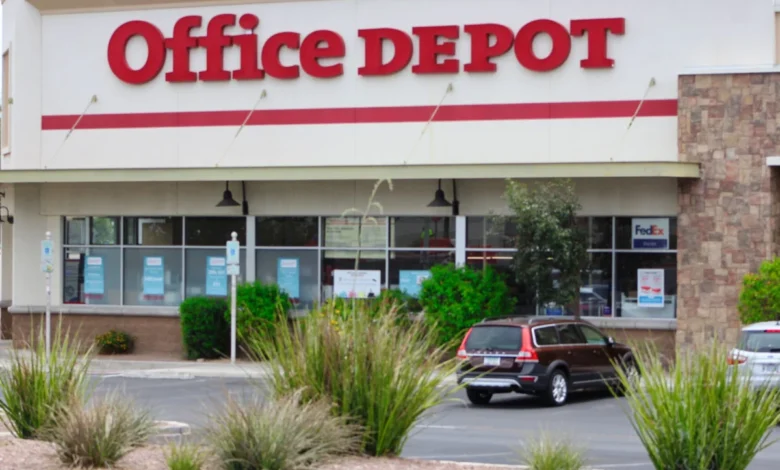
In a strategic move to consolidate its market presence and leverage four decades of brand equity, the parent company formerly known as The ODP Group has officially rebranded as Office Depot Group. This structural transformation involves the retirement of the ODP Business Solutions moniker, with the company’s distribution arm now operating under the banner of Office Depot Business. The realignment serves as a definitive step toward unifying the company’s retail storefronts and its extensive B2B distribution network under one singular, recognizable name.
A Strategic Pivot Toward Legacy
For over forty years, the Office Depot brand has maintained a dominant, if occasionally volatile, position in the office supplies sector. By shifting the corporate identity back to the core brand name, leadership aims to simplify its market messaging. Craig Gunckel, CEO of Office Depot, emphasized that the decision was rooted in the enduring power of the brand’s history. In a public statement shared via social media, Gunckel noted that the recognition the company enjoys is a result of decades of engagement with customers, partners, and local communities—a form of capital that cannot be synthesized quickly.
The transition, which is currently being rolled out across digital platforms, official communications, and physical signage, represents more than a cosmetic change. It is an effort to reframe the organization as a cohesive entity rather than a fragmented collection of business units. According to company officials, the move is expected to have a positive impact on stakeholders, including employees who have navigated the company’s complex corporate restructurings over the last decade.
Chronology of a Transformation
The evolution of the ODP Group has been marked by significant shifts in corporate strategy, particularly regarding its focus on B2B versus retail. To understand the gravity of this rebrand, one must look at the company’s recent history:
- 2013: Office Depot and OfficeMax merge in a $1.2 billion deal, aiming to compete more effectively against the growing dominance of Amazon and the stability of Staples.
- 2016: A proposed merger between Office Depot and Staples is blocked by federal regulators, citing anti-competitive concerns in the business-to-business supply market.
- 2020-2021: The company undergoes a significant internal reorganization, separating its retail consumer-facing business from its B2B supply chain operations, eventually adopting the name "The ODP Group" to serve as the holding company for both.
- 2022: The company further emphasizes its ODP Business Solutions division as an independent, tech-forward procurement platform.
- 2024: The company officially announces the reversal of this fragmentation, re-adopting the "Office Depot Group" identity to streamline operations and brand recognition.
Market Positioning and Competitive Landscape
Office Depot currently holds a significant footprint in the North American retail and supply sectors. As noted in the Top 2000 Database—which tracks annual ecommerce performance for North American retailers—Office Depot maintains a position at No. 24, underscoring its relevance in an increasingly digital-first economy. However, the company remains the second-largest player in the office supplies category, trailing its primary rival, Staples.
The pressure to evolve is not merely internal; it is a reaction to a shifting landscape. The rise of hybrid work models, the decline of traditional office spaces, and the aggressive expansion of generalist e-commerce giants have forced office supply retailers to pivot their value propositions. Where companies once sold paper, toner, and pens, they are now tasked with providing "workplace solutions"—a shift that requires a more sophisticated, service-oriented business model.
Expert Analysis: The Risks of Nostalgia
While the unification of the brand is intended to foster clarity, industry analysts have pointed to inherent risks. The "Office Depot" name is heavily laden with perceptions of traditional, brick-and-mortar retail. For procurement officers and enterprise-level clients, this legacy can act as a double-edged sword.
Alys Reynders, chief marketing officer at the operations platform Quickbase, notes that the move could potentially dilute the identity of the B2B division. "There is a concern that procurement officers have spent four decades associating the Office Depot name with a retail experience," Reynders explains. "By pulling that name onto the B2B side, there is a risk that clients might underestimate the scope of the company’s capabilities, seeing them only as a supplier of physical goods rather than a comprehensive logistics and operational partner."
Despite these concerns, there is consensus that, if managed correctly, the rebrand provides a necessary "clean slate" for the organization. By eliminating the disconnect between the retail brand and the B2B solutions provider, the company can streamline its marketing budget and create a more consistent customer journey. The challenge lies in the execution: can the company prove to enterprise clients that "Office Depot" represents a high-tech procurement engine rather than just a place to buy desk chairs?
The Challenge of Redefining Value
Shailendra Pratap Jain, a professor of marketing at the University of Washington’s Foster School of Business, views the rebrand as a "useful turnaround signal," yet warns that branding alone is insufficient for long-term growth. "Renaming ODP Business Solutions to Office Depot Business provides immediate familiarity," Jain says. "However, the strategic challenge is whether a brand so strongly tied to retail can effectively stretch into a high-level B2B services identity."
Jain suggests that the company’s success will hinge on its ability to transition its messaging from "the place where businesses buy supplies" to "the company that helps businesses operate." This requires a shift in the underlying product mix, pricing structures, and, most importantly, the customer service architecture.
To achieve this, the Office Depot Group must move beyond the cosmetic change of its name. It must demonstrate that it has integrated its retail distribution networks with the sophisticated logistics required to support modern, remote-heavy corporate environments. The company’s ability to leverage its massive, long-standing database of corporate clients will be the true test of this rebranding initiative.
Looking Toward the Future
The decision to return to the Office Depot name is a bet on the power of recognition in a cluttered marketplace. In an era where digital brands appear and disappear with frequency, a 40-year-old brand name possesses a sense of institutional stability. However, in the B2B sector, stability must be paired with agility.
As the company moves forward, it will face intense scrutiny regarding its product diversification and its ability to maintain its B2B market share. The consolidation of its branding is merely the first phase of this effort. The coming quarters will be critical for Office Depot Group as it seeks to demonstrate that it can shed the limitations of its "retailer" label while retaining the trust that made it a household name.
For the time being, the market is watching to see if the "Office Depot" name will act as an anchor that keeps the company tethered to its past, or as a foundation upon which a modern, multifaceted business can be built. Ultimately, as experts note, the name itself is not the solution—it is the vehicle through which the company must now prove its future relevance.