Walmart leverages brick-and-mortar footprint to fuel 23% surge in U.S. e-commerce growth through rapid fulfillment strategies

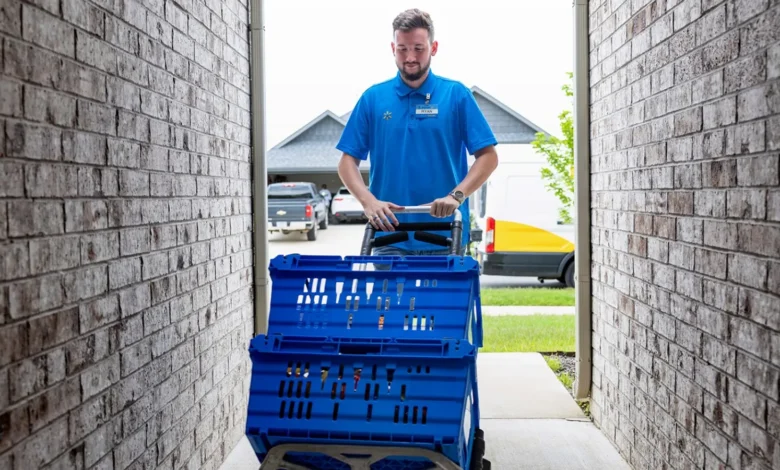
The retail landscape has undergone a seismic shift over the past half-decade, moving from a model defined by centralized distribution centers to one predicated on the proximity of goods to the end consumer. Walmart, the world’s largest retailer, has successfully harnessed its massive physical footprint of over 4,600 U.S. stores to create a formidable logistics engine. During the third quarter of the fiscal year, this strategy yielded a significant 23% year-over-year increase in U.S. e-commerce sales, signaling that the company’s investment in omnichannel fulfillment is paying dividends in an increasingly hyper-competitive retail environment dominated by the perennial battle with Amazon.
The Evolution of the Omnichannel Strategy
For years, the conventional wisdom in retail suggested that online shopping and physical stores were two distinct, often cannibalistic, entities. Walmart’s recent performance effectively dismantles this binary, demonstrating that its stores are no longer just points of purchase, but essential fulfillment nodes. By utilizing these locations to bridge the gap between digital storefronts and customer doorsteps, the company has effectively neutralized the geographic advantages that once defined Amazon’s primary edge.
The current strategy is the culmination of a multi-year transformation that began in earnest following the onset of the global pandemic. In 2020, as consumer behavior shifted abruptly toward contactless shopping, Walmart accelerated the integration of its store inventory systems with its digital marketplace. By 2022, the company began scaling its "Store-to-Door" delivery programs, moving beyond standard grocery delivery into the realm of general merchandise. Today, this infrastructure supports a complex array of delivery speeds, including sub-30-minute options that serve as a critical competitive differentiator.
Chronology of Fulfillment Advancements
The trajectory of Walmart’s logistics transformation can be mapped through several key strategic milestones:
- 2019-2020: Walmart shifts focus toward "Grocery Pickup" and "Delivery," turning thousands of stores into local distribution hubs to manage the surge in online demand.
- 2021: The retailer launches "Walmart GoLocal," a white-label delivery service, signaling its intent to monetize its logistics network by offering delivery-as-a-service to other businesses.
- 2022: Introduction of "Walmart Depot" locations, designed as dedicated e-commerce delivery stations, marks a departure from pure store-based fulfillment toward a hybrid model.
- 2023: Expansion of AI-driven inventory management tools allows for better predictive stocking, ensuring that the right products are located in the right stores based on local search trends.
- 2024: The current fiscal year has seen a renewed focus on marketplace integration, with third-party sellers gaining access to Walmart’s store-fulfilled delivery network, drastically expanding the variety of available goods for rapid delivery.
Data-Driven Performance Metrics
The financial implications of this transformation are stark. According to EVP and CFO John David Rainey, the acceleration in fulfillment speeds is directly correlated with higher customer conversion rates. During the third quarter, store-fulfilled deliveries saw a year-over-year increase exceeding 40%, while expedited delivery options grew by more than 50%.
Perhaps most importantly, more than 80% of all Walmart U.S. e-commerce orders are now fulfilled directly from store locations. This model creates a "virtuous cycle" of efficiency. When a package is fulfilled from a store five miles away rather than a warehouse 200 miles away, the shipping cost decreases, the carbon footprint is reduced, and the delivery speed is significantly improved. These micro-fulfillment efficiencies are essential for maintaining margins in an industry where customers increasingly expect free or low-cost expedited shipping as a standard service rather than a premium perk.
Operational Insights from Leadership
During the most recent earnings call, CEO John Furner emphasized that the integration of marketplace inventory into physical stores is a game-changer for the company’s assortment. "By placing select marketplace inventory in stores, it brings more of the online assortment closer to customers and makes it available fast for local delivery," Furner noted.
This move allows Walmart to compete not only on price but on breadth of selection. By transforming stores into showrooms for third-party marketplace goods, the company effectively turns local real estate into an agile, multi-functional warehouse. This reduces the "out-of-stock" frustration that often drives customers toward Amazon’s platform and provides a necessary outlet for the growing volume of goods sold by independent vendors on Walmart’s digital platform.
The Rise of Delivery Density and Depot Nodes
While stores remain the backbone of the operation, the introduction of "Walmart Depot" locations represents a sophisticated evolution in the retailer’s supply chain. These dedicated delivery stations serve as forward-deployed inventory hubs. They are strategically positioned to handle high-velocity items that are frequently ordered online but may not require the full range of services provided by a standard retail store.
Furner highlighted the concept of "delivery density" as a critical metric for profitability. In the logistics industry, delivery density refers to the number of packages dropped off within a specific geographic radius. As Walmart increases the volume of packages moving through a single route, the per-package cost of delivery drops. By utilizing depots to aggregate inventory and optimize driver routes, the company is successfully lowering the barrier to entry for same-day delivery, making the service economically viable even for lower-margin goods.
Competitive Implications in the Amazon Era
The rivalry between Walmart and Amazon remains the central narrative of modern retail. Amazon has long held the advantage in logistics technology, pioneering the two-day and eventually one-day delivery model. However, Amazon’s reliance on massive, centralized fulfillment centers—while highly efficient—is being challenged by Walmart’s decentralized store network.
Analysts note that Walmart’s physical presence offers a unique "last-mile" advantage that Amazon struggles to replicate without massive capital expenditure in urban real estate. By turning existing stores into distribution centers, Walmart avoids the massive cost of building new infrastructure from the ground up. This has forced Amazon to pivot toward its own "Same-Day Delivery" facilities, though they still lack the sheer density of Walmart’s 4,600 locations.
For the consumer, this competition has resulted in a "speed war" that has reset expectations for retail. The sub-30-minute delivery promise is the current gold standard, but as both companies continue to invest in automated fulfillment and robotics, the industry is likely to see further compression of delivery timelines.
Future Outlook and Market Impact
As Walmart looks to the future, the integration of automation and artificial intelligence into its stores will likely be the next frontier. The retailer is already experimenting with autonomous floor scrubbers, robotic shelf scanners, and automated picking systems in select stores. These technologies are designed to free up human employees to focus on the high-touch tasks of order picking and packing, further increasing the throughput of the fulfillment engine.
However, the strategy is not without risks. Managing inventory across thousands of stores and a massive online marketplace requires a degree of precision that is susceptible to supply chain disruptions and labor market fluctuations. Furthermore, the operational cost of maintaining a high-velocity fulfillment network within a retail environment can be demanding on store personnel.
Despite these challenges, the trajectory is clear. Walmart has successfully transitioned from a traditional retailer to a logistics-first organization. The 23% growth in e-commerce is not merely a statistical anomaly but the result of a deliberate, sustained effort to turn the company’s greatest historical asset—its physical stores—into its greatest modern competitive weapon. As the company continues to refine its "Depot" network and increase its delivery density, it is well-positioned to maintain its momentum, challenging Amazon not just for the shopper’s wallet, but for the shopper’s time. The integration of physical and digital assets, once considered a theoretical ideal, has become the operational reality of the modern retail sector, with Walmart currently setting the pace.