Anatomy of a Digital Breakdown: How a Cascade of Outages and Cyber Scares Ignited National Anxiety


A cascading series of technological disruptions, critical infrastructure glitches, and high-profile cybersecurity breaches has gripped the United States, leaving citizens, market analysts, and even federal emergency management personnel questioning the stability of the nation’s digital backbone. While the Trump administration and intelligence officials maintain that the recent wave of network outages stems from routine maintenance and hurried technical upgrades rather than malicious state-sponsored activity, a palpable sense of unease has settled over the American public.
The convergence of grounded commercial flights, crippled banking networks, major corporate software failures, and frantic consumer stockpiling has created a volatile psychological landscape. For many, the invisible threads connecting modern commerce, communication, and travel feel increasingly frayed. As lawmakers demand answers and federal agencies scramble to reassure a skeptical populace, the events of recent weeks highlight a vulnerable intersection where hyper-reliance on digital infrastructure meets public paranoia.
A Month of Malfunction: The Chronology of "Black October" and Beyond
The current wave of public anxiety did not materialize overnight; rather, it is the cumulative result of weeks of high-profile technological failures and security scares that began in the fall. The groundwork for public apprehension was laid during a prolonged period of cyberattacks dubbed "Black October," which targeted hundreds of private corporations and public institutions worldwide. This widespread hacking spree severely eroded corporate and consumer confidence in digital security frameworks.
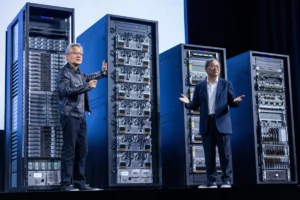
Compounding these fears was a major corporate espionage scandal involving semiconductor giant Nvidia, which further rattled financial markets and intelligence circles. Against this backdrop of heightened threat awareness, the Pentagon launched an ambitious initiative known as "FORTRESS." Designed to insulate major U.S. military bases from external dependencies, the program aims to ensure that strategic installations can operate entirely off-grid for up to 90 days in the event of a catastrophic war that severs power grids and global supply chains. While intended as a defensive posture, the announcement of FORTRESS inevitably filtered down to the public consciousness, priming citizens to view national infrastructure through a lens of vulnerability.
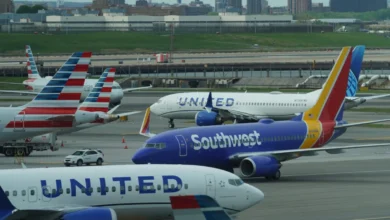
The tipping point for widespread consumer alarm arrived in mid-November. On a Thursday, Microsoft suffered a massive global outage affecting its core email and enterprise productivity tools, halting communications for countless businesses and individuals. Less than 24 hours later, the Federal Aviation Administration (FAA) took the unprecedented step of grounding all domestic commercial flights for more than four hours, throwing the nation’s air travel network into chaos. Although the FAA later attributed the grounding to a routine physical upgrade involving the replacement of a copper wire with a fiber-optic cable, the timing did little to quell public suspicion.
Over the days that followed, the disruptions expanded into the financial, technology, and defense sectors. Major financial institutions, including Chase and Wells Fargo, experienced temporary service interruptions that prevented customers from accessing funds or viewing accounts. Simultaneously, digital giants such as Apple and commercial carriers like United Airlines reported localized service degradation. In a particularly sensitive breach of internal security, the classified internal communications network of the National Security Agency (NSA) also suffered an outage, intensifying concerns within the defense apparatus.
Official Reassurances Meet Internal Skepticism
Despite the outward appearance of a coordinated systemic collapse, federal authorities have forcefully rejected the notion that the United States is under cyber siege. Director of National Intelligence Jay Clayton addressed the House Homeland Security Committee, delivering explicit testimony to calm jittery lawmakers and markets.
"These are separate service outages associated with maintenance and technical changes," Clayton stated during the congressional hearing. "They are not a coordinated or state-sponsored attack."
According to administration explanations, the cluster of outages is the result of network operators hastily deploying critical software patches and infrastructure upgrades meant to seal newly discovered vulnerabilities. In their rush to fortify systems following the cyber incidents of Black October, technicians reportedly bypassed rigorous testing protocols, introducing bugs that triggered widespread, localized cascading failures.
Yet, these official narratives have faced friction from within the very agencies tasked with disaster response and national security. In interviews with journalists, two anonymous officials at the Federal Emergency Management Agency (FEMA) voiced deep skepticism regarding the official explanations, noting the statistical improbability of so many critical sectors failing simultaneously. One official confessed to withdrawing extra physical cash as a precaution, while the other reported being overwhelmed by inquiries from peers questioning whether an existential emergency was underway.
"There is nothing on this scale that has happened before in this many sectors this close together," one FEMA official remarked anonymously. "This is scary, and there is no leadership."
Adding to the administrative turmoil, the White House abruptly removed U.S. National Cyber Director Sean Cairncross. Meanwhile, reports surfaced that the Federal Bureau of Investigation (FBI) had launched an internal probe into an apparent breach of its primary nationwide criminal information database—marking the second time in recent months that the critical law enforcement repository had been compromised.
Consumer Panic and the Return of Doomsday Prepping
The friction between administrative reassurances and erratic technological performance has catalyzed a measurable shift in consumer behavior. Across the nation, retail giants such as Costco and Walmart have reported notable surges in the sale of emergency preparedness supplies, non-perishable foods, and bottled water.
Market analysts have taken direct note of the phenomenon. In a research note to investors, Mizuho analyst David Bellinger highlighted the psychological driver behind the retail spike. "Consumer anxiety, following the Microsoft Outlook outage, the ground stoppage for all U.S. airline flights, and apocalyptic concerns flaring up across social media, have all contributed to increased emergency prep sales at Costco," Bellinger wrote.
This domestic unease mirrors parallel developments internationally. In the United Kingdom, the government launched a public awareness campaign urging British citizens to stockpile canned goods, potable water, and physical currency to sustain themselves through a minimum of three days of potential civil or infrastructural disruption.
The psychological toll has been exacerbated by simultaneous turbulence in the financial markets. Investors, already unnerved by shifting monetary policies and the potential plateau of the artificial intelligence boom, have subjected the stock market to some of its sharpest declines since the onset of the COVID-19 pandemic. The fear that a technological misstep could trigger a broader economic contraction has transformed everyday inconveniences into existential anxieties.
For ordinary citizens navigating delayed flights and frozen ATM screens, the distinction between technical ineptitude and malicious attack feels increasingly academic. Chuck Amasio, a 68-year-old traveler stranded at Newark Liberty International Airport during the disruptions, captured the prevailing public sentiment in an interview with the Associated Press.
"We talk about how wars aren’t done with bombs anymore," Amasio observed. "They shut down airspace or a power grid. They can cripple an economy."
The Perspective of Infrastructure Experts
While public perception leans toward systemic vulnerability, technological infrastructure experts urge calm, contextualizing the recent events within the broader evolution of the global internet.
In an interview examining the architecture of modern digital services, Mark Giles, director of Ookla Research—the parent company of network monitoring platform Downdetector—argued that the clustering of outages is largely an artifact of modern visibility rather than a sign of structural decay. According to Giles, while the public experiences these events as a unified crisis, the underlying technical roots remain distinct and largely self-contained.
"This is a big blip, but it’s kind of on par for the course for what we’re seeing in terms of those longer-term trends," Giles explained. "Most of the time they’re fairly self-contained and remedied quite quickly. It’s the ones where you can’t withdraw money or you can’t access your emails that really get the headlines."
Broader Implications for National Resilience
The convergence of technological fragility, public skepticism, and administrative turnover underscores a critical vulnerability in modern industrialized societies: the psychological and operational cost of systemic interdependence. As critical infrastructure becomes increasingly digitized and automated, the threshold for public panic lowers significantly whenever routine maintenance intervals overlap with high-profile security threats.
The events of November have forced a reluctant reckoning among policymakers, cybersecurity professionals, and corporate leaders. Moving forward, federal agencies face the dual challenge of hardening the nation’s digital perimeter against sophisticated adversaries while rebuilding public trust through transparent, timely, and credible communication. Until the federal government can establish a seamless narrative of technological reliability, Americans will likely remain on edge, watching their screens—and their bank accounts—for the next unexpected blip.
Related posts: