When a sync window closes: How Argo CD self-heal skipped the migration hook

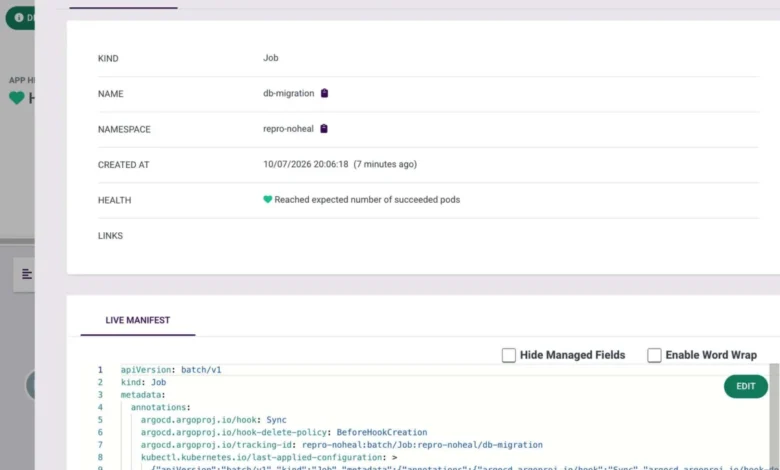
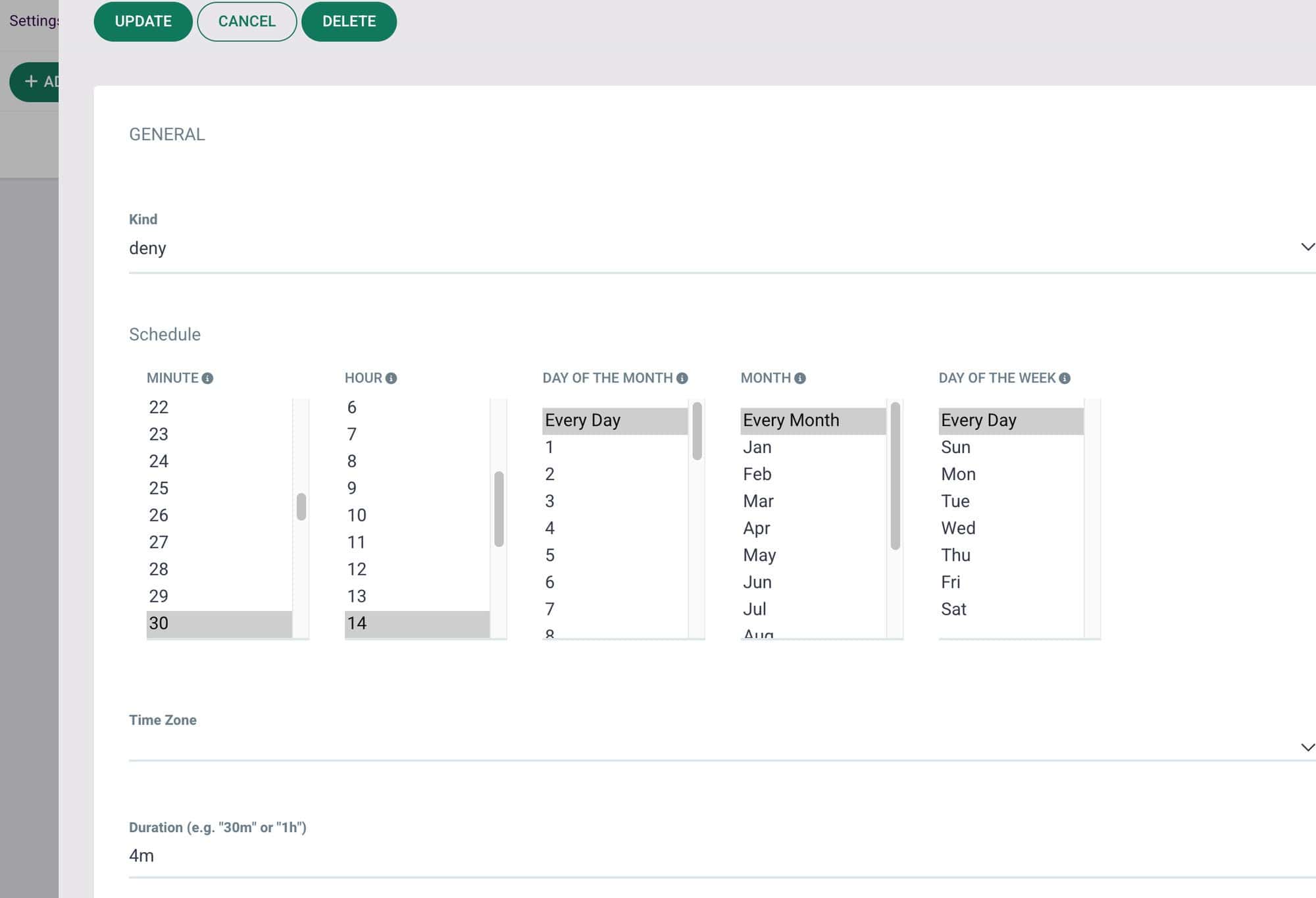
This issue emerges when an organization employs "Sync Windows"—a feature designed to prevent deployments during sensitive business hours—alongside automated synchronization, pruning, and self-healing. When a sync window expires, the Argo CD controller performs a check to align the cluster state with the Git repository. If the controller triggers a "self-heal" event rather than a full synchronization, it bypasses the defined Sync hooks entirely. This creates a state where the application is marked as "Synced" and "Healthy" in the Argo CD dashboard, yet the underlying database remains stuck on the previous schema version, causing the application to communicate with an incompatible database for 36 to 44 minutes before the next reconciliation cycle.
The Chronology of a Failed Sync
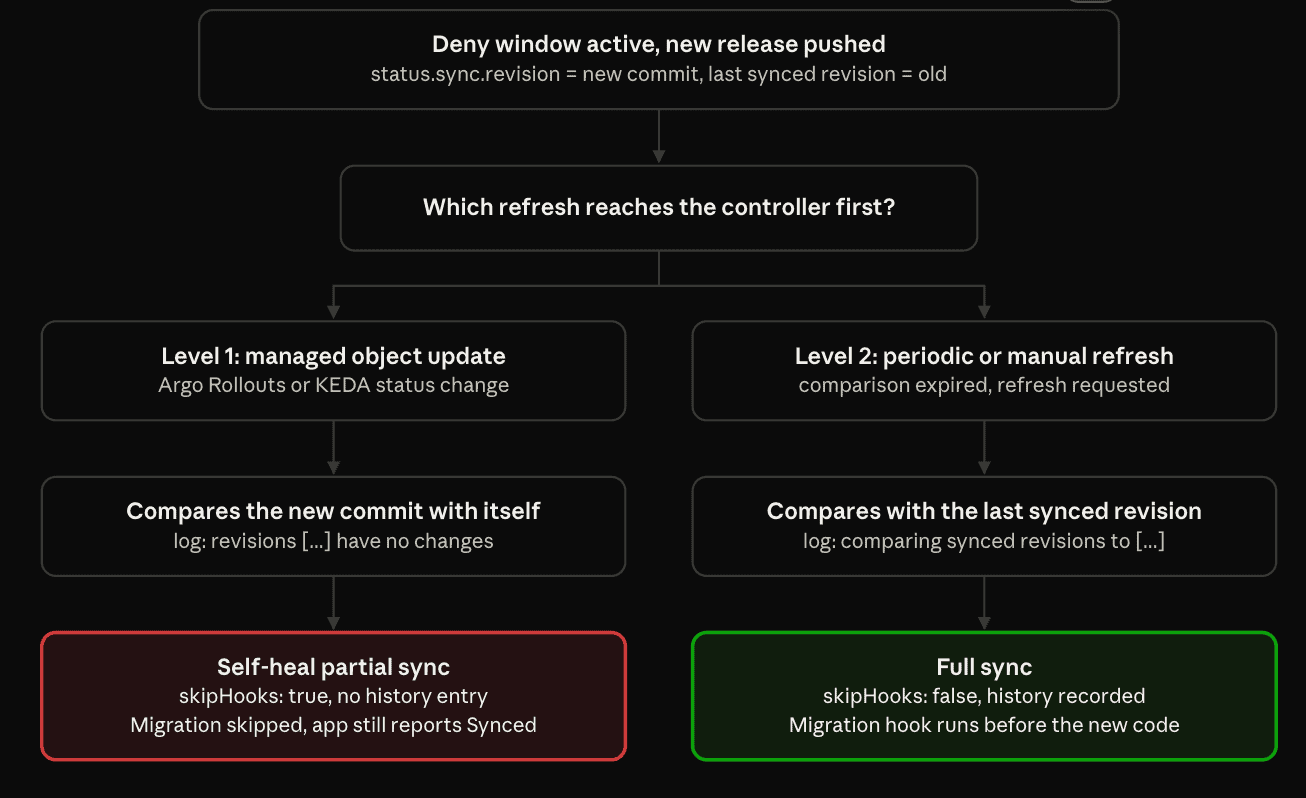
To understand the mechanics of this failure, it is necessary to examine the interaction between the Argo CD controller’s reconciliation loops. Argo CD utilizes two distinct types of refresh mechanisms:
- Level-2 Refresh (Timer-Driven): This occurs every two to three minutes as a standard reconciliation process, where the controller compares the cluster state against the source-of-truth in Git.
- Level-1 Refresh (Event-Driven): This is triggered by changes to managed objects in the cluster. It relies on the controller’s cached knowledge to determine if a change is required.
When a sync window closes, the system is essentially waiting for a signal to resume operations. If a Level-1 refresh—often triggered by a minor drift detection—reaches the controller before the next Level-2 timer-based refresh, the controller may incorrectly identify that the current revision is already "synced."
In the investigation conducted by the engineering team, it was observed that the controller performs an evaluation using the last recorded revision. Because the application had been "effectively" synced to the desired revision during the window—even though the hook execution was suppressed—the controller concludes that no changes are necessary. Consequently, the self-heal mechanism attempts to correct "drift" by applying only the resources it perceives as out-of-sync, ignoring the Sync hook Jobs that are designed to handle migrations.
Technical Implications of Sync Hooks and Self-Heal
The reliance on Sync hooks as a primary mechanism for database migrations assumes that every synchronization event is a "full" deployment. However, Argo CD’s architecture distinguishes between standard resource application and hook execution. Sync hooks are specifically designed to run as part of a deliberate deployment process. When self-healing occurs, it is an automated, corrective measure intended to force the cluster back to the desired state defined in Git.
Data from the lab environment suggests that this failure is not a statistical outlier but a predictable outcome of race conditions. In five out of six controlled tests, the application reached a "Healthy" status on the new commit while the database migration Job remained tethered to the previous release. This creates a dangerous "silent failure" scenario: the CI/CD pipeline reports a successful deployment, the monitoring dashboard shows a healthy application, but the business logic fails because the data layer has not been transitioned.
Strategic Remediation for Infrastructure Teams
Industry best practices for managing this risk involve moving away from hook-dependent migrations toward a model where the migration is treated as an immutable component of the application’s desired state. By defining the database migration as a standard Kubernetes Job within the Git repository—utilizing sync waves to ensure execution order—the migration becomes part of the declarative manifest.
Under this approach, the Job is managed as an ordinary resource. When a new release is pushed, the controller sees a "new" Job (differentiated by a unique name or version tag) and includes it in the synchronization process regardless of whether the sync is a full deployment or a partial self-heal. This ensures that the migration is guaranteed to execute before the application pods are updated.
Recommended Implementation Steps:
- Versioned Jobs: Utilize Helm or Kustomize to inject unique tags (e.g., image version) into the Job metadata, ensuring the Job is always treated as a new resource.
- Sync Waves: Leverage the
argocd.argoproj.io/sync-waveannotation to define a sequence where the migration Job executes in a negative wave, ensuring completion before the deployment rollout. - Idempotency: Ensure all database migration scripts are inherently idempotent, allowing them to be re-run safely if the controller attempts to reconcile the state multiple times.
- Disable Self-Heal (Alternative): For teams unable to refactor their charts immediately, disabling
selfHealfor applications that rely on migration hooks prevents the controller from skipping hooks during drift correction. While this increases the time required to recover from manual configuration drift, it eliminates the risk of deploying code before the database schema is updated.
Broader Impact on Kubernetes Orchestration
The implications of this issue extend beyond Argo CD. It highlights a fundamental tension in GitOps: the desire for automated, self-healing infrastructure versus the requirement for ordered, transactional changes. As organizations move toward more complex microservices architectures, the dependency between application code and persistent data schemas becomes a common point of failure.
The consensus among platform engineers is shifting toward the "Git as the single source of truth" philosophy. If a database migration is not represented as a managed resource in the version-controlled repository, it exists outside the visibility of the orchestration layer. By treating migrations as first-class citizens in the declarative model, teams can mitigate the risks associated with timing-sensitive race conditions.
This event serves as a reminder that automation is only as reliable as the underlying logic. Relying on "hooks" to orchestrate complex dependencies is a fragile strategy in highly distributed environments. As the CNCF ecosystem continues to evolve, the movement toward more robust, declarative resource management will be essential for maintaining system integrity in production environments where downtime or data inconsistency can have significant financial and operational consequences.