Trump Administration Imposes Sweeping Tariffs on Canadian Goods, Citing Discriminatory Trade Practices

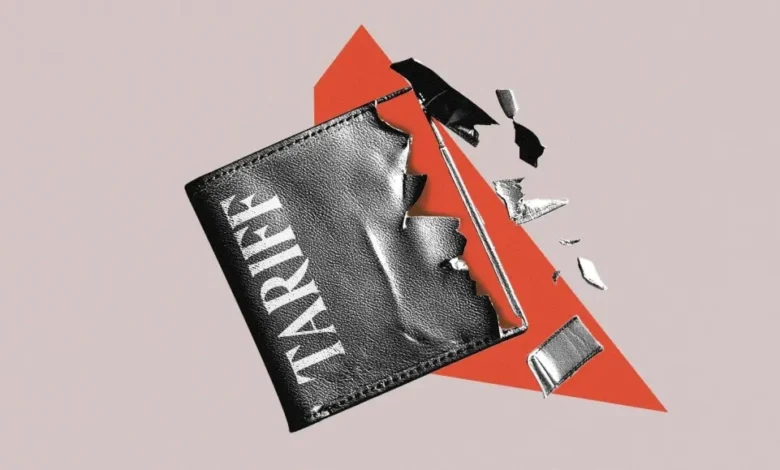
The Trump Administration has initiated a new round of surprise tariffs, this time targeting a broad spectrum of goods originating from Canada, the United States’ closest northern neighbor and vital trading partner. The announcement, which sent ripples through North American markets, specifies that duties will be levied on Canadian auto parts, dairy products, alcoholic beverages, fishing rods, and even wigs. This move signals a significant escalation in trade tensions, despite the overarching framework of the United States-Mexico-Canada Agreement (USMCA).
Scheduled to take effect on August 19, these tariffs are justified by the Trump Administration under Section 338 of the Tariff Act of 1930, a rarely invoked provision. The administration claims these measures are a direct response to what it characterizes as "discriminatory Canadian trade practices" against U.S. goods. Notably, crucial Canadian exports such as oil and natural gas will be exempt from the new duties, a decision underscoring the strategic importance of these energy resources to the U.S. economy.
Companies anticipated to face immediate repercussions span various sectors. Major dairy producer Agropur, plant-based food brand Daiya, and even certain products from ice cream giant Halo Top, which sources ingredients from Canada, are among those identified as potentially affected. The move has prompted a "wait and see" approach from many importers and industry observers, who anticipate weeks of intense negotiations that could ultimately reshape the final tariff rates.
A History of Trade Tensions: From NAFTA to USMCA and Beyond
To fully contextualize this latest tariff announcement, it’s crucial to understand the intricate and often contentious history of trade relations between the United States and Canada. For decades, the North American Free Trade Agreement (NAFTA), enacted in 1994, governed trade among the U.S., Canada, and Mexico, fostering deep economic integration and complex supply chains, particularly in the automotive sector. NAFTA facilitated the free flow of goods and services, leading to significant growth in cross-border trade.
However, the Trump administration frequently criticized NAFTA, labeling it a "bad deal" for American workers and industries. This critique ultimately led to its renegotiation and replacement by the United States-Mexico-Canada Agreement (USMCA), which came into force on July 1, 2020. The USMCA aimed to modernize NAFTA, introducing new provisions related to digital trade, labor, environment, and stricter rules of origin for automobiles. For instance, the USMCA requires 75% of auto content to be made in North America (up from 62.5% under NAFTA) and mandates that 40-45% of auto content be made by workers earning at least $16 per hour.
A critical, and often overlooked, detail is that the USMCA agreement includes a sunset clause, which means it expires after 16 years, subject to a review every six years that could extend it. However, as Jackson Wood, director of industry strategy for global trade intelligence at Ontario-based Descartes, a firm specializing in helping importers navigate tariffs, points out, the original "free-trade agreement between the three countries, which replaced NAFTA in 2020, expired on July 1" in terms of its initial fixed period. "So we now have rolling one-year periods where some form of USMCA is going to remain in place," Wood explained. This transitional phase, with its inherent ambiguities, effectively creates openings for individual governments to unilaterally introduce new tariff rates targeting specific industries, as the current administration has now done.
The Legal Basis: Section 338 of the Tariff Act of 1930
The administration’s choice to invoke Section 338 of the Tariff Act of 1930 is particularly noteworthy. Unlike previous rounds of tariffs under the Trump administration, which often relied on Section 232 (national security grounds, as seen with steel and aluminum) or Section 301 (unfair trade practices, primarily against China), Section 338 is a rarely utilized tool.
Previous tariff measures initiated by the Trump administration faced significant legal challenges, with some rounds ultimately ruled unconstitutional or exceeding presidential authority. For example, some Section 232 tariffs were challenged on the grounds that they did not genuinely pertain to national security or that the process lacked due diligence. The distinction with Section 338 is its specific focus: it grants the President the power to impose tariffs of up to 50% on goods from countries that are found to discriminate against U.S.-made products.
In this instance, Wood elaborated that the administration’s rationale refers to alleged Canadian discriminatory practices, specifically citing instances where Canadian retailers and consumers have reportedly boycotted American goods in response to previous U.S. tariff impositions. While the claim of "discriminatory practices" is open to interpretation and likely to be contested, the legal framework provides a different pathway than previous tariff efforts, potentially complicating legal challenges. The fact that no other president has used Section 338 to impose tariffs until now adds a layer of legal uncertainty and underscores the administration’s aggressive approach to trade enforcement.
Targeted Industries: A Closer Look at the Impact
The announced tariffs cast a wide net over significant sectors of the Canadian economy, though their overall impact on the vast U.S.-Canada trade relationship is projected to be contained.
-
Dairy: The inclusion of dairy products is perhaps the least surprising. Canada’s highly protected dairy industry, operating under a supply management system, has long been a contentious point for U.S. agricultural interests. This system sets production quotas and prices, and imposes high tariffs on imported dairy products to protect domestic producers. U.S. dairy farmers, a powerful lobby, have consistently argued that this system unfairly limits their access to the Canadian market. The tariffs will likely target Canadian cheese, yogurt, and other processed dairy goods, directly affecting producers like Agropur and potentially increasing prices for U.S. consumers who favor specific Canadian brands. Wood confirmed that "the dairy industry in Canada has long been a sore spot for the U.S., particularly its powerful dairy farming community."
-
Automotive: The North American automotive industry is deeply integrated, with parts and components crossing the U.S.-Canada border multiple times during the manufacturing process. Tariffs on Canadian auto parts could disrupt complex supply chains, potentially increasing production costs for U.S.-based automakers and, in turn, leading to higher vehicle prices for consumers. While the exact scope of "auto" tariffs remains to be fully detailed, it could encompass engines, transmissions, and various components that are manufactured in Canada and then shipped south for final assembly.
-
Alcohol: Canadian alcoholic beverages, particularly Canadian whisky and craft beers, enjoy a significant market presence in the U.S. Tariffs on these products would directly impact Canadian distillers and brewers, making their products more expensive for American consumers and potentially reducing their competitiveness against domestic or other imported alternatives. This could disproportionately affect smaller, independent spirits and beer brands trying to gain a foothold in the U.S. market.
-
Other Categories: The inclusion of "fishing rods and even wigs" seems less economically significant but carries symbolic weight, often chosen in trade disputes to signal a broad intent or to target niche industries for specific political leverage. While the individual economic impact of these categories might be minor, their inclusion highlights the comprehensive nature of the tariff list.
-
Strategic Exemptions: The explicit exemption of oil and natural gas is crucial. Canada is the largest foreign supplier of crude oil to the United States, and the energy trade between the two countries is foundational to North American energy security. Exempting these categories demonstrates a pragmatic approach, insulating critical energy supplies from trade disputes while still applying pressure in other sectors.
Overall Economic Impact and Business Reactions
Despite the initial alarm, experts suggest the immediate economic impact of these tariffs on the broader U.S.-Canada trade relationship may be somewhat contained. Jackson Wood noted, "The types of products that have been targeted this time around represent just about $20 billion of annual Canadian exports." While $20 billion is a substantial figure, it must be viewed in the context of the total trade volume. Canada is currently the U.S.’s second-largest trading partner, with total Canadian imports to the United States reaching $382 billion in 2025. Therefore, Wood concluded, "Twenty billion dollars is a lot of money, but not in the context of a trading relationship that’s in the hundreds of billions of dollars annually." This limits the direct impact of this round of tariffs to approximately 5% of total Canadian imports to the U.S.
However, the impact will not be evenly distributed. Wood emphasized that these tariffs would "disproportionately affect small and medium-sized businesses that happen to fall in the targeted categories." An independent spirits brand, a small cheese producer, or a niche auto parts manufacturer might find their profit margins severely eroded or their ability to compete in the U.S. market significantly hampered by a 50% tariff, whereas larger corporations might have more resources to absorb costs or adjust supply chains.
Retailers and importers, many of whom have grown accustomed to the unpredictable nature of trade policy under the Trump administration, are adopting a cautious stance. Joseph Firrincieli, sales manager at freight forwarding and logistics firm OEC Group New York, remarked that after numerous tariff announcements last year, many importers "have become kind of numb" to the administration’s surprise policies. "It’s like, ‘Oh here we go again,’" he said.
Firrincieli noted that, so far, his Canadian importer customers have not made any immediate modifications to their upcoming shipments from Canada. This reflects a broader "wait and see" approach, driven by the understanding that trade policies can be fluid and subject to change through negotiation. "There are a lot of factors that you have to take into consideration before jumping around and changing your supply chain," Firrincieli advised.
Some businesses are also carefully assessing how their products fit into the tariff categories. Toronto-based frozen pizza brand Porta, which distributes to Whole Foods Market and Sprouts in the U.S., is an example. A company representative stated that Porta does not consider its finished products, despite containing dairy ingredients, to fall under the specific categories listed in the initial announcement. This indicates that the precise wording and interpretation of the tariff categories will be crucial for businesses navigating the new landscape.
Official Reactions and the Path Forward
While the Canadian government has yet to issue a comprehensive official response to this latest tariff announcement, it is highly probable that Ottawa will express strong disappointment and reiterate its commitment to fair trade. Historically, Canada has responded to U.S. tariffs with retaliatory measures, targeting U.S. goods to exert pressure on American industries and lawmakers. Such a response could involve duties on American agricultural products, steel, or consumer goods, further escalating the trade dispute. Canadian industry associations, particularly in the dairy and automotive sectors, are expected to lobby their government vigorously and to work with their U.S. counterparts to mitigate the impact.
From the U.S. perspective, the administration’s move aligns with its "America First" trade agenda, prioritizing domestic industries and aiming to rectify perceived imbalances. The United States Trade Representative (USTR) office will likely emphasize the need for Canada to address what it views as unfair trade practices, particularly within its dairy supply management system.
The coming weeks are critical. Both Jackson Wood and Joseph Firrincieli anticipate intense negotiations between Canada and the U.S. "In the context of negotiations, a lot can change in 30 days," Wood remarked. These discussions could lead to various outcomes: the tariffs might be implemented as announced, the rates could be reduced, specific product categories might be exempted, or the tariffs could even be withdrawn entirely if an agreement is reached on the underlying trade issues.
The legal validity of these tariffs, particularly the novel use of Section 338, will also remain a key point of contention. Should the tariffs proceed, legal challenges from affected industries in both countries are highly probable, potentially pushing the issue into the U.S. court system. The outcome of such challenges would not only affect the current tariffs but also set important precedents for future presidential authority in trade matters.
In conclusion, the Trump administration’s imposition of new tariffs on Canadian goods marks a significant, albeit targeted, escalation in North American trade relations. While the overall economic impact on the vast bilateral trade is projected to be limited, specific industries and small-to-medium-sized businesses within Canada will face considerable challenges. The reliance on a rarely used legal provision and the backdrop of an election year add layers of complexity and uncertainty, making the upcoming negotiations crucial in shaping the future of trade between these two vital partners.