The Tale of Two Nvidias: Soaring Earnings, China Policy Shifts, and the High-Stakes Battle Over Jensen Huang’s Legacy

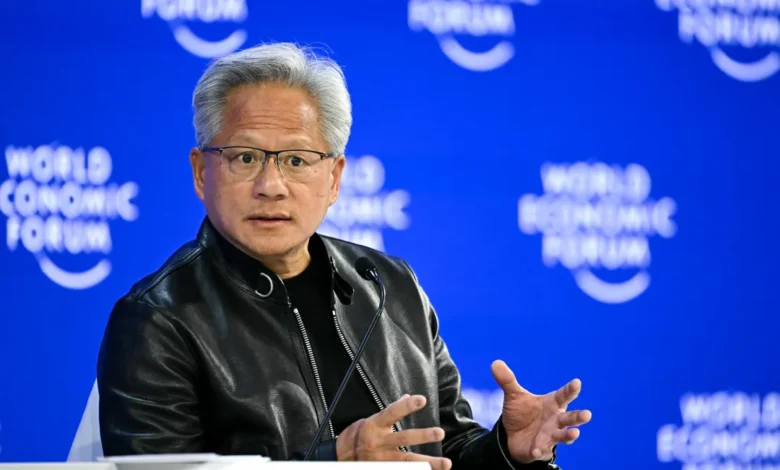
Nvidia finds itself at a profound corporate crossroads, defined concurrently by staggering financial performance and unprecedented executive turbulence. On one side of the ledger, the semiconductor giant continues to ride an extraordinary wave of artificial intelligence-driven demand, reporting robust revenue and issuing fiscal guidance that comfortably surpasses Wall Street expectations. Yet, this operational triumph is overshadowed by intense boardroom drama and high-profile public maneuvering surrounding the recent ouster of former Chief Executive Officer Jensen Huang.
While interim leadership attempts to project calm, competence, and absolute continuity, a vocal coalition of tech industry elites—spearheaded by billionaire entrepreneur Elon Musk—is actively lobbying for Huang’s reinstatement. This dichotomy has created what analysts are describing as a fractured corporate identity: a company posting record-breaking metrics while simultaneously grappling with leadership instability, shifting geopolitical trade restrictions, and mounting investor anxiety.
The unfolding narrative highlights the delicate balance modern mega-cap technology companies must maintain between governance stability, regulatory compliance in an increasingly fractured global market, and the irreplaceable visionary leadership that often underpins their market dominance.
Financial Resilience Amid Leadership Uncertainty
During the latest earnings reporting cycle, Nvidia’s financial foundation appeared entirely unshakable. Interim CEO Colette Kress and the executive leadership team delivered financial guidance that validated the insatiable global appetite for advanced AI hardware. Data center expenditures by hyper-scalers, enterprise software developers, and sovereign AI initiatives continue to generate unprecedented revenue streams for the chipmaker.
Yet, beneath the glossy financial statements, market sentiment remains jittery. Nvidia’s stock price has experienced noticeable downward pressure, signaling that Wall Street views the current earnings reports as a lagging indicator of past momentum rather than a guaranteed roadmap for the future. Investors are acutely aware that these financial results were largely engineered during Huang’s tenure, raising difficult questions regarding the company’s long-term strategic trajectory in a post-Huang era.
The disconnect between operational success and market valuation underscores the unique weight founder-led leadership carries in the technology sector. When a CEO becomes synonymous with a company’s technological moat and market capitalization, replacing them—regardless of interim financial performance—introduces existential uncertainty.
The Campaign to Reinstate Jensen Huang
The corporate boardroom at Nvidia has become the epicenter of a broader ideological and cultural battle within Silicon Valley. In the wake of Jensen Huang’s departure, a concerted grassroots and social media campaign emerged, urging the board of directors to reverse course and bring back the longtime leader.
Prominent technology executives, most notably Elon Musk, have publicly championed Huang’s return, drawing parallels to legendary sports management decisions and arguing that sidelining a visionary of Huang’s caliber is a self-inflicted strategic error. Musk and other high-profile critics have actively circulated petitions and utilized public speaking platforms, such as the DealBook Summit and various technology conferences, to amplify the pressure on Nvidia’s directors.
Crucially, Huang himself has reportedly indicated a willingness to return under the right circumstances, fueling further speculation. However, Nvidia’s current executive leadership and board have responded with swift, unequivocal rejections of these overtures. In official statements, the company has insisted that Huang’s departure is permanent and that interim management is fully equipped to steer the corporate ship.
Observers note that the board’s rigid resistance may stem from a desire to project institutional autonomy. Yielding to public pressure from external billionaires like Musk would severely undermine the authority of Nvidia’s directors and set a perilous precedent for corporate governance at a publicly traded firm. Industry analysts frequently compare the situation to historical governance clashes at other high-profile AI pioneers, such as OpenAI, though with distinct regulatory and structural differences inherent to a publicly listed entity.
Geopolitical Realities: Abandoning the Chinese Market
Compounding the leadership crisis is an evolving and increasingly restrictive geopolitical landscape. During the recent earnings disclosures, interim CEO Colette Kress announced a definitive strategic shift: Nvidia is officially abandoning direct and indirect sales of its H200 artificial intelligence chips to China.
This decision aligns with aggressive new trade policy discussions emanating from Washington. The U.S. government has increasingly focused on closing regulatory loopholes that previously allowed Chinese technology firms to access high-performance American silicon. Historically, these restrictions were circumvented through remote access models, where Chinese entities utilized localized data centers established in secondary jurisdictions, such as Malaysia and other Southeast Asian nations, to tap into Nvidia’s advanced processing power.
By cutting off these secondary access pathways, Nvidia is proactively positioning itself to comply with tightening export controls. However, this strategic pivot carries substantial financial risks. Industry estimates suggest that the broader Chinese ecosystem—inclusive of indirect and remote-access channels—has historically accounted for roughly 20% of Nvidia’s broader business footprint.
While these transactions do not always appear as direct domestic sales on the company’s balance sheets, the termination of these regional pathways could ultimately inflict a noticeable blow to Nvidia’s bottom line. Whether these restrictions remain permanent or experience softening in future political cycles remains a subject of intense speculation among market analysts.
Regulatory Scrutiny and Internal Investigations
The abruptness of Huang’s ouster is widely believed to be tied, at least in part, to mounting regulatory and internal scrutiny regarding compliance with historical export controls. Federal authorities have initiated inquiries to determine the exact knowledge, oversight, and corporate authorization surrounding how advanced Nvidia chips continued to find their way into restricted markets.
As internal investigations unfold, the board of directors faces the complex task of establishing accountability without triggering a catastrophic loss of institutional knowledge. The opaque nature of these ongoing inquiries has fueled rumors and heightened uncertainty, leaving institutional shareholders in the dark regarding the full scope of potential regulatory liabilities.
Governance experts emphasize that the board’s primary objective at this juncture is risk mitigation. Permitting Huang to return while federal and internal investigations remain active could expose the company to heightened legal jeopardy and complicate compliance efforts with the Department of Commerce and other regulatory bodies.
Broader Industry Implications and Future Outlook
The multifaceted crisis at Nvidia serves as a case study in the vulnerabilities of modern tech monopolies. As artificial intelligence hardware continues to represent the geopolitical and economic lifeblood of the global technology sector, companies like Nvidia are no longer merely commercial enterprises; they are critical nodes in international security and economic competition.
The coming months will test the resilience of Nvidia’s corporate governance structure. If the current executive team can sustain high margins, successfully navigate the loss of the Chinese market, and insulate the enterprise from regulatory fallout, the board’s hardline stance against reinstating Huang will be vindicated.
Conversely, should technological innovation stagnate, market share erode, or pressure from major enterprise clients and external billionaires intensify, the board may find its resolve tested. For now, the tech world watches closely as Nvidia attempts to navigate a high-stakes balancing act between past brilliance and an uncertain future.