AWS Unleashes Graviton5 Processors and General Availability of EC2 M9g/M9gd Instances, Marking a New Era for Cloud Compute Performance and Agentic AI.

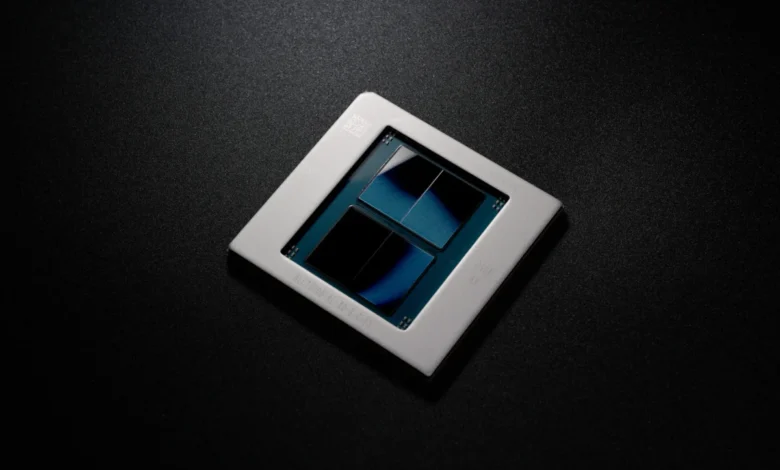
Amazon Web Services (AWS) today announced the general availability of its highly anticipated Amazon EC2 M9g and M9gd instances, powered by the fifth-generation AWS Graviton5 processors. This release, initially previewed at re:Invent 2025, represents a significant leap forward in cloud computing, offering unprecedented compute performance, enhanced price-performance, and superior energy efficiency. The M9gd instances further extend these capabilities by incorporating high-speed, low-latency local NVMe SSD storage, catering to data-intensive workloads.
The Evolution of AWS Graviton: A Decade of Innovation
The journey of AWS Graviton processors began nearly a decade ago, driven by AWS’s strategic vision to deliver customized silicon tailored for cloud workloads. This initiative aimed to optimize performance, cost, and energy efficiency, moving beyond traditional x86 architectures.
- 2018: Graviton1 (A1 instances) – AWS introduced its first ARM-based Graviton processor, designed for scale-out, ARM-native applications. This marked AWS’s initial foray into custom silicon, leveraging the ARM Neoverse N1 core.
- 2020: Graviton2 (M6g, C6g, R6g instances) – A major leap, Graviton2 delivered up to 40% better price-performance over comparable x86 instances. It rapidly gained traction for a wide range of general-purpose, compute-optimized, and memory-optimized workloads.
- 2022: Graviton3 (C7g, M7g, R7g instances) – Building on its predecessors, Graviton3 offered further performance enhancements, particularly for high-performance computing, gaming, and machine learning inference, with up to 25% better performance than Graviton2.
- 2024: Graviton4 (C8g instances) – Graviton4 pushed the boundaries for compute-intensive workloads, delivering substantial gains in core count and memory bandwidth, solidifying AWS’s leadership in ARM-based cloud instances.
- 2025: Graviton5 (M9g, M9gd instances) – Previewed at re:Invent 2025 and now generally available, Graviton5 represents the pinnacle of AWS’s custom silicon development, specifically engineered to meet the burgeoning demands of agentic AI, advanced analytics, and enterprise databases.
This continuous investment over eight years has cultivated a robust ecosystem around Graviton, now powering over 350 instance types and serving more than 120,000 customers globally, from agile startups to multinational enterprises. The widespread adoption underscores the industry’s confidence in ARM-based architectures for diverse cloud environments, supported by a rich ecosystem of independent software vendor (ISV) partners and integrated managed services.
Graviton5: A Technical Deep Dive into Unprecedented Power
The Graviton5 processor stands as the most powerful and energy-efficient chip ever engineered by AWS. It delivers up to 25% better compute performance compared to its Graviton4 predecessor, with specific workload optimizations yielding even greater gains: up to 35% faster performance for web applications, up to 35% for machine learning inference tasks, and up to 30% for database operations.
These significant improvements stem from several key architectural advancements:
- Core Density and Cache: Graviton5 boasts up to 192 cores, a substantial increase that allows for massive parallel processing. Complementing this is a 5x larger L3 cache, drastically reducing data retrieval times and improving overall system responsiveness.
- Memory Bandwidth: As the first CPU in the AWS fleet to support the latest generation of DDR5-8800 memory, Graviton5 instances deliver the fastest memory of any processor instances in the cloud. This high-bandwidth memory is crucial for data-intensive applications and agentic AI workloads that require rapid access to large datasets.
- Inter-Core Latency: With up to 33% lower inter-core latency, Graviton5 ensures faster communication between processor cores, a critical factor for highly threaded applications and complex computational tasks.
- PCIe Gen6 Support: The integration of PCIe Gen6 represents a forward-looking step, providing significantly higher I/O bandwidth for connecting to peripherals, including high-speed local storage and network interfaces. This future-proofs the instances for increasingly demanding data transfer requirements.
Customer Validation: Real-World Performance Gains

The preview period for M9g instances provided critical real-world validation of Graviton5’s capabilities, with early adopters reporting impressive gains across a spectrum of workloads.
- ClickHouse, a leading open-source OLAP database, observed a remarkable 36% performance boost when migrating to M9g instances compared to M8g (Graviton4-powered instances), achieving this with zero code changes. This demonstrates the seamless compatibility and inherent performance advantages of Graviton5 for analytical databases, enabling faster query processing and more efficient data warehousing.
- Honeycomb, a prominent observability platform, conducted a rigorous six-month A/B test of its production observability workloads. Their findings revealed a 36% better throughput per core on Graviton5 compared to Graviton4. For an observability platform processing vast streams of telemetry data, this efficiency translates directly into lower operational costs, improved service responsiveness, and enhanced analytical capabilities.
- HubSpot, a global leader in CRM, deployed M9g instances for its critical MySQL databases. The results were compelling, with query durations dropping by up to 60%. Such a significant reduction in query time has profound implications for user experience, application performance, and the overall efficiency of HubSpot’s vast customer relationship management operations. These testimonials collectively underscore Graviton5’s versatility and its capacity to deliver substantial, tangible benefits across diverse enterprise applications.
Addressing the AI Imperative: Powering Agentic AI
The rise of agentic AI—AI systems capable of autonomous reasoning, code generation, tool utilization, result evaluation, and multi-step task orchestration—is rapidly transforming the technological landscape. These advanced AI workloads are inherently CPU-intensive, demanding high computational power, large caches, and substantial memory bandwidth to function effectively. Graviton5 is purpose-built for this shift. Its 192 cores, 5x larger L3 cache, and high-bandwidth DDR5 memory enable AI agents to spend less time waiting on CPU-bound steps, process more instructions concurrently, manage large numbers of concurrent environments, and keep accelerators (like GPUs for inference) continuously supplied with data.
In a landmark partnership, Meta is deploying Graviton at an unprecedented scale, starting with tens of millions of cores, to support its ambitious agentic AI initiatives. This makes Meta one of the largest Graviton customers globally, a clear testament to Graviton5’s suitability for cutting-edge AI research and production deployments. The robust compute performance and high core density of Graviton5 are critical for the real-time reasoning, complex code generation, and intricate orchestration required by Meta’s advanced AI agents. This collaboration highlights Graviton5’s pivotal role in shaping the future of artificial intelligence.
Beyond Compute: Enhanced Networking, Storage, and Security
The M9g and M9gd instances are not just about raw compute power; they represent a holistic advancement across the entire instance architecture, built on the sixth-generation AWS Nitro System.
- Expanded Bandwidth: Recognizing that modern workloads are increasingly data-driven, AWS has significantly expanded networking and storage bandwidth. M9g and M9gd instances offer up to 15% higher network bandwidth and 20% higher Amazon Elastic Block Store (Amazon EBS) bandwidth on average across sizes. The largest instance sizes see even greater gains, with up to twice the network bandwidth. This ensures faster data movement and improved throughput for applications reliant on high I/O performance.
- Instance Bandwidth Configuration (IBC): A new feature, IBC, allows customers to dynamically adjust the allocation of bandwidth between Amazon EBS and Amazon Virtual Private Cloud (Amazon VPC) networking by up to 25%. This granular control is invaluable for optimizing performance for workloads with specific bandwidth requirements, such as database read/write operations, complex query processing, and extensive logging, allowing users to fine-tune their infrastructure for maximum efficiency.
Pioneering Cloud Security with Nitro Isolation Engine
Security and isolation are paramount in cloud environments. The AWS Nitro System, with its custom hardware and lightweight Nitro Hypervisor, has long been a cornerstone of AWS’s security posture, isolating instances from each other and from AWS operators. With M9g and M9gd instances, AWS is raising the bar even higher through the introduction of the Nitro Isolation Engine.
The Nitro Isolation Engine is a purpose-built enhancement to the Nitro System, designed to enforce instance isolation with mathematical precision. It is responsible for mediating all access to virtual machine memory, CPU register state, and I/O devices through a minimal set of APIs. What truly sets it apart is its pioneering use of formal verification. Formal verification is a rigorous technique that mathematically demonstrates that hardware or software behaves exactly as intended, proving its correctness across all possible scenarios, not just specific test cases. This intensive verification process establishes Nitro as the first formally verified cloud hypervisor in the industry, setting a new, unprecedented standard for mathematically proven cloud security. This innovation provides unparalleled assurances of isolation, critical for highly sensitive workloads and regulatory compliance.

Instance Specifications and Availability
The M9g instances, designed with a 1:4 vCPU to GiB memory ratio, are versatile general-purpose instances suitable for a broad spectrum of workloads. These include application servers, microservices architectures, midsize data stores, gaming servers, caching fleets, containerized applications, large-scale Java applications, code repositories, web applications, and agentic AI deployments.
For workloads demanding high-speed, low-latency local storage, the M9gd instances are ideal. They offer up to 11.4 TB of NVMe SSD storage, delivering 30% higher IOPS and storage performance compared to Graviton4-based M8gd instances. This makes them perfectly suited for general-purpose applications requiring a balance of compute and memory with fast local storage, such as application servers, microservices, gaming servers, midsize key-value data stores, caching fleets, data logging, media processing, batch and log processing, and applications needing temporary storage like caches and scratch files.
Both M9g and M9gd instances are now generally available in multiple sizes, ranging from medium (1 vCPU, 4 GiB memory) to 48xlarge and metal-48xl (192 vCPUs, 768 GiB memory). The metal instance type provides direct access to the underlying server hardware, beneficial for specialized workloads or those requiring deep performance introspection.
Initial availability for M9g and M9gd instances includes key AWS Regions: US East (N. Virginia), US East (Ohio), US West (Oregon), and Europe (Frankfurt). Customers can procure these instances through various purchasing options, including Savings Plans, On-Demand, Spot Instances, Dedicated Instances, or Dedicated Hosts, offering flexibility and cost optimization.
Pathways to Adoption and Future Outlook
AWS provides comprehensive resources to facilitate the migration and optimization of workloads on Graviton-based instances. The AWS Graviton Getting Started Guide offers technical insights for building, running, and optimizing applications. The Graviton Savings Dashboard helps customers track and measure the significant cost savings achieved by leveraging Graviton. Furthermore, AWS Transform, an AI-powered service, automates code transformations for migrating Java applications from x86 to Graviton-based Amazon EC2 instances, handling compatibility analysis, automated recompilation, dependency updates, and validation, thereby significantly easing the migration process.
The general availability of Graviton5-powered M9g and M9gd instances solidifies AWS’s leadership in custom silicon development and its commitment to delivering cutting-edge cloud infrastructure. This release not only empowers customers with superior performance and efficiency but also reinforces the broader industry trend towards ARM-based architectures in the data center. As cloud workloads continue to evolve, particularly with the explosive growth of AI, Graviton5 positions AWS and its customers at the forefront of innovation, driving advancements in performance, cost-effectiveness, and sustainability for the foreseeable future.