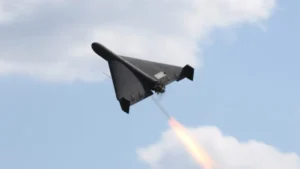
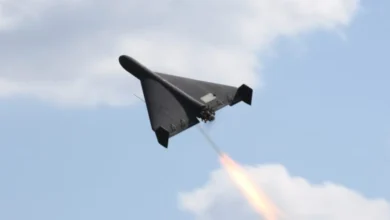
The Rise of Fully Autonomous Combat Drones Marks a New Era in Military Technology and Global Regulation

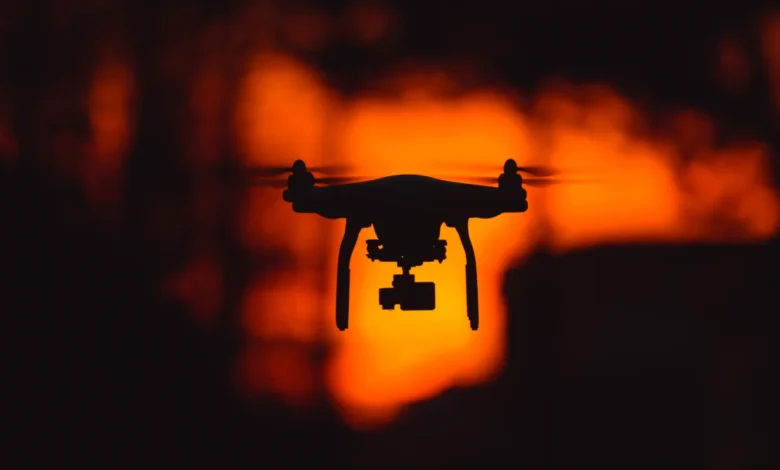
In January 2026, over the frigid, snow-swept expanse of a Swedish military test range, a small, unassuming drone executed a mission that would send ripples through the international defense community. Without a single command issued by a human operator, the aircraft scanned the terrain, processed various heat signatures and metallic profiles, identified an armored engineering vehicle as its primary target, and initiated a terminal strike. This demonstration, conducted under the BAE Systems Bofors Affordable Loitering Modular Ammunition (ALMA) program, represented a significant leap in the integration of Artificial Intelligence (AI) into lethal kinetic operations.
The event, while initially framed within the broader context of defense industrial expansion, has reignited a fierce, high-stakes debate regarding the morality, safety, and strategic necessity of lethal autonomous weapons systems (LAWS). As AI continues to evolve from a supportive tool for human intelligence into an independent decision-maker on the battlefield, the line between automated assistance and fully autonomous lethal force has become increasingly blurred.
The Anatomy of an Autonomous Mission
The ALMA program’s success in Sweden relied on sophisticated edge-computing capabilities provided by Uppsala-based Scaleout Systems. During the January trials, the drone functioned as an autonomous agent capable of detection, classification, and engagement. Unlike traditional remote-piloted aircraft—which rely on constant satellite or radio links to a "human-in-the-loop"—the ALMA unit was designed to operate in high-interference environments where electronic warfare (EW) is prevalent.
By removing the reliance on a data link, the drone effectively neutralized the threat of signal jamming. In modern combat, particularly in theaters like the ongoing conflict in Ukraine, electromagnetic spectrum superiority is often the difference between a successful strike and a lost asset. An autonomous system that can process target data, rank threats based on tactical value, and execute a strike without outside input is significantly more resilient against conventional countermeasures. However, this autonomy comes at a profound technical cost: the system must possess enough onboard intelligence to distinguish between a military vehicle, civilian infrastructure, and non-combatants, a challenge that remains the "holy grail" of AI safety research.
A Chronology of Escalating Autonomy
The transition toward autonomous munitions has been gradual, spanning several decades of military research. To understand the significance of the 2026 Sweden test, one must look at the historical trajectory of loitering munitions:
- 1990s: The emergence of Israel’s Harpy system. Designed to loiter over a battlefield, the Harpy could autonomously detect and attack radar emitters. While groundbreaking, it was limited to specific radio-frequency signatures, not visual target identification.
- 2010s: The proliferation of small, low-cost commercial drones repurposed for military surveillance. These systems introduced the concept of rapid deployment but still required human pilots.
- 2022–2024: The Russia-Ukraine conflict accelerates the use of FPV (First-Person View) drones. While these are human-operated, the demand for "target acquisition assistance" increases as radio interference makes manual control difficult.
- January 2026: BAE Systems Bofors conducts the ALMA Winter Demo in Karlskoga, Sweden. The drone demonstrates a full kill-chain sequence (search, target selection, and neutralization) without human intervention.
- September 2026: Diplomatic fallout occurs in Geneva as 128 states attempt to codify regulations on autonomous weapons, only to reach a watered-down, non-binding agreement.
The Regulatory Dilemma
The timing of the Swedish test coincided with a critical period for global arms control. On September 5, 2026, nations party to the Convention on Certain Conventional Weapons (CCW) convened in Geneva to discuss the regulation of lethal autonomous weapons. The goal was to establish a framework that ensures "meaningful human control" over life-and-death decisions.
However, the outcome of these talks was widely criticized as insufficient. Negotiators from the United States and Russia, two of the world’s most significant military powers, reportedly pushed for late-stage amendments that significantly weakened the proposed constraints. Nicole van Rooijen, a representative of the campaign group Stop Killer Robots, noted that three years of intense diplomatic effort were "substantially diluted" in the final hours of the summit.
The resulting non-binding text leaves a vacuum that private firms and defense contractors are rapidly filling. For the defense industry, the argument is one of necessity: if an adversary deploys autonomous systems that can react at machine speeds, any military restricted by slow human decision-making processes will be at a severe disadvantage. This "arms race" logic is driving a surge in venture capital and government interest in startups like Scaleout Systems, which offer the software stack required to modernize legacy hardware.
Tactical Implications and Ethical Risks
The move toward autonomy presents a paradoxical shift in modern warfare. Proponents argue that AI-guided systems can be more precise than humans, reducing collateral damage by making objective, data-driven decisions that are not influenced by fatigue, fear, or emotional bias. In theory, an AI could be programmed with rigid "rules of engagement" that it would follow more strictly than a stressed soldier in the field.
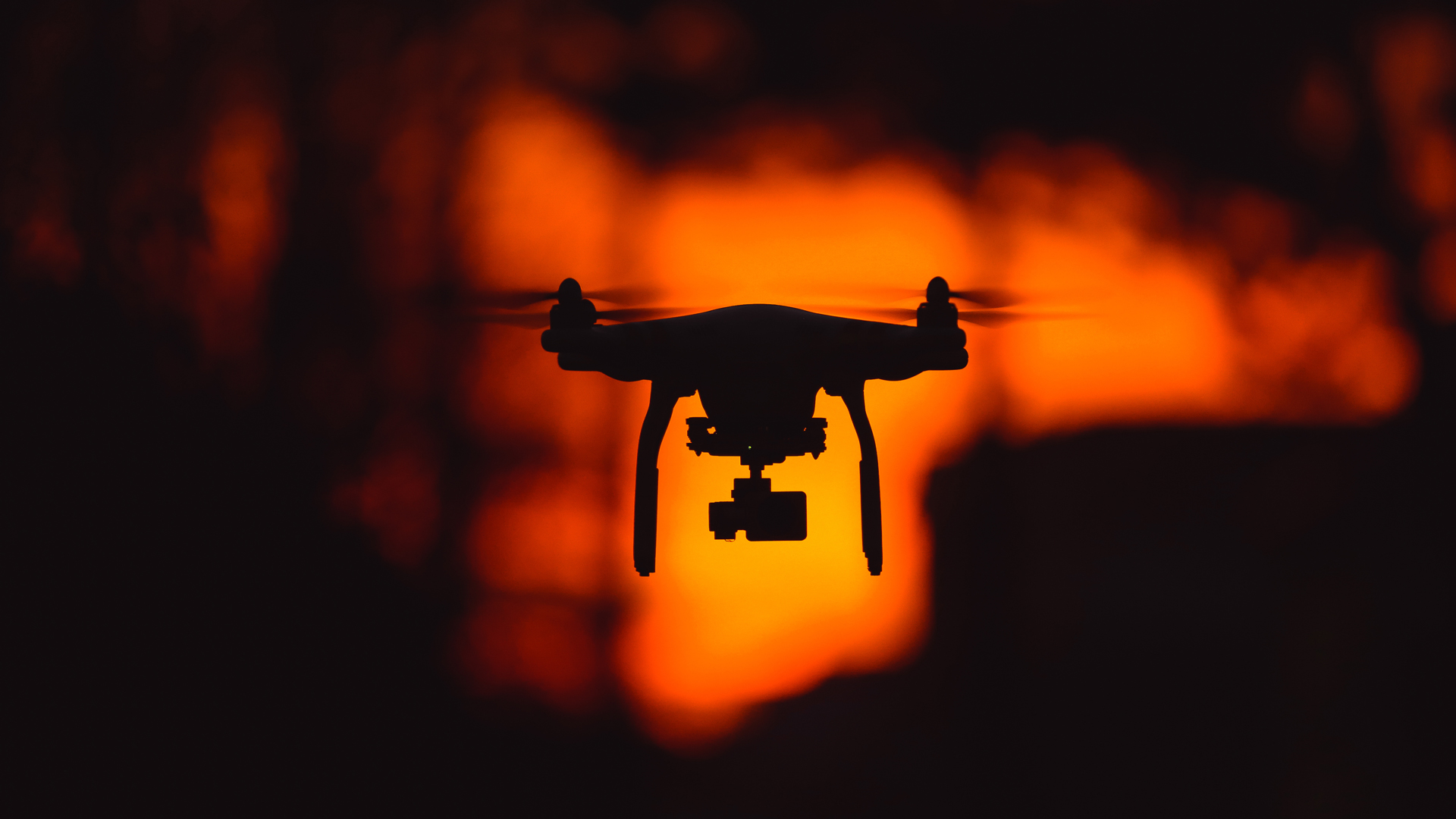
Conversely, the risks of technical failure are substantial. What happens when an AI encounters a scenario it was not trained for? In the event of a "hallucination"—an AI error where the system misidentifies a civilian vehicle as an armored unit—there is no immediate mechanism to recall the weapon. Furthermore, the loss of human oversight shifts the burden of accountability. If an autonomous drone commits a war crime, determining whether the fault lies with the software developer, the military commander who deployed it, or the hardware manufacturer remains a legal gray area that international law has yet to address.
Looking Toward the Future
The Winter Demo 2026 in Karlskoga was, by all accounts, a tactical success. Swedish Defense Minister Pål Jonson used the event to advocate for a more integrated defense ecosystem, emphasizing that the modern military needs "more actors and entrepreneurs." This sentiment reflects a broader European shift toward "dual-use" technology, where startups working in civilian AI are increasingly encouraged to pivot toward defense applications.
As we look toward the remainder of the decade, the integration of autonomous AI into weapon systems appears inevitable. The focus for regulators is now shifting from a total ban on such systems—which many view as unrealistic—to the development of "safe-fail" protocols. These protocols would involve mandatory "black box" logging for AI decisions, rigorous testing standards to ensure target-identification reliability, and the preservation of a "kill switch" that could be activated by human oversight, provided the communication link is not compromised.
The question remains whether the pace of technological development will continue to outstrip the ability of international law to contain it. The drone that flew over the Swedish snow in 2026 was a prototype, but the algorithms that guided it are already being integrated into larger, more lethal platforms. As militaries move closer to the era of "algorithm-led" warfare, the decision to outsource the trigger-pull to a machine may prove to be the most consequential technological choice of the 21st century.
For now, the defense sector remains in a period of aggressive experimentation. Companies like BAE Systems and their partners are signaling that the future of the battlefield is not just faster or more connected, but fundamentally automated. Whether this evolution will lead to a more surgical form of warfare or a more volatile and unpredictable global security landscape remains the central concern for policymakers and ethicists alike as they navigate the post-2026 reality.