The Great Trucking Transformation: Why Major Fleets and Courts Are Rewriting the Rules of American Logistics

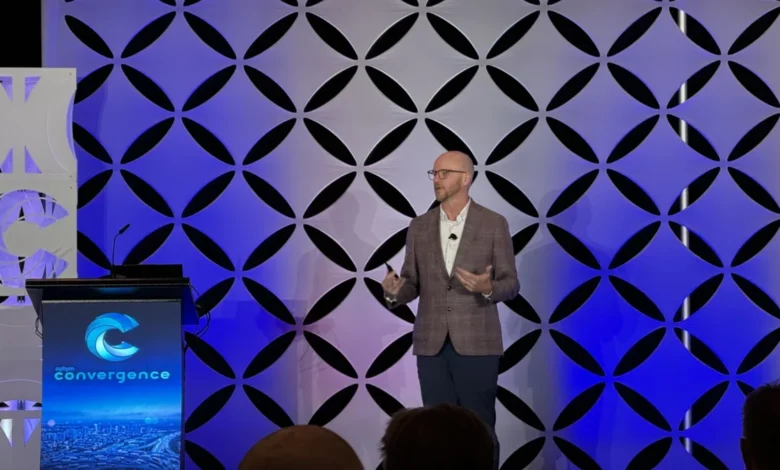
The American trucking industry is undergoing the most profound structural upheaval since federal economic deregulation dismantled route and rate controls in 1980. Speaking at Optym’s Convergence 2026 conference in Frisco, Texas, FreightWaves founder and CEO Craig Fuller told industry leaders that small carriers and brokers hoping for regulatory relief from Washington under the next administration are bound to be disappointed. According to Fuller, the industry’s largest asset-based fleets and powerful trade organizations are no longer pushing to relax oversight; instead, they are actively demanding stricter enforcement and tighter hiring standards as a matter of survival.
This convergence of heightened federal enforcement, landmark judicial rulings, and staggering civil jury verdicts marks a definitive turning point. For decades, the growth of third-party logistics providers (3PLs) and freight brokers injected an unprecedented volume of low-cost capacity into the marketplace. However, as regulatory scrutiny tightens and the liability umbrella expands to envelop every stakeholder in the supply chain, the era of cheap, loosely vetted truck capacity is drawing to a close.
Follow the Money: The Institutional Shift Toward Strict Enforcement
When evaluating the future of federal oversight, market participants frequently question whether a political shift in Washington will roll back compliance mandates or ease the entry of new, independent operators. Fuller cautioned against expecting any such rollback, advising analysts and executives to follow the financial incentives.
Major motor carriers, alongside influential trade groups such as the American Trucking Associations (ATA) and the Truckload Carriers Association (TCA), have arrived at a stark realization. These legacy institutions now view rigorous driver qualification standards and aggressive regulatory enforcement not as bureaucratic red tape, but as an absolute prerequisite for their long-term survival. Because this push for regulatory integrity is backed by the wealthiest and most politically influential players in the transportation sector, it enjoys bipartisan institutional backing that will persist regardless of electoral cycles.
For years, the ATA championed the narrative of a severe, perpetual driver shortage, successfully lobbying Congress for legislation and funding aimed at accelerating driver training programs and lowering entry barriers. In hindsight, Fuller argued, these efforts inadvertently created an environment that threatened the financial stability of the established trucking hierarchy. Executives from previous generations assumed that newly minted drivers would naturally seek employment with major asset-based fleets. They failed to anticipate the meteoric rise of freight brokers, who transformed digital load boards into primary procurement channels and funneled millions of newly qualified operators directly into small, independent carriers.
Historical Evolution of Long-Haul Freight and Brokerage
To understand the current market dynamics, one must examine the shifting geography of American freight. Through the 1980s and 1990s, owning and operating a long-haul dry van or refrigerated truckload carrier remained one of the most consistently lucrative business models in the domestic economy. This golden age began to erode as Class I railroads aggressively captured long-distance freight through highly efficient intermodal rail services.
Concurrently, corporate procurement departments underwent a radical evolution, centralizing transportation buying and implementing strict, automated digital bidding processes. In the early 2000s, freight brokers handled a modest 6% of domestic surface transportation. Today, that figure has exploded to an estimated 30% or more. Fuller memorably described modern freight brokers as the "day traders" of the logistics industry, entities that provide transactional liquidity but fundamentally alter how market cycles function.
Historically, severe economic downturns acted as natural purges for excess capacity. During the 2008 financial crisis, thousands of undercapitalized small carriers rapidly collapsed, unable to service their debt when freight volumes evaporated. Yet, the prolonged freight recession that began in mid-2022 defied historical precedents. Small carriers demonstrated an unexpected resilience, surviving month after month in a depressed rate environment.
The Economics of the Recent Freight Recession
For years, freight analysts struggled to reconcile macroeconomic data with the stubborn persistence of marginal carriers. The fundamental rule of motor carrier survival is deceptively simple: running out of freight and mileage is fatal. However, as long as a small-fleet owner-operator generates enough revenue per mile to cover direct variable costs—such as fuel and maintenance—they can technically defer equipment replacement and personal compensation, sustaining operations for five to ten years without filing formal bankruptcy.
FreightWaves investigations and industry disclosures point to a critical factor that prolonged the post-pandemic downturn: the proliferation of non-domiciled commercial driver’s licenses (CDLs) and illicit labor practices that bypassed safety regulations to operate at drastically reduced labor costs.
Industry testimony underscored the severity of this disparity. Steve Troyer, president of California Midwest Xpress, revealed that brokered freight lanes exceeding 500 miles routinely paid between 25 and 75 cents per mile below his company’s actual operating costs for nearly three and a half years. Analysts from FTR Transportation Intelligence noted that even years after the pandemic demand spike subsided, the market remained over-saturated with roughly 95,000 more for-hire active carriers than existed prior to 2020.
The regulatory battlefield surrounding this issue reached a climax when the U.S. Court of Appeals for the D.C. Circuit stayed the Federal Motor Carrier Safety Administration’s (FMCSA) interim rule regarding non-domiciled CDLs in November 2025. The majority opinion cited agency data indicating that while non-domiciled CDL holders accounted for roughly 5% of all commercial drivers, they were involved in approximately 0.2% of fatal crashes. A dissenting judge argued that the small sample of crashes cited did not reflect a comprehensive accounting. Following administrative reviews, the FMCSA published its definitive final rule on February, which officially took effect on March 16, designed to restore rigorous integrity to commercial licensing standards.
A Triple Crisis: Security, Safety, and Economic Instability
The domestic trucking sector currently contends with what industry observers classify as a simultaneous security, safety, and economic crisis. On the security front, cargo theft has reached such epidemic proportions that major logistics news broadcasts feature active cargo heists on an almost daily basis.
Simultaneously, safety metrics have sparked intense debate. Despite major asset-based carriers investing record amounts in advanced driver training, collision mitigation technology, and late-model equipment, aggregate large-truck crash rates experienced a concerning multi-year upward trajectory. According to the FMCSA’s Large Truck and Bus Crash Facts report, large trucks involved in fatal crashes rose from 1.22 per 100 million vehicle miles traveled in 2010 to 1.76 by 2022. While newer data from the National Highway Traffic Safety Administration (NHTSA) indicates that this rate subsequently eased to 1.58 per 100 million miles in 2024—with 5,340 fatalities recorded in crashes involving large trucks—policymakers remain under intense pressure to enact structural safety reforms. Adding complexity to data analysis, the FMCSA historically does not track comprehensive crash statistics broken down by specific CDL issuance categories.
The Judicial Earthquake: Broker and Shipper Liability
While motor carriers navigate strict operating margins, freight brokers face an entirely unprecedented legal and compliance crisis. For decades, brokers operated under the protective shield of federal preemption, specifically provisions within the Federal Aviation Administration Authorization Act (FAAAA) that shielded them from state-level tort claims regarding ordinary services.
That legal firewall collapsed on May 14, when the U.S. Supreme Court issued a unanimous 9-0 ruling in Montgomery v. Caribe Transport II. The high court determined that state-level negligent-hiring claims brought against freight brokers fall squarely within the statutory safety exception of the FAAA Act, effectively stripping away broad federal preemption and exposing intermediaries to direct civil liability for the carriers they select.
Prior to the decision, Fuller warned industry stakeholders that an adverse ruling would trigger an "extinction event" for underprepared freight brokerages. The fallout was immediate. In July, a Dallas County jury delivered a staggering $604 million verdict in Lipe v. Lupus Superior, finding logistics giant C.H. Robinson 23% liable for a catastrophic 2021 collision in Mississippi that resulted in three fatalities.
Plaintiffs successfully argued a "borrowed-employee" legal theory, convincing the jury that the truck driver was effectively operating as an agent of C.H. Robinson due to their interaction with the broker’s proprietary digital application. Although C.H. Robinson noted that the motor carrier held a satisfactory FMCSA safety rating at the time of dispatch and throughout subsequent federal reviews, the trial court confirmed the verdict in October. With accrued statutory interest, the total financial exposure reportedly climbed to approximately $711 million, leaving the brokerage vulnerable to the vast majority of the judgment.
The FMCSA’s own Safety Measurement System portal explicitly warns supply chain participants that external stakeholders "should not draw conclusions about a carrier’s overall safety condition simply based on the data displayed in this system," as long as a carrier lacks an explicit "Unsatisfactory" rating or an active federal out-of-service order. However, judicial standards are rapidly outpacing regulatory technicalities.
Logistics providers are moving swiftly to mitigate this existential risk. Major brokerages have initiated aggressive internal audits, systematically purging carriers with questionable safety scores from their active capacity networks. Freight brokers can no longer rely blindly on baseline federal operating authority; they must independently vet, verify, and monitor every motor carrier they tender loads to.
The Expanding Liability Umbrella: Shippers and Warehouses in the Crosshairs
The liability shockwaves are no longer restricted to brokers; they are rapidly expanding upstream to engulf major product manufacturers, retail shippers, and commercial warehouse operators.
A prominent example involves ongoing litigation stemming from a catastrophic collision that severely injured Dalilah Coleman, a young girl publicly recognized during a presidential State of the Union address. The amended civil complaint explicitly names major consumer goods manufacturer Unilever and cold storage warehouse operator United States Cold Storage alongside C.H. Robinson, alleging that all parties failed in their duty of care by neglecting to verify the safety credentials and physical identity of the motor carrier dispatched to the loading dock.
Industry surveys and logistics audits suggest that an alarming percentage of outbound freight—estimated by experts at 20% to 30%—leaves warehousing facilities daily without dock personnel performing basic physical checks to verify that the arriving tractor-trailer actually belongs to the authorized motor carrier assigned to the load. What was historically treated as a routine facility security oversight has transformed into a high-stakes litigation hazard.
The legal boundaries of this new liability landscape remain under active judicial review. In a concurring opinion in the Montgomery case joined by Justice Samuel Alito, Justice Brett Kavanaugh observed that freight brokers should maintain viable defenses against state tort actions provided they acted reasonably in selecting transport partners. Meanwhile, C.H. Robinson announced plans to appeal the Dallas verdict, maintaining that its historical safety record demonstrates only one serious accident claim for every 500 million miles logged across its customer base.
Future Outlook: The Return of Asset-Based Dominance
As shippers finalize their transportation procurement strategies and annual contract rate bids, logistics risk management has become a paramount financial priority. Shippers must now price two distinct variables simultaneously: the escalating cost of legal liability associated with third-party carrier selection, and the diminishing availability of cheap, unvetted spot-market capacity.
Industry analysts predict that this ongoing legal and regulatory crackdown will drive a structural migration back toward asset-based motor carriers. Shippers that tender freight directly to established asset fleets—which employ professional drivers directly and maintain end-to-end control over safety protocols—occupy the strongest defensive posture against catastrophic litigation. Ultimately, the confluence of strict licensing rules, aggressive court verdicts, and heightened safety mandates signals the dawn of a new era, one in which asset-based carriers are uniquely positioned to reclaim lost market share, restore pricing discipline, and reassert their dominance over the American supply chain.
Related posts: