Brokerage Industry Rocked by Texas Nuclear Verdict Against C.H. Robinson, Triggering Widespread Stock Sell-Off

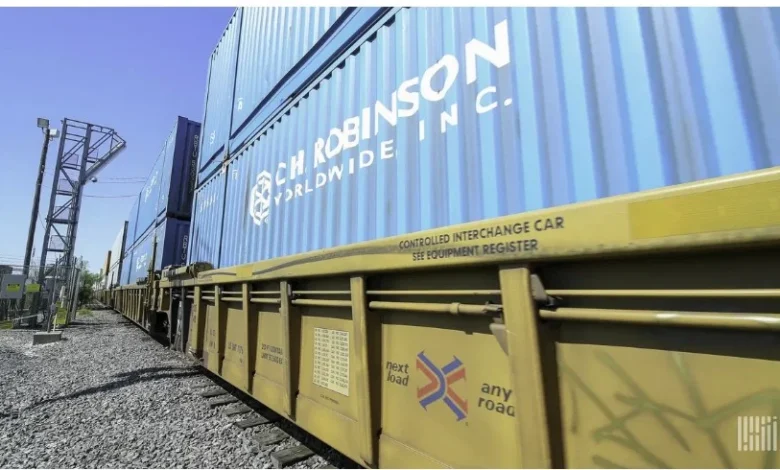
Investors reacted sharply on Friday to a colossal "nuclear verdict" issued by a Texas court against logistics giant C.H. Robinson, sending shockwaves through the third-party logistics (3PL) industry and prompting a significant sell-off of related stocks. The verdict, delivered in the Lipe vs. Lupus Superior case, awarded approximately $604 million in compensatory damages, with C.H. Robinson poised to bear the brunt of the financial responsibility. This landmark decision is widely seen as the first major legal fallout in the post-Montgomery world, referring to the recent Supreme Court ruling that fundamentally altered the landscape of broker liability.
The immediate market response was palpable and severe. C.H. Robinson (NASDAQ: CHRW) experienced a precipitous decline, shedding $19, or 9.25%, to close at $186.50. This dramatic drop occurred just two days after the company had reached a 52-week high of $210.33, underscoring the sudden and unexpected nature of the blow. The reverberations extended to other key players in the 3PL sector. RXO (NYSE: RXO) saw its shares plummet by 7.71%, or $2.14, to $25.63, similarly retracting from its own 52-week peak of $29.90 earlier in the week. Landstar (NYSE: LSTR) also felt the pressure, declining $7.65, or 3.68%, to $200.32, a notable retreat from its 52-week high of $228.46 recorded just last month. This widespread market reaction stood in stark contrast to the broader S&P 500, which posted marginal gains on the same day, highlighting the localized and intense concern within the logistics and transportation sector.
The Verdict Explained: Lipe vs. Lupus Superior
The "nuclear verdict" stems from a tragic 2021 multi-vehicle crash in Texas that claimed the lives of three individuals and the driver of Lupus Superior, the carrier hired by C.H. Robinson to transport a load of Arizona Beverages. The plaintiffs in the Dallas County court system case sued multiple entities and individuals connected to the incident, alleging negligence in various forms. On Thursday, a jury handed down the staggering $604 million compensatory damages award. Crucially, the jury’s findings were structured in a manner that strongly implicates C.H. Robinson as the primary party responsible for payment, a point the company has vehemently contested, stating its firm intention to appeal the decision.
At the heart of the jury’s decision was a critical finding that has sent shivers through the brokerage industry: the determination that the deceased driver of Lupus Superior was effectively an employee of C.H. Robinson. This finding is particularly significant because C.H. Robinson, like most freight brokers, does not directly employ drivers. Instead, it acts as an intermediary, connecting shippers with independent motor carriers. This reclassification of the relationship from an independent contractor to an "effective employee" has profound implications for how brokers might be held liable in future incidents, potentially opening a new avenue for plaintiffs to pursue deeper pockets.
The Montgomery Precedent: A Legal Earthquake
To fully grasp the magnitude of the Lipe vs. Lupus Superior verdict, it is essential to understand the recent legal shift brought about by the U.S. Supreme Court’s unanimous ruling in Montgomery vs. Caribe Transport II. For decades, freight brokers had largely operated under the protective umbrella of the Federal Aviation Administration Authorization Act (F4A). Specifically, a "safety exception" within F4A was frequently invoked by defendants to argue that state-level negligent hiring or selection claims against brokers were preempted by federal law. The rationale was that allowing individual states to impose varying standards of care on brokers would unduly burden interstate commerce and create an inconsistent regulatory patchwork, undermining the F4A’s goal of promoting efficiency in transportation.
C.H. Robinson itself had been an original defendant in the Montgomery case, and both a district court and an appellate court had previously invoked F4A to remove the company from that litigation. This demonstrates how deeply entrenched the F4A preemption defense was within the industry’s legal strategy. However, the Supreme Court’s May ruling in Montgomery unequivocally rejected this interpretation, effectively dismantling the F4A safety exception as a shield against state tort claims. The Court clarified that F4A primarily aimed to deregulate pricing, routes, and services, not to preempt traditional state common law claims regarding safety. This unanimous decision removed a critical layer of protection for 3PLs, leaving them more exposed to negligence lawsuits at the state level. The Lipe vs. Lupus Superior verdict is thus not merely a large award but the first major test and consequence of this seismic legal shift.
A "Domino" Effect? Industry Reactions and Analyst Insights
The immediate aftermath saw research teams scrambling to assess the implications. TD Cowen’s research team encapsulated the prevailing pessimistic sentiment among investors with a stark report titled "The First Domino to Fall?" The report explicitly stated, "C.H. Robinson faces the first post-Montgomery ruling nuclear verdict. We view this as a negative for brokers." This sentiment quickly translated into downgrades and revised outlooks across Wall Street.
Analysts from Bank of America, including Ken Hoexter, provided a crucial tempering perspective, noting that the Lipe vs. Lupus decision is merely the initial step in what promises to be a protracted legal battle. Under a headline proclaiming "process will be long," Bank of America’s report highlighted C.H. Robinson’s official stance: "the verdict is one step in a process, does not determine what CHRW will pay, with any final outcome subject to post-trial motions, appeals, and other proceedings." Indeed, Dallas County Judge Dianne Jones has yet to formally certify the jury award, a procedural step that must occur before the appeals process can fully commence.
Bascome Majors at Stephens echoed the sentiment that while a quick settlement from C.H. Robinson appears unlikely, "even a settlement for $150 to $350 million is clearly bad news for C.H. Robinson." This illustrates the substantial financial risk that the company now faces, even if the final payout is significantly reduced through appeals or negotiation.
The Nuance of Carrier Vetting: A New Standard of Care?
One of the most perplexing aspects of the Lipe vs. Lupus Superior verdict, and a major point of concern for the entire brokerage industry, centers on the safety rating of Lupus Superior. Various reports from Wall Street analysts highlighted that Lupus Superior possessed a "Satisfactory" safety rating from the Federal Motor Carrier Safety Administration (FMCSA) both before the crash and upon subsequent affirmation.
TD Cowen analysts pointed out the inherent dilemma this presents: "(suggests) that CHRW was working with a high-quality carrier (at least in the eyes of FMCSA’s standards)." The jury’s decision, therefore, "puts the company and broker in a difficult position. If a carrier with a satisfactory FMCSA rating is insufficient, what standard should brokers use when determining which carriers are permitted on their platforms?" This question cuts to the core of broker operational practices and risk management. For years, a "Satisfactory" FMCSA rating has been considered the gold standard for vetting carriers, indicating compliance with federal safety regulations. If this is no longer sufficient to protect brokers from liability, the industry faces an unprecedented challenge in defining and implementing new, potentially more stringent, and legally defensible vetting processes.
This concern was presciently articulated in an amicus brief filed by Marc Blubaugh of the Benesch law firm, representing the Transportation Intermediaries Association, prior to the Montgomery decision. Blubaugh warned of the chaotic implications if a broker’s vetting decisions were seen as overriding a federal judgment of a carrier’s safety. He argued, "No valid way exists for a broker to compare and contrast motor carrier safety records in any consistent and meaningful way in order to yield uniform outcomes necessary for efficient interstate commerce. Even given identical facts, judges and juries across the nation’s myriad state and federal jurisdictions would inevitably reach contrary and conflicting conclusions as to the adequacy of a broker’s choice of federally authorized motor carrier." The Lipe verdict appears to validate these very fears, ushering in an era of potential legal ambiguity and heightened due diligence requirements.
"Effectively an Employee": A Deeper Legal Quagmire
Beyond the sheer size of the award, the jury’s finding that the Lupus Superior driver was "effectively an employee" of C.H. Robinson represents a significant legal development. This concept, often tied to doctrines of vicarious liability or respondeat superior, implies that even without a direct employment contract, the broker exerted sufficient control over the carrier’s operations to be held responsible for the carrier’s actions. As analyst Bascome Majors at Stephens noted, "This treatment is what makes the deceased driver’s liability become Robinson’s."
Historically, brokers have meticulously structured their relationships with carriers as independent contractors to limit their liability. This finding challenges that fundamental operational model. If brokers can be deemed "employers" for liability purposes, it could drastically alter the legal exposure of the entire industry. It might necessitate a re-evaluation of contractual agreements, operational oversight, and even the very business model of freight brokerage, potentially pushing companies towards more direct control or increased indemnification clauses. The legal precedent set by this aspect of the verdict could lead to a wave of similar claims in future cases, complicating the established independent contractor framework that underpins much of the logistics sector.
The Road Ahead: Appeals, Settlements, and Long-Term Outlook
The immediate future for C.H. Robinson involves navigating a complex and potentially lengthy legal process. The company’s stated intent to appeal means the verdict is far from final. This process will involve post-trial motions, where C.H. Robinson can argue for a reduction or overturn of the verdict, followed by appeals through higher courts. Such appeals can take years to resolve, during which time the actual financial liability remains uncertain.
Financially, the TD Cowen report indicated that C.H. Robinson is unlikely to take an immediate charge against earnings, "as the case remains subject to appeal." However, it cautioned that such a charge is a distinct possibility in the future, particularly if the appeals process does not yield a favorable outcome. The report drew parallels to trailer manufacturer Wabash National (NYSE: WNC), which took a $342 million charge in 2025 related to its own "nuclear verdict," though Wabash later reduced the size of that charge upon settlement.
Majors and TD Cowen both highlighted C.H. Robinson’s existing insurance structure: a $10 million deductible and a $135 million liability limit. TD Cowen optimistically suggested, "If the company sees favorable developments in the appeals process, estimable losses could fall within C.H. Robinson’s coverage tower, capping losses to the self-insured limit, which would minimize the hit to profits and losses." However, the sheer size of the initial $604 million award far exceeds these limits, suggesting that a significant portion could fall outside of insurance coverage unless drastically reduced. This potential exposure to uninsured losses adds another layer of financial risk for C.H. Robinson and its shareholders.
The broader outlook for the brokerage industry, as articulated by TD Cowen, is grim: "Verdicts are coming faster than most expected. Many pending court cases were waiting for the SCOTUS ruling for more clarity and are now moving forward in the courts. This is… a new reality many brokers will now live with and investors need to assess the risks of more nuclear verdicts in the future." This implies a landscape of heightened litigation risk, potentially leading to increased insurance premiums, more rigorous and costly carrier vetting processes, and a re-evaluation of risk tolerance within the industry.
Broader Implications for the Supply Chain
The Lipe vs. Lupus Superior verdict, coming on the heels of the Montgomery Supreme Court ruling, signals a profound shift in the legal and operational environment for the entire supply chain. The implications extend far beyond C.H. Robinson, threatening to reshape how freight brokers operate, manage risk, and interact with carriers and shippers.
Firstly, the cost of doing business for 3PLs is likely to increase. Higher insurance premiums, coupled with the need for enhanced due diligence in carrier selection, will inevitably translate into higher operational expenses. These costs may ultimately be passed on to shippers, leading to increased freight rates across various industries.
Secondly, the standard of care for vetting carriers is now subject to intense scrutiny. Brokers may need to develop more sophisticated, potentially proprietary, systems to assess carrier safety beyond mere FMCSA ratings. This could involve deeper dives into a carrier’s accident history, driver training programs, maintenance records, and overall safety culture. Smaller carriers, which may lack the resources to meet these potentially elevated standards, could find it harder to secure loads from brokers, potentially leading to consolidation within the carrier market.
Finally, the "effective employee" finding introduces uncertainty into the independent contractor model. If this interpretation gains traction in future cases, brokers might face pressure to exert more direct control over carriers, blurring the lines between broker and carrier, or face reclassification of relationships with significant legal and financial consequences.
The future of litigation against brokers in the wake of the Montgomery decision will undoubtedly take years to fully unfold. The Dallas case of Lipe vs. Lupus Superior is not just a single, isolated incident but the first major tremor in what promises to be a lengthy and transformative process for the multi-billion-dollar freight brokerage industry, demanding adaptive strategies and heightened vigilance from all stakeholders.