The Battle for the Consumer Return: How DoorDash, TikTok Shop, and Industry Giants are Redefining E-Commerce Logistics

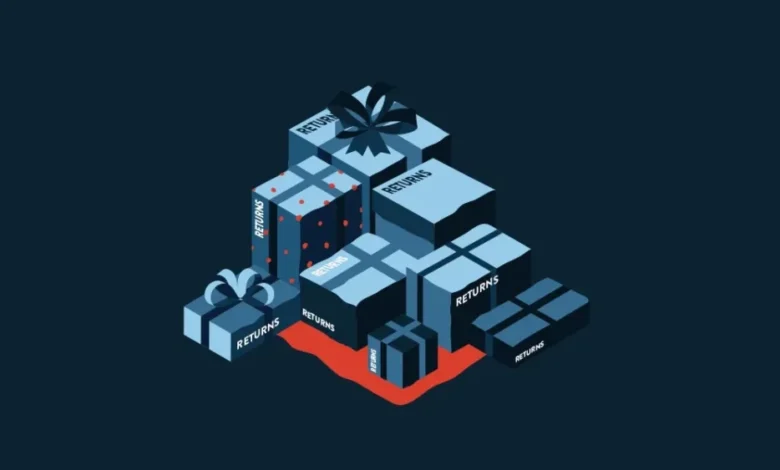
The modern e-commerce landscape has entered a hyper-competitive era where the final click of a purchase is no longer the defining moment of customer loyalty. Instead, the entire retail battleground has shifted backward into the realm of reverse logistics—specifically, the ease, speed, and friction of product returns. As digital marketplaces and hyper-local delivery apps vie for dominance against traditional e-commerce titans, frictionless return policies have emerged as the ultimate conversion tool. Major platforms like DoorDash and TikTok Shop are aggressively overhauling their post-purchase infrastructure, transforming what was once a notoriously painful consumer chore into a streamlined, high-tech amenity designed to lock in long-term customer retention.
This strategic evolution was underscored in late 2024 when DoorDash officially launched a standalone retail returns feature, moving well beyond its traditional footprint of restaurant and grocery delivery. Simultaneously, social commerce powerhouse TikTok Shop announced a strategic integration with Happy Returns, a UPS-owned reverse logistics firm, allowing social media shoppers to drop off unwanted merchandise at thousands of physical brick-and-mortar locations nationwide.
These synchronized maneuvers by two entirely different types of digital platforms signal a fundamental maturation of the American retail market. Consumers, thoroughly conditioned by Amazon’s gold standard of hassle-free returns and rapid-fire shipping, now view a complicated or expensive return process as an immediate dealbreaker. As platforms race to become the definitive "mall in your pocket," mastering the return has become just as critical as mastering the sale.
The Evolution of Reverse Logistics: Convenience at a Premium
For decades, the standard return process for online shopping required consumers to navigate a frustrating gauntlet: printing out a shipping label, locating a cardboard box, packing the item securely, taping it shut, and making a dedicated trip to a post office or a carrier drop-off center. For busy modern consumers, this multi-step chore often resulted in "product hoarding"—where unwanted items sit in closets for weeks or months because the friction of returning them outweighed the value of the refund.
Recognizing this friction point, digital platforms have begun treating reverse logistics as a primary value proposition. DoorDash’s entry into the space highlights a willingness to charge for ultimate convenience while solving the physical labor aspect of the return. Under the DoorDash retail returns model, customers can request a driver to pick up packaged or unpackaged returns directly from their doorstep in as little as 30 minutes. While the service carries a $7.99 convenience fee, it eliminates the need for the consumer to ever leave their home or handle packing materials. Following localized pilot programs, the feature expanded nationwide, positioning DoorDash as a full-service logistics utility rather than a mere food courier.
On the social commerce front, TikTok Shop approached the reverse logistics puzzle through physical accessibility. By integrating with Happy Returns, TikTok merchants who opt into the service can now offer their buyers drop-off capabilities at over 10,000 retail partner locations across the United States. Crucially, Happy Returns specializes in "boxless" and "label-free" returns; customers simply bring the item and a QR code generated on their phone to a drop-off point, where it is instantly scanned, accepted, and queued for consolidation.
These contrasting approaches—DoorDash’s hyper-local home pickup and TikTok Shop’s distributed physical drop-off network—reflect two distinct methodologies aimed at achieving the same objective: neutralizing the anxiety of online purchasing.
Consumer Expectations and the Amazon Effect
The aggressive push toward frictionless returns did not happen in a vacuum. It is the direct downstream consequence of decades of consumer conditioning orchestrated by Amazon. By pioneering zero-friction policies, free shipping, and ubiquitous drop-off partnerships with physical entities like Kohl’s, The UPS Store, and Whole Foods, Amazon established a psychological baseline for the American shopper.
According to retail analytics data from firms like Gartner, consumer behavior has shifted dramatically in response to these policies. A comprehensive Gartner Consumer Omnibus Survey revealed that an impressive 35% of U.S. consumers explicitly cite a favorable and straightforward returns policy as the decisive factor when choosing where to shop online.
Brad Jashinsky, director analyst at Gartner, notes that this consumer perception is foundational to Amazon’s sustained market dominance. The seamless integration of fast delivery, intuitive checkout, and forgiving return policies fosters a deep-seated institutional trust, framing the platform as inherently consumer-friendly.
As alternative marketplaces—ranging from Walmart and Target to rapidly scaling ecosystems like TikTok Shop—fight for market share, they are discovering that matching these baseline logistical expectations is non-negotiable. Retailers that fail to streamline their reverse logistics risk immediate abandonment at the digital checkout cart. Conversely, companies that transparently market their easy-to-use return policies directly on product pages and checkout screens are witnessing measurable uplifts in conversion rates.
Platform Diversification: Beyond Niche Beginnings
The timing of these logistics upgrades coincides with a massive structural expansion by both DoorDash and TikTok Shop into traditional retail categories. Both companies have aggressively shed their origins as pandemic-era novelties or single-category applications, scaling into comprehensive retail ecosystems.
TikTok Shop, which officially launched its e-commerce capabilities in the U.S. in late 2023, has experienced meteoric growth. Industry analysts and market reports indicate that TikTok Shop’s gross merchandise volume (GMV) has already surpassed that of legacy e-commerce platforms like eBay in various global markets. Over the past year, the platform has successfully recruited major mainstream enterprise retailers—including household names like Ulta Beauty and Best Buy—to establish official storefronts within the social app. As high-value brands with established customer expectations move onto TikTok, upgrading the backend infrastructure, including returns, became an existential necessity.
DoorDash has pursued a parallel diversification strategy, deliberately transforming its application from a restaurant delivery service into a digital shopping mall. Through strategic partnerships initiated throughout late 2024, DoorDash integrated major department stores and apparel brands—including Macy’s, Anthropologie, The North Face, Vans, and Timberland—into its retail marketplace. By pairing these high-end partnerships with on-demand delivery and immediate return pickups, DoorDash is attempting to capture impulse retail purchases that traditionally required a physical trip to a suburban shopping center.
Industry Response and Holiday Season Realities
The broader retail sector is actively adapting to this multi-channel reality, particularly during the high-stakes holiday shopping season. Legacy big-box retailers are simultaneously expanding their own marketplace models while refining their supply chain execution to handle unprecedented order and return volumes.
Target, for instance, has heavily emphasized its sophisticated sourcing and supply chain capabilities as part of its seasonal market push. Showcasing its ability to deliver "luxe for less"—exemplified by high-end products like competitively priced cashmere items—Target executives have leaned into decades of supplier partnerships to maintain cost efficiencies without sacrificing product quality.
However, expanding onto multiple digital marketplaces introduces severe operational complexities for third-party brands and merchants. During the fourth-quarter holiday rush, brands frequently juggle storefronts across Amazon, Walmart, Target, Nordstrom, and TikTok simultaneously. In this environment, inventory management and operational synchronization become the dividing line between profitability and logistical chaos.
Monil Kothari, founder of the jewelry brand Haus of Brilliance—which sells across Amazon, Target, and Nordstrom—emphasizes that marketplace success is entirely dependent on robust backend infrastructure.
"Having a really good operational foundation goes such a long way, especially when you have two-day ship times and incredible volume," Kothari explained during a recent industry briefing. "We might have 10 units of a piece on Black Friday—nine might sell, and if your inventory doesn’t update and reflect that it’s now one, it shows another 10 units available. Our systems move very fast."
When inventory systems fail to sync in real-time across multiple platforms during peak sales events, merchants face a cascading failure of fulfillment delays, canceled orders, and subsequent returns—placing an immense strain on reverse logistics pipelines.
Economic and Strategic Implications
The strategic pivot toward advanced return solutions carries profound economic implications for the retail sector. While consumer-facing benefits are clear—reduced friction, increased trust, and ultimate convenience—the operational costs absorbed by merchants and logistics providers are substantial.
Reverse logistics has historically been the most expensive and least efficient segment of the supply chain. Processing, inspecting, restocking, or liquidating returned merchandise costs retailers billions of dollars annually, with apparel and online retail suffering the highest return rates, often hovering between 20% and 30%.
When platforms like DoorDash introduce high-touch services such as 30-minute doorstep pickups, or when networks like Happy Returns expand physical drop-off footprints, the labor and transportation costs must be absorbed somewhere within the ecosystem. Whether funded by consumer convenience fees, merchant subscription models, or subsidized by platform operators eager to capture market share, these costs represent a structural shift in how retail infrastructure operates.
Ultimately, the ongoing transformation of returns signals that the future of e-commerce will not be won solely on the speed of outbound delivery. As digital marketplaces crowd into the daily lives of consumers, the ultimate winner will be determined by how painlessly they can untangle the reverse journey—turning the dreaded return into a seamless, brand-building touchpoint.
Related posts: