Walmart Puts Shoppers in the Driver Seat as Artificial Intelligence Agents Transform Ecommerce

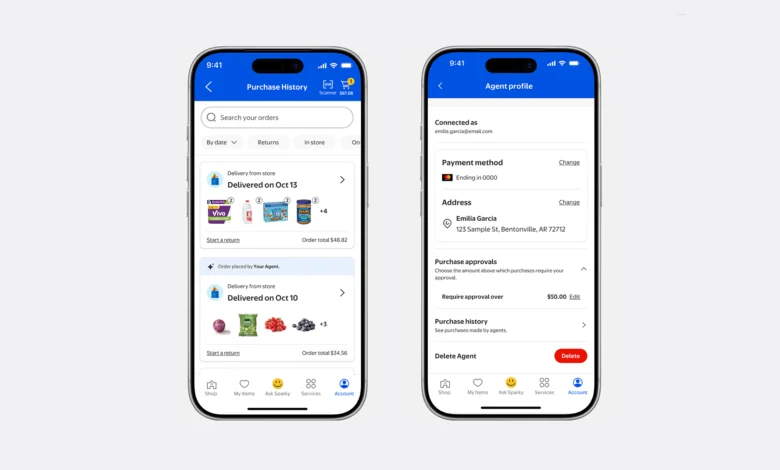
The retail landscape is undergoing a profound structural shift as Walmart moves to formalize the role of artificial intelligence agents in the consumer shopping journey. On October 21, 2026, the retail giant unveiled a comprehensive strategy to manage agentic commerce, introducing a suite of oversight tools that allow customers to retain control over purchases initiated by AI assistants. This development represents a critical inflection point for the industry, as retailers move beyond experimental chatbot interfaces toward autonomous systems capable of executing transactions on behalf of users. By implementing dedicated agent profiles and a new technical gateway, Walmart is attempting to reconcile the efficiency of autonomous shopping with the fundamental consumer demand for security, transparency, and fiscal oversight.
The shift toward agentic commerce—where AI systems perform tasks, make decisions, and complete purchases with minimal human intervention—has been building for years. Walmart’s recent announcement serves as a strategic response to the growing capability of large language models (LLMs) like those powering OpenAI’s ChatGPT, Google’s Gemini, and Meta’s Muse. While these tools have demonstrated a remarkable ability to assist with product discovery, they have historically lacked a structured environment within retail ecosystems to operate safely and predictably.
The Evolution of AI in Retail: A Timeline
The integration of AI into the Walmart shopping experience has been a multi-year effort, moving from simple predictive analytics to generative agents.
- Early 2025: Walmart accelerates its investment in “agentic commerce,” focusing on how AI can move from answering questions to acting as a procurement proxy for consumers.
- May 2026: Walmart deepens its technical infrastructure with the expansion of its proprietary AI agent, "Sparky," and formalizes integrations with third-party LLMs to handle complex customer queries.
- August 2026: Market research from industry analysts highlights a significant trust gap; consumer surveys reveal that while interest in AI assistance is high, the desire for granular control over spending remains the primary barrier to adoption.
- October 2026: Walmart announces the launch of "Agent Profiles" and the "Agent Gateway," setting a new industry standard for how retailers govern autonomous purchasing agents.
Balancing Autonomy and Accountability: The Agent Profiles
The core of Walmart’s new strategy is the introduction of Agent Profiles. Previously, if a consumer used an AI to facilitate a purchase, the transaction often appeared in their account history without clear attribution, making it difficult for the user to manage budgets or audit the agent’s performance.
Under the new system, AI agents will operate through distinct profiles linked to a primary customer account. This architecture provides three primary layers of control:
- Approval Workflows: Users can mandate that every transaction proposed by an AI agent be reviewed and authorized by the human owner before the payment is processed.
- Dynamic Spending Limits: Shoppers can establish pre-set financial boundaries, such as $50, $100, or $200, allowing the agent to execute orders within these parameters without requiring constant manual intervention.
- Auditability: A dedicated interface will allow users to clearly distinguish between human-initiated purchases and agent-led orders, providing transparency into the decision-making process of the AI.
Daniel Danker, Walmart’s executive vice president of AI acceleration, product and design, emphasized that these guardrails are not merely technical features but trust-building measures. The goal is to minimize the friction of shopping while mitigating the risks associated with unauthorized or erroneous purchases. By restricting an agent’s access—specifically barring them from modifying payment methods or accessing sensitive financial data—Walmart is addressing the top concerns raised by consumers in recent industry studies.
Technical Foundations: The Agent Gateway and MCP
Beyond the user-facing profiles, Walmart is addressing the technical inefficiencies of current AI shopping methods. Today, most AI agents navigate retail websites by "scraping" or interacting with interfaces designed for human eyes. This process is frequently slow, error-prone, and susceptible to disruptions if a website layout changes.
To solve this, Walmart is developing the "Agent Gateway," utilizing the Model Context Protocol (MCP). Developed by Anthropic, the MCP acts as a universal language for AI systems to communicate with external data and tools. By adopting this standard, Walmart enables agents to interact directly with its product catalog, inventory management systems, and order tracking services without the "brittle" interface of a standard web browser.
This technical shift offers a more reliable "discovery-to-delivery" pipeline. It also creates a privacy-first environment; because the agent communicates via the gateway, it can identify a user’s preferred brand of detergent or coffee without having to access the user’s entire historical purchase data or personal profile. This compartmentalization is essential for maintaining consumer privacy in an era of data-heavy AI operations.

Implications for the Walmart Marketplace
The transition to agentic commerce has significant ripple effects for the millions of third-party sellers on the Walmart Marketplace. Historically, product discovery was driven by search engine optimization (SEO) and paid advertising. In an agentic future, discovery will be driven by the "intent" of the consumer as interpreted by an AI.
As evidenced by early data from ChatGPT interactions—where categories like protein supplements and vitamins consistently topped the charts—AI agents often influence the customer journey during the consideration phase. This suggests that the future of retail competition will be won by brands that provide structured, high-quality, and machine-readable product data.
Manish Joneja, senior vice president of Walmart Global Marketplace, noted that this environment raises the stakes for sellers. To be "visible" to an AI, a product listing must be perfect. AI agents rely on specific, accurate data regarding availability, pricing, and shipping logistics to make recommendations. Consequently, Walmart is working closely with its sellers to upgrade their catalog quality, ensuring that even smaller brands can compete effectively by becoming "AI-ready."
The Consumer Trust Gap: A Reality Check
Despite the technological advancements, the industry faces a significant hurdle: consumer skepticism. According to research from NMI, only 11% of consumers have utilized AI to complete a transaction, and a mere 10% would consider granting an AI full, unchecked control over their spending.
Walmart’s strategy is a direct acknowledgement of these statistics. By requiring human approval by default and implementing strict "no-access" rules for payment credentials, the company is attempting to move the needle on adoption. The logic is clear: if the risk of financial error is eliminated or significantly reduced, consumers will be more likely to delegate the mundane aspects of shopping—such as replenishment of household staples—to their AI agents.
Market Position and Competitive Outlook
Walmart’s aggressive stance on AI governance underscores its position as a leader in the digital retail space. Currently ranked No. 2 in the Digital Commerce 360 Top 1000 database, Walmart is leveraging its massive scale to set the rules of the road for the rest of the industry.
The integration of these tools into the broader ecosystem of Meta’s Muse, OpenAI’s ChatGPT, and Google’s Gemini positions Walmart as a preferred partner for tech firms looking to monetize their AI models through commerce. By providing a safe, predictable, and high-quality environment for agents to operate, Walmart is effectively positioning its marketplace as the default "backend" for the next generation of consumer AI.
Conclusion: The Future of Autonomous Retail
The introduction of Agent Profiles and the Agent Gateway marks the beginning of a new chapter in retail history. As AI evolves from a search tool to a transactional actor, the ability to maintain the "human-in-the-loop" will remain the defining feature of successful retail platforms.
Walmart’s initiative is not merely about implementing new software; it is a fundamental redesign of the retailer-customer contract. By building robust, transparent, and secure frameworks for AI interaction, the company is attempting to ensure that as commerce becomes increasingly autonomous, it remains inherently trustworthy. For the consumer, this means the potential for a more personalized, efficient, and proactive shopping experience. For the retail industry, it signals a transition into an era where the primary customer is increasingly likely to be an algorithm, and the primary challenge is ensuring that algorithm acts in the best interest of the user.
As the rollout continues in the coming months, the success of this model will likely serve as a blueprint for global ecommerce, dictating how brands, retailers, and AI developers collaborate in the years to come. The goal is no longer just to sell products to people, but to provide a digital infrastructure that allows people to use AI to achieve their objectives with speed, precision, and total peace of mind.
Related posts: