Amazon Expands Shop Direct to Redefine the Digital Marketplace Through Third-Party Integration and AI-Driven Commerce

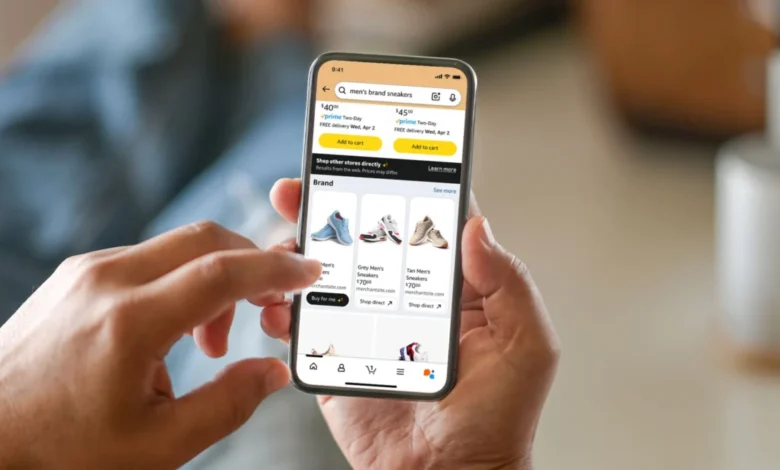
Amazon has officially announced a significant expansion of its Shop Direct program, a strategic initiative designed to integrate third-party inventory directly into the Amazon ecosystem. By facilitating seamless connections between U.S. customers and external merchant websites, the retail giant is effectively evolving from a closed marketplace into a comprehensive navigation hub for the broader digital economy. This expansion is supported by new technical integrations with major product feed providers, including Feedonomics, Salsify, and CedCommerce, allowing Amazon to ingest real-time data regarding pricing, availability, and product catalogs from retailers who do not sell their goods on the Amazon platform.
The move marks a departure from Amazon’s traditional model, which has historically prioritized keeping customers within its own "walled garden." By incorporating external product feeds, Amazon is positioning its search engine and its generative AI shopping assistant, Rufus, as the primary starting point for consumer discovery, regardless of whether the final transaction occurs on an Amazon-owned property or a third-party site.
A Chronology of Strategic Evolution
The genesis of this shift can be traced back to early 2025, when Amazon began quietly beta-testing a feature that redirected users to external brand websites when a requested product was unavailable in its own warehouses. This pilot program served as a proof-of-concept for the current, more robust Shop Direct initiative. By providing customers with a way to view product specifications, pricing, and shipping logistics on external sites, Amazon sought to reduce bounce rates and maintain user engagement, even when the company lacked the inventory to fulfill the request itself.
Throughout 2025, the program underwent iterative testing, focusing on user experience markers such as transparency and trust. Amazon implemented clear notifications to inform users when they were being transitioned to an external domain, ensuring that shoppers did not mistakenly believe they were completing a purchase through Amazon’s fulfillment network. Following the success of these trials, the company began scaling the program, leading to this week’s announcement of automated feed support.
The integration of Feedonomics, Salsify, and CedCommerce represents the infrastructure layer of this expansion. These companies specialize in product information management (PIM) and feed optimization, serving as the bridge between thousands of independent brands and major e-commerce marketplaces. By standardizing these feeds, Amazon has effectively lowered the barrier to entry for merchants, enabling them to surface their inventory within Amazon’s search results with minimal technical friction.
The Rise of Autonomous Commerce: Buy for Me
Central to this expansion is the deployment of "Buy for Me," an AI-powered agent designed to streamline the checkout process on third-party websites. When a user identifies a product through Amazon that is hosted on an external site, the AI agent can, with user authorization, handle the mechanical aspects of the purchase.

The process is designed for convenience: the AI agent captures the necessary transaction details—such as shipping addresses, tax calculations, and payment information stored in the user’s Amazon account—and executes the checkout on the merchant’s behalf. The user acts as the final validator, confirming the order details before the transaction is finalized.
This functionality is integrated into the user’s centralized "Your Orders" dashboard. By bringing the management of external purchases into a unified interface, Amazon is attempting to solve the fragmentation of modern online shopping. Consumers often juggle multiple accounts across various niche retailers; by providing a consolidated tracking experience, Amazon is adding value to the customer journey even when the underlying transaction is external.
Data Implications and Competitive Strategy
From an analytical perspective, the expansion of Shop Direct provides Amazon with an unprecedented window into consumer behavior outside of its own marketplace. While the primary goal of the program is to capture consumer intent at the start of the shopping journey, the secondary benefit is data accumulation.
By monitoring which external products are frequently searched for, which price points drive click-throughs, and which product categories are underrepresented in Amazon’s own inventory, the company gains a roadmap for future expansion. These insights could be used to identify potential candidates for the "Buy with Prime" program—a service that allows merchants to use Amazon’s logistics and checkout infrastructure—or to inform Amazon’s own private-label strategy.
Industry analysts note that this strategy is a double-edged sword for merchants. On one hand, inclusion in Amazon’s search results provides exposure to the platform’s massive, high-intent user base, which could significantly increase traffic for mid-sized and boutique brands. On the other hand, participating in the program increases a brand’s dependency on Amazon’s algorithms. If Amazon determines that a particular third-party product is high-performing, it may choose to stock that item itself, potentially creating a conflict of interest for the original merchant.
Addressing the "Starting Point" Mandate
Amazon’s core objective is to remain the default "starting point" for product search. With the rise of vertical-specific search engines and the increasing prevalence of social media-driven commerce (such as TikTok Shop or Instagram Shopping), Amazon has faced pressure to prove its relevance as a discovery engine.
By incorporating third-party inventory, Amazon is essentially "un-bundling" its marketplace. It is no longer just a store; it is an index of the entire retail web. This mirrors the trajectory of search giants like Google, which evolved from simple keyword matching to providing rich, integrated experiences that keep users within their ecosystem as long as possible.

Official Stance and Market Reaction
Amazon has framed this initiative as a "customer-first" approach. In official statements, the company emphasizes that its mission is to ensure that customers can find what they are looking for, even if that product isn’t currently sitting in an Amazon fulfillment center. The emphasis on "Buy for Me" is similarly positioned as a tool to reduce the friction of online shopping, particularly on mobile devices where entering shipping and billing information across multiple sites can be cumbersome.
Market reaction has been cautiously optimistic. While retailers are generally eager for the traffic boost that Amazon can provide, there is a lingering concern regarding the platform’s potential to cannibalize sales or squeeze margins. However, for many smaller retailers, the benefit of being "discoverable" on the world’s largest e-commerce site outweighs the risk of data exposure.
Looking Ahead: The Future of the Merchant Portal
The next phase of the program involves the launch of an Amazon-managed merchant portal. This portal will allow brands to manage their product feeds directly with Amazon, bypassing the need for third-party intermediaries. This move is expected to accelerate the onboarding of brands and provide Amazon with even more granular control over the quality and consistency of the product data surfaced in its search results.
As the retail landscape continues to shift toward a hybrid model of decentralized commerce and centralized discovery, Amazon’s role as the "great aggregator" appears to be strengthening. Whether this model proves sustainable for the independent retail ecosystem remains to be seen. However, with the full rollout of Shop Direct to U.S. customers across web and mobile platforms, the integration of third-party goods is no longer an experiment—it is a central pillar of Amazon’s future.
For the modern consumer, the distinction between "buying on Amazon" and "buying through Amazon" is becoming increasingly blurred. As AI agents like Rufus and "Buy for Me" become more sophisticated, the technical barriers between websites will continue to dissolve, potentially leading to a more unified, if centralized, online shopping experience. Whether this consolidation will lead to a healthier, more competitive retail market or further entrench Amazon’s dominance is the primary question that will define the next decade of digital commerce.