Tapestry integrates Coach and Kate Spade into Google’s AI shopping ecosystem to capture consumers at the point of inspiration

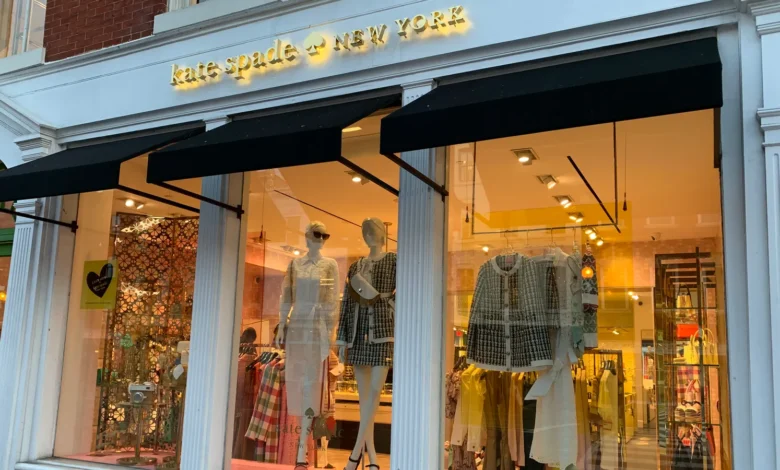
Tapestry, the parent company behind luxury and lifestyle powerhouses Coach and Kate Spade, has officially expanded its digital footprint by integrating its product inventory into Google’s AI-powered shopping ecosystem. This strategic move allows consumers to browse, discover, and purchase items from both brands directly through Google’s AI-assisted platforms, including the Gemini app and Google’s "AI Mode" shopping interface. By leveraging the search giant’s advanced artificial intelligence capabilities, Tapestry aims to reduce friction in the consumer purchasing journey, meeting shoppers exactly where they are—whether they are searching for inspiration, researching product details, or completing a transaction.
This development marks a significant shift in how luxury retailers approach digital discovery. As consumer behavior continues to migrate toward conversational search and generative AI tools, legacy brands are increasingly pressured to move beyond traditional e-commerce silos. For Tapestry, the integration represents a proactive effort to remain relevant in an era where the first point of contact for a fashion purchase is increasingly a chatbot or an AI-driven search result rather than a brand-owned homepage.
The Strategic Rationale: Meeting the Modern Consumer
The decision to partner with Google is rooted in a fundamental shift in retail strategy: the desire to capture "inspiration-driven" commerce. According to Joanne Crevoiserat, CEO of Tapestry, the primary goal is to ensure that the company’s brands are present whenever a consumer feels the urge to shop. "Our goal is for shoppers to find and engage with our brands at the moment when inspiration strikes, whether it be when a consumer passes by one of our stores, peruses our websites, or chats with AI," Crevoiserat noted in a recent statement regarding the partnership.
This philosophy acknowledges that the traditional linear path to purchase—moving from brand awareness to website visit to checkout—has been disrupted. By embedding its catalog into Google’s ecosystem, Tapestry is effectively treating the search engine as a virtual storefront. This is particularly relevant for the Coach and Kate Spade demographics, which consist of style-conscious consumers who frequently use Google to compare products, look for styling advice, or check availability.
Google’s Evolving AI Shopping Landscape
To understand the significance of this move, one must examine the rapid evolution of Google’s retail strategy. Over the past 24 months, Google has aggressively pivoted its search engine toward a shopping-centric AI experience. Last year, the company debuted "AI Mode," a sophisticated interface that merges the capabilities of its Gemini large language model with its vast Shopping Graph.
This tool is designed to act as a personal shopping assistant. It does not merely display a list of links; it analyzes product attributes, compares prices across thousands of retailers, facilitates virtual try-ons using augmented reality, and provides personalized recommendations based on the user’s specific intent. By integrating into this environment, Tapestry is positioning Coach and Kate Spade products to be prioritized in these AI-generated shopping sessions, providing a seamless transition from query to purchase.
A Growing Trend Among Retail Giants
Tapestry is by no means the first major retailer to recognize the potential of Google’s AI. In fact, this collaboration is part of a broader industry trend. Several retail giants have already integrated their inventories into Google’s AI infrastructure to maintain their competitive edge.
Ulta Beauty, for instance, recently enabled its full product assortment within Google’s AI Mode. This integration allows beauty shoppers to query the platform for specific makeup solutions, compare product ingredients, and complete purchases without leaving the Google interface. Similarly, Walmart—a long-standing partner of Google—has fully enabled its Walmart and Sam’s Club inventory within the Gemini app. This allows users to build grocery lists, receive nutritional suggestions, and finalize orders through the AI assistant.
For these retailers, the bet is clear: if they do not provide their data to the AI platforms that consumers are using, they risk becoming invisible in the modern search funnel.
Data Privacy and the "Disintermediation" Debate
The integration of retail inventory into third-party AI platforms has sparked a rigorous debate among digital commerce analysts. Some experts warn that by outsourcing the discovery process to Google, retailers risk "disintermediation"—a process where the retailer loses direct contact with the customer. If the shopping journey happens entirely within the Google ecosystem, the brand may lose access to crucial first-party data, consumer behavior insights, and the opportunity to build long-term brand loyalty through owned channels.
However, Tapestry has moved to assuage these concerns. Yang Lu, Chief Information and Data Officer at Tapestry, emphasized in communication with industry analysts that the partnership does not compromise the brand’s data integrity. Because the transaction ultimately occurs through the brand’s existing order management infrastructure, Tapestry receives the same transactional data as it would if the customer had visited the brand’s proprietary e-commerce site.
"Tapestry’s launch of UCP [Unified Commerce Platform] is about staying close to the consumer and building an infrastructure that is flexible and ready for wherever our customers are discovering and shopping for products," Lu stated. This suggests that for Tapestry, the partnership is not a surrender of customer ownership but a necessary expansion of its reach.
Financial Context: A Look at Recent Performance
This AI initiative arrives at a pivotal moment for Tapestry, as the company navigates a complex retail environment. According to its fiscal 2026 fourth-quarter financial results, the company demonstrated a strong recovery, with revenue rising 9% year-over-year to $1.9 billion.

The performance, however, remains bifurcated across its portfolio:
- Coach: The flagship brand continues to show impressive momentum, with quarterly revenue jumping 15% to $1.6 billion. This growth is often attributed to successful marketing campaigns and a revitalization of its heritage product lines.
- Kate Spade: The brand reported a 7% decline in revenue, settling at $235 million for the quarter.
For the leadership team, the Google partnership is a logical lever to pull for the Kate Spade brand. By increasing visibility in AI-driven search, the company hopes to reverse recent sales trends by making the brand more accessible to younger, digitally native shoppers who frequently use AI tools to discover new fashion trends.
The Road Ahead: Implications for Retail
The implications of Tapestry’s move extend far beyond the luxury sector. As generative AI becomes the standard interface for internet navigation, the role of the traditional search engine is shifting from a directory to an agent.
For retail brands, the challenge of the next decade will be "AI optimization." Just as brands once competed for high rankings in organic search results (SEO), they will now compete for prominence in AI-generated product recommendations. This requires brands to ensure their product data—descriptions, images, pricing, and availability—is structured perfectly to be ingested and interpreted by AI models.
Furthermore, this move suggests a transition toward "headless commerce," where the brand experience is decoupled from the physical website and distributed across any platform where the consumer happens to be. Whether it is a voice-activated smart speaker, a social media chatbot, or a generative AI search engine, the ability to transact without forcing the user to navigate to a traditional URL will become a hallmark of successful retail.
In conclusion, Tapestry’s integration into Google’s AI ecosystem is a calculated move to future-proof its sales channels. By aligning with one of the most powerful digital platforms in the world, the company is ensuring that its brands remain at the forefront of the consumer’s digital life. As the lines between search, social media, and commerce continue to blur, Tapestry’s strategy underscores a broader truth: in the modern economy, the most successful brands will be those that can seamlessly manifest their products wherever the consumer’s curiosity takes them. Whether this leads to a sustained boost in revenue for Kate Spade or serves to further solidify Coach’s dominance, it marks a permanent shift in the relationship between luxury fashion and the machines that help us find it.