Netflix Series Minimum Wage Brings Indie TikTok and YouTube Comedy to the Streaming Mainstream

The transition of independent digital creators from viral web platforms to traditional television and streaming networks has undergone a significant transformation over the past decade. During the 2010s, critically acclaimed comedy web series such as Broad City and Insecure successfully made the monumental leap from independent internet distribution to established cable television networks and major streaming platforms. However, in the contemporary era dominated by a few massive streaming conglomerates, live-action indie creators face unprecedented hurdles in securing greenlights for their serialized projects. The pathway from viral short-form content to long-form episodic television has narrowed considerably, making major studio pickups a rarity in the modern digital media ecosystem.
It is against this backdrop of industry consolidation that the workplace mockumentary series Minimum Wage emerged. Produced by the teen and young-adult-oriented production company American High, the series successfully secured a distribution deal with Netflix. Built upon a foundation of viral internet sketches, TikTok shorts, and YouTube videos that collectively amassed millions of views, Minimum Wage attempts to bridge the gap between algorithmic short-form entertainment and traditional streaming comedy. The series follows a group of eccentric, dimwitted, and largely high-school-aged employees at a struggling pizzeria who actively avoid performing their job duties efficiently. While the production retains the frantic, high-energy pacing of its viral origins, its overall packaging reflects the growing pains inherent in scaling up digital-first comedy for a global streaming audience.
Welcome to Slice Club: The Setting and Premise
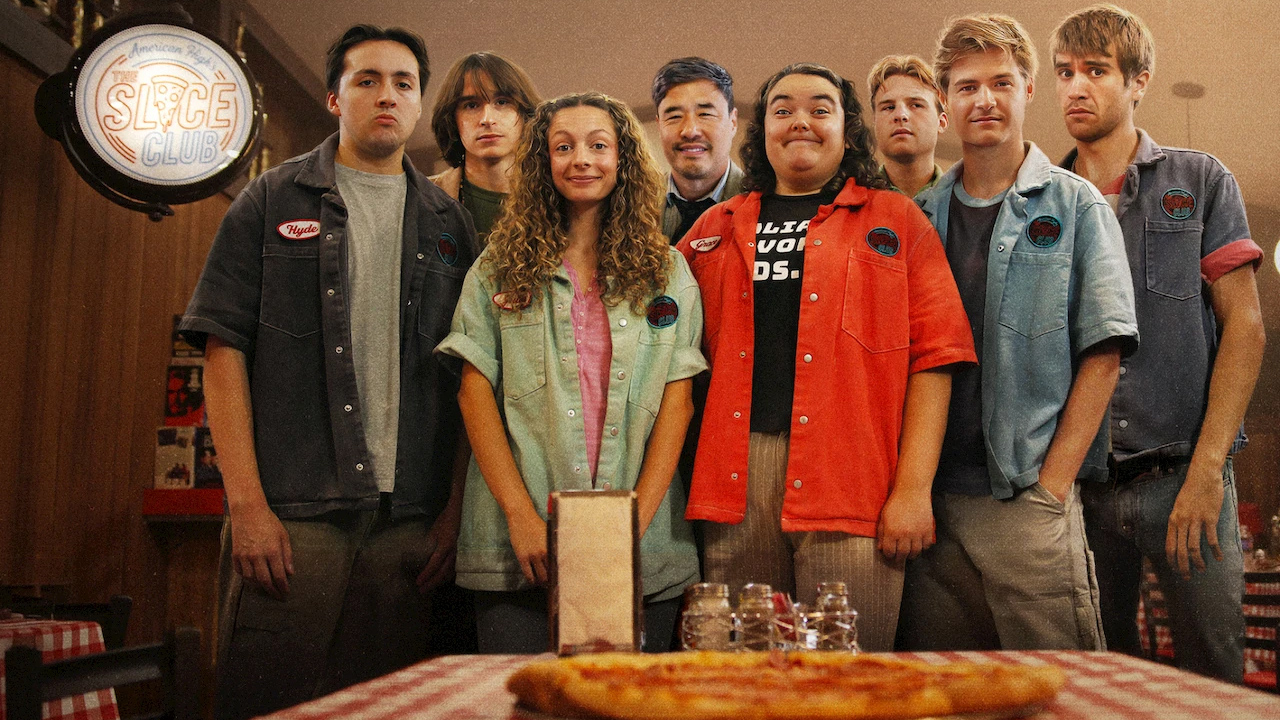
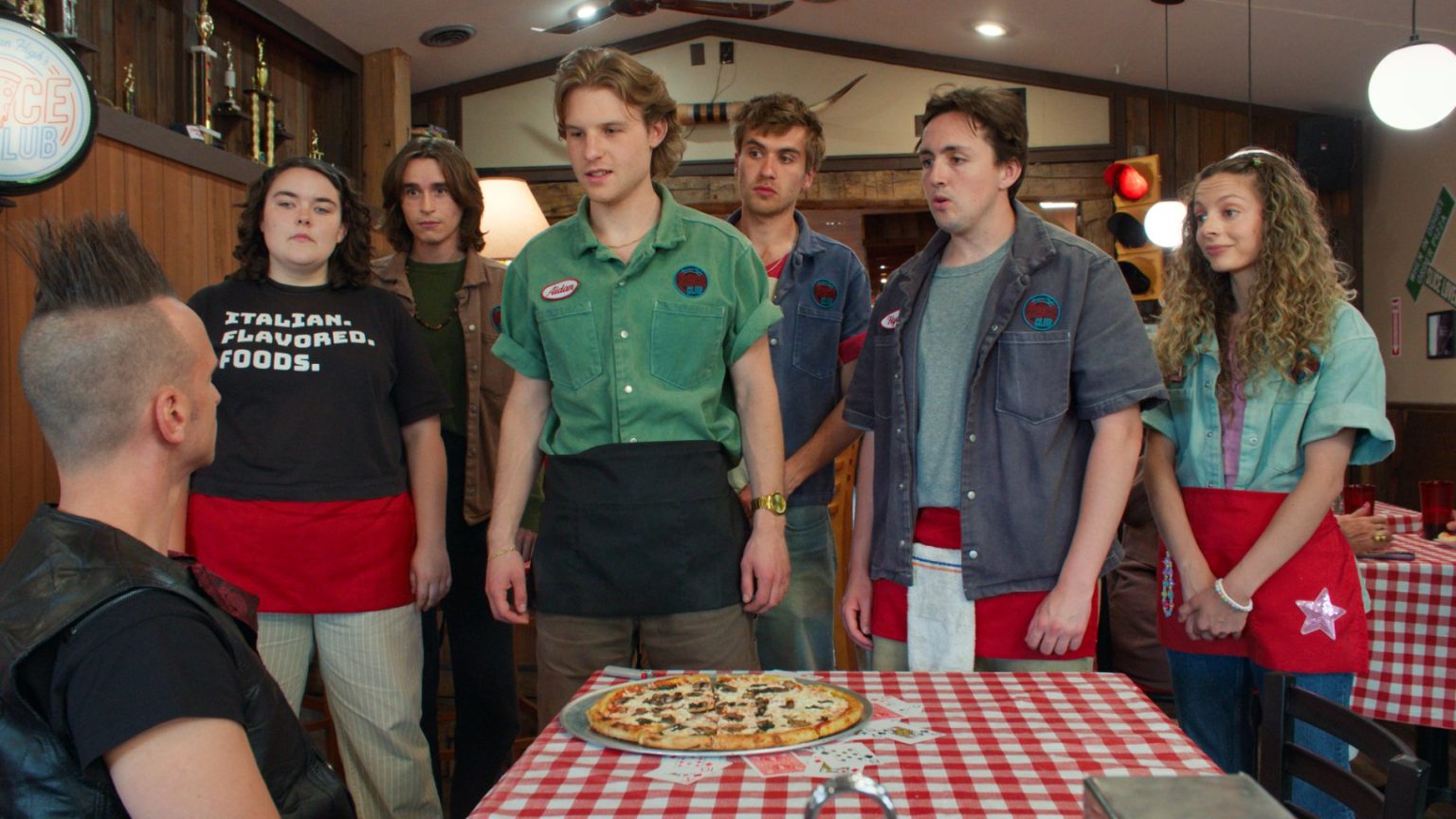
At the narrative center of Minimum Wage is Slice Club, identified as the worst-performing store within a moderately successful upstate New York pizza chain. The series is showrun by Jeremy Garelick and Will Phelps, featuring an ensemble cast comprising Aidan Micho, Hyde Healy, Julia Dicesare, Luke Burke, Ryan Micho, Tommy Armstrong, and Saturday Night Live featured player Grace Reiter. The actors portray characters sharing their own first names, working at a restaurant where customer service standards are practically non-existent.
The opening episodes establish the chaotic and incompetent nature of the staff through a series of absurd workplace behaviors. Aidan attempts to regulate his body temperature inside a walk-in refrigerator in hopes of bodily enhancement; Hyde exhibits casual and grating misogyny while misreporting operating hours; Ryan experiences severe anxiety regarding his table-setting capabilities; and Grace operates as the store manager while appearing mentally detached from her surroundings. Rounding out the ensemble are Julia, a homeschooled employee whose social development is visibly stunted; Tommy, who uses a hair dryer to heat pizzas; and Luke, the eldest employee at age twenty, who spends his time womanizing and pursuing an unseen relationship with Julia’s mother.
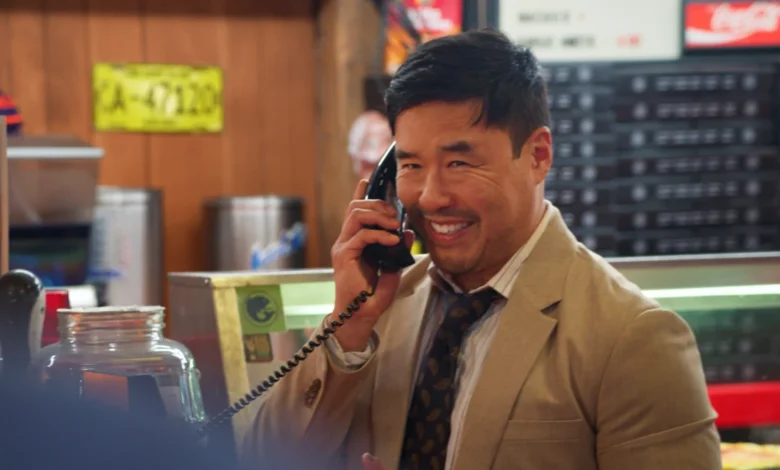
The central conflict of the series accelerates with the arrival of Slice Club franchise founder Terry Sylvester, portrayed by Randall Park. Sylvester enters the narrative in a downtrodden state, revealing that he lost the majority of his restaurant empire following a costly divorce, leaving him with only the single, unprofitable upstate New York location. Handing the teenage employees an ultimatum—drastically improve store performance or face permanent closure—Sylvester moves into the restaurant’s basement. From his subterranean living quarters, he attempts to institute new monetary and operational practices, injecting a layer of grounded absurdity into the chaotic workplace environment.
Derivation and Influences in Modern Mockumentary Formats
Minimum Wage positions itself as a distinct contemporary entry within the workplace mockumentary subgenre, explicitly targeting Generation Z and Generation Alpha demographics. The show borrows heavily from the documentary-style confessionals popularized by The Office, while incorporating the single-set food service claustrophobia of Party Down and the eccentric small-town dynamics observed in series like Welcome to Flatch.
For younger viewers intimately familiar with the viral short-form sketches that spawned the series, the format feels immediately accessible. Yet, the production frequently exposes its narrative inexperience, resembling a new medium trying to find its footing while heavily relying on established comedic tropes. Critics have noted that the series would benefit significantly from the guidance of a veteran mockumentary showrunner to help flesh out its character arcs and narrative consistency. Interestingly, the individual episodic premises and overarching scenarios often prove far more entertaining than the character development driving those plots forward.
Character Dynamics and Ensemble Execution
The primary ensemble of Minimum Wage consists of five male actors and two female actors, a demographic makeup reflective of the geographic demographic of certain upstate New York regions, yet limited in broader cultural representation. Across its fourteen-episode inaugural season—with each episode averaging approximately sixteen minutes in runtime—the cast demonstrates undeniable chemistry and natural comedic timing. The actors alternate writing and directing duties in pairs, focusing heavily on character-centric episodes. While this collaborative approach yields genuine moments of physical comedy and strong banter, it also highlights the limitations of inexperienced character writing.
Throughout the season, writers frequently push the boundaries of absurdism purely for the sake of a punchline, often at the expense of consistent character development and internal logic. Consequently, several characters blur together to the point of narrative irrelevance. Aidan, for instance, possesses defining traits that are so ephemeral he occasionally feels entirely absent from the narrative. Conversely, a few characters maintain distinct personalities: Ryan’s relentless perfectionism and desperate need for validation, and Julia’s blend of social naivety and a good-natured demeanor stand out as concrete character pillars. Even Grace Reiter, despite delivering some of the series’ sharpest comedic gags and deadpan line deliveries, receives limited character exposition. Luke emerges as the most definitively characterized figure primarily through running gags concerning his age relative to his teenage coworkers.
Certain character dynamics, however, have drawn criticism for leaning into grating archetypes. Hyde’s persistent misogyny becomes tiresome quickly, with narrative counter-attacks failing to provide sufficient comedic mitigation. Furthermore, the romantic and social configurations of the ensemble evoke the familiar tropes of Brooklyn alternative comedy spaces, predominantly centering white characters with minimal diversity among the supporting cast. Tommy, characterized as the most fluid personality within the ensemble, navigates a complex dynamic involving Julia and a female partner named John, played by Kalissa Persaud, contributing to the show’s erratic relationship subplots.
Technical Execution of the Mockumentary Style
From a technical standpoint, the mockumentary execution in Minimum Wage suffers from noticeable inconsistencies. The editing features frequent, abrupt cuts immediately following physical comedy beats or pratfalls, occasionally misaligning the camerawork with the intended comedic timing. Unlike benchmark mockumentary series such as The Office or What We Do in the Shadows, which explicitly acknowledge an in-universe documentary crew or feature characters directly addressing the presence of cameras, Minimum Wage adopts the visual style without narrative justification. The documentary format is treated as an invisible, homogenous norm rather than an active storytelling device, leaving the stylistic choice unexplained within the narrative universe.
Production Background and Industry Implications
The journey of Minimum Wage from digital incubation to Netflix’s global library highlights shifting strategies within television production and talent acquisition. American High, the production banner behind the series, has built a reputation for centering youth-centric narratives, often collaborating with emerging digital creators who possess established online followings. By leveraging pre-existing digital audiences, studios attempt to mitigate the financial risks associated with launching entirely new comedy properties in a crowded streaming market.
However, the transition from short-form vertical video to horizontal streaming television demands a rigorous approach to narrative structure and character depth that viral sketches do not always require. The fourteen-episode first season serves as a testing ground for creators learning the mechanics of long-form television production in real-time. Industry analysts note that while platforms are increasingly willing to experiment with low-budget, high-concept digital transfers to capture younger demographics, the long-term viability of such projects depends heavily on structural refinement.
Comparative Context within Contemporary Streaming Comedy
The hurdles faced by Minimum Wage echo the trajectory of other contemporary youth-focused comedies. For instance, critically evaluated first seasons of series such as Adults encountered similar struggles with uneven character distribution and underdeveloped scripts before undergoing significant creative course corrections in subsequent outings. The potential for growth is visibly present within the camaraderie of the Slice Club staff; interactions such as Ryan’s compulsive need to embrace Luke generate consistent comedic payoff, proving that the ensemble possesses genuine interpersonal chemistry.
Despite occasional moments of sharp humor tailored specifically to an underserved teen demographic—audiences who frequently find contemporary television lacking in relevant comedic content—Minimum Wage remains constrained by its amateurish execution and narrow demographic lens. The series successfully surpasses the low bar of fast-food cultural stereotypes, yet it currently lacks the narrative substance and refined execution required to fully capitalize on its underlying premise. As the streaming industry continues to evaluate the intersection of internet-native talent and traditional television production, series like Minimum Wage demonstrate both the exciting possibilities and the substantial pitfalls of bringing viral digital creators into the mainstream television ecosystem.
Related posts: