ces Dedicated What’s Hot Hub to Reshape Content Discovery and User Engagement
Netflix is once again overhauling how its subscribers navigate its massive catalog, rolling out a dedicated trending destination titled the "What’s Hot" hub. Accessible via both desktop browsers and television applications, the new interface is designed to aggregate real-time viewership momentum, moving beyond the traditional daily Top 10 lists that have anchored the platform for years. This development arrives amid a broader series of user-interface experiments aimed at reducing decision fatigue and steering viewers away from the conventional, endless homepage scroll.
The launch of the What’s Hot hub—currently spotted during initial tests in select markets such as the United States—represents a structural evolution in how Netflix surfaces popular content. By creating an isolated environment driven entirely by live metrics rather than subjective curation, the streaming giant is attempting to solve a fundamental problem of modern video-on-demand services: helping users quickly identify what cultural touchstones are resonating at any given moment.
Anatomy of the What’s Hot Hub
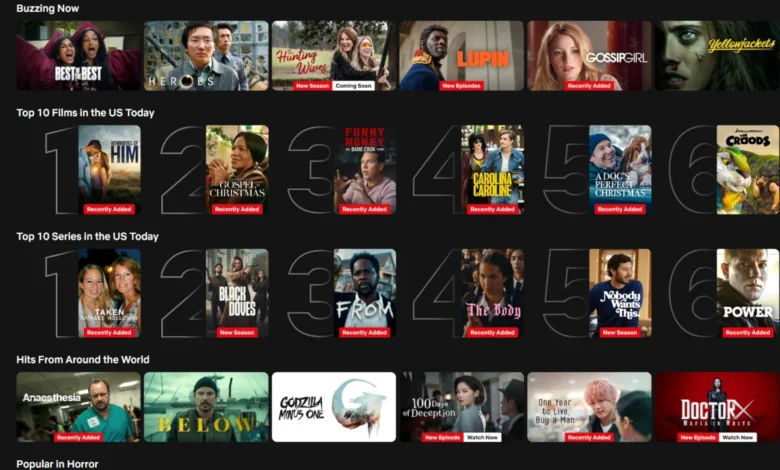
The newly deployed destination, located natively on the platform, features a prominent orange "HOT" wordmark across the top of the interface, accompanied by a vertical stack of data-driven rows. Unlike conventional landing pages that often prioritize hand-picked themes, mood-based collections, or algorithmic recommendations tailored exclusively to individual viewing histories, the What’s Hot hub relies strictly on aggregate popularity signals.
Data points powering the hub include regional charts, genre-specific popularity indexes, and momentum-based categories such as "Buzzing Now." Because the underlying architecture is tethered to raw viewership metrics rather than proprietary original-content prioritization, the hub achieves a unique parity between Netflix Originals and licensed content. Titles historically distributed by traditional networks and studios—ranging from classic procedural dramas and long-running sitcoms to recently acquired syndicated hits—share prominent billing alongside high-budget streaming exclusives.
Furthermore, contextual tags such as "New Season," "New Episode," "Recently Added," and "Leaving Soon" are integrated directly into the rows, providing subscribers with actionable urgency regarding availability and release schedules. This design philosophy closely mirrors recent modular interface experiments deployed on television applications, signaling a broader migration toward compartmentalized, module-based browsing across all client platforms.
Broader Context and the Strategic Push Into Dedicated Hubs
The arrival of the What’s Hot hub does not occur in a vacuum; it is part of an accelerated, multi-pronged strategy by Netflix to diversify its navigation pathways. Just one week prior to the discovery of the trending hub, the platform introduced a dedicated fan destination tailored for the breakout title KPop Demon Hunters. That specialized hub consolidated the primary feature film, sing-along iterations, official lyric videos, choreography breakdowns, and related stop-motion companion series into a single, cohesive ecosystem.
While branded hubs dedicated to prolific overall-deal creators like Shonda Rhimes and Ryan Murphy have existed on the service for years, the deployment of two distinct destinations in rapid succession indicates a calculated shift in product strategy. Netflix is increasingly experimenting with functional and thematic sub-destinations that break the monotony of the standard home feed. Industry analysts note that as subscription video-on-demand libraries expand to encompass a vast array of licensed content, live sports integrations, and interactive formats, traditional homepage layouts struggle to surface relevant material efficiently. By segmenting discovery into purposeful hubs—one for hyper-specific fandoms and another for broad, real-time cultural momentum—Netflix is attempting to optimize user retention and reduce churn caused by browsing frustration.
The Evolution of Metrics and Discovery on Streaming Platforms
To understand the significance of the What’s Hot hub, it is necessary to examine the evolution of transparency and data presentation within the streaming sector. For the first decade of the modern streaming era, platforms operated as closed ecosystems, offering little to no insight into what other subscribers were watching. Metrics were largely internal, and recommendations were governed by opaque, black-box recommendation engines.
In 2020, following years of internal testing that began around 2019, Netflix fundamentally altered industry standards by introducing the daily Top 10 lists. This feature democratized viewership data to a degree, establishing a standardized public barometer of cultural relevance. The Top 10 lists quickly became a powerful promotional tool, capable of propelling overlooked catalog titles and licensed acquisitions into massive, unexpected secondary runs.
The What’s Hot hub is the logical extension of this philosophy. By expanding a single row into an entire dedicated page, Netflix is institutionalizing popularity as a primary genre of content discovery. However, media researchers and consumer advocates suggest that while popularity-driven hubs effectively capture the zeitgeist, they also create a self-fulfilling prophecy, concentrating viewership onto an increasingly narrow band of already-popular titles at the expense of long-tail catalog content.
Implications for Creators, Licensors, and Subscribers
The balancing act between original intellectual property and licensed acquisitions within the What’s Hot hub carries notable financial and strategic implications for the entertainment industry. For major studios licensing their back catalogs to Netflix, placement within a high-visibility, trending destination translates directly to renewed consumer interest and potential ancillary revenue. Titles that may have languished in the depths of the algorithm can experience sudden resurgences in cultural relevance simply by virtue of appearing in a live momentum chart.
For independent creators and smaller-scale studio partners, the reliance on raw popularity metrics underscores the ongoing challenge of breaking through the noise on major streaming platforms. Without the foundational marketing budgets required to manufacture immediate viewing velocity, securing a spot in a top-tier algorithmic momentum row remains difficult.
From the subscriber’s perspective, the reception to the What’s Hot hub has been generally receptive among early testers, though usability experts point out potential areas for future refinement. User feedback from initial rollout phases indicates a desire for enhanced regional filtering, allowing viewers to see not just what is trending nationally, but what is driving engagement globally or within specific demographic micro-communities. Furthermore, incorporating granular ranking indicators within genre-specific charts could provide deeper context for why certain titles are surging.
Future Outlook for Netflix Navigation
As Netflix continues to refine its user interface across smart televisions, streaming sticks, mobile devices, and web browsers, the line between traditional video-on-demand menus and dynamic content portals continues to blur. The concurrent testing of sidebar menu redesigns, modular category blocks, and specialized hubs points toward a future where the Netflix homepage is no longer a static billboard, but a customizable dashboard tailored to specific viewing intents.
Whether the What’s Hot hub transitions from a regional test phase to a permanent, globally standardized feature will depend heavily on engagement metrics gathered during the rollout period. If internal telemetry demonstrates that subscribers successfully utilize the hub to shorten their time-to-watch and discover content outside of their typical viewing patterns, similar data-driven destinations targeting other behavioral metrics are likely to follow. For now, the platform’s latest interface experiment signals a clear directive: when it comes to modern entertainment consumption, capturing the immediate, collective pulse of the audience remains paramount.
Related posts: