Daydream launches AI-powered fashion stylist agent to redefine personalized e-commerce experiences

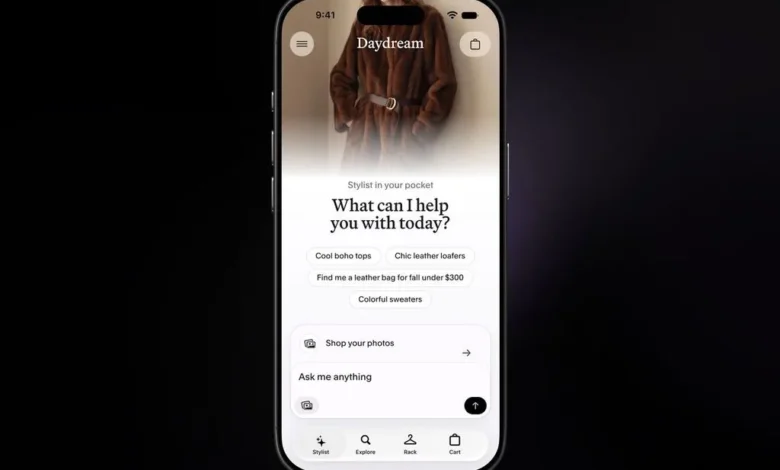
The landscape of digital retail is undergoing a fundamental transformation as artificial intelligence shifts from a backend utility to a front-facing, interactive concierge. On Tuesday, Daydream, the fashion-focused technology startup led by e-commerce veteran Julie Bornstein, officially unveiled the "Daydream Agent." This sophisticated AI tool is designed to serve as a comprehensive personal stylist, capable of curating looks, facilitating virtual try-ons, and executing seamless one-click purchases. By synthesizing real-time inventory data with a user’s unique aesthetic profile, the platform aims to replicate the high-touch service of a luxury boutique within the mobile-first environment of modern e-commerce.
The Evolution of Daydream: From Search Engine to Stylist
The launch of the Daydream Agent represents the latest milestone in a deliberate roadmap that began in 2023. Bornstein, who previously served as the Chief Operating Officer of Stitch Fix and founded the shopping app The Yes—which was acquired by Pinterest in 2022—established Daydream with the vision of solving the "discovery problem" in online retail.
The company’s journey began with a focus on an AI-driven search engine, designed to help consumers navigate the overwhelming volume of products available online. In June 2025, the startup moved toward a more conversational interface by introducing an AI chatbot capable of making outfit suggestions. While successful in driving engagement, that iteration lacked the transactional capability to complete purchases directly. The new Daydream Agent bridges this gap, evolving from a passive recommendation engine into a proactive, autonomous shopping assistant that manages the entire lifecycle of a purchase.
Technical Architecture and Operational Framework
At the core of the Daydream Agent is a sophisticated multi-model architecture. The company leverages a hybrid approach, utilizing fine-tuned versions of industry-standard large language models including OpenAI’s GPT series, Google’s Gemini, and Anthropic’s Claude. These models are supplemented by Daydream’s proprietary, fashion-specific AI training, which allows the agent to interpret style nuances, color palettes, and seasonal trends with higher accuracy than generic chatbots.
The agent functions by drawing from a massive, live-updated catalog of over 10,000 brands. By monitoring real-time inventory levels, pricing fluctuations, and new product drops, the system ensures that its recommendations are always actionable. Furthermore, users can synchronize their personal digital closets and calendars with the agent. This integration allows the AI to suggest outfits based on items the user already owns, effectively acting as an advisor that balances existing wardrobe management with new purchasing decisions.

Human-in-the-Loop: The Role of Expert Curation
Despite the high level of automation, Daydream acknowledges that fashion remains an inherently subjective, creative field. To prevent the "algorithmic homogeneity" that often plagues AI-driven platforms, the company has implemented a "human-in-the-loop" strategy.
This month, Daydream appointed Francesca Salih, an esteemed international fashion stylist and founder of StyleGrid, as its first "stylist in residence." Salih’s role is to provide the qualitative "human touch" that feeds into the platform’s fashion knowledge database. By codifying professional styling principles, color theory, and trend forecasting into the system’s training parameters, Daydream ensures that the AI’s suggestions adhere to professional aesthetic standards rather than relying solely on high-frequency shopping data.
Market Context and the Rise of the Consumer AI Agent
The emergence of the Daydream Agent occurs against a backdrop of rapid consumer adoption of AI agents. Market data suggests that shopping is becoming the primary utility for these technologies. Meta’s AI assistant, Muse, recently reported reaching over 10 million users, with internal data indicating that a significant portion of its user base engages with the tool for daily shopping tasks. Notably, 25% of individuals who configure Muse return to the platform daily, signaling a high level of "stickiness" for AI-powered retail interfaces.
For Daydream, the timing is strategic. The startup has already demonstrated significant traction, reporting that more than 2 million shoppers have utilized its platform since its debut in June 2025. This growth has been supported by a robust $50 million funding round, with backing from prominent venture capital firms including Forerunner Ventures, Index Ventures, GV, and True Ventures.
The "Clothing Rack" and Frictionless Commerce
A critical feature of the new agent is the "clothing rack," a persistent digital space where users can store items of interest. Unlike traditional shopping carts—which are often temporary and transactional—the clothing rack serves as a long-term repository for comparative shopping.
This feature allows users to evaluate potential purchases over time, receive notifications when items go on sale, or wait for complementary pieces to drop. By removing the pressure of immediate checkout, the platform fosters a more thoughtful, curated shopping experience. When a decision is reached, the agent utilizes a one-click checkout system to minimize friction, a key metric for converting interest into revenue in the mobile e-commerce space.

Broader Implications for the Retail Sector
The shift toward agent-based shopping could have profound implications for the traditional retail model. For brands, the rise of AI stylists means that visibility is no longer just about SEO or paid advertising; it is about being integrated into the "consideration set" of the AI. If an agent is trusted by millions of users to recommend the best products, brands that align with the agent’s logic—by providing accurate metadata and high-quality imagery—will likely capture a disproportionate share of the market.
However, the trend also presents challenges. Retailers may find their brand identity diluted if the AI stylist becomes the primary interface between the customer and the product. There is also the matter of virtual try-on technology, which, while improving rapidly, must achieve a high level of photorealistic fidelity to minimize return rates—a perennial pain point for the fashion industry.
Future Outlook and Strategic Challenges
As Daydream continues to scale, its ability to maintain the balance between machine efficiency and human creativity will be its defining challenge. The company is currently focused on refining its virtual try-on features, allowing users to upload personal photos to see how specific items drape and fit on their own bodies. This visual layer is expected to be a major driver of conversion, as it addresses one of the most significant barriers to online apparel sales: uncertainty regarding fit.
Industry analysts suggest that the success of the Daydream Agent will depend on its ability to evolve as the user’s personal taste changes. If the AI can effectively "remember" a user’s style evolution over years, it could create a level of brand loyalty that traditional e-commerce platforms struggle to achieve.
With $50 million in capital and a clear focus on the intersection of generative AI and personal styling, Daydream is positioned to lead a new category of "intelligent retail." As the technology matures, the question for the industry is no longer whether consumers will use AI to shop, but rather which platforms will provide the most accurate, personalized, and seamless experience in a crowded digital marketplace. The entry of Daydream into this space signals that the "personal stylist in every pocket" is no longer a futuristic concept, but a current reality in the digital transformation of fashion.
Related posts: