AWS Weekly Roundup: Generative AI, Security Innovations, and Infrastructure Scalability

The rapid evolution of cloud infrastructure, security frameworks, and artificial intelligence capabilities continues to reshape enterprise operations across global industries, from traditional agribusiness in South America to mission-critical financial services in the United States. Recent developments at Amazon Web Services (AWS) highlight a strategic shift toward closing the gap between vulnerability discovery and remediation, alongside significant enhancements in generative audio and model customization.
The Intersection of AI and Traditional Industry
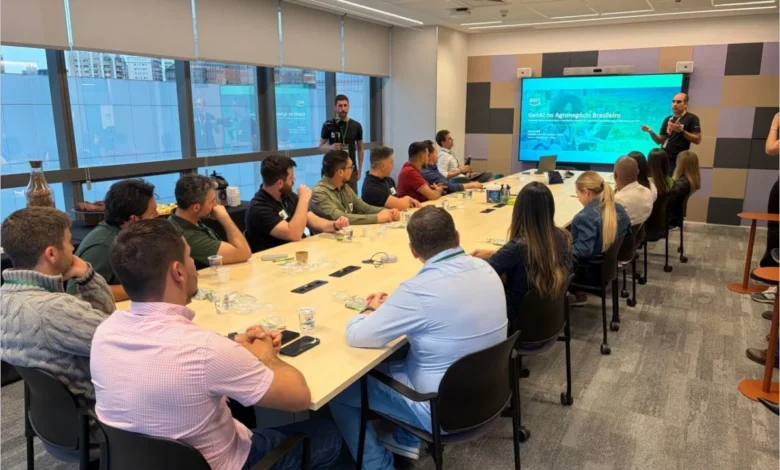
During a recent engagement with agribusiness leaders in São Paulo, Brazil, the discourse centered not on the theoretical merit of generative AI, but on the practicalities of implementation. In environments where the primary interface for workers is voice-activated—often while navigating agricultural machinery—the fidelity of natural language processing is paramount. This operational necessity explains the recent upgrade to the Amazon Polly Generative engine, which has introduced 14 new voices across nine locales, including two specifically designed for Brazilian Portuguese: Leo and Carolina.
This update reflects a broader trend in enterprise technology: the move toward "invisible interfaces." By expanding the linguistic reach and natural expressiveness of synthetic speech, organizations can deploy AI-driven guidance systems that are safer and more accessible for field-based employees. These enhancements, which maintain existing API structures and pricing, allow businesses to integrate higher-quality vocal output without the burden of re-engineering established workflows.
Closing the Security Gap: AWS Continuum
Perhaps the most significant development this week is the general availability of AWS Continuum, a service designed to address the tightening window between vulnerability disclosure and active exploitation. Historically, the "patch window"—the time allotted for administrators to remediate security flaws—has been predicated on a delay that no longer exists in the modern threat landscape.
Evidence provided by Amazon Threat Intelligence underscores the urgency of this shift. On October 17, telemetry from MadPot identified exploitation attempts related to the PHP2Shell vulnerability, a full four days before the official public disclosure of CVE-2026-109618 and CVE-2026-109619. By the time the vulnerabilities were disclosed on October 21, functional proof-of-concept exploits were already circulating roughly 12 hours before the embargo was scheduled to lift.
AWS Continuum responds to this reality by reframing vulnerability management from a passive scanning exercise into an active, context-aware remediation pipeline. The service constructs a "context graph" of a client’s environment, mapping repositories against actual AWS infrastructure to identify which vulnerabilities pose the greatest threat to business-critical systems. By reproducing exploitable findings within an isolated sandbox and generating pull requests for human-reviewed fixes, Continuum minimizes the manual labor traditionally required to triage security alerts.
Infrastructure and Load Balancing Evolution
The introduction of Amazon ECS Gateway marks a pivotal change in how platform and application teams interact with networking infrastructure. By decoupling service exposure from network management, AWS allows platform teams to define centralized configurations—including TLS certificates, WAF web ACLs, and listener settings—while enabling application teams to "opt-in" through simple gateway connectors.
The economic implications of this architecture are substantial. A single Application Load Balancer (ALB) can now support up to 25 services, with dynamic provisioning and de-provisioning based on active demand. A single gateway is capable of associating with up to 10,000 clusters, providing a scalable, incremental path for organizations looking to modernize their container networking without performing a "rip-and-replace" of existing load balancers.
Advancements in Machine Learning and Model Customization
The AWS machine learning ecosystem has also seen notable expansions, particularly regarding hardware flexibility and training efficiency.
TorchNeuron and Hardware Agnosticism
The release of TorchNeuron in public beta addresses the growing desire among developers to avoid hardware-induced software lock-in. As an open-source PyTorch backend, TorchNeuron allows models to be ported to AWS Trainium hardware through a simple configuration change (switching to .to(‘neuron’)) rather than requiring a full rewrite of the code. This integration, supported by the broader Neuron 2.33 release, ensures that eager execution and torch.compile remain intact, providing a seamless transition for teams scaling their generative AI workloads.
SageMaker AI and Managed Training
Amazon SageMaker AI is further lowering the barrier to model customization by introducing new training session capabilities. This allows developers to manage the post-training loop—including custom loss functions and reward signals—without the operational overhead of managing GPU clusters, distributed execution, or fault recovery. This service model, which bases costs on token processing rather than raw compute time, is particularly advantageous for organizations experimenting with specialized models such as Muse Glimmer, Qwen 3.8, and Ministral 3.
Claude and Structured Outputs
To improve the reliability of LLM-based automation, Amazon Bedrock now supports structured outputs for Anthropic’s Claude models. By enforcing schema-compliant JSON, developers can bypass the need for custom parsing, retry logic, or complex post-processing. This is a critical development for high-stakes applications such as financial reporting, clinical documentation, and automated ticket routing, where data integrity is non-negotiable.
Operational Milestones and Data Migrations
The flexibility of modern cloud databases continues to be demonstrated by large-scale enterprise migrations. A recent case study involving U.S. Bank illustrates this, as the institution successfully migrated 119 terabytes of data from Oracle Exadata to Amazon RDS for Oracle. The process, which utilized a configuration-driven pipeline—combining Oracle XTTS (Cross-Platform Transportable Tablespaces), AWS DataSync, and Amazon EFS—achieved an initial baseline copy in approximately seven days. With average cutover times of four hours per database and zero data loss, the project serves as a benchmark for large-scale legacy-to-cloud migrations.

Additionally, the introduction of zero-downtime online migration for ElastiCache Serverless for Valkey enables seamless transitions from self-managed environments. By removing the requirement for third-party replication tools, AWS is standardizing the migration path for high-performance, in-memory data stores.
Broader Implications for the Enterprise
The collective weight of these announcements points to a definitive shift toward "automated operational resilience." Whether through the automated vulnerability remediation of AWS Continuum, the simplified networking of ECS Gateway, or the managed training loops in SageMaker, AWS is aggressively reducing the administrative burden on engineering teams.
The timeline of recent security disclosures suggests that the industry is entering an era where "reaction time" is the primary competitive advantage. As threat actors automate their exploitation pipelines, organizations that rely on manual triage and legacy patch windows are increasingly vulnerable. The move toward integrated, context-aware security and automated deployment frameworks is not merely an efficiency gain; it is a defensive necessity.
Looking Ahead: The Road to re:Invent
As the ecosystem matures, the focus remains on the upcoming AWS re:Invent conference, scheduled for late November in Las Vegas. With more than 2,200 sessions planned, the event is expected to serve as the platform for the next wave of generative AI and cloud infrastructure strategies. As organizations prepare to finalize their roadmaps for the coming year, the emphasis on cost-efficiency—highlighted by recent initiatives like the "tokenomics for coding agents" benchmarking tools—will likely remain a central theme.
In conclusion, these updates reflect a strategic alignment between AWS’s service offerings and the immediate, practical needs of the global enterprise. From enhancing the naturalness of voice-driven interfaces in remote work environments to providing the tools for rapid, secure software deployment, the trajectory remains clear: the future of cloud computing is increasingly automated, highly integrated, and designed to minimize the friction between infrastructure and innovation.