Building Custom Agent Harnesses: How Mux Transformed Video Intelligence With Vercel Eve and Slack Integration

The modern software development landscape has increasingly shifted toward off-the-shelf artificial intelligence tools, prompting many engineering teams to question the utility of building bespoke agent harnesses when solutions like Claude and Codex are readily accessible. For Mux, a prominent video infrastructure platform, this foundational question led to a deliberate engineering experiment. While universal AI tools excel at exploratory tasks and generalized coding assistance, they frequently lack the contextual workflows, routing mechanisms, and deep pipeline integrations necessary to deliver a reliable, production-grade user experience. The decision to construct a custom agent harness rather than relying entirely on third-party interfaces underscores a broader evolution in enterprise AI adoption: the recognition that orchestration, permissions, and asynchronous state management are not mere plumbing details, but critical components of the user experience itself.
At Mux, where rich video content serves as the primary medium for cross-functional communication, engineers routinely share demos, architectural walkthroughs, and progress updates within company Slack channels. However, the sheer volume of multimedia content shared daily creates significant friction. Video assets are notoriously difficult to index and search within standard chat applications, frequently slipping into digital obscurity. High-level summaries, automated transcriptions, and the ability to instantly verify whether a specific technical topic was addressed in a recorded meeting are invaluable capabilities for a fast-paced engineering organization. To solve this internal communication bottleneck, the development team sought to leverage newly introduced Mux Robots workflows—advanced video intelligence pipelines designed to automate transcription, frame analysis, and semantic embedding generation.
The initial technical hurdle lay in bridging the gap between raw application programming interfaces and a functional conversational agent. While an individual developer operating locally can easily wire a command-line interface directly into an out-of-the-box LLM, deploying a resilient service capable of automated Slack integration requires a sophisticated application architecture. The team needed a system that could act as an omniscient, private video library historian—one that could ingest new recordings on demand, process complex natural language queries, and return precise timestamped references directly within active communication threads. This requirement exposed a clear division in the current AI tooling ecosystem: off-the-shelf harnesses are exceptional for rapid prototyping and capability discovery, but owning the harness becomes paramount when routing, data privacy, state preservation, and user interface customization dictate the success of the product.
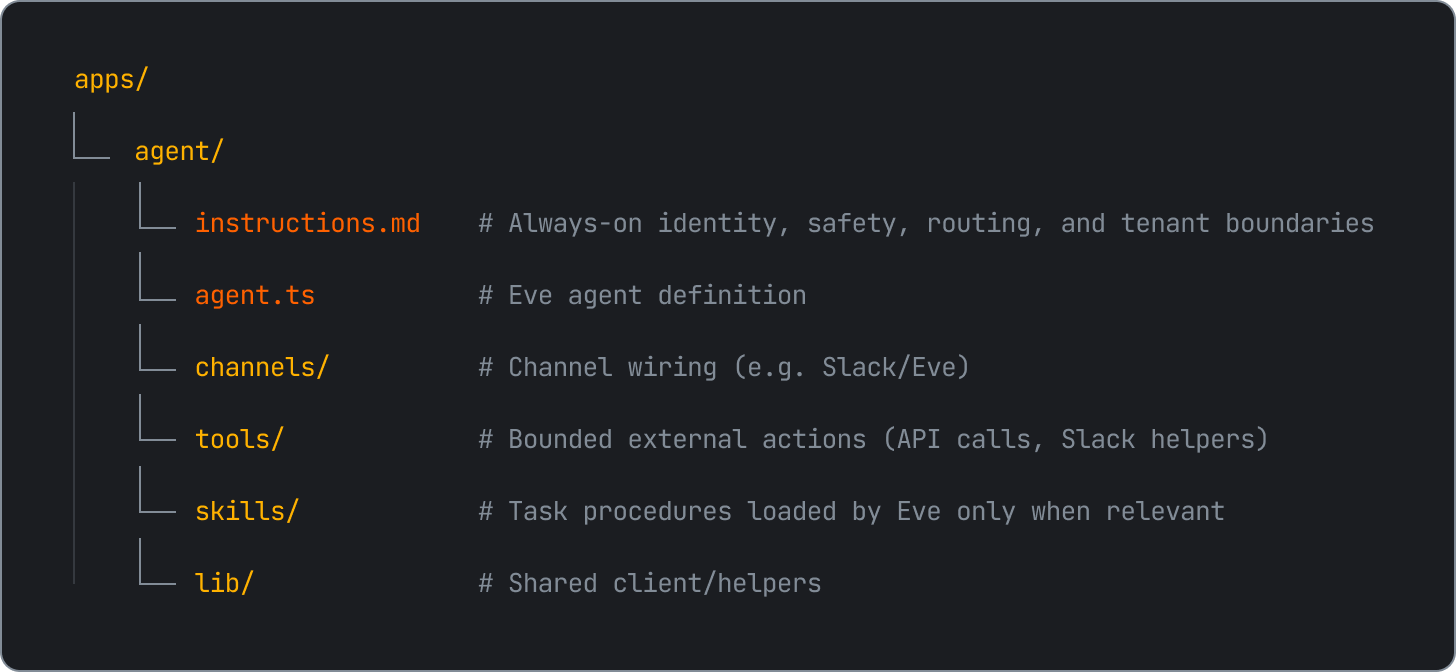
To transition the experimental agent out of the terminal environment and into a production-ready messaging ecosystem, the Mux team utilized Vercel’s eve framework. Frequently characterized within the developer community as a Next.js-inspired framework for autonomous agents, eve provided a familiar component-based architecture for TypeScript developers. By adopting this framework, the team established a clean separation between the agent’s core cognitive capabilities and the external communication channels that route messages to and from the runtime. The agent architecture was organized systematically within the project directory, isolating the system prompt—which dictates identity, safety protocols, routing logic, and tenant boundaries—from specific channel integrations like Slack, web interfaces, or command-line terminals. This structural abstraction ensured that the agent’s core competencies could be scaled across multiple communication mediums without requiring a complete rewrite of the underlying logic for each interface.
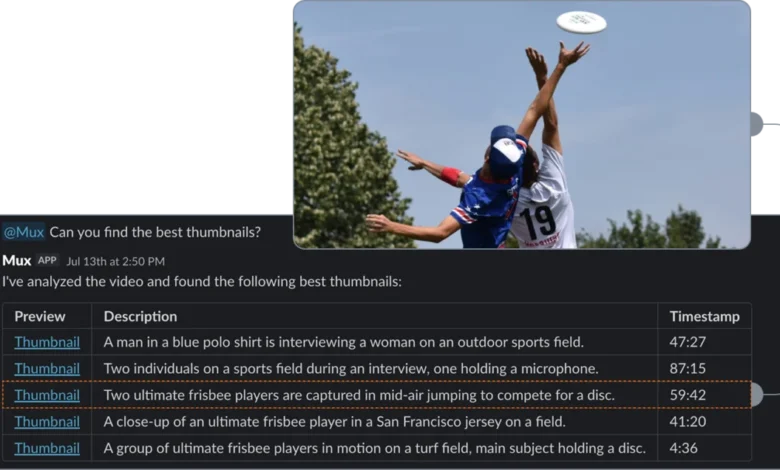
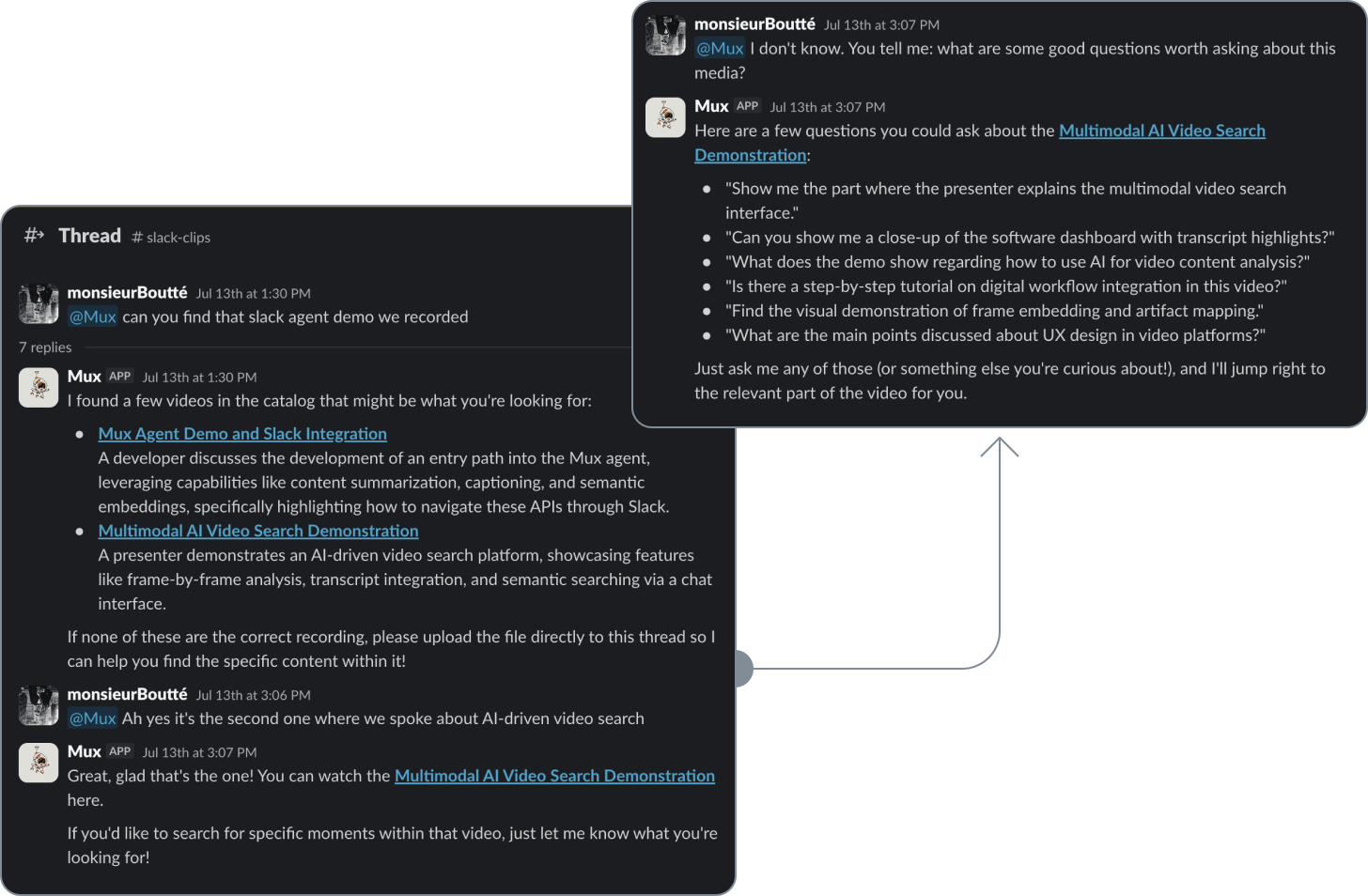
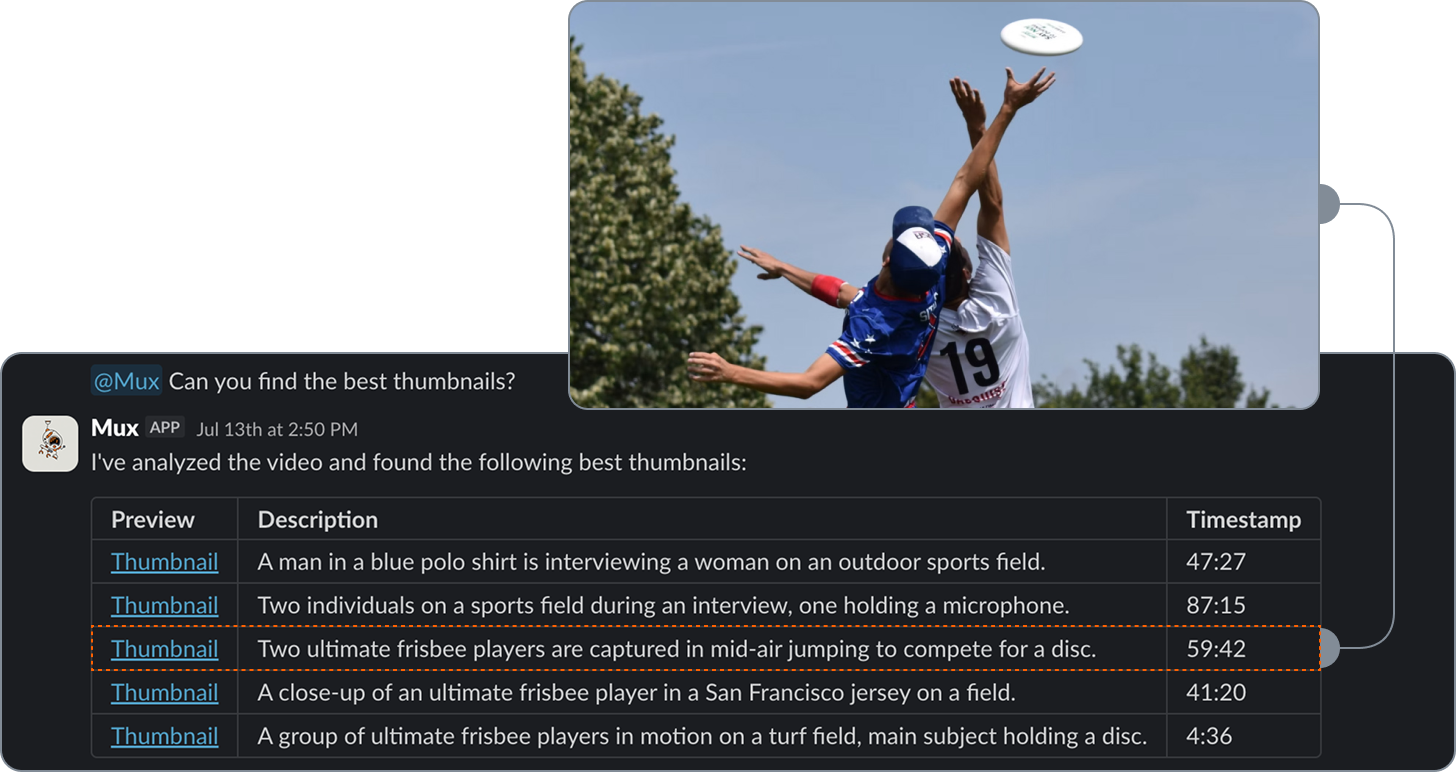
The operational workflow of the newly deployed Mux Video Agent fundamentally altered how internal teams interact with multimedia assets. When an engineer shares a product demo or architectural review within a Slack thread, invoking the Mux Agent initiates an automated ingestion sequence. The video is routed through the Mux processing pipeline, where job status updates are monitored and reported back to the thread in real time. Once the video has been fully indexed—generating searchable transcripts, visual embeddings, and structural metadata—team members can query the repository using natural language. Users can ask the agent to locate specific feature discussions, summarize technical requirements, or identify the exact timestamp where a particular UI element appeared. Furthermore, the system supports multimodal queries, allowing employees to upload screenshots or reference images to locate corresponding moments within extensive video archives.
Underpinning this seamless user experience is a strict architectural philosophy: deterministic domain logic is strictly delegated to robust backend APIs, while the probabilistic AI agent handles user intent interpretation, tool selection, and conversational coordination. Mux’s established APIs continue to manage heavy computational tasks such as audio transcription, vector embedding generation, async workflow orchestration, and job state tracking. The agent operates strictly as an intelligent orchestrator—interpreting what the user is asking for, executing the appropriate tool calls, tracking asynchronous processing states, and formatting the results for the end user. This strict separation of concerns has rendered the harness exceptionally easy to debug, maintain, and iterate upon as new video intelligence capabilities are introduced.
Furthermore, maintaining absolute control over the agent harness has provided the Mux engineering team with invaluable qualitative data regarding tool usage patterns. When developers rely exclusively on third-party agent interfaces, telemetry and workflow visibility often remain trapped within proprietary vendor ecosystems. By owning the orchestration layer, Mux gained granular visibility into how users naturally chain tools together, observing compound workflows where the output of one video intelligence task seamlessly becomes the input for another. These empirical insights enable engineering teams to formalize ad-hoc user behaviors into structured, automated product features—an optimization loop that remains largely inaccessible when utilizing generic, external execution environments.
While the initial deployment of the Mux Video Agent was strictly confined to internal Slack channels as a proof-of-concept, the implications of the architecture extend far beyond a single messaging platform. The successful decoupling of agent capabilities from channel-specific delivery mechanisms demonstrates a scalable blueprint for enterprise AI deployment. In the near term, tools of this nature promise to permanently eliminate the productivity drag associated with fragmented corporate video repositories, transforming ephemeral meeting recordings into searchable, actionable institutional knowledge. Over the long term, the underlying methodology offers a compelling paradigm for external customers seeking to embed sophisticated video intelligence capabilities directly into their own proprietary applications and enterprise workflows.
Industry analysts observe that the evolution from generalized AI experimentation to bespoke harness construction marks a mature phase in enterprise software development. As organizations move past the initial novelty of foundational large language models, the competitive advantage increasingly lies in vertical integration—shaping the entire user experience around domain-specific challenges. For Mux, the experiment validated a core hypothesis: while pre-packaged AI tools provide an essential starting point for exploration, building and owning the harness is the definitive path to transforming raw computational capabilities into reliable, deeply integrated product experiences. By starting small, focusing on a single high-friction workflow, and maintaining strict boundaries between deterministic APIs and probabilistic agents, engineering organizations can unlock entirely new dimensions of operational efficiency and product utility.
Related posts: