United States Imposes Sweeping Section 301 Tariffs on 60 Trading Partners Over Forced Labor Concerns

The United States is poised to enact a comprehensive new tariff regime, imposing duties of either 10% or 12.5% on imports from 60 trading partners, effective this Friday, July 25, 2026. This significant trade action, mandated under Section 301 of the Trade Act of 1974, marks a pivotal moment in U.S. trade policy, coinciding with the expiration of the temporary global Section 122 levies. The move underscores the Trump administration’s continued reliance on tariffs as a primary tool to address perceived unfair trade practices and human rights abuses in global supply chains.
The Genesis of the New Tariffs: A Focus on Forced Labor
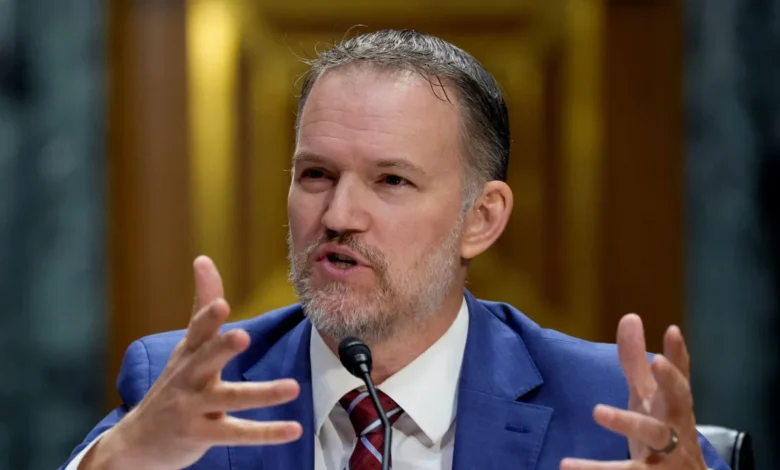
The impetus for these far-reaching tariffs stems from a Section 232 investigation launched in March 2026 by the U.S. Trade Representative (USTR). This investigation meticulously scrutinized the forced labor regulations and enforcement mechanisms of key U.S. trading partners. USTR Jamieson Greer, speaking during a Senate Finance Committee hearing on July 22, 2026, and as detailed in a Federal Register filing released on July 23, 2026, articulated the administration’s findings. The investigation concluded that these 60 nations had demonstrably failed "to impose and effectively enforce" prohibitions against goods produced with forced labor from entering the U.S. market.
The Trump administration has explicitly linked the tariffs to human rights and ethical sourcing concerns. A USTR fact sheet, accompanying the Federal Register filing, robustly defended the action, stating, "Despite longstanding international consensus that this practice must be eliminated, the prevalence of forced labor persists worldwide and has even escalated in recent years." This declaration frames the tariffs not merely as an economic measure but as a moral imperative, aiming to leverage U.S. market access to enforce international labor standards. The sheer scale of the proposed action is staggering, with the USTR estimating that these new tariffs will ultimately cover 99.4% of U.S. imports from the affected trading partners, signaling an unprecedented effort to address forced labor through trade policy.
Among the prominent economies facing these new duties are China, the European Union, and Mexico, alongside other major U.S. trading partners such as Japan, South Korea, Canada, and Brazil. The imposition of these tariffs is expected to reverberate across global supply chains, prompting businesses to re-evaluate their sourcing strategies and compliance protocols.
Intricacies of the New Tariff Structure: "Net of MFN" and Key Exemptions
The Federal Register filing meticulously outlines the application of the new Section 301 tariffs. Goods from certain countries will face a 10% tariff, while others will be subjected to a 12.5% charge. A critical aspect of the new policy, and one that has garnered significant attention from trade experts, is the "net of MFN" clause for imports from countries with Most-Favored Nation (MFN) rates, such as the European Union, Japan, and South Korea.
As explained in the filing, for these nations, the Section 301 tariff will be applied net of the existing MFN duty. This means that the combined rate of the Section 301 tariff and the MFN duty will not exceed either 10% or 12.5%, depending on the specific country, unless the MFN duty already surpasses that percentage. This nuanced approach could significantly alter the actual financial impact on certain imports. Pete Mento, director of global trade advisory services at Baker Tilly, highlighted the potential ramifications of this clause in a LinkedIn post, noting, "Those three words—‘net of MFN’—may end up being the biggest story in the entire announcement. If it works the way it appears, this isn’t simply another tariff stacked on top of existing duties. It could fundamentally change how the Section 301 duty is calculated for those products." This interpretation suggests a more integrated, rather than additive, tariff calculation for some goods, potentially mitigating the cumulative burden for certain products already subject to MFN duties.
However, not all imports from these 60 countries will be subject to the new levies. The U.S. government has stipulated several key exemptions. A range of agricultural goods will be spared, as will products already subject to Section 232 levies, such as steel and aluminum. This exemption for Section 232 goods prevents a double-tariff imposition on critical industrial materials. Furthermore, the filing lists country-specific exemptions, acknowledging unique trade relationships and product sensitivities. For instance, certain textiles from Malaysia and whiskey from the United Kingdom have been explicitly exempted from these new tariffs, indicating a degree of targeted policy application. For businesses, it is crucial to note that goods loaded on a vessel before Friday, July 25, 2026, and entered for consumption before July 28, 2026, will not be affected by these new levies, providing a brief window for pre-emptive customs clearance.
A Seamless Transition: Replacing Expiring Section 122 Duties
The introduction of these Section 301 tariffs is strategically timed to coincide with the expiration of the temporary global 10% tariff imposed under Section 122 of the Trade Act. This temporary measure was itself a response to a landmark Supreme Court ruling earlier this year that invalidated previous tariffs implemented by the Trump administration under the International Emergency Economic Powers Act (IEPA). The Supreme Court’s decision, which found that the administration had overstepped its authority in using emergency powers for trade purposes, forced a rapid pivot in trade strategy.
In the wake of that ruling, the Trump administration quickly installed the Section 122 tariff as a stopgap measure, vowing to maintain trade pressure while developing a more legally robust framework. That temporary global 10% tariff is now set to expire this Friday, creating a direct handover to the newly enacted Section 301 duties. This carefully orchestrated transition ensures that the U.S. maintains a continuous tariff posture, avoiding a potential vacuum in its protectionist trade agenda. The move demonstrates the administration’s determination to sustain its "America First" trade policies, adapting to legal challenges while continuing to exert pressure on international trade partners.
Chronology of Recent Trade Actions: A Pattern of Pressure

The new Section 301 tariffs are the latest in a series of aggressive trade actions undertaken by the Trump administration, painting a clear picture of its persistent use of unilateral measures to reshape global commerce.
- Early 2026: The Supreme Court invalidates a series of tariffs previously imposed by the Trump administration under the International Emergency Economic Powers Act, citing an overreach of executive authority.
- Early 2026: In response to the Supreme Court ruling, the Trump administration swiftly implements a temporary global 10% tariff under Section 122 of the Trade Act to maintain trade pressure.
- March 2026: The USTR launches a Section 232 investigation into the forced labor regulations and enforcement practices of key U.S. trading partners. Concurrently, a separate Section 301 probe into global manufacturing capacity is initiated.
- June 2026: USTR Jamieson Greer publicly proposes new Section 301 levies after the forced labor investigation concludes that 60 countries have failed to adequately address forced labor in their supply chains.
- July 22, 2026: U.S. Trade Representative Jamieson Greer addresses the Senate Finance Committee, reiterating the administration’s stance on the need for new tariffs.
- July 23, 2026: The Federal Register filing detailing the new Section 301 tariffs, including rates and exemptions, is officially released.
- Late July 2026: In the week prior to this announcement, the Trump administration also imposed new levies on goods from Canada and Brazil. Both countries are included within the list of 60 trading partners subject to the new forced labor tariffs. The Federal Register filing, however, did not clarify how these overlapping tariffs would interact, adding a layer of complexity for importers.
- Friday, July 25, 2026: The new Section 301 tariffs on 60 trading partners become effective, and the temporary Section 122 global tariff expires.
- Ongoing: The Section 301 investigation into global manufacturing capacity continues, with findings yet to be revealed, suggesting that even more duties could be in store in the near future.
Global Reach and Economic Implications
The imposition of these Section 301 tariffs on 60 trading partners, covering an estimated 99.4% of U.S. imports from these nations, signals a monumental shift in the global trade landscape. The economic ramifications are expected to be substantial and multifaceted. For U.S. businesses, particularly those heavily reliant on global supply chains, the immediate impact will be an increase in import costs. This could lead to higher prices for consumers, potentially fueling inflationary pressures in the U.S. economy. Industries ranging from electronics and apparel to automotive components and specialized manufacturing goods are likely to experience supply chain disruptions as companies scramble to assess the impact, adjust sourcing, and ensure compliance.
The "net of MFN" clause, while potentially mitigating the additive effect of tariffs for some products, introduces a new layer of complexity for customs brokers and importers. Businesses will need to meticulously analyze their product classifications and country of origin to determine the precise duties applicable, which could lead to increased administrative burdens and potential delays at ports of entry. Furthermore, the sheer breadth of countries affected, including major economic blocs like the EU and critical trade partners like Mexico and Canada, underscores the far-reaching nature of this policy. It is likely to accelerate existing trends of supply chain diversification, nearshoring, and reshoring as companies seek to reduce their exposure to tariff risks and geopolitical uncertainties.
Reactions and Industry Perspectives
The USTR’s official statement, emphasizing the "escalation" of forced labor globally despite international consensus for its elimination, provides the moral and policy backbone for the administration’s actions. However, the international community and various industry stakeholders are likely to offer a spectrum of reactions.
Trading partners, particularly those like China, the EU, and Mexico, are expected to voice strong condemnations. Historically, such unilateral tariff actions have often provoked retaliatory measures, leading to escalating trade disputes. While the stated aim is to combat forced labor, these countries may view the tariffs as protectionist barriers disguised as human rights enforcement, potentially challenging them through the World Trade Organization (WTO) or implementing their own counter-tariffs.

From an industry perspective, organizations like the U.S. Chamber of Commerce and various sector-specific trade associations are likely to express concerns about increased costs, reduced competitiveness for U.S. businesses, and the potential for a trade war. While acknowledging the importance of addressing forced labor, many in the business community prefer multilateral negotiations and targeted enforcement over broad-brush tariffs that can harm legitimate trade. Human rights organizations, on the other hand, may cautiously welcome the focus on forced labor but might also question the efficacy of tariffs as a primary tool, advocating for a more comprehensive approach that includes robust labor inspections, diplomatic pressure, and capacity building in affected countries.
The Broader Trade Landscape and Future Outlook
These new Section 301 tariffs are deeply embedded within the Trump administration’s "America First" trade doctrine, which prioritizes domestic industries and jobs, often through the application of tariffs and bilateral negotiations. The administration’s consistent use of trade tools like Section 232 (national security) and Section 301 (unfair trade practices) demonstrates a clear preference for assertive, unilateral actions over traditional multilateral trade frameworks.
The ongoing Section 301 probe into global manufacturing capacity, launched concurrently with the forced labor investigation, looms as a potential harbinger of further trade actions. Should that investigation conclude with findings that global overcapacity harms U.S. industries, it could trigger another round of tariffs or other trade remedies. This continuous cycle of investigations and tariff impositions creates an environment of significant uncertainty for global businesses and investors, making long-term planning challenging.
Looking ahead, the effectiveness of these tariffs in genuinely curbing forced labor practices will be a subject of intense debate. While the economic pressure is undeniable, some critics argue that tariffs can inadvertently harm the very workers they aim to protect by causing economic hardship in the targeted regions or by pushing illicit labor practices further underground. The complexity of enforcing ethical labor standards across vast and opaque global supply chains remains a formidable challenge.
Ultimately, the implementation of these Section 301 tariffs on 60 trading partners marks a significant escalation in the U.S.’s assertive trade posture, leveraging economic leverage to address both perceived unfair trade practices and critical human rights issues. The coming months will reveal the true economic and geopolitical consequences of this sweeping policy shift, as global supply chains adapt, governments respond, and the international community grapples with the implications of trade as a tool for ethical enforcement.