Beyond the Prompt: Why Enterprise Marketing Automation Requires More Than Individual Speed


The modern reality of marketing operations is defined by a paradoxical challenge: while individual speed has never been higher, organizational momentum rarely
follows suit automatically. Artificial intelligence tools can draft dozens of email variants, analyze complex market segments, and surface deep account intelligence in a matter of seconds. Yet, translating that raw, localized velocity into measurable, enterprise-scale business value requires rigorous operational architecture. This includes defined cross-functional handoffs, shared workflows, and universal buy-in from every department touching the revenue engine.
This critical friction point—the widening gap between ad-hoc tactical experimentation and synchronized enterprise adoption—took center stage at the November 2026 MarTech Conference. During a highly anticipated session titled "Marketing automation is dead. Long live marketing automation!", industry leaders gathered to dissect how marketing departments must evolve to survive an era dominated by hyper-efficient AI platforms and autonomous software agents.
Moderated by Frans Riemersma, CEO of MartechTribe, the panel featured a roster of seasoned marketing and operations executives: Eric Dates, Director of Growth Marketing at Luxury Presence; Milton Hwang, Principal at Mission MarTech LLC; Morgan Lehmann, VP of Global Demand Generation at Iterable; and Moni Oloyede, Founder of MO MarTech. Together, they explored why the traditional playbook of marketing automation is no longer fit for purpose and what organizations must do to restructure their operational backends for the future.

Personal Efficiency as a Foundation, Not the Finish Line
The widespread democratization of AI tools has conditioned modern marketers to view personal efficiency gains as the ultimate metric of success. Writing prompts, generating creative copy, and automating simple reminders have become daily habits for millions of professionals. However, panellists at the November 2026 MarTech Conference were quick to emphasize that personal productivity is merely a foundation, not the finish line.
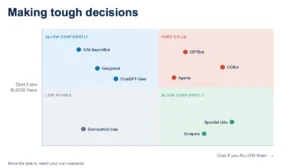
Moni Oloyede underscored this distinction during the discussion, pointing out that automating low-stakes background tasks—such as data hygiene, database scrubbing, and basic pipeline maintenance—carries a manageable risk profile. In contrast, autonomous, customer-facing execution demands exponentially higher safeguards. No matter how advanced a large language model or predictive algorithm becomes, the human operator remains fundamentally accountable for the final outcome. Delegating customer touchpoints to unmonitored systems invites catastrophic brand risks.
Building on this theme, Milton Hwang and Morgan Lehmann examined how embedded platform agents are actively reshaping daily operations by cutting down task latency. These systems can now pull complex account research directly into central automation hubs and optimize delivery timing based on predictive engagement scores.
However, Hwang offered an important word of caution: saving twenty minutes on an ad-hoc, isolated task does not fundamentally optimize the end-to-end pipeline. True operational efficiency requires intentional, deliberate workflow design rather than haphazard tool adoption. Lehmann echoed this sentiment, stressing that enterprise organizations must provide equitable access to these technologies across all departments. Without democratized access, teams inevitably build in disconnected silos, resulting in fragmented strategies and wasted potential.
Connected Handoffs and the Cost of Tech Sprawl
When individual team members or isolated business units attempt to solve complex operational problems in a vacuum, the predictable result is technological sprawl and redundant software costs. Eric Dates highlighted this phenomenon, noting that uncoordinated, bottom-up AI experiments frequently cause organizations to pay multiple times for the exact same underlying software solution or API capability. To combat this fiscal inefficiency, Dates focuses his efforts on establishing centralized, highly collaborative environments where work processes are openly shared rather than duplicated across departments.

Equally critical to organizational success is the operational handoff between distinct business units, most notably between marketing and sales. As Hwang illustrated during the conference session, generating an exquisitely detailed, automated prospect dossier carries zero business value if your revenue partners in sales do not know where to find the document, how to interpret it, or when to act on the insights it contains.
Furthermore, scaling these advanced AI and automation capabilities introduces entirely new layers of financial oversight. Modern marketing leaders can no longer rely solely on traditional software seat licenses for budgeting. Operations managers must now actively monitor variable consumption costs, API token usage, and computing overhead alongside legacy overhead, demanding closer collaboration with finance departments.
Audience Bandwidth as the Ultimate Bottleneck
As internal production capacity explodes thanks to generative AI and automated workflows, marketing teams face a hard ceiling dictated by their audience. Producing marketing assets, whitepapers, emails, and advertisements ten times faster does not mean prospective buyers can absorb them any quicker.
As Lehmann acutely observed during the session, an increased output capacity easily tempts teams to flood buyer inboxes and saturate digital channels. However, true marketing leadership requires strict editorial discipline. In an over-saturated media landscape, the primary role of the marketer is not to amplify noise, but to curate meaningful signals—delivering highly relevant touchpoints precisely when prospective buyers are receptive and in-market.
Compounding this challenge is the irreplaceable nature of trust. Oloyede reminded conference attendees that even in a digital ecosystem increasingly populated by autonomous research agents and automated outreach bots, end buyers still actively seek verified peer validation and authentic human reassurance before committing to a commercial contract. Technology can accelerate research and streamline delivery, but human-to-human trust remains the ultimate currency of B2B and high-value B2C transactions.

Background Context and Industry Evolution at MarTech 2026
The discussions at the November 2026 MarTech Conference did not occur in a vacuum. They reflect a broader, macro-level maturation of the marketing technology industry. Over the preceding four years, the martech landscape had expanded exponentially, ballooning past thousands of discrete vendor solutions. Organizations spent the early 2020s rapidly accumulating point solutions to solve immediate pandemic-era and post-pandemic digital engagement hurdles.
By late 2026, however, the industry narrative had shifted decisively away from software accumulation toward consolidation, interoperability, and ROI accountability. The explosive rise of generative AI in 2023 and 2024 initially triggered a gold rush of uncoordinated tool adoption among rank-and-file marketers. By the time industry leaders convened in November 2026, the hangover from this chaotic adoption wave was palpable, fueling urgent conversations around composable martech architectures, strict consent engineering, and data privacy frameworks.
Sessions throughout the conference repeatedly circled back to the necessity of structural integration. Whether discussing composable martech stacks that allow enterprises to swap out modular components without disrupting core operations, or exploring real-time customer data decisioning engines designed to replace static multi-touch journeys, the overarching consensus was clear: the era of throwing disparate software at growth problems has officially ended.
Broader Implications and Strategic Takeaways
The insights shared by Riemersma, Dates, Hwang, Lehmann, and Oloyede point to a definitive turning point for marketing operations. As enterprises navigate the latter half of the decade, the competitive advantage will no longer belong to the organization that deploys the newest AI feature first. Instead, it will belong to the company that successfully integrates those capabilities into a cohesive, secure, and cross-functionally aligned operational framework.
Moving from ad-hoc experimentation to scalable, predictable revenue operations requires organizations to embrace structural rigor. Marketing leaders must audit their current tech stacks to eliminate redundant expenditures, establish crystal-clear handoff protocols between marketing and sales, exercise editorial discipline to protect audience bandwidth, and prioritize human trust above automated output.

For professionals seeking a deeper dive into these strategies, the on-demand sessions from the November 2026 MarTech Conference remain accessible online, offering a comprehensive blueprint for organizations looking to future-proof their marketing operations in an increasingly automated world.