Beyond the Code: Reflecting on the Evolution of Kubernetes Community Days Lima 2026

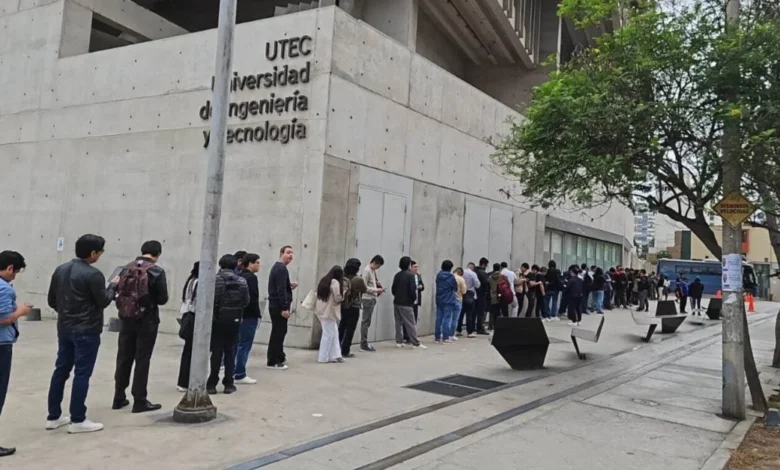
On July 18, 2026, the Universidad de Ingeniería y Tecnología (UTEC) in the Barranco district of Lima served as the epicenter for the third annual Kubernetes Community Days (KCD) Lima. This major industry gathering, organized under the auspices of the Cloud Native Computing Foundation (CNCF), marked a significant milestone for the Peruvian tech ecosystem. With an attendance exceeding 900 participants, the event underscored the rapid maturation of cloud-native technologies within Latin America, transforming from a grassroots experiment into a cornerstone of regional professional development.
The event, which concluded with the submission of a comprehensive transparency report to the CNCF, served as a diagnostic tool for the health of the local DevOps and Site Reliability Engineering (SRE) communities. Ronald Requena, a newly appointed CNCF Ambassador for Peru and a pivotal figure in the event’s organization, noted that the administrative wrap-up—ranging from sponsor logistics to attendee feedback analysis—revealed a sector that is increasingly defined by its architectural maturity and its demand for high-level technical discourse.

A Three-Year Chronology of Growth
To understand the current significance of KCD Lima, one must evaluate its trajectory since the inaugural event in 2024. The 2024 edition functioned primarily as a proof of concept. With no established track record, the organizing committee operated with limited resources, aiming to validate whether the Peruvian market could sustain a specialized conference dedicated to container orchestration. The successful turnout of over 500 attendees, supported by 49 speakers and 11 corporate sponsors, provided the necessary evidence of viability.
By 2025, the focus shifted from existence to institutionalization. The organizing committee transitioned from ad-hoc management to a structured framework, focusing on documentation, standardized legal contracts, and financial sustainability. This second year solidified the event’s reputation, attracting 1,377 registrations and 520 actual attendees across seven specialized tracks. This phase was critical in transforming the event from a one-time novelty into a repeatable industry tradition.
The 2026 iteration represented a "maturation phase." With attendance figures nearly doubling compared to the previous year, the event moved beyond the need to prove its relevance. Instead, it faced the challenge of meeting elevated expectations from a community that has become highly sophisticated in its technical requirements. The presence of international speakers and a robust roster of returning sponsors highlighted that KCD Lima has established itself as a critical node in the global CNCF ecosystem.

Data-Driven Insights and Attendee Demographics
The success of KCD Lima 2026 is best understood through the lens of its participant profile. Data collected from the event reveals a significant shift in the professional landscape of Peruvian technology. Notably, 45% of attendees represented end-user companies, with the financial services sector—including major institutions like BCP, Interbank, and Scotiabank—accounting for the largest share.
This statistic holds significant implications for the region’s digital transformation. It suggests that the adoption of Kubernetes and cloud-native practices in Peru has moved past the experimental phase and is now being integrated into the core infrastructure of the nation’s largest financial institutions. These entities are no longer merely testing cloud architectures; they are building dedicated platform teams to manage complex, mission-critical SRE and DevOps operations.
Furthermore, the prevalence of "Architect" as the most common job title among attendees—surpassing developers and general DevOps engineers—indicates a shift in the local market. It suggests that the focus of the community has moved from simple code implementation to complex system design and long-term infrastructure strategy. Additionally, the deliberate inclusion of students, who made up 8% of the audience, highlights a strategic investment in the future workforce. By maintaining a free-access model for students, the organizers have effectively lowered the entry barrier to the cloud-native ecosystem, ensuring that the next generation of engineers is exposed to industry standards early in their academic careers.

Behind the Scenes: The Infrastructure of Community
While attendees experience the event as a seamless sequence of talks and networking, the reality of organizing KCD Lima involves a complex logistical operation. The 2026 event required months of intensive work, including navigating international vendor onboarding processes, managing multi-currency cash flows, and negotiating complex legal agreements regarding liability and exclusivity.
The organizing team, led by Josua Castro and supported by a group of professionals working in full-time capacities, underscored the necessity of volunteer labor in maintaining the CNCF’s global standards. From a newsroom perspective, the "invisible" work—the coordination of five separate rooms, the management of coffee stations, and the intricate scheduling of 60 individual speakers—serves as a case study in decentralized community management. Without the rigorous standardization mandated by the CNCF, the scalability of such an event would be nearly impossible.
Future Implications and Challenges
Despite the success of the 2026 edition, feedback from the community has highlighted areas for potential improvement. Future iterations will need to address the following:

- Agenda Depth: As the professional maturity of the attendees grows, there is an increasing demand for more advanced, "deep-dive" technical workshops rather than introductory sessions.
- Networking Infrastructure: With nearly 1,000 participants, the logistical challenge of facilitating meaningful professional connections has become more complex.
- Regional Integration: There is a stated desire to increase the participation of speakers and attendees from neighboring countries to further solidify Lima’s position as a regional hub for cloud-native innovation.
- Content Diversification: Expanding the scope of topics to include more on AI/ML integration with Kubernetes and edge computing represents the next logical step for the event’s technical curriculum.
A Sustained Commitment to Growth
The appointment of Ronald Requena as a CNCF Ambassador in August 2026 serves as an external validation of the progress made by the local organizing committee. This recognition is not merely an individual honor; it acts as a bridge between the local Peruvian community and the global CNCF governance structure.
The broader impact of KCD Lima lies in its ability to serve as a bellwether for the region’s technical progress. The transition of the Peruvian banking sector toward cloud-native platforms, the increased emphasis on architectural design, and the professionalization of the event itself all point to a maturing market. As the event looks toward 2027, the central question for the organizers will be how to maintain this momentum without sacrificing the accessibility and community-driven spirit that defined its inception.
The image of the early morning line at UTEC, with attendees arriving hours before the doors opened, remains a powerful symbol of the current state of the technology sector in Lima. It represents a professional class that is not only eager for knowledge but is also actively seeking to define the standards of their industry. For the CNCF and the broader tech community, KCD Lima has evolved from a local gathering into a vital component of the international cloud-native conversation, proving that high-level technical collaboration can thrive in any geography, provided the community is sufficiently committed to the labor of building it.
Related posts: