Amazon S3 Integration Comes to Vercel Marketplace and v0 to Streamline Cloud Storage for Developers

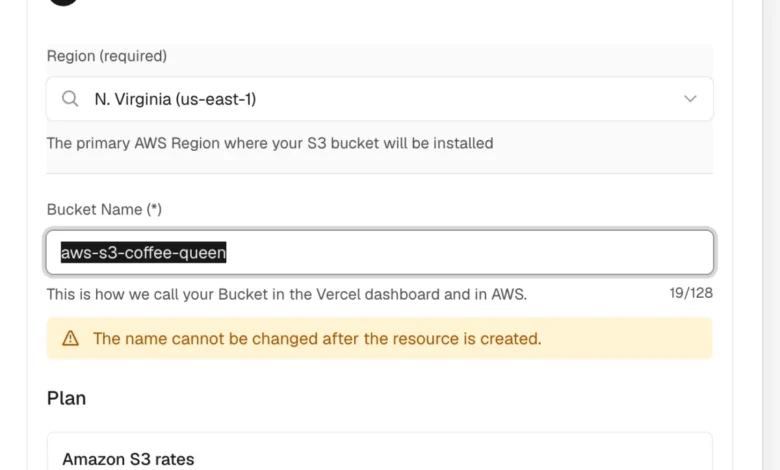
The landscape of cloud-native development underwent a significant shift this week as Vercel announced a deep integration with Amazon Simple Storage Service (Amazon S3), bringing enterprise-grade object, table, and vector storage directly into the Vercel ecosystem. By bridging the gap between Vercel’s high-velocity deployment platform and AWS’s foundational storage infrastructure, this partnership aims to eliminate the friction historically associated with cross-platform credential management, manual policy configuration, and infrastructure provisioning.
Bridging the Gap Between Frontend and Cloud Infrastructure
For years, developers working within the Vercel ecosystem have enjoyed a seamless experience for frontend deployment and serverless functions. However, connecting these applications to robust backend storage often necessitated an arduous journey into the AWS Management Console, requiring the manual creation of Identity and Access Management (IAM) roles, bucket policies, and cross-service authentication.
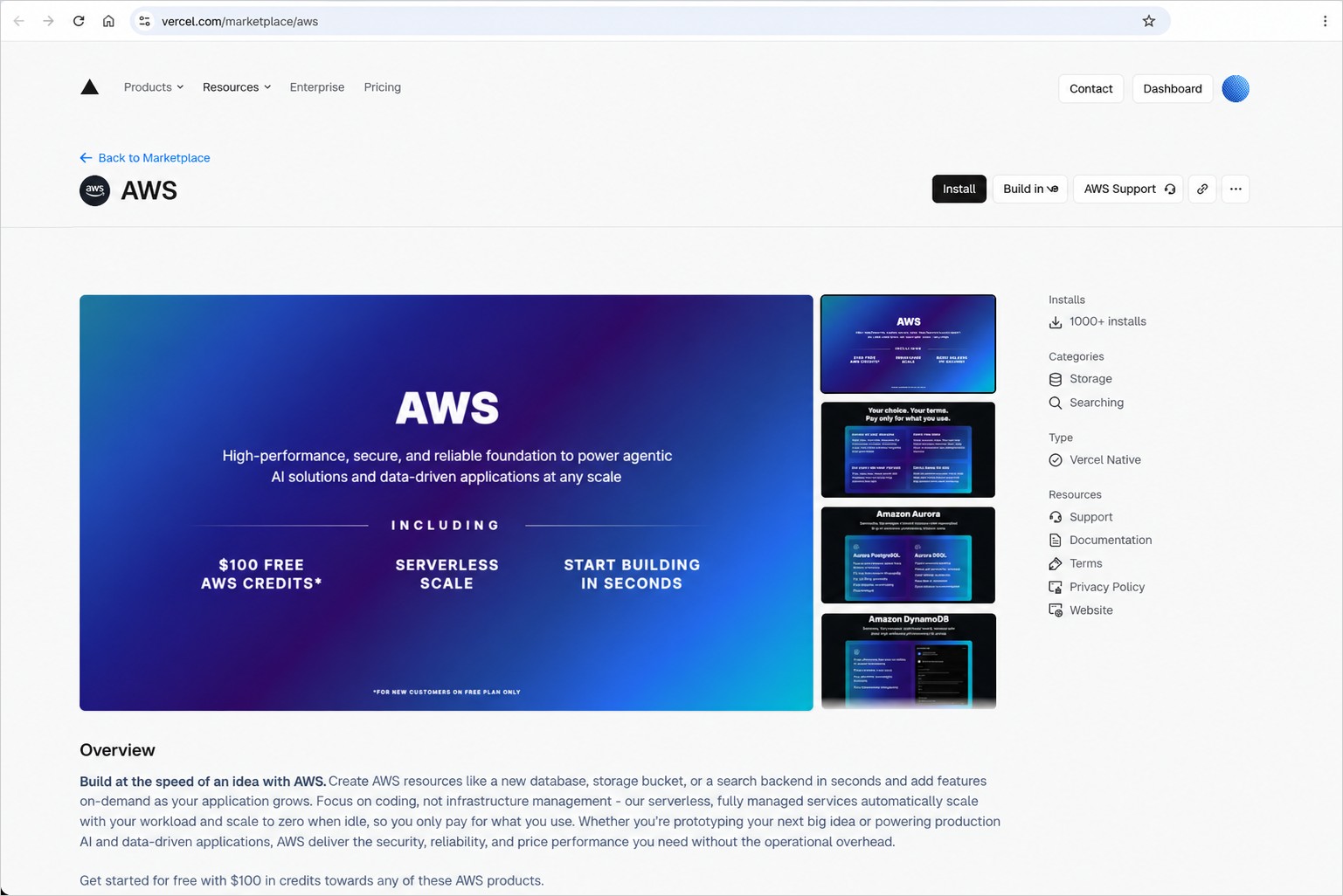
The new integration, accessible via the Vercel Marketplace and the generative AI tool v0, changes this paradigm by automating the provisioning of Amazon S3 resources. Developers can now initiate bucket creation—including specialized workloads like S3 Tables and S3 Vectors—without leaving their development environment. This capability effectively treats storage as a first-class citizen within the Vercel dashboard, mirroring the convenience found in managed database services like Amazon Aurora and DynamoDB.
A Three-Tiered Approach to Storage Workloads
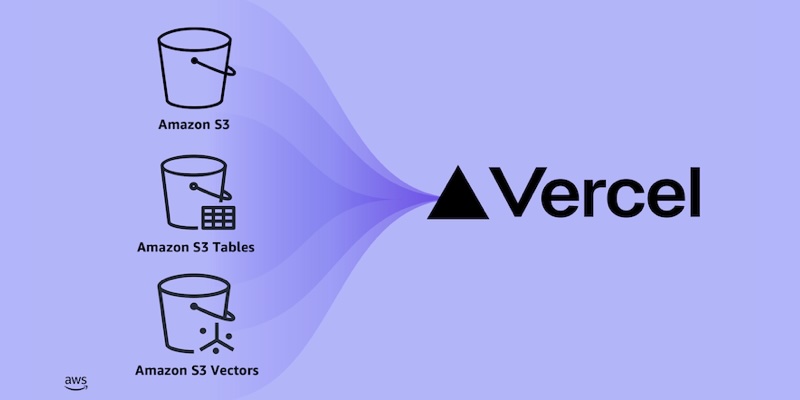
The integration is not a monolithic offering but a specialized suite covering three primary categories of modern application needs:
- Everyday Object Storage: This remains the core of the S3 offering, allowing developers to handle standard file uploads, media assets, and static content with the high durability and scalability that have made S3 the industry standard for over a decade.
- Analytics with S3 Tables: By incorporating S3 Tables, Vercel developers now have access to fully managed Apache Iceberg tables. This is a critical development for data-heavy applications, as it provides automated table maintenance and compaction, allowing developers to query large datasets using engines like DuckDB directly from within Vercel functions without the need for a complex external data warehouse.
- AI-Driven Vector Storage: Perhaps the most forward-looking aspect of this release is the support for S3 Vectors. As the AI and machine learning sector accelerates, the ability to perform semantic search and support RAG (Retrieval-Augmented Generation) pipelines is paramount. By enabling S3 Vectors, Vercel allows developers to build AI agents that can query embeddings stored natively in their existing S3 buckets.
Chronology of the Integration
The path to this integration reflects a broader trend in the cloud industry: the movement toward "invisible infrastructure."
- Early 2024: The industry observed an increase in developers requesting more unified workflows between frontend platforms and backend cloud storage to support the rapid growth of generative AI applications.
- Mid-2024: Vercel expanded its AWS integrations, adding support for Amazon Aurora and OpenSearch, signaling a move toward supporting a full-stack AWS architecture.
- October 2026: The official launch of the S3 native integration marks the culmination of this roadmap, moving beyond databases to include the foundational object storage layer.
- Future Outlook: Industry analysts suggest that this integration will likely serve as a blueprint for further AWS service expansions into the Vercel Marketplace, potentially including more specialized serverless compute and messaging services.
Technical Implementation and Security
A primary concern for any integration of this scale is security. The Vercel-S3 implementation addresses this through the use of OIDC (OpenID Connect) tokens. Rather than requiring developers to manage long-lived, static access keys—which are notoriously prone to leakage—the system utilizes awsCredentialsProvider from @vercel/functions/oidc.
When a Vercel function executes, it exchanges a short-lived OIDC token with the AWS Security Token Service (STS). This results in temporary, narrowly scoped credentials that exist only for the duration of the request. This "zero-static-key" approach significantly reduces the attack surface for web applications, aligning with modern security best practices like the principle of least privilege.

Strategic Implications for the Development Stack
The implications of this development are twofold. First, it democratizes access to complex AWS services. Junior developers or small teams that might have previously been intimidated by the complexity of AWS IAM or S3 lifecycle policies can now leverage enterprise-grade storage tools with minimal configuration.
Second, it reinforces the trend of "vendor consolidation" within a single cloud account. By managing both the application compute (on Vercel) and the backend storage (in AWS) under a unified billing and identity model, companies can simplify their operational overhead. This is particularly advantageous for startups that need to move fast but must maintain the ability to scale into the full AWS ecosystem as their user base grows.
Expert Analysis and Industry Response
Market observers have noted that this move is a strategic win for both parties. For AWS, it secures a deeper foothold in the rapidly growing frontend-as-a-service market, ensuring that the next generation of AI-native applications is built on S3 foundations. For Vercel, it mitigates the "platform lock-in" critique by offering a powerful, native bridge to the world’s most widely used cloud provider.
"The shift here is from ‘managing infrastructure’ to ‘consuming capabilities’," says a lead systems architect familiar with the integration. "By abstracting the provisioning layer, Vercel allows developers to focus on the business logic of their AI agents or analytics dashboards, while AWS handles the heavy lifting of data durability and query performance. It is a refinement of the developer experience that was long overdue."
Getting Started: A Simplified Workflow
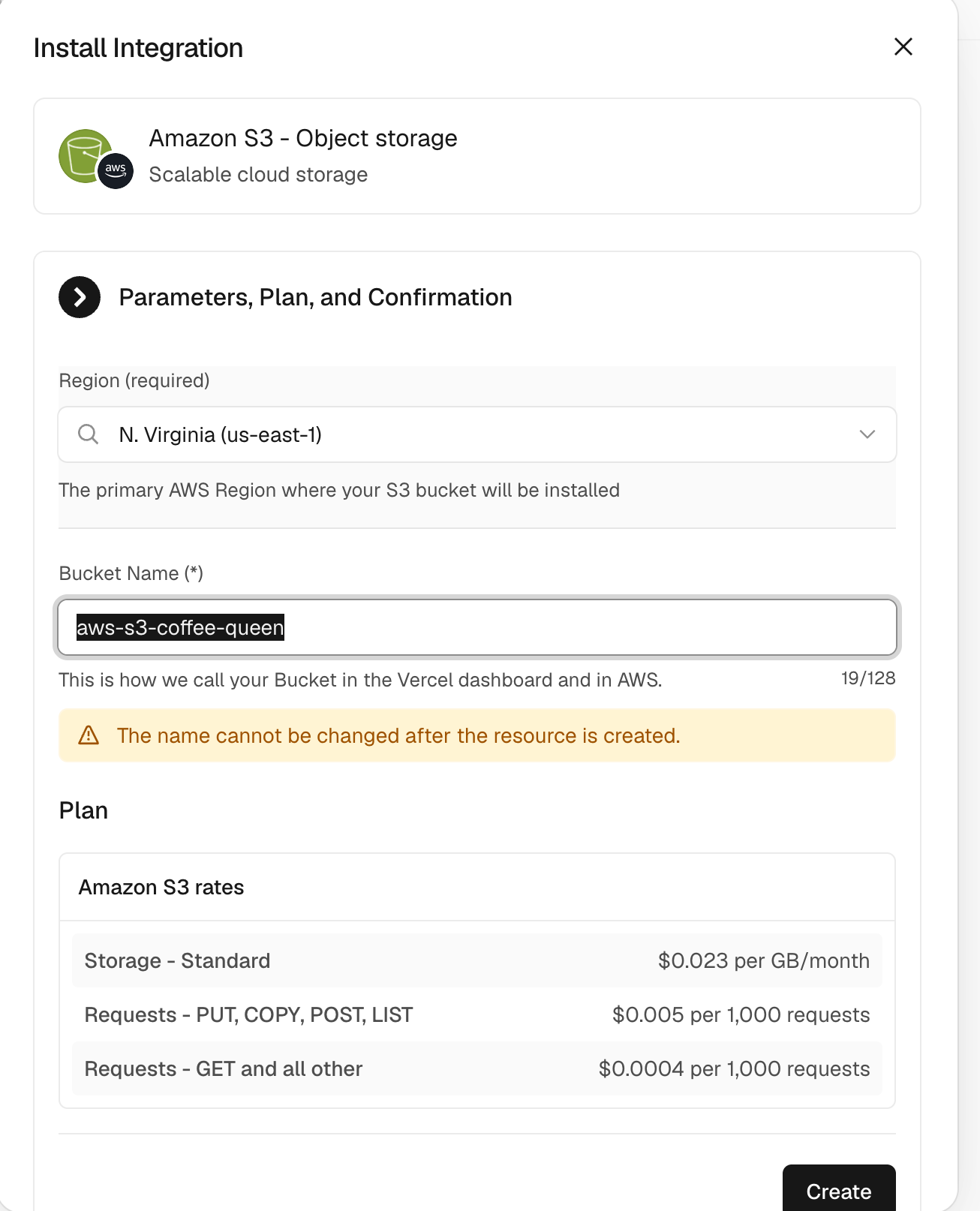
To facilitate adoption, the onboarding process has been reduced to a few clicks within the Vercel dashboard. Upon navigating to the "Storage" tab, users can select "Create" and choose their desired AWS resource. Once the bucket is provisioned, the vercel link and vercel env pull commands automatically inject the necessary environment variables into the local development environment.
The integration also leverages v0, Vercel’s generative AI interface. Developers can now use natural language prompts—such as "build a support bot that searches through my PDFs"—and the platform will not only generate the UI code but also provision the necessary S3 Vector buckets and configure the connection parameters automatically.
Pricing and Accessibility
As of October 2026, there is no additional service fee for using the Vercel-S3 integration. Users are billed exclusively for the standard Amazon S3 usage rates through their linked AWS account. To lower the barrier to entry, new AWS accounts created through the Vercel portal are eligible for $100 in AWS credits, providing a runway for testing and production deployments.
This feature is currently available in all commercial AWS Regions supported by Vercel, ensuring that global teams can maintain low-latency connections to their data.
The Path Forward
As the line between frontend and backend continues to blur, the success of this integration will likely be measured by the adoption rate of S3 Tables and S3 Vectors among Vercel’s user base. With the inclusion of the AWS MCP (Model Context Protocol) Server, developers are also encouraged to participate in the broader AWS community via the AWS re:Post forums, fostering a collaborative environment for troubleshooting and feature requests.
Ultimately, the integration represents a mature evolution of cloud-native development. By stripping away the bureaucratic layers of cloud infrastructure management, developers are empowered to dedicate more time to innovation, data analysis, and the creation of the next generation of AI-driven web experiences. Whether through the efficiency of Apache Iceberg tables or the semantic precision of vector storage, the new Vercel-S3 partnership provides the building blocks for more performant, secure, and intelligent web applications.