Accelerating Enterprise Analytics: How United Airlines Modernized Database Replication with Apache Iceberg and AWS

As the global aviation industry navigates hyper-competitive commercial landscapes, the velocity of business intelligence can dictate the difference between operational profitability and missed opportunities. United Airlines, recognized as the world’s largest airline based on revenue passenger miles, recently confronted a critical technological bottleneck: its legacy data synchronization infrastructure could no longer keep pace with the demands of its expansive analytical workloads. During a sweeping multi-year digital modernization initiative, the Chicago-headquartered air carrier faced the complex challenge of continuously replicating rapidly changing reference data from an operational Amazon Aurora MySQL-Compatible Edition database directly into a modern, cloud-native analytics architecture powered by Apache Iceberg.
Historically reliant on batch processing methodologies, United Airlines discovered that changes originating in its core transactional databases were taking far too long to propagate down to business analysts and downstream reporting systems. Consequently, analytical teams were routinely forced to evaluate dynamic market patterns, inventory fluctuations, and pricing adjustments using stale data. This latency introduced undesirable friction into critical revenue management decisions. To eliminate these operational blind spots, the airline’s engineering organization, in close collaboration with AWS principal architects, engineered a state-of-the-art, near-real-time Change Data Capture (CDC) pipeline. This novel architecture successfully bypassed traditional relational database scaling limitations, providing hundreds of business analysts simultaneous access to up-to-the-minute data domains.
The Architectural Paradigm Shift
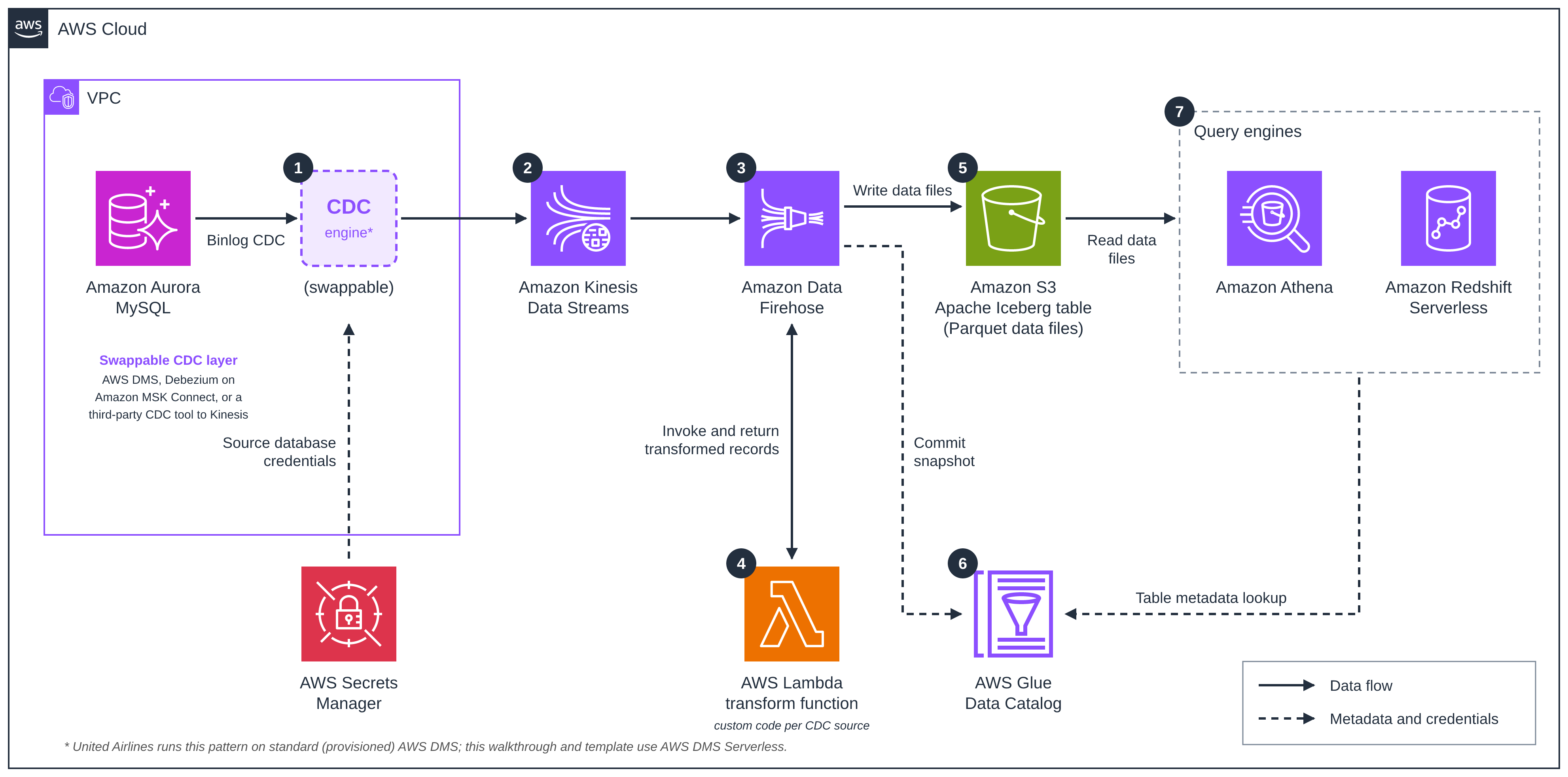
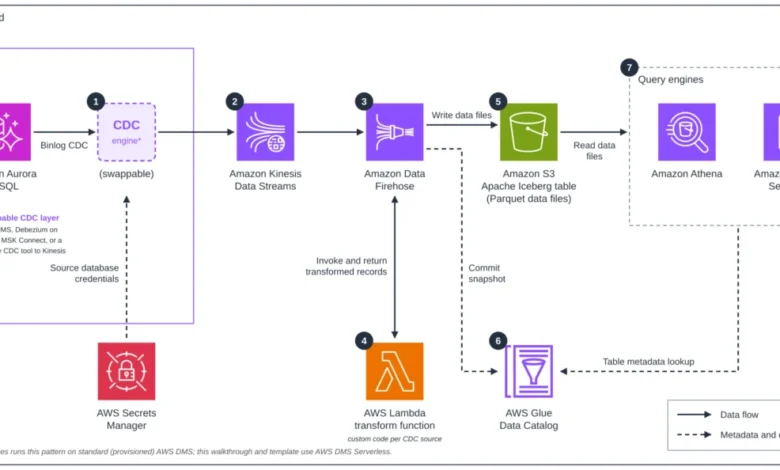
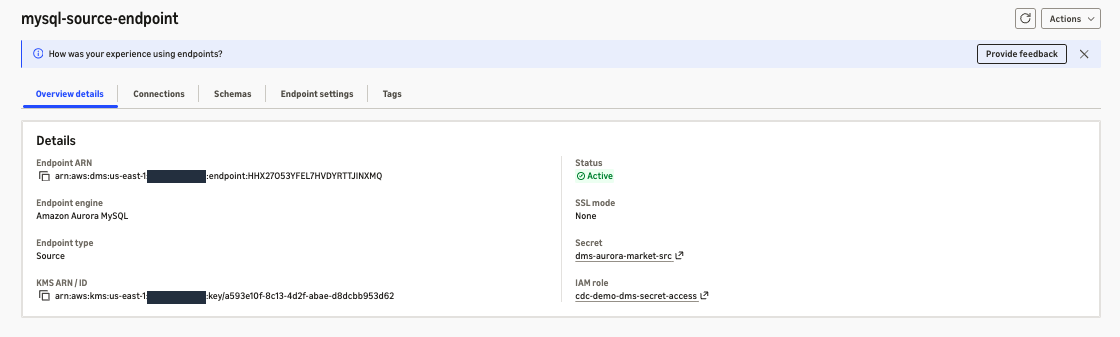
The core of United Airlines’ newly designed analytics pipeline relies on a fully managed, event-driven architecture hosted entirely within Amazon Web Services (AWS). At the foundational ingestion layer, AWS Database Migration Service (DMS) Serverless captures real-time binary log (binlog) modifications from the Amazon Aurora MySQL database. This data capture process is meticulously configured to operate with minimal performance overhead on the source transactional system, ensuring that passenger booking engines and core operational applications experience no degradation in transaction processing speeds.
Once captured, the database change events—encompassing inserts, updates, and deletes—are immediately streamed into Amazon Kinesis Data Streams. Kinesis serves as a highly scalable, durable, and elastic buffer, decoupling the source database replication tasks from heavy downstream processing mechanics. For the downstream delivery and storage transformation, United Airlines integrated Amazon Data Firehose alongside AWS Lambda. The Lambda function acts as a specialized parsing engine, dynamically translating raw CDC record formats into structured inputs compatible with Apache Iceberg specifications.
Amazon Data Firehose then consumes these transformed events, batching and writing them directly as columnar Parquet files into Apache Iceberg tables hosted on Amazon Simple Storage Service (Amazon S3). Crucially, Firehose handles the continuous application of insert, update, and delete operations via an optimistic concurrency control mechanism, committing atomic, consistent, isolated, and durable (ACID) Iceberg table snapshots without requiring custom infrastructure management or dedicated server maintenance.
Overcoming Historical Scalability Limits
Before migrating to the open table format of Apache Iceberg, United Airlines’ analytical capabilities were constrained by the inherent scalability boundaries of conventional SQL databases. Complex analytical queries scanning over 10 million rows frequently encountered severe performance bottlenecks, restricting concurrent usage and prolonging reporting cycles.
The integration of Apache Iceberg fundamentally altered this performance profile. By leveraging Iceberg’s advanced table specification—specifically utilizing format-version 2 with merge-on-read methodologies—the airline eliminated legacy querying ceilings. In rigorous internal pre-production testing, average query latency plummeted by an impressive factor of five. Furthermore, because these complex queries are executed as part of downstream AWS Glue extract, transform, and load (ETL) routines, total job processing times were cut in half, yielding substantial reductions in billed AWS Glue execution hours.

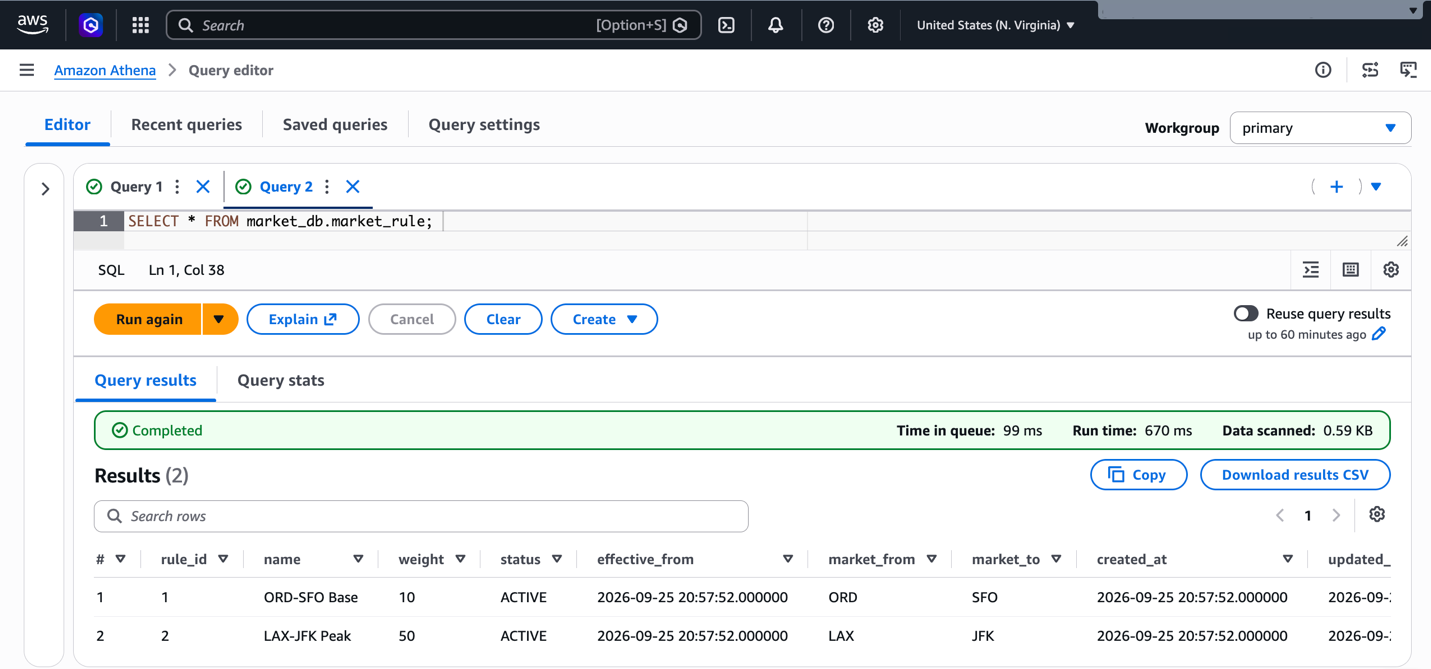
Once landed within the Amazon S3-backed Iceberg tables, the data is indexed and cataloged through the centralized AWS Glue Data Catalog. This open storage framework democratizes access across multiple compute engines. Business analysts and data scientists can query the exact same underlying datasets interchangeably using Amazon Redshift Serverless for heavy warehousing tasks or Amazon Athena for rapid, pay-per-query ad-hoc discovery and data validation.
Step-by-Step Implementation and Automation
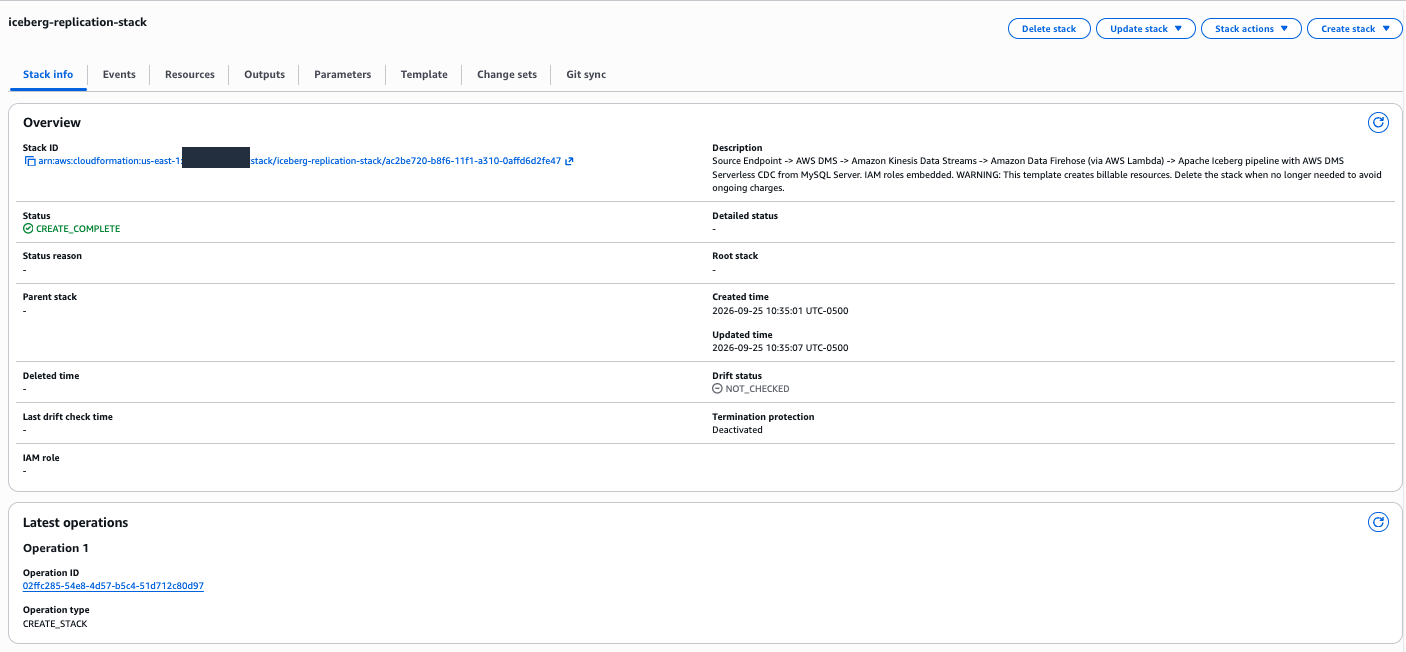
To assist organizations facing similar high-volume data synchronization requirements, the collaborative engineering team published a representative architectural blueprint featuring AWS CloudFormation automation. While United Airlines runs its enterprise workloads on provisioned infrastructure configurations, the reference implementation utilizes AWS DMS Serverless to abstract away replication-instance sizing and management complexities.
The replication lifecycle follows a meticulously orchestrated sequence:
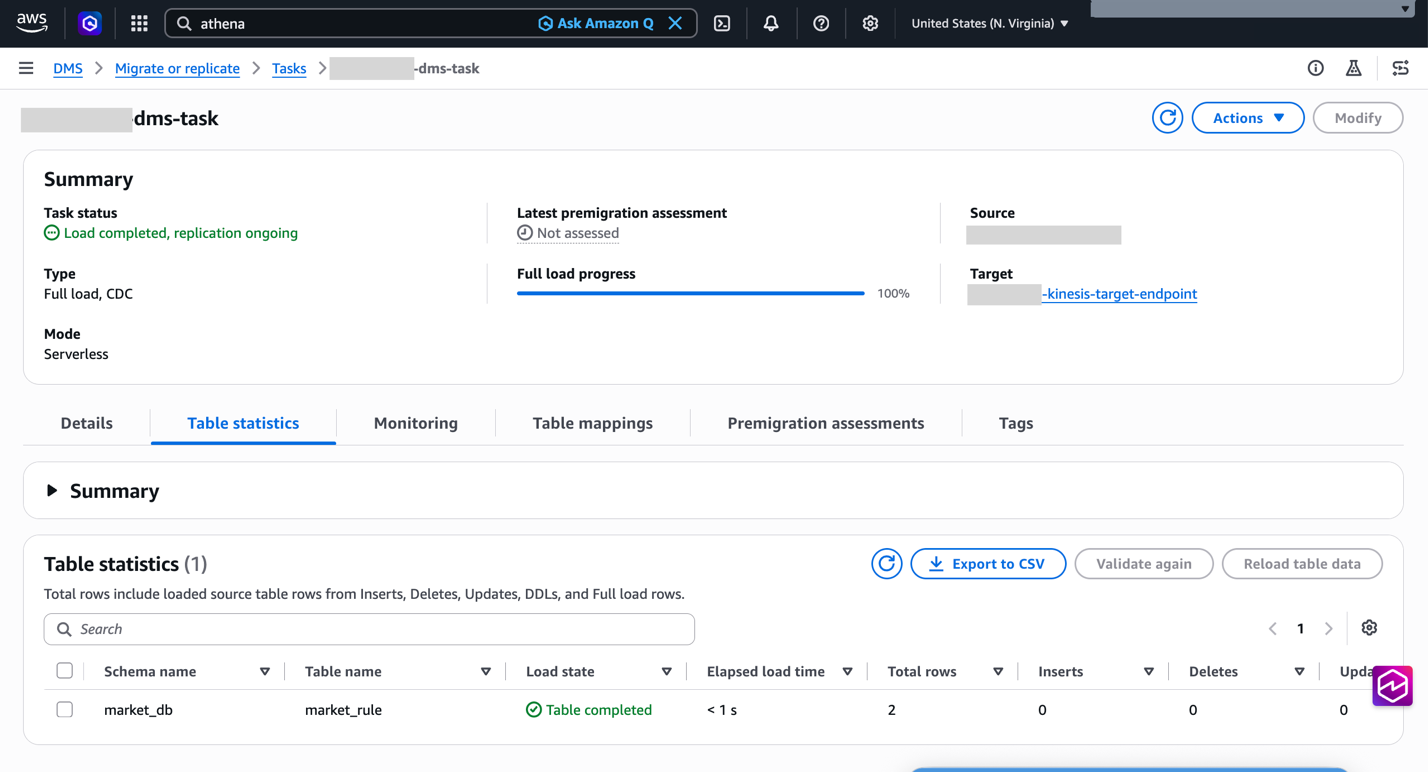
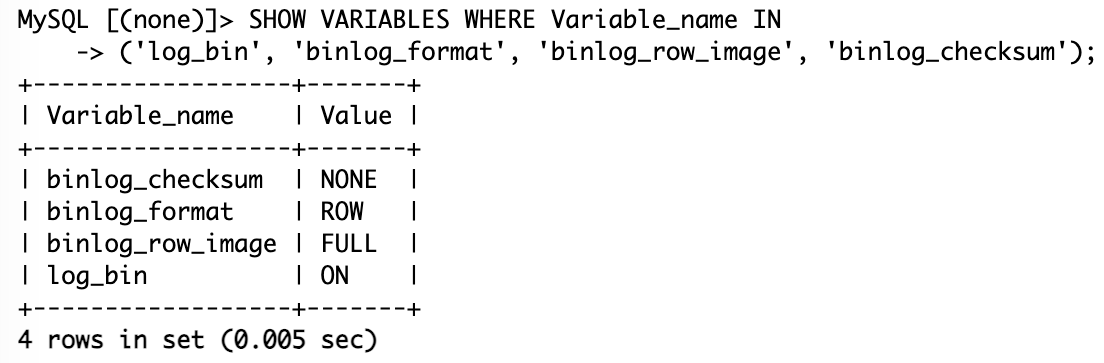
- Source Configuration: Administrators configure the operational Amazon Aurora MySQL cluster to maintain active binary logging with row-level image formatting, setting adequate binary log retention windows to safeguard against prolonged replication stoppages.
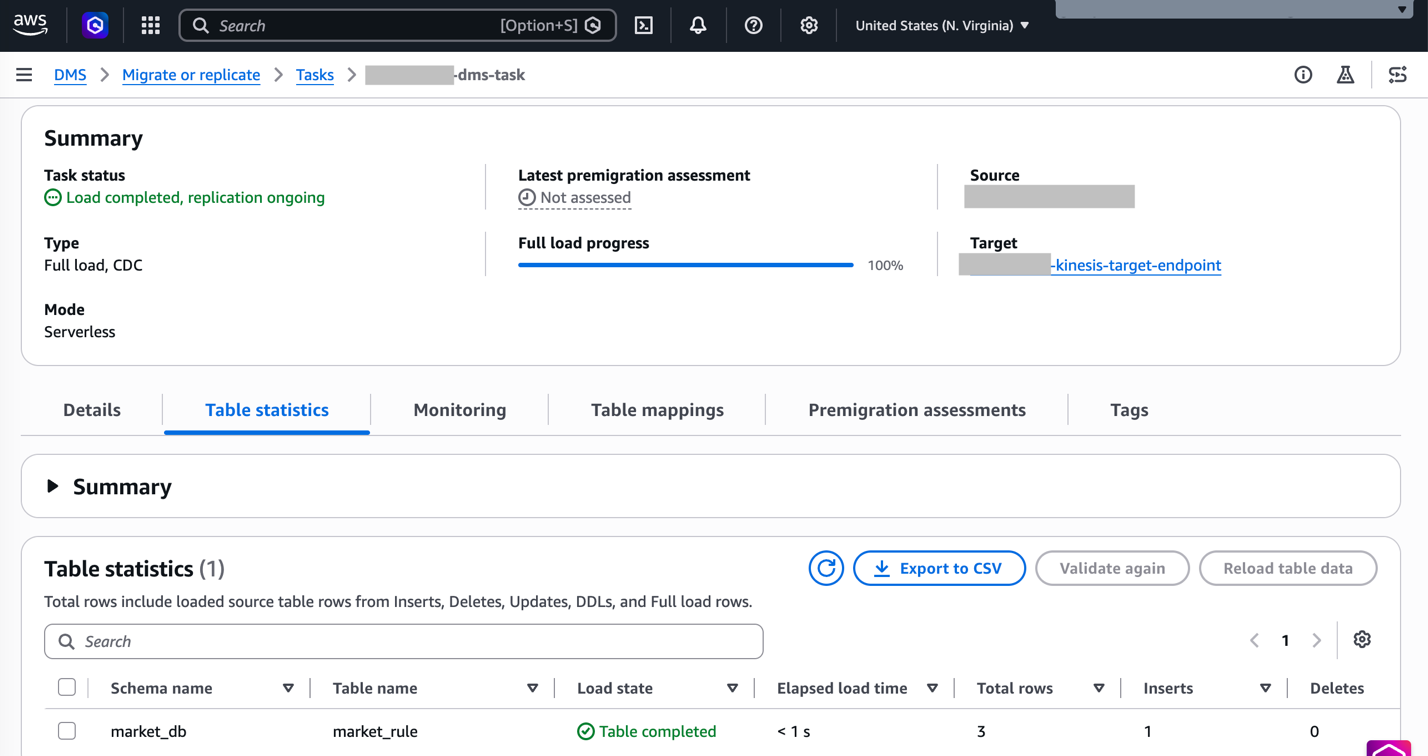
- Capture and Streaming: AWS DMS Serverless reads transaction changes from the source binlog, transmitting structured event payloads securely into Amazon Kinesis Data Streams.
- Transformation and Delivery: Amazon Data Firehose reads from the Kinesis stream, invoking an AWS Lambda function that parses operational metadata and routes records to appropriate table destinations.
- Storage and Cataloging: Firehose writes optimized Parquet data files to Amazon S3 while updating ACID-compliant snapshot metadata inside the AWS Glue Data Catalog.
- Analytical Consumption: Downstream analytics platforms, including Amazon Athena and Amazon Redshift Serverless, query the open Iceberg tables seamlessly.
Operational Excellence and Table Maintenance
Maintaining high-performance queries on rapidly growing data lakes requires rigorous operational discipline. As high-traffic Apache Iceberg tables continuously absorb streaming inserts and append delete files via merge-on-read operations, small-file accumulation can gradually degrade read efficiencies. To counteract this phenomenon, engineering teams must establish routine maintenance schedules.
Best practices dictate the implementation of automated table compaction routines—either natively managed via the AWS Glue Data Catalog or executed periodically through SQL optimization commands such as Athena’s OPTIMIZE and VACUUM utilities. These administrative operations consolidate fragmented Parquet files, expire outdated snapshots, and purge orphan storage artifacts, ensuring that query planners maintain optimal execution paths over multi-terabyte datasets.
Broader Industry Implications and Future Outlook
The successful deployment of this serverless Apache Iceberg CDC pipeline at United Airlines illustrates a broader architectural trend sweeping enterprise data engineering. Across industries characterized by high transactional volume—such as financial services, real-time retail inventory management, and global travel hospitality—the demand for near-real-time analytical visibility has transitioned from a competitive advantage to an operational baseline.
By pairing managed streaming services with open storage standards like Apache Iceberg, enterprises can decouple storage formats from proprietary compute engines, preventing vendor lock-in while drastically reducing infrastructure overhead. As United Airlines continues to scale its Revenue Management data platform to support hundreds of concurrent analytical users, the foundational stability and blazing-fast query response times provided by this modern data architecture will remain central to its commercial strategy. Organizations looking to emulate this success are encouraged to leverage foundational infrastructure-as-code templates, incorporate rigorous CloudWatch monitoring dashboards, and carefully calibrate buffer intervals to strike the optimal economic balance between low-latency ingestion and cost-effective data storage.