NVIDIA Founder Jensen Huang Commissions Landmark AI Supercomputer at Naval Postgraduate School to Empower U.S. Military Leadership

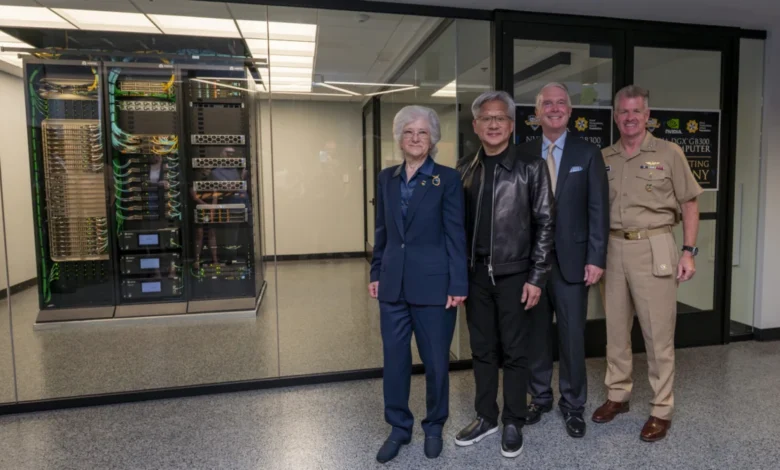
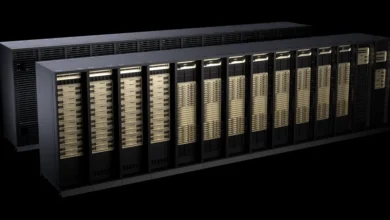
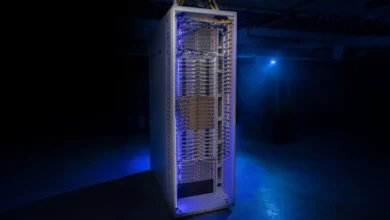
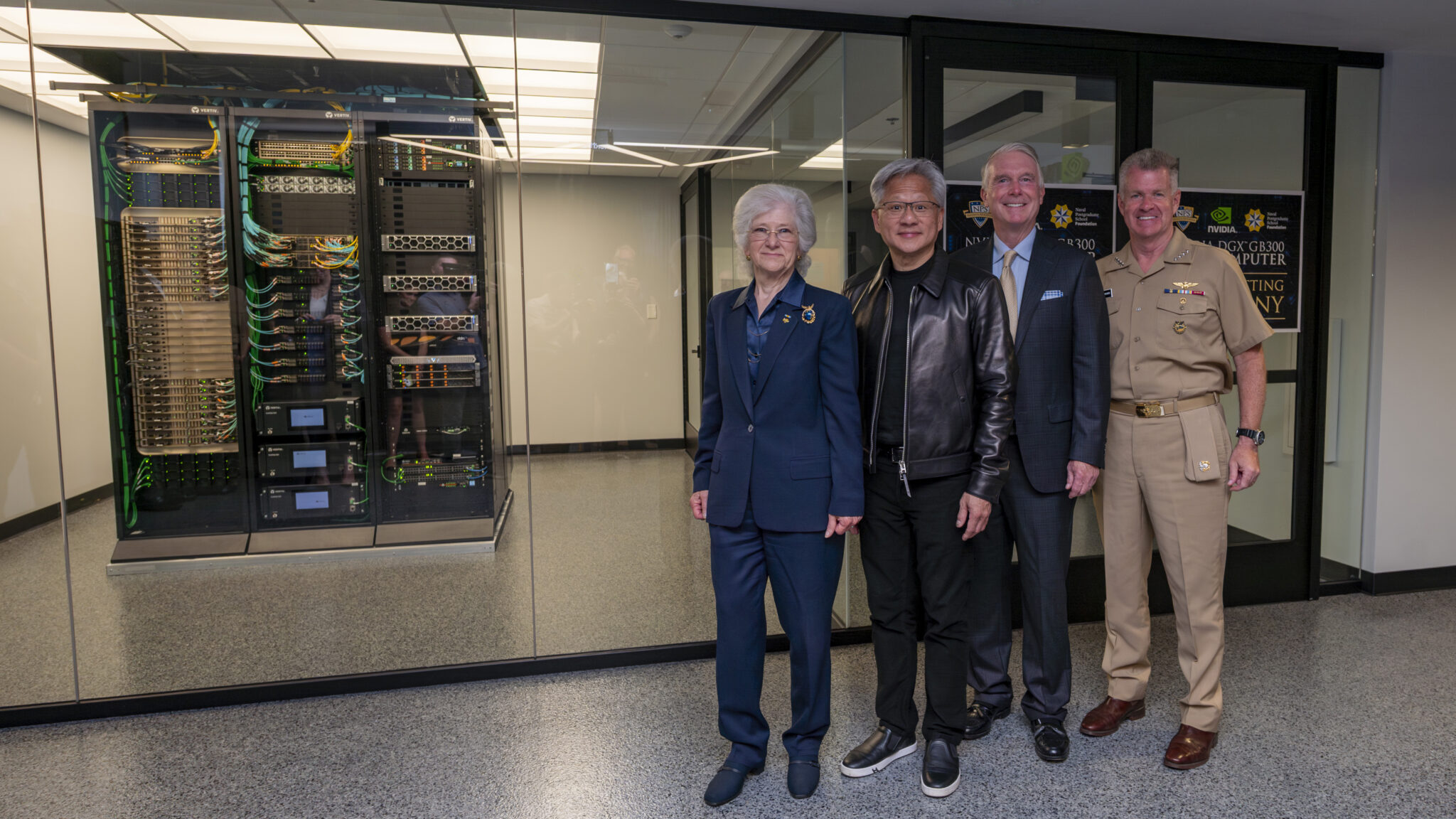
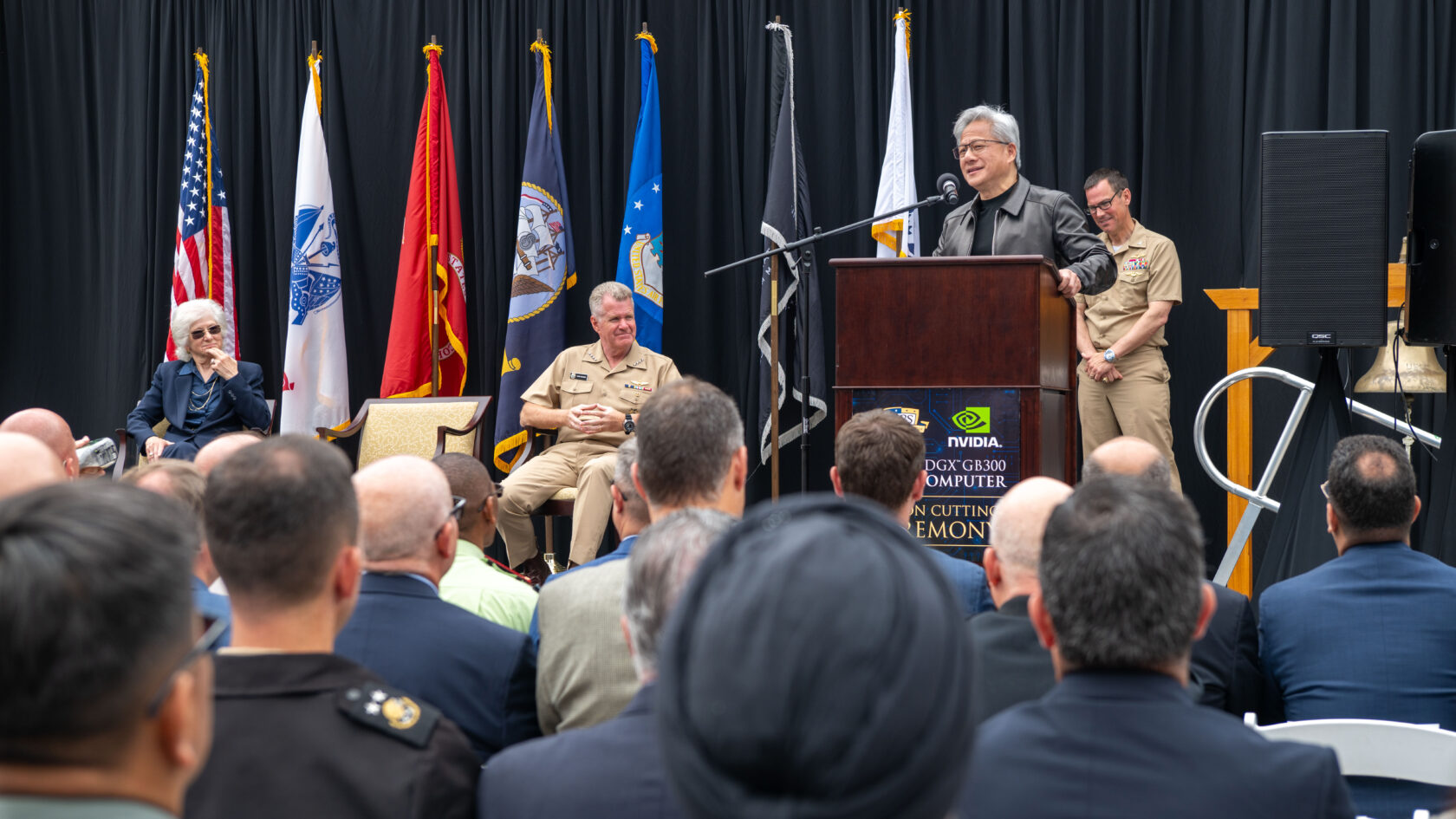
NVIDIA founder and CEO Jensen Huang marked a significant milestone in the advancement of artificial intelligence within the U.S. military today by commissioning an NVIDIA DGX GB300 system at the Naval Postgraduate School (NPS) in Monterey, California. This state-of-the-art AI supercomputer, recognized as one of the world’s most powerful platforms, is now fully operational for the students, researchers, and faculty at the nation’s premier graduate institution for national security affairs. The integration of this cutting-edge technology is poised to profoundly enhance educational programs and accelerate groundbreaking research with direct implications for national defense.
The commissioning event, held as part of NPS’s three-day Converge @ NPS forum, underscores a deepening collaboration between NVIDIA and the Naval Postgraduate School. This partnership is dedicated to fostering the development and application of AI-driven technologies, aimed at equipping military leaders with the critical insights and capabilities needed to navigate an increasingly complex global landscape. The DGX GB300 system, managed by NVIDIA Mission Control software, provides on-premises access to robust, large-scale AI computing power. This capability is crucial for a wide array of applications, including advanced weather prediction models, sophisticated cybersecurity threat analysis, and comprehensive disaster resilience and response planning.
Jensen Huang articulated the profound importance of timely information and insightful analysis for those on the front lines of national security. "Our nation depends on our men and women who fight on the front lines," Huang stated during the ceremony. "Nothing is more valuable to you than information and insight, and information and insight in a timely way, and to understand its impact and consequence. I can’t imagine anything more important." His words highlight the strategic imperative to equip military personnel with the most advanced tools for decision-making.
Admiral Samuel Paparo, Commander of the U.S. Pacific Command, emphasized the necessity of modernizing educational approaches alongside technological advancements. "As we modernize our technology, we must also modernize how we educate our leaders," Admiral Paparo remarked. "Access to advanced computing capability means NPS students and faculty understand the opportunities and responsibilities that come with these technologies." This sentiment underscores the dual focus of the initiative: leveraging AI for operational advantage while ensuring responsible and informed integration by future leaders.
A New Era of AI-Powered Education and Research at NPS
The Naval Postgraduate School serves a unique and vital role in the U.S. military, educating active-duty officers and international partners across diverse disciplines, from space operations and cyber warfare to oceanography and national security affairs. The institution is renowned for its commitment to applied research that directly addresses real-world challenges faced by the armed forces. The introduction of the DGX GB300 supercomputer represents a significant leap forward in the school’s capacity to support these critical endeavors.
The DGX GB300 system will empower NPS’s more than 1,500 in-resident students and 600 faculty members with unprecedented on-premises access to large-scale AI computing. This includes the ability to train complex foundation models from the ground up, execute high-fidelity simulations at scale, and develop novel AI tools with immediate practical applicability. This level of computational power was previously a significant bottleneck for many advanced research projects undertaken at the school.
Huang further elaborated on the accessibility of modern AI tools, advising attendees to embrace the technology regardless of their specific technical background. "The most important advice that I would give to someone is to engage the technology," Huang advised. "It’s not as hard as you think it is, and the reason for that is because, on first principles, technology is supposed to get smarter and smarter over time." This perspective aims to demystify AI and encourage its adoption across a broader spectrum of military professionals.
NVIDIA’s commitment extends beyond hardware provision through its Deep Learning Institute (DLI). By equipping NPS faculty with instructor toolkits, NVIDIA is facilitating the integration of AI education across various departments and curricula. This strategic move ensures that AI literacy and application become a foundational element of graduate-level instruction at NPS, preparing officers for an AI-enabled future.
Admiral Paparo reiterated the urgency of this educational shift, stating, "Many of you will command in AI-enabled environments. Information will move at lightning speeds, compressing response times. Our advantage will come from leaders, like you, who can use the technology to see, understand, decide and act faster while exercising the judgment, experience and leadership that machines cannot provide. That education is happening here at NPS." His statement highlights the critical human element that AI is intended to augment, not replace, emphasizing the enduring importance of human judgment and leadership.
From Ocean Models to Digital Twins: Harnessing AI for Real-World Applications
The DGX GB300 supercomputer is strategically positioned to supercharge existing research initiatives at NPS and unlock new avenues of exploration. The school has a history of fostering innovation through regular hackathons, which have yielded significant advancements in areas such as autonomous systems, oceanographic research, and operational planning. These applied research efforts, by their nature, demand substantial computational resources to scale effectively.
Researchers at NPS are already leveraging AI for complex modeling tasks, including the simulation of intricate sea conditions, the prediction of atmospheric changes with greater accuracy, and the creation of high-fidelity digital twins of critical operational environments. These digital twins, essentially virtual replicas of physical systems or environments, allow for extensive testing, scenario planning, and risk assessment without impacting real-world operations. Such work directly aligns with NPS’s deep expertise in scientific and operational domains vital to national security.
A notable example of this applied research is the framework developed through NPS’s partnership with MITRE, a non-profit organization dedicated to solving complex problems. This framework, built upon NVIDIA Omniverse libraries, creates sophisticated digital twin environments. These environments are designed to simulate real-world navigation and decision-making processes under conditions of uncertainty, providing invaluable training and analytical capabilities. The DGX GB300 will now provide the computational horsepower necessary to expand the scope and fidelity of these simulations.
The introduction of the DGX GB300 represents the culmination of a strategic vision to embed advanced AI capabilities within the fabric of NPS’s educational and research ecosystem. The system itself is anchored by an NVIDIA AI Technology Center on the Monterey campus, serving as a dedicated hub for AI research and graduate instruction.
A Collaborative Effort: Building the Foundation for AI Leadership
The successful commissioning of the NVIDIA DGX GB300 at NPS is a testament to a robust collaborative effort involving key partners in the AI infrastructure ecosystem. This integrated approach ensures that the supercomputer operates at peak performance and seamlessly supports the demanding workloads of AI research and education.

DDN (DataDirect Networks) played a crucial role by contributing high-performance data infrastructure. This ensures that NPS researchers can efficiently access, manage, protect, and scale the vast datasets required for complex AI computations. Efficient data handling is paramount for accelerating AI model training and inference, directly impacting the speed of research breakthroughs.
VAST Data provided a unified data platform designed to streamline data access and management across edge, core, and cloud environments. This unified approach simplifies data operations, enhances security, and ensures that researchers have consistent and reliable access to their data, regardless of its location.
Vertiv, a global leader in power, cooling, and IT infrastructure, was instrumental in bringing the physical infrastructure of the DGX GB300 system online. Their contribution included providing the necessary racks, cooling systems, and power infrastructure, along with expert support for installation sequencing, testing, and commissioning. Vertiv’s expertise in managing complex data center environments ensures the reliability and operational continuity of the supercomputer.
The collaboration between NVIDIA and its partners, alongside the Naval Postgraduate School, represents a forward-thinking investment in national security. By providing advanced AI computing capabilities and integrating them into a leading educational institution, this initiative is not only advancing scientific research but also cultivating a new generation of military leaders equipped to leverage artificial intelligence for the protection and advancement of national interests. The timeline for this initiative stretches back through ongoing collaborations, with the DGX GB300 serving as a significant acceleration point. The Converge @ NPS event provided the formal platform for this powerful system to be officially brought into service.
The implications of this deployment are far-reaching. The ability to conduct more sophisticated simulations, analyze complex data sets at unprecedented speeds, and develop novel AI applications will directly enhance the U.S. military’s operational readiness, strategic planning, and technological superiority. As Admiral Paparo noted, the advantage will lie with those leaders who can effectively harness these technologies, combining machine intelligence with human judgment and experience. The Naval Postgraduate School, empowered by the NVIDIA DGX GB300, is now at the forefront of this critical educational and research endeavor.