The Dawn of AI-Driven Creativity: Microsoft Integrates DALL-E 2 into Azure, Revolutionizing Design and Productivity

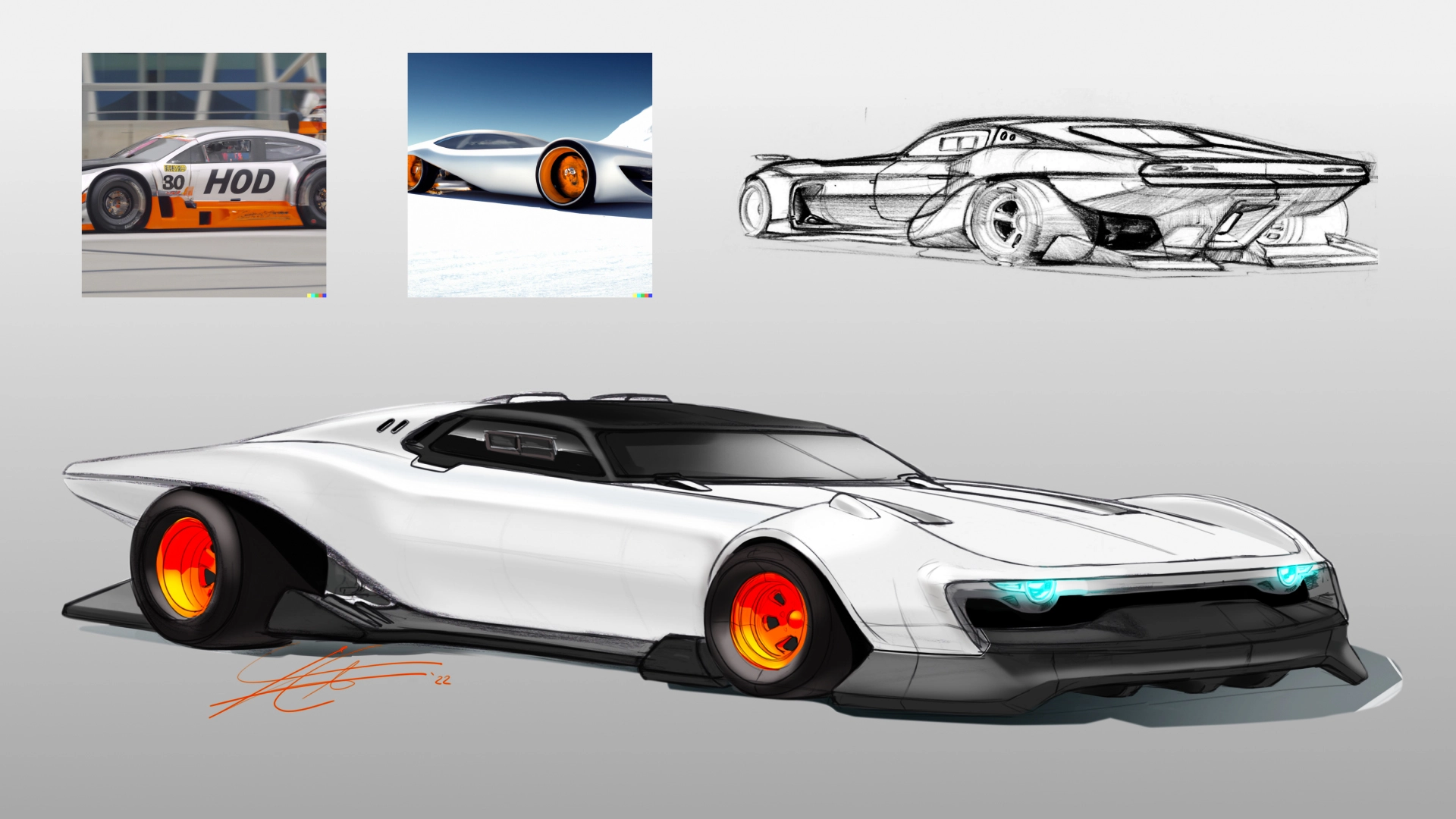
The toy industry, long a bastion of human imagination and intricate craftsmanship, is now embracing the transformative power of artificial intelligence. At Mattel, the iconic toy company behind Hot Wheels, designers are actively leveraging DALL-E 2, an advanced AI system developed by OpenAI, to spark innovation and conceptualize new model car designs. This integration, announced at the recent Microsoft Ignite conference, marks a significant milestone in the democratization of creative tools and signals a broader shift towards AI-powered productivity across various industries.
DALL-E 2, renowned for its ability to generate unique images from simple text descriptions, is now being made available through Microsoft’s Azure OpenAI Service. This move provides select Azure AI customers, including major players like Mattel, with cloud-based AI infrastructure that combines cutting-edge generative art capabilities with the robust security, responsible AI guardrails, and compliance certifications inherent to the Azure platform. The collaboration underscores Microsoft’s commitment to embedding AI across its product ecosystem, aiming to amplify user productivity and foster innovation.
The process, as exemplified by Mattel’s designers, is remarkably intuitive. A designer might begin with a prompt like "A scale model of a classic car." DALL-E 2 would then generate a visual representation, perhaps a silver vintage car with classic whitewall tires. The iterative nature of the tool allows for rapid refinement. A designer could then instruct DALL-E 2 to "Make it a convertible" by virtually erasing the car’s roof, and the AI would seamlessly update the image. Further prompts could dictate color changes ("try it in pink or blue") or modifications like adding a soft-top, allowing for an exploration of dozens of design variations that can inspire and refine the final product.
Carrie Buse, director of product design at Mattel Future Lab, highlighted the value of this AI-powered ideation process. "It’s about going, ‘Oh, I didn’t think about that!’" she remarked, emphasizing how DALL-E 2 acts as a catalyst for unexpected ideas. While acknowledging that ultimate quality remains paramount, Buse noted, "But sometimes quantity can help you find the quality." This sentiment reflects a growing understanding that AI, in this context, isn’t replacing human creativity but augmenting it, providing a vast playground of visual possibilities.
Microsoft’s integration of DALL-E 2 extends beyond enterprise solutions. The company is also embedding this powerful generative AI into its consumer-facing applications. The newly launched Microsoft Designer app will be the first to feature these capabilities, with plans to integrate DALL-E 2 into Image Creator within Microsoft Bing in the near future. This widespread deployment signifies a strategic vision to infuse AI into every facet of Microsoft’s offerings, empowering individuals and businesses alike.
The Evolution of AI: From Proof of Concept to Practical Application
The current wave of AI integration is a testament to the rapid maturation of the field. Eric Boyd, Microsoft corporate vice president for AI Platform, observed a significant transition over the past 18 months. "We’ve seen this transition in technology from proving that you can do things with AI to mapping it to actual scenarios and processes where it’s useful to the end user," he stated. This shift is attributed to breakthroughs in AI capabilities, fueled by increased computational power and vast datasets, which have led to the development of richer and more sophisticated models.
"The power of the models has crossed this threshold of quality and now they’re useful in more applications," Boyd explained. He further noted that product developers are increasingly recognizing AI’s potential to enhance user experience and product performance. This understanding is driving the integration of AI into a wide array of products and services, moving beyond theoretical possibilities to tangible benefits.
The underlying technology powering DALL-E 2 and other advanced AI models like GPT-3 and Codex (which powers GitHub Copilot) is a specialized supercomputer hosted on Azure, built exclusively for OpenAI. This powerful infrastructure enables the rapid generation of image, text, and code suggestions, which users can then review and utilize. The ongoing partnership between Microsoft and OpenAI, rooted in a shared vision for advancing AI, continues to expand the utility of the Azure OpenAI Service, offering enterprise-grade security, privacy, and reliability.
Beyond generative art, Microsoft’s Azure Cognitive Services provides a suite of AI technologies, including language translation, speech transcription, optical character recognition, and document summarization. These are already being integrated into widely used Microsoft products such as Microsoft Teams, Microsoft Power Platform, and Microsoft 365, streamlining workflows and enhancing user capabilities.
AI for Enhanced Productivity and Streamlined Workflows
The practical implications of these AI advancements are profound, particularly in automating tedious tasks and freeing up human capital for more strategic endeavors. Charles Lamanna, Microsoft corporate vice president of business applications and platform, emphasized this aspect, highlighting how AI can enable sales associates to focus on customer engagement rather than note-taking.
"We can now inject AI that listens to our conversation and helps people be more productive by creating transcripts, capturing action items, doing summarization of the meeting, identifying common phrases or doing analysis about, ‘Am I a good listener?’" Lamanna elaborated. He added that these capabilities, while seemingly advanced, are now achievable due to advancements in AI and digital collaboration tools.
A significant development for empowering a broader user base is the integration of AI-powered copilot capabilities into Microsoft Power Automate. This feature allows individuals to build complex workflow processes using natural language. Lamanna provided a compelling example: "Users in normal language can say, ‘Hey, whenever I get an email from my boss, send a text message to my phone and put a to-do in my Outlook.’ They can just say that, and it gets generated automatically." This capability dramatically expands the pool of individuals who can create AI-powered software solutions, democratizing application development.
For those with a more technical inclination, the Microsoft Power Platform offers low-code tools and graphical interfaces, such as the intelligent document processing technology in AI Builder, for further customization. The potential applications are vast. Lamanna illustrated this with a scenario for legal professionals: a customized application could be built to automatically extract key information from newly uploaded contracts, such as parties involved and industry sector, and then distribute summaries to relevant legal teams. He described this as "magic," contrasting it with the laborious manual processes currently in place, emphasizing how AI can alleviate monotony and delegate tasks to computers where they excel.
Content AI: Navigating the Information Deluge
The digital transformation has resulted in an exponential increase in content creation. Microsoft 365 users, for instance, generate approximately 1.6 billion pieces of content daily, ranging from marketing presentations and contracts to video recordings and meeting transcripts. Jeff Teper, Microsoft president of collaborative apps and platform, highlighted the need to integrate AI with this content to enable more structured activities like contract approvals, invoice management, and regulatory filings.
To address this, Microsoft introduced Microsoft Syntex, a content AI offering for Microsoft 365 that leverages Azure Cognitive Services. Syntex is designed to transform how content is created, processed, and discovered. It reads, tags, and indexes content—both digital and paper—making it searchable and accessible within specific applications or as reusable knowledge. It also manages the content lifecycle with integrated security and retention settings.
The TaylorMade Golf Company serves as a prime example of Syntex in action. They adopted the platform to create a comprehensive document management system for organizing and securing intellectual property and patent filings. Previously, company lawyers manually managed this content, a process that was time-consuming and prone to inefficiencies. With Syntex, documents are automatically classified, tagged, and filtered, enhancing security and searchability. TaylorMade is also exploring Syntex for processing transactional documents like orders and receipts for their finance teams.
Teper further noted that other customers are utilizing Syntex for contract management and assembly. While contracts often contain unique elements, they share common clauses related to financial terms, change control, and timelines. Syntex allows users to assemble these common clauses from various documents, streamlining the contract creation process and highlighting significant deviations from standard terms that might require additional oversight. "If you’re trying to read a 100-page contract and look for the thing that’s significantly changed, that’s a lot of work versus the AI helping with that," Teper commented, underscoring the efficiency gains.
Personalization at Scale: DALL-E 2 and User Experience
The availability of DALL-E 2 within the Azure OpenAI Service is also opening up new frontiers in personalized user experiences. At RTL Deutschland, Germany’s largest privately held cross-media company, data scientists are exploring how to generate personalized imagery based on individual customer interests. Marc Egger, senior vice president of data products and technology for the RTL data team, explained the critical role of visuals in engaging users on their streaming service, RTL+.
"Even if you have the perfect recommendation, you still don’t know whether the user will click on it because the user is using visual cues to decide whether he or she is interested in consuming something. So artwork is really important, and you have to have the right artwork for the right person," Egger stated. He illustrated this with a hypothetical rom-com about a soccer player in Paris. A sports enthusiast might be drawn to an image of a soccer game, while a romance reader might prefer a visual of the couple.
By combining DALL-E 2 with metadata on user preferences and past interactions, the potential exists to offer personalized imagery on an unprecedented scale. "If you have millions of users and millions of assets, you have the problem that you simply can’t scale it – the workforce doesn’t exist," Egger observed. He highlighted that the sheer volume of personalized imagery required would be impossible to produce with human graphic designers alone, positioning DALL-E 2 as an "enabling technology for doing things you would not otherwise be able to do."
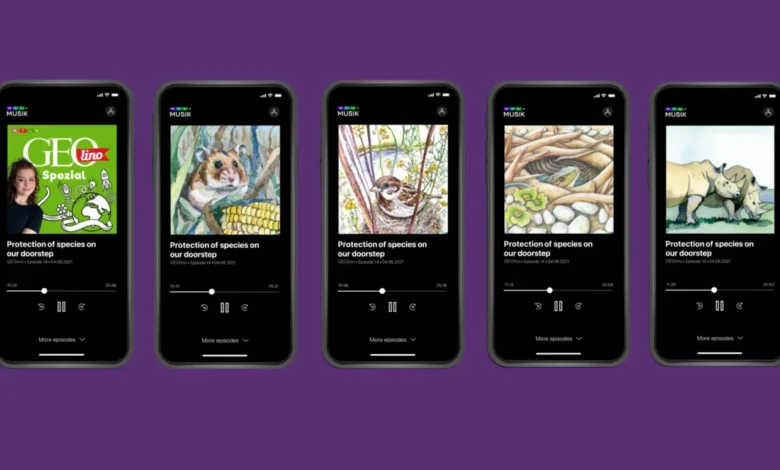
RTL Deutschland is also considering using DALL-E 2 to create visuals for content that currently lacks imagery, such as podcast episodes and audiobooks. Instead of repetitive generic cover art for podcasts, unique images could be generated for each episode. Similarly, audiobook listeners could experience unique visuals for each scene within a chapter, rather than seeing the same book cover art repeatedly. Egger noted that the Azure OpenAI Service’s integration with other Azure tools allows his team to work efficiently and ensures scalability for image creation demands.
Responsible AI: Ensuring Safe and Ethical Use
The excitement surrounding image-generating AI like DALL-E 2 is palpable, but so is the commitment to its responsible and ethical deployment. Sarah Bird, Microsoft principal group project manager for Azure AI, emphasized that while the technology offers incredible creative potential, robust safeguards are essential. "People love images, and for someone like me who is not visually artistic at all, I’m able to make something much more beautiful than I would ever be able to using other visual tools," she shared, acknowledging DALL-E 2’s power to democratize creativity.
Microsoft and OpenAI have taken deliberate steps to mitigate risks associated with AI-generated content. To prevent the generation of explicit sexual or violent material, OpenAI removed such content from DALL-E 2’s training dataset. Azure AI has implemented filters to reject prompts that violate content policies. Furthermore, measures are in place to prevent the creation of images of celebrities and to block attempts to trick the system into generating harmful content. Post-generation, additional models are employed to filter out images that appear to contain adult themes, gore, or other inappropriate material.
A persistent challenge in AI systems, however, is the inherent biases present in their training data. Without the benefit of contextual understanding of user intent, less descriptive prompts to DALL-E 2 can inadvertently surface these biases. Bird’s team is actively working with Microsoft product teams to educate users on crafting more descriptive prompts that guide the AI towards desired outcomes. "We’re designing the interfaces to help users be more successful in what it’s generating, and sharing the limitations today, so that users are able to use this tool to get the representation that they want, not whatever average representation exists on the internet," she explained.
Imagining the Future: AI as a Creative Catalyst
The exploration of AI’s creative potential is extending into emerging fields like the metaverse and NFTs. Carrie Buse at Mattel is using DALL-E 2 to visualize these virtual experiences. "It’s fun to poke around in here to think about what would come up in a virtual world based on – pick a descriptor – a forest, mermaids, whatever," she said, seeing DALL-E 2 as a tool for "predicting the future" by continuously feeding the imagination with new information and imagery.
Boyd echoes this sentiment, viewing DALL-E 2 and similar large language models as catalysts for creativity. "What is most exciting, I think, is we’re just scratching the surface on the power of these large language models," he concluded, suggesting that the current applications are merely the beginning of AI’s transformative impact on how we create, innovate, and interact with information. The ongoing integration of DALL-E 2 and other advanced AI technologies across Microsoft’s portfolio signifies a future where human ingenuity is amplified by intelligent machines, unlocking new possibilities across industries and empowering individuals to achieve more than ever before.
Related posts: