The Continuous Evolution of Agentic AI: Post-Training as the New Frontier in Intelligence and Efficiency

The landscape of artificial intelligence is undergoing a fundamental shift, moving beyond static models to dynamic, adaptive agents. This evolution is driven by a new paradigm: continuous post-training, a process that mirrors the relentless refinement of elite athletes and is emerging as the central workload and primary driver of intelligence per dollar in the agentic era. Unlike traditional generative models that respond to prompts, agentic AI systems are tasked with achieving goals, requiring them to constantly adapt to changing environments, novel challenges, and evolving toolkits. This continuous learning cycle, fueled by post-training, is transforming how AI models are developed and deployed, promising greater intelligence and efficiency.
At its core, agentic AI operates with a mission, not just a command. Imagine a professional athlete: their success is not solely defined by their performance on game day, but by the meticulous, ongoing effort between competitions. This involves dissecting past performances, strategizing against new opponents, and constantly honing their skills. Agentic AI operates on a similar principle. Once initially trained on vast datasets, these models are not left to stagnate. Instead, they are placed in dynamic operational environments where they must learn, adapt, and improve. This adaptive capability means that the phase following initial training – known as post-training – is no longer a one-time, final polish. It has become an ongoing, iterative process.
The necessity for continuous post-training stems from the inherently fluid nature of the environments in which agentic models operate. The tools an AI agent can utilize can change week by week, as new APIs are developed or existing ones are updated. Edge cases, unforeseen scenarios that were not accounted for in any initial testing, frequently emerge in real-world deployments. Each new deployment also introduces a unique context, comprising its own codebase, specific organizational policies, and distinct operational environment. These variables necessitate a constant feedback loop, where learnings from production are fed back into the model for further refinement.
This continuous refinement process creates a novel compute pattern. The computational footprint of agentic AI doesn’t necessarily grow because any single training run is exceptionally large, but rather because these runs are perpetual. The post-training phase has effectively become the core operational workload for agentic AI, directly impacting the efficiency and effectiveness of these intelligent systems. The ultimate goal of this continuous post-training is to maximize "intelligence per dollar" – ensuring that every computational resource invested yields the highest possible level of intelligent behavior.
Agentic Post-Training Demystified: Building True Intelligence
The distinction between pre-training and post-training is crucial to understanding the rise of agentic AI. During pre-training, a model primarily learns to predict the next token in a sequence. This process imbues the model with fluency and a broad understanding of language and patterns, but it does not equate to true intelligence. Intelligence, in the context of agentic AI, is developed during post-training. This is where the model learns to perform complex tasks such as writing code, devising multi-step plans, effectively utilizing external tools like search engines, and, critically, recovering from errors or unexpected situations encountered during operation.
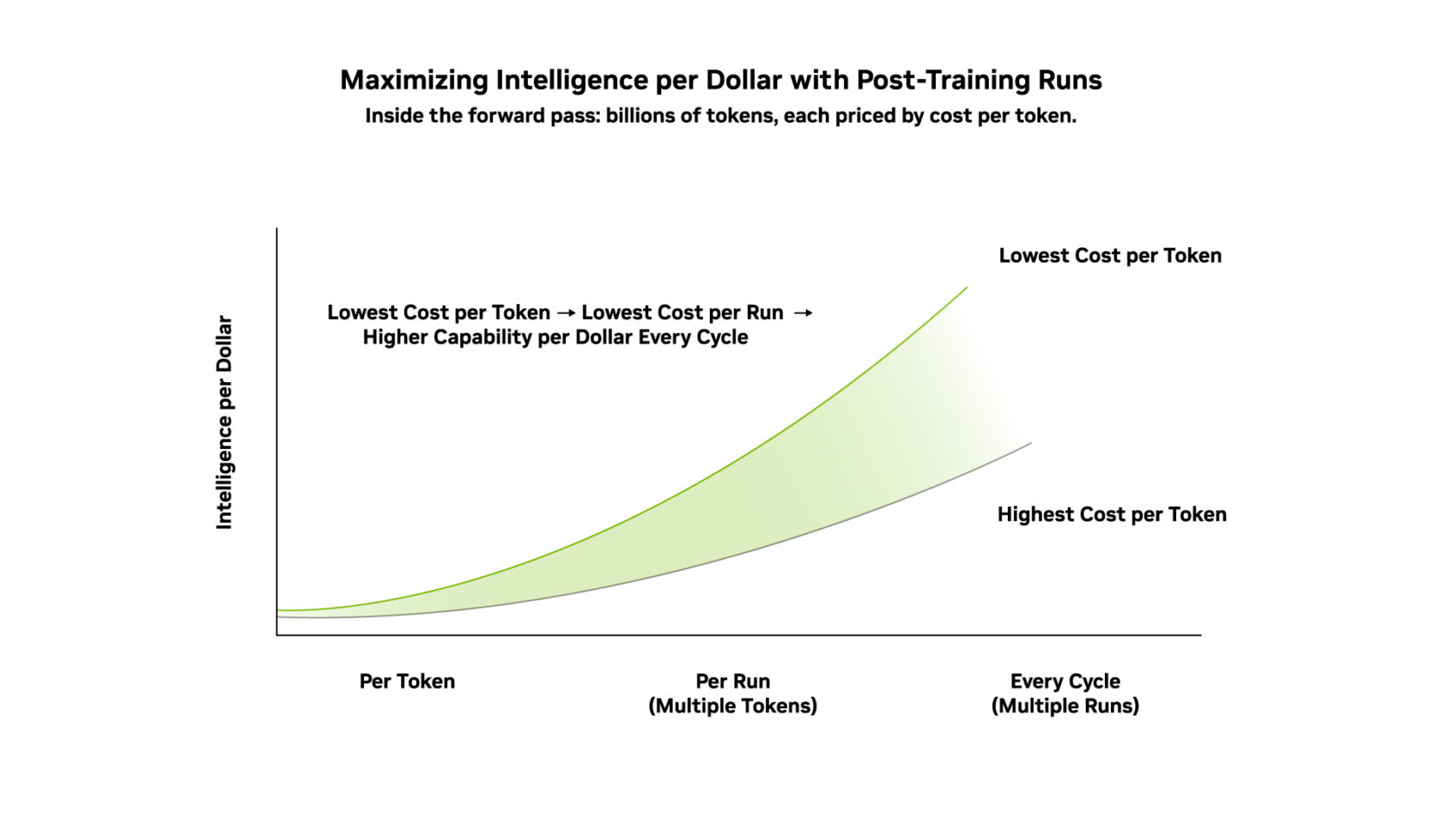
Inference, the phase where the model is actively working on a task and delivering outputs, is where the economic value is realized. This is measured in "cost per token," representing the expense incurred for processing a certain volume of data. However, the true economic leverage lies in maximizing the intelligence embedded within each token served. Every improvement in the cost per token directly contributes to enhancing intelligence per dollar, but the foundation of that intelligence is built during post-training.
The learning mechanism in post-training differs significantly from supervised learning with definitive right answers. Agentic models learn through reinforcement learning (RL) techniques. When presented with a task, the agent formulates an attempt, which is akin to the forward pass during inference – the same computational work it would perform in a real-world scenario. This attempt is then evaluated, and a "reward" signal is generated based on its success or failure. This reward informs the model, updating its internal weights through a backward pass, thereby refining its future performance. This cycle, repeated across millions of attempts, is what incrementally builds the agent’s intelligence and problem-solving capabilities.
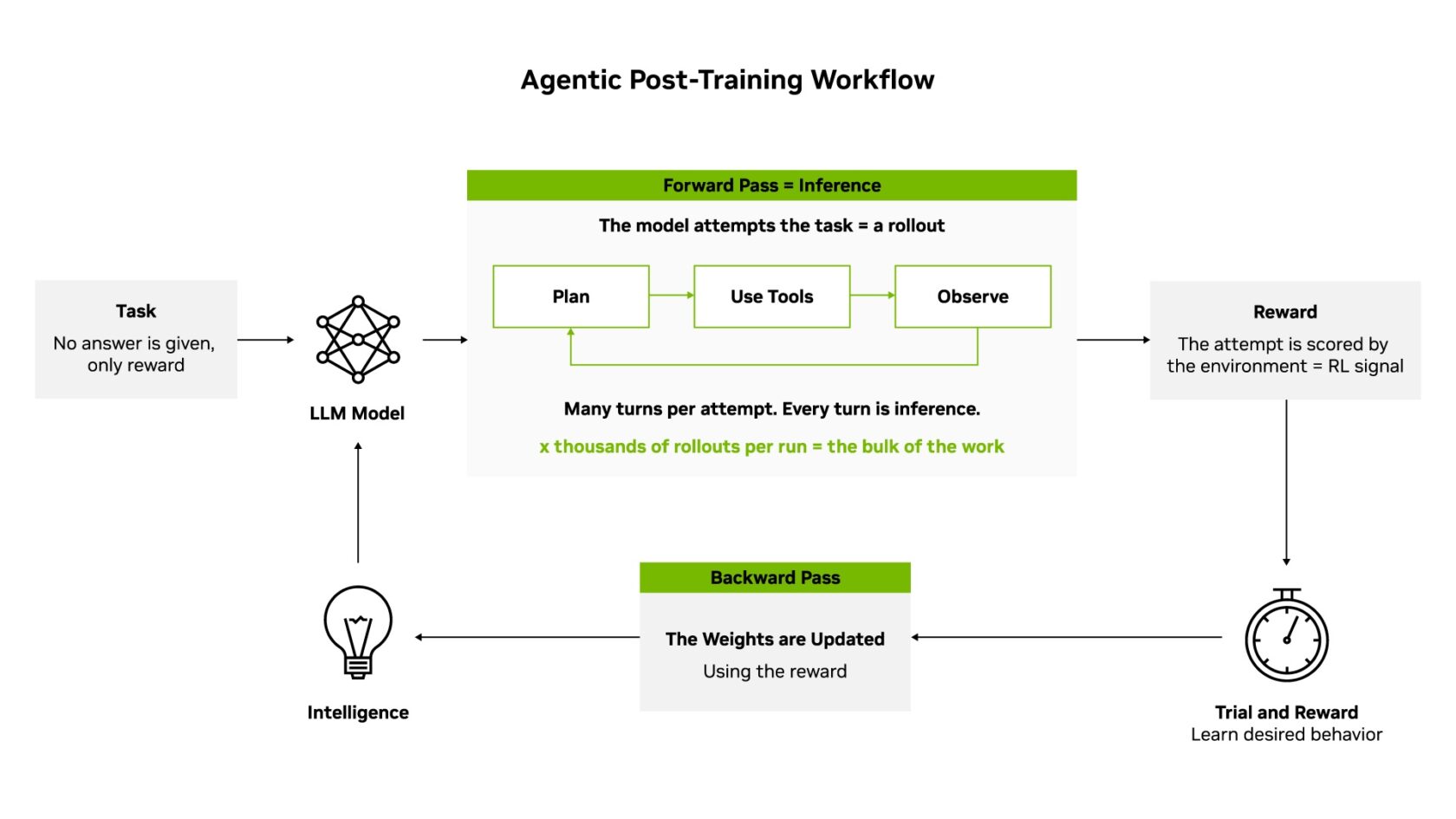
The computational demands of this iterative RL loop are substantial. Orchestrating this process at scale presents a significant engineering challenge. It involves managing thousands of simulated environments that generate training data (rollouts), accurately verifying the rewards received, and efficiently updating the model’s weights, all while ensuring that computational accelerators are utilized to their maximum capacity. To address these complexities, platforms like NVIDIA’s NeMo open libraries are proving instrumental. NeMo Gym provides environments for training, while NeMo RL facilitates distributed post-training, transforming what was once bespoke research code into robust, repeatable infrastructure.
The Synergy of Intelligence per Dollar and Cost per Token
The relationship between "cost per token" and "intelligence per dollar" is not one of competition, but of profound synergy. If inference, measured by cost per token, represents the revenue-generating engine of an AI system, then post-training acts as the crucial multiplier. The more capable and intelligent a model becomes through effective post-training, the higher the value and impact of every token it processes.
Cost per token is the granular metric for the inference factory, quantifying the all-in cost of delivering a million tokens. Intelligence per dollar, however, operates at a higher strategic level. It addresses a different, more fundamental question: what is the cost to develop a model that is genuinely valuable to serve, and how can we ensure it remains valuable as its operational environment evolves?
These two metrics are intrinsically nested. AI infrastructure that successfully drives down the cost per token also inherently lowers the cost associated with building each increment of intelligence into the model. Conversely, each point of intelligence successfully embedded into the model through rigorous post-training directly elevates the value proposition of every token processed by the inference engine. In essence, cost per token measures the operational efficiency or "yield," while intelligence per dollar evaluates the return on investment in the model’s inherent capabilities and its ongoing development.

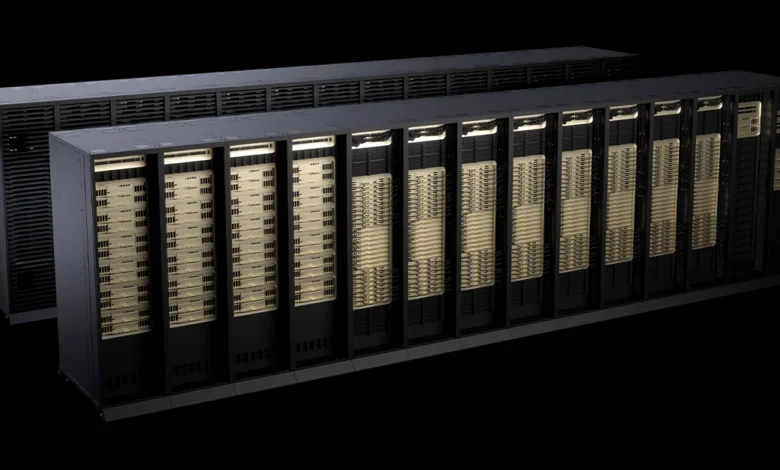
The development of advanced AI infrastructure, such as the NVIDIA Blackwell platform, is critical in making the continuous post-training demands of the agentic era economically viable. These platforms are designed to reduce the cost per training run, ensuring that the perpetual refinement required for agentic AI is sustainable. The intelligence gained from these ongoing training cycles is then leveraged across every token served, creating a compounding benefit.
Looking ahead, platforms like the NVIDIA Vera Rubin are set to further extend this trajectory. Designed from the ground up to optimize intelligence per dollar for agentic post-training workloads, Vera Rubin aims to train even larger models with significantly fewer GPUs compared to previous generations. This includes enabling more training rollouts per run, supporting a greater number of concurrent environments, and facilitating non-stop post-training cycles.
Agentic Post-Training in Action: Real-World Deployments and Future Outlook
The practical implementation of agentic post-training is already demonstrating its transformative potential. NVIDIA Nemotron 3 Ultra, an open-weight, 550-billion-parameter mixture-of-experts (MoE) model, showcases verifiable benchmarks and a fully disclosed post-training methodology executed on NeMo RL. This model achieved an impressive 71.7% on the SWE-bench benchmark, a standard for evaluating real-world coding capabilities. This means it successfully produced working fixes for approximately seven out of every ten real software bugs sourced from open-source projects, with each fix rigorously validated against the project’s own test suites. This level of verifiable performance underscores the efficacy of advanced post-training in developing highly capable AI agents.
The NVIDIA Blackwell platform is playing a pivotal role in making these demanding post-training workflows economically feasible by reducing the cost per run. This allows for the frequent, iterative training necessary to keep agentic AI systems optimized and effective. The intelligence cultivated through this process is then realized across every token processed during inference.
Companies are actively leveraging these advancements. Prime Intellect’s Lab, for instance, is continuously post-training frontier open models on NVIDIA Blackwell infrastructure, utilizing NVIDIA Dynamo for inference orchestration. With the advent of Vera Rubin, Prime Intellect plans to further scale its reinforcement learning environments, generating more rollouts per run and accelerating the iteration loops between training and inference. This strategic approach aims to maximize intelligence per dollar for businesses leveraging their AI solutions. Prime Intellect has also optimized its sandbox infrastructure, integrating with NVIDIA Vera CPUs to achieve low-latency, energy-efficient reinforcement learning. Their comparisons indicate that Vera CPUs deliver, on average, 30% greater throughput per CPU compared to alternative x86 architectures for realistic RL sandbox workloads.
Perplexity AI has implemented its RL post-training stack asynchronously across hundreds of NVIDIA GPUs. Their system features an RDMA-based weight transfer engine capable of synchronizing trillion-parameter models between training and inference compute nodes in under two seconds. The resulting post-trained Qwen3 235B models are then deployed for inference on NVIDIA GB200 NVL72 systems, demonstrating a seamless and highly efficient workflow from continuous training to production deployment.
Together AI offers post-training as a comprehensive service, encompassing supervised fine-tuning, RL, and direct preference optimization. This service is delivered through a feature-rich API and SDK, supporting the full spectrum of post-training capabilities on their AI Native Cloud platform. Having operated on NVIDIA’s existing platform and optimized kernel libraries, Together AI is now poised to leverage the capabilities of the Vera Rubin platform to further enhance their offerings.
The ongoing innovation in AI infrastructure, particularly with platforms like NVIDIA Vera Rubin, is not merely about increasing computational power. It’s about fundamentally re-architecting the AI development lifecycle to prioritize continuous learning and adaptation. By making post-training the central workload and optimizing for intelligence per dollar, the industry is paving the way for AI agents that are not only more capable but also more cost-effective and resilient in the face of an ever-changing technological landscape. This marks a significant leap forward, promising a future where AI systems continuously learn, evolve, and deliver greater value.
Related posts: