TJX Companies leverage hold and flow supply chain strategy to master inventory volatility and weather-related disruptions

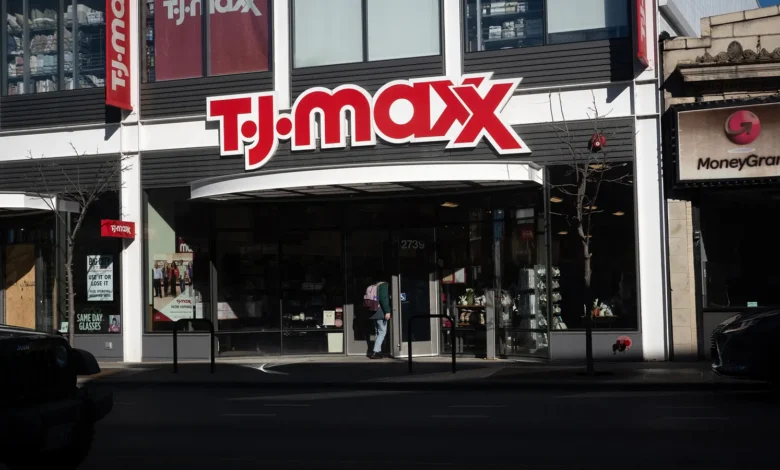
The retail landscape is increasingly defined by the ability to navigate unpredictable consumer demand and volatile environmental factors. During the second-quarter earnings call for 2026, TJX Companies, the parent organization behind T.J. Maxx, Marshalls, and HomeGoods, highlighted a strategic logistical advantage that distinguishes it from traditional big-box retailers. By prioritizing a "hold and flow" inventory model, the company has effectively insulated itself from the pitfalls of overstocking, allowing it to maintain agility in the face of shifting market conditions and localized weather events.
The Strategic Mechanics of Hold and Flow
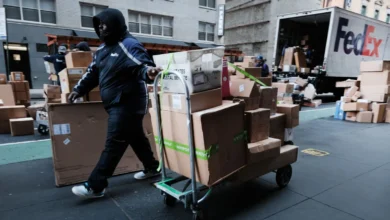
At the core of the TJX supply chain philosophy is the deliberate decision to decouple the receipt of goods from the immediate replenishment of store shelves. Unlike the "flow-through" or "cross-dock" models—where merchandise moves from a supplier to a distribution center (DC) and directly onto a departing truck within 24 to 48 hours—the hold and flow strategy introduces a critical buffer.
In this model, a significant portion of incoming inventory is staged within the retailer’s massive distribution network. Rather than forcing goods into stores based on initial projections, TJX retains the inventory on racks within its DCs. This allows the company to monitor real-time sell-through data, regional consumer behavior, and emerging weather patterns before finalizing the destination for the products.
According to industry analysts, this is not merely a warehousing tactic; it is a sophisticated risk-management tool. By keeping stock in a centralized location, TJX can "trickle" merchandise into specific geographic markets only when demand signals warrant it. If a specific region experiences an unseasonably warm autumn, for example, the company can delay the shipment of heavy winter apparel to those stores, preventing the inventory from cluttering floors and requiring heavy markdowns.
Comparative Logistics: Hold and Flow vs. Flow-Through
To understand the competitive edge TJX has cultivated, one must analyze the industry-standard alternatives. Most high-volume, low-margin retailers rely heavily on the flow-through model. This system is designed for efficiency and speed; it minimizes storage costs and maximizes throughput. However, it is inherently rigid. Once goods are committed to a store, the retailer has limited recourse if the local market fails to absorb that inventory, often leading to the "markdown trap" where retailers must slash prices to clear space for new shipments.
Dheera Anand, a partner at Bain & Co., notes that the retail sector does not operate on a one-size-fits-all basis. The hybrid model is becoming increasingly common, where retailers segment their inventory based on complexity and predictability.
"When you look at your assortment, seasonal items, high-fashion goods, and products that exhibit higher volatility, those are clearly more suitable for a hold and flow strategy," Anand explained. "Conversely, products that are low complexity, highly predictable, and exhibit low variety are better suited for flow-through systems. The genius of the TJX model is that it treats these categories differently, utilizing the DC as a strategic staging ground rather than a mere transit point."
Chronology of Inventory Management Evolution
The evolution of modern retail logistics has been marked by three distinct phases over the last two decades. In the mid-2010s, the industry was obsessed with "lean" inventory, pushing for just-in-time delivery to reduce working capital tied up in stock. This era prioritized speed above all else.
However, the period between 2020 and 2023—characterized by massive supply chain bottlenecks and the post-pandemic "bullwhip effect"—forced a reckoning. Retailers who relied exclusively on lean, flow-through models found themselves paralyzed when global shipping lanes were disrupted or when consumer demand shifted abruptly from goods to services.
By 2024 and 2025, firms began pivoting back toward localized distribution and increased safety stock levels. TJX, having long refined its off-price, treasure-hunt model, was uniquely positioned to handle this shift. Their infrastructure was already built to accommodate fluctuating inventory levels, as their business model relies on buying opportunistically from other brands’ overstock. The 2026 fiscal year has served as a stress test for these systems, proving that the ability to "wait and see" is often more valuable than the ability to "ship and sell."
Supporting Data and Operational Efficiency
The financial implications of this supply chain strategy are reflected in the operational efficiency metrics of the company. While traditional department stores often struggle with inventory turnover ratios that dip when consumer confidence wavers, off-price retailers like TJX have maintained a consistent cadence.

Data indicates that by holding inventory at the DC level, retailers can reduce the "cost of failure"—the price paid when inventory ends up in the wrong store at the wrong time. Industry averages suggest that markdowns account for a significant percentage of lost gross margin in the apparel sector. By utilizing the hold and flow model, TJX effectively minimizes the "forced markdown" scenario. If an item is not selling in the Midwest, it never leaves the DC, or it is redirected to a market where the demographic or climatic conditions are more favorable.
Furthermore, this model supports the retailer’s "treasure hunt" value proposition. Because the stock is not stagnant on store shelves, the store environment remains dynamic. Shoppers return frequently because the inventory changes, and the company’s ability to replenish shelves based on actual, rather than forecasted, demand ensures that the store experience is optimized for conversion.
Official Responses and Industry Reactions
During the Q2 2026 earnings call, CEO Ernie Herrman emphasized that the company’s supply chain is designed to handle environmental volatility, such as the shifting impacts of El Niño. "Our distribution model allows us to pivot," Herrman stated. "We aren’t forced to push product into the field. We wait for the signal, and then we respond."
Retail experts have praised this approach, noting that it provides a "buffer of intelligence." By keeping the inventory in the DC, the retailer is essentially purchasing an option on time. They are waiting for more data to materialize before making the final decision on allocation. This minimizes the risk of stockouts in high-demand areas and prevents the over-allocation of goods in sluggish markets.
Broader Impact and Future Implications
The success of the hold and flow model has significant implications for the broader retail sector. As climate change continues to make seasonal weather patterns less predictable, the traditional, rigid supply chain models that rely on long-range forecasts are likely to become increasingly obsolete.
Retailers are now facing a reality where "seasonal" clothing is no longer strictly defined by the calendar. Warm winters and cool springs are becoming the norm, requiring a supply chain that can react in weeks, not months. The ability to hold inventory centrally provides the necessary flexibility to adapt to these anomalies.

Moreover, as automation and robotics continue to integrate into distribution centers, the cost of holding inventory is decreasing. Automated storage and retrieval systems (AS/RS) allow for high-density storage that makes the "hold" portion of the "hold and flow" model more space-efficient and cost-effective than it was a decade ago.
The shift toward this model also has environmental benefits. By reducing the number of shipments to stores—and specifically, by reducing the shipping of goods that will eventually need to be returned or marked down—retailers can lower their carbon footprint. Optimized, data-driven shipments are inherently more efficient than the "scatter-gun" approach of shipping everything to every store simultaneously.
In conclusion, the strategy employed by TJX Companies represents a maturation of retail logistics. By moving away from the binary choice of either shipping immediately or keeping stock in limbo, the retailer has established a system that thrives on information. In an era where data is the most valuable currency, the ability to wait for that data to crystallize before committing capital to a specific location is a distinct competitive advantage. As other retailers look to modernize their operations in the face of ongoing economic and environmental uncertainty, the "hold and flow" model will likely serve as the gold standard for agility in the modern retail environment.