U.S. Federal Agencies Warn of Escalating Iranian Cyberattacks Targeting Critical Infrastructure Controllers in Water and Energy Sectors

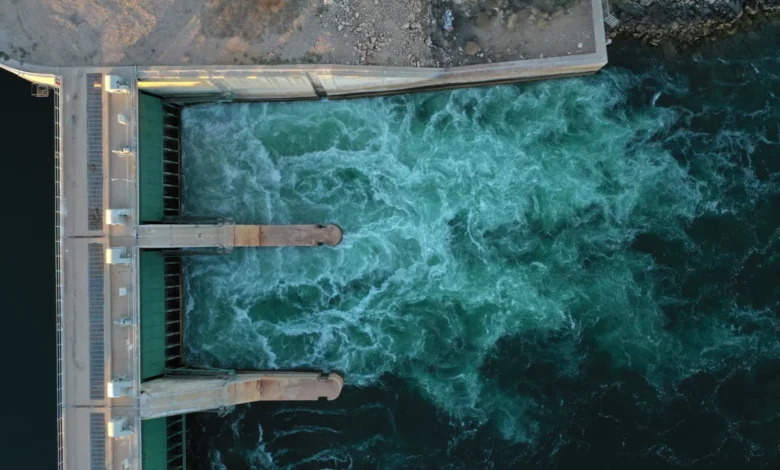
The United States government has issued a comprehensive and urgent security advisory regarding a surge in malicious cyber activity orchestrated by Iranian state-backed actors. According to a joint statement released by the Federal Bureau of Investigation (FBI), the National Security Agency (NSA), the Department of Energy (DOE), and the Cybersecurity and Infrastructure Security Agency (CISA), Iranian hackers are actively infiltrating and disrupting industrial control systems (ICS) that underpin essential services, specifically within the American water and energy sectors. This updated alert, which builds upon previous warnings issued earlier this year, highlights a significant expansion in the technical scope and geographic reach of the attacks, signaling a heightened level of risk for critical infrastructure operators nationwide.
The Evolution of the Iranian Cyber Threat
The updated advisory serves as a stark reminder of the escalating tensions in the digital domain, particularly as geopolitical conflicts in the Middle East continue to spill over into global cyberspace. Federal authorities noted that while initial Iranian operations discovered earlier this year were primarily focused on targeting programmable logic controllers (PLCs) manufactured by Rockwell Automation, the scope of the campaign has broadened significantly. The hackers are now confirmed to be exploiting vulnerabilities in industrial control products from other major global manufacturers, including Schneider Electric and Siemens.
The shift in targeting suggests a more sophisticated and opportunistic approach by Iranian operatives. By diversifying their targets, these actors are attempting to maximize the potential for disruption across a wider array of utilities. The agencies warned that "potentially all internet-exposed" industrial control systems are currently at risk. This includes any system that is directly connected to the public web without robust authentication or air-gapping measures, making them low-hanging fruit for state-sponsored entities looking to project power through domestic disruption.
Technical Mechanics: Manipulating Operational Technology
At the heart of these attacks is the compromise of Operational Technology (OT), which differs from standard Information Technology (IT) in that it directly controls physical processes. PLCs are the "brains" of these industrial environments; they manage the flow of water, the regulation of electricity, and the safety protocols of heavy machinery. When an attacker gains access to a PLC, they can manipulate the data displayed to human operators or alter the logic that governs the machine’s behavior.
According to the FBI, recent breaches have seen hackers change the programming logic of controllers to disable critical safety mechanisms. In one specific instance cited by the federal government, hackers disabled processes responsible for handled shutdowns and emergency alarms. This type of interference is particularly dangerous because it allows a system to enter an "unsafe condition" without notifying the human operators of any anomalies. By the time a failure is detected, the physical damage—such as a pipe burst, a chemical imbalance in water supplies, or a power grid surge—may already be irreversible.
The methods used by the Iranian-backed groups often involve exploiting default passwords, unpatched software vulnerabilities, and the lack of multi-factor authentication (MFA) on internet-facing devices. Once inside the operational network, the hackers move laterally to find the logic controllers, often using the very tools designed for legitimate maintenance to instead cause chaos.
A Timeline of Iranian Cyber Operations and Proxies
The current wave of attacks is part of a broader pattern of cyber aggression that has intensified since early 2024. While the Iranian government officially denies involvement in such activities, U.S. intelligence agencies have consistently linked these operations to the Islamic Revolutionary Guard Corps (IRGC) and various state-sponsored proxy groups.
A notable entity in this landscape is the group known as "Handala." This group has claimed responsibility for several high-profile incidents that align with Iranian strategic interests.
- February – March 2024: Initial reports surfaced of Iranian actors targeting Rockwell Automation PLCs in small-to-medium-sized utility companies.
- March 2024: The medical technology giant Stryker reported a massive cyberattack. The "Handala" group claimed responsibility for remotely wiping tens of thousands of employee devices, causing significant operational delays and data loss.
- March 2024: In a move aimed at psychological warfare and political embarrassment, Iranian hackers claimed to have breached the personal email account of FBI Director Kash Patel, subsequently leaking its contents online.
- June 2024: Handala claimed to have breached Cal Water, a major California water provider. While the group alleged they could have disrupted the water supply, Cal Water officials later stated that there was no evidence of unauthorized access to their operational networks, though the claim itself served to cause public alarm.
- Late 2024: The current updated advisory from CISA and the FBI confirms that the targeting has expanded to Siemens and Schneider Electric systems, indicating a sustained and evolving campaign.
The Geopolitical Context: Cyber Warfare as an Extension of Conflict
The U.S. government has explicitly stated that these cyber operations are likely a direct response to the ongoing geopolitical tensions involving Iran, the United States, and Israel. In the "gray zone" of international relations, cyberattacks provide a means for state actors to exert pressure and retaliate without necessarily triggering a full-scale kinetic war.
By targeting water and energy providers, Iranian actors are striking at the "soft underbelly" of American infrastructure. Unlike the highly defended networks of the Department of Defense or major financial institutions, many municipal water districts and local energy co-ops operate on limited budgets with aging hardware and minimal cybersecurity staff. Disrupting these services not only causes economic harm but also undermines public confidence in the government’s ability to protect essential services.
Industry analysts suggest that Iran is utilizing these attacks to demonstrate its capability to reach into the American heartland. The goal is often twofold: to gather intelligence through espionage and to maintain "persistent access" that could be used for destructive purposes in the event of a direct military escalation.
Official Responses and Defensive Recommendations
In response to these threats, U.S. agencies have urged critical infrastructure owners to adopt a "defensive posture" immediately. The joint advisory provides several key recommendations to mitigate the risk of compromise:
- Isolate Control Systems: Ensure that PLCs and other OT devices are not directly accessible from the public internet. If remote access is required, it should be conducted through a secure Virtual Private Network (VPN) with strict access controls.
- Enforce Multi-Factor Authentication: Implement MFA for all remote access to industrial networks. Iranian actors have frequently succeeded by simply guessing or using default passwords.
- Regular Backups and Logic Validation: Operators are encouraged to maintain offline backups of PLC configurations and logic. Regularly verifying that the logic running on a controller matches the authorized version can help detect unauthorized changes.
- Change Default Credentials: Many industrial devices ship with "factory default" usernames and passwords that are publicly available in manuals. Changing these is a fundamental but often overlooked step in securing a facility.
- Update and Patch: While patching industrial systems can be difficult due to uptime requirements, agencies stress the importance of addressing known vulnerabilities in Siemens, Schneider Electric, and Rockwell products.
The Department of Energy has also been working with private sector partners to enhance the "Cyber Shield" surrounding the nation’s power grid. This includes sharing real-time threat intelligence and conducting "red team" exercises to identify weaknesses before state-backed actors can exploit them.
Broader Implications for National Security
The persistent targeting of the water and energy sectors highlights a critical vulnerability in the U.S. national security framework. The decentralized nature of American infrastructure—where thousands of independent entities manage vital resources—makes it a difficult environment to defend uniformly.
This situation has prompted calls for more stringent federal regulations regarding cybersecurity standards for utilities. Currently, many water utilities are subject to less rigorous oversight compared to the bulk power system, which is governed by the North American Electric Reliability Corporation (NERC) standards. The Biden administration has previously attempted to use the Environmental Protection Agency (EPA) to enforce higher cyber standards for water systems, though these efforts faced legal challenges from various states.
The ongoing Iranian campaign serves as a case study in the modern reality of "perpetual cyber conflict." As the lines between digital and physical security continue to blur, the protection of a local water tower or a regional substation has become as vital to national defense as the security of a military base. The consensus among intelligence officials is that these attacks will not only continue but will likely become more sophisticated as Iranian actors refine their techniques and identify new targets within the global supply chain of industrial automation.
For now, the focus remains on resilience and rapid recovery. As federal agencies continue to monitor the activity of groups like Handala and their state sponsors, the primary defense remains the vigilance of the technicians and engineers who manage the nation’s most critical valves and switches. The message from Washington is clear: the threat is active, the targets are broad, and the time for securing these systems is now.
Related posts: