The End of the Six-Week Catalog: How Automation is Transforming B2B Commerce and Sales Efficiency

For decades, the standard lifecycle of a B2B product catalog has been defined by an agonizingly slow, manual process. Marketing and merchandising teams typically dedicate six weeks to producing a single edition, painstakingly placing product images, descriptions, and pricing into layout software. Yet, as soon as that catalog is finalized and distributed, it begins to degrade in value. In an era of volatile supply chains and fluctuating market prices, a static, printed or PDF-based catalog is often obsolete the moment it reaches a customer’s inbox.
This systemic inefficiency has long been an "open secret" in the world of manufacturing, distribution, and wholesale importing. While business leaders often focus on the front-end growth of their e-commerce platforms, the back-end infrastructure supporting their sales collateral remains trapped in a legacy workflow that prioritizes manual design over data accuracy.
The Anatomy of the Catalog Crisis
The fundamental disconnect lies in the siloed nature of corporate data. In many mid-to-large-sized enterprises, product information is fragmented across disparate systems: enterprise resource planning (ERP) software, fragmented Excel spreadsheets, and informal email chains between sales reps and operations managers. When a price update is required, it must be manually propagated through these various channels, creating a high probability of human error.
For a mid-sized distributor, this means that 15 different customers might be holding 15 different versions of a catalog, each reflecting a different set of stale prices or discontinued SKUs. The real-world consequence is not just a wasted marketing budget; it is a breakdown in the sales funnel. Buyers who attempt to place orders based on outdated catalogs often face friction, leading to delayed transactions, lost sales, and a significant increase in administrative overhead as teams scramble to reconcile orders with current inventory and pricing.
Chronology of the Shift: From Static Pages to Dynamic Feeds
The transition toward automated cataloging represents a fundamental shift in B2B strategy. For years, the industry operated on a rigid, seasonal publishing cycle. Companies would invest heavily in one or two major catalog launches per year, treating the document as a fixed asset.
- 2010–2018 (The Manual Era): Catalog production was almost entirely manual. Designers worked in silos, and any change in a SKU’s price necessitated a complete manual overhaul of the document, often requiring weeks of labor.
- 2018–2022 (The Rise of Hybrid Models): As e-commerce began to dominate, companies started experimenting with digital PDFs. However, these were often just digital versions of static files, lacking true connectivity to the underlying inventory data.
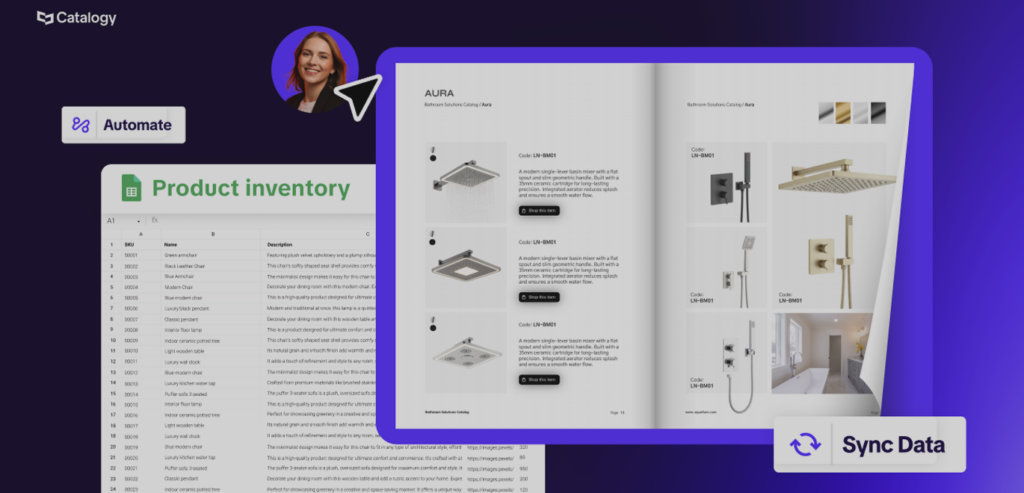
- 2023–Present (The Automation Paradigm): The emergence of specialized catalog automation platforms, such as those powered by Catalogy, has allowed firms to treat their product catalog as a live reflection of their ERP or product information management (PIM) system.
This shift has enabled businesses to increase their publishing frequency from a handful of times per year to monthly or even real-time updates. By decoupling design from data, firms have moved away from the "re-layout" cycle and toward a "refresh" cycle, where the template remains constant while the data flows dynamically.
Supporting Data and Industry Impact
The scale of this inefficiency is captured in recent industry analysis. According to data aggregated from businesses utilizing the Flipsnack and Catalogy platforms between October 2024 and May 2026, the transition to automated catalog generation results in a drastic reduction in production time.
Companies that previously spent six weeks per edition—producing roughly three to four catalogs annually—have moved to a model that allows for the publication of 12 to 16 catalogs per year, with each production cycle taking less than a week. The measurable impact includes:
- Increased SKU Coverage: One Latin American hardware distributor, which previously managed a 181-page catalog manually, now maintains 48 automated catalogs covering nearly 4,000 SKUs.
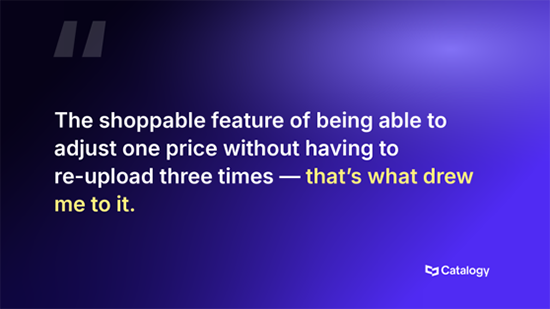
- Agile Pricing Response: A Minnesota-based wholesale importer of home goods reported that the ability to update a single price point—without re-uploading the entire document—was the primary catalyst for adopting automation.
- Cross-Border Efficiency: A global distributor operating across 20 countries transitioned from having no catalog program in certain markets to maintaining 32 automated catalogs, updated monthly, with zero manual page editing.
Implications for the Modern Sales Organization
The move toward automation is not merely a technical upgrade; it is a reorganization of the sales process. By utilizing "master feeds," companies can now generate personalized catalogs for specific client segments. Instead of sending a monolithic 500-page book to every customer, a sales representative can use an automated tool to filter the product feed based on a specific client’s purchase history or contract pricing.
This creates a "just-in-time" sales asset. The customer receives a tailored, branded document that is both current and highly relevant. Because these catalogs are hosted digitally, they also provide a feedback loop that static files lack. Sales teams can track engagement metrics, such as which products are being viewed most frequently, and use that data to refine their outreach strategies.
Operational Analysis: The "Zero-Manual" Objective
From a management perspective, the goal is to remove the "human bottleneck." When a catalog is tied to a live data feed, the role of the designer shifts from that of a manual layout operator to a curator of brand experience. The underlying rules—how pages reflow as the product range grows or shrinks—are established once in a master template.
This creates a high degree of scalability. Whether a company manages 100 SKUs or 10,000, the effort required to update the catalog remains largely the same. This is particularly vital for distributors in industries like industrial manufacturing, electronics, and wholesale retail, where price volatility is a constant business reality.
The Future of B2B Procurement
The broader implication of this trend is the gradual erasure of the line between a "catalog" and a "sales channel." As buying behavior in the B2B sector continues to mirror the frictionless experience of B2C e-commerce, the catalog is being reimagined as a shoppable interface.
The successful implementation of these systems often hinges on the willingness of leadership to view product data as an enterprise-wide asset rather than a departmental burden. As Bogdan Mile, Chief Product Officer at Flipsnack, notes, the traditional six-week production timeline is not a technical necessity—it is a byproduct of outdated workflows. Once the data is synced and the automation is in place, the catalog ceases to be a static record of the past and becomes a dynamic, revenue-generating tool for the future.
For the modern enterprise, the competitive advantage no longer lies in the sheer size of the catalog, but in its accuracy and relevance. As companies continue to digitize their supply chains, the ability to deliver a personalized, real-time product experience will likely become the standard requirement for securing long-term buyer loyalty. The "silence in the room" when asking about catalog order attribution is finally being replaced by concrete data on conversion rates, engagement, and operational savings.
Related posts: