Navigating the 2026 Holiday Shopping Season Requires Balancing AI Utility, Human Creativity, and Deal Fatigue

The 2026 holiday marketing landscape stands at a critical juncture, forcing major retail brands and advertisers to delicately balance modern technological efficiencies with deeply rooted traditional consumer values. As the retail industry prepares for the final stretch of the year, marketing executives are grappling with a distinct push-and-pull dynamic: the rising consumer curiosity surrounding artificial intelligence tools versus an overwhelming weariness of automated advertising, coupled with a simultaneous demand for creator-driven authenticity and value-focused messaging.
For brands looking to capture market share during this high-stakes period, achieving this equilibrium will determine who wins the season. According to Deloitte’s comprehensive annual holiday retail survey, average household spending for the season is projected to reach $1,654, representing a solid 4% year-over-year increase. Despite lingering economic anxieties and persistent cost-of-living pressures, shoppers remain remarkably resilient. However, industry experts emphasize that while affordability and smart budgeting remain top-of-mind, traditional holiday emotional drivers—such as human connection, nostalgia, and a genuine sense of togetherness—will ultimately move the needle for brands striving to stand out in an increasingly crowded marketplace.
Shifting Demographics and High-Stakes Retail Realities
The stakes for the 2026 holiday shopping season feel significantly elevated as major retailers and consumer goods brands contend with sluggish, inconsistent sales trends that have persisted throughout the year. To reverse these patterns, corporate marketing playbooks have pivoted aggressively toward handcrafted advertising creative, strategic creator partnerships, and innovative ways to help consumers navigate an oversaturated market filled with overlapping promotions and discounts.
Compounding this strategic shift is a major demographic milestone: for the first time in the 41-year history of Deloitte’s annual holiday tracking, Gen Z and millennial consumers will collectively comprise the absolute bulk of holiday retail sales. This generational shift brings entirely new behavioral expectations to the forefront. Unlike older cohorts like Baby Boomers and Generation X, who typically prioritize straightforward value propositions and independent shopping journeys, younger demographics demand higher levels of personalization, convenient digital experiences, seamless omnichannel integration, and clear guidance throughout their gift-buying workflows.
Deb Freeman, head of strategy at Gut New York, notes that consumers are placing a higher emotional premium on the holiday season than in previous years, seeking comfort in shared traditions.
"The holidays in general are being more cherished by people," Freeman observed. "Marketers are really trying to understand how to take their brand DNA and plug it into the engine of this holiday spirit in a way that is coming out on the other side full of humanity."
The Cultural Backlash Against AI in Creative Campaigns
One of the most profound debates defining the 2026 retail cycle is the precise role of artificial intelligence within the consumer shopping experience versus its application in brand marketing materials. Market research from Gartner reveals a fascinating dichotomy: while over one-third of consumers report a willingness to utilize generative AI tools to assist with practical holiday shopping tasks, public resistance to AI-generated marketing materials and brand campaigns remains remarkably high.
Gartner Senior Principal Analyst Emily Weiss highlights the growing alienation caused by hyper-automated content creation.
"If everyone can click and generate a campaign in Copilot and it only takes 20 minutes—or less—then why would they expect that people should spend any time caring about that?" Weiss questioned.
In direct response to this widespread "AI bloat," a growing roster of prominent brands is leaning heavily into meticulous, human-crafted creative assets. Earlier this month, apparel giant Levi’s debuted a widely discussed holiday campaign titled "Let’s Get Fuzzy." The campaign relies entirely on traditional stop-motion claymation, requiring four grueling hours of physical filming for every single second of final animation. The creative execution pays deliberate homage to "Clayman," the brand’s breakthrough 1995 global commercial. By celebrating tactile human craftsmanship while simultaneously reinforcing its enduring legacy status, Levi’s aims to deepen emotional brand loyalty.
"We often reference and pay homage to our past while moving ideas and creativity forward—and it was this same thinking that we applied to our ‘Let’s Get Fuzzy’ campaign," explained Anne Cambria, vice president of global marketing at Levi Strauss & Co.
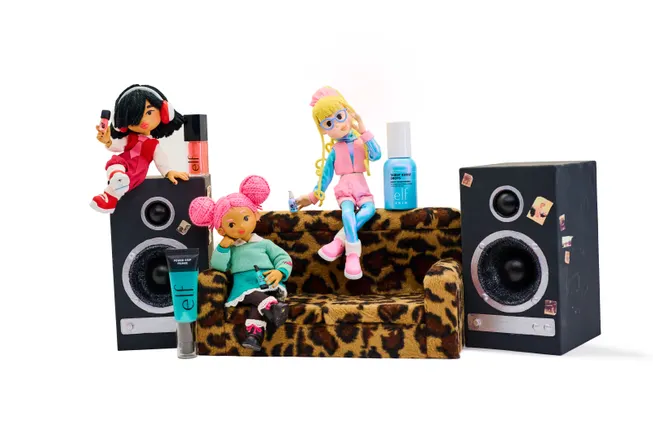
Similarly, beauty powerhouse E.l.f. Brands launched "Made to Stand Out," its inaugural holiday campaign. Narrated by acclaimed actor Alan Cumming, the spot utilizes stop-motion animation to tell an inclusive story about a trio of friends learning to embrace their individual quirks. Oshiya Savur, chief marketing officer at E.l.f. Brands, noted that the company spotted a glaring opportunity amid a crowded sea of homogeneous digital advertising.
"When we looked at the holiday landscape, we saw a sea of sameness and a real opportunity to bring something different to the table," Savur stated.
AI Inspiration and the Complexities of Product Discovery
While consumers have largely rejected synthetic advertising, they have actively embraced artificial intelligence for utilitarian, behind-the-scenes shopping tasks. Gartner data indicates that approximately 13% of shoppers are utilizing AI platforms for gifting inspiration, price comparisons, and product discovery.
However, rather than streamlining the consumer journey, AI integration appears to be complicating it. Consumers who consult AI tools for gifting ideas subsequently reference an average of 4.48 additional external sources, compared to just 3.24 sources among nonusers. This indicates that AI is adding an extra layer of research to an already fragmented purchasing pipeline. Traditional discovery channels remain dominant: retailer websites serve as the primary source for inspiration, while in-store shopping and Amazon retain the top spots for planned purchase channels, capturing 77% and 75% of consumers, respectively.
"These tools are not replacing the more traditional search channels or the traditional places where people tend to start their shopping journeys, like good old Google Search, Amazon, friends and family wish lists, and other people’s real-life recommendations—it’s just that we can’t mine real-life recommendations for data," Weiss explained.
To adapt, retail analysts advise brands to optimize their discoverability across both legacy and emerging search engines. This requires ensuring that enterprise-level data systems seamlessly communicate inventory levels, real-time pricing, and up-to-the-minute shipping options to protect search rankings and prevent consumer friction.
Combating Deal Fatigue and the Rise of the Value Seeker
The pragmatic reliance on technology for price discovery directly mirrors broader economic anxieties. Deloitte’s research indicates that 79% of shoppers anticipate higher price tags across retail categories this season. This widespread economic caution has triggered severe "deal fatigue," driven by months of aggressive, overlapping retailer promotions whose actual financial legitimacy is increasingly questioned by weary buyers.
To counteract deal overwhelm, retailers are deploying targeted strategies focused on authenticity. J.C. Penney launched a targeted holiday campaign featuring real, everyday shoppers rather than professional models. A notable "Party Fits" spot features a local Indiana barber styling complete holiday outfits sourced for a modest $168. The creative strategy is grounded in sobering consumer trust metrics: only 32% of shoppers fully or mostly trust retailers to offer genuinely fair prices.
Paradoxically, budget-conscious shoppers represent some of the most lucrative targets for brands this season. Deloitte classifies 38% of holiday shoppers as "value seekers"—individuals who actively engage in five or more distinct cost-saving behaviors. While this segment might initially alarm risk-averse merchants, value-seeking consumers are projected to spend 12% more overall than their non-value-seeking peers.
"I think of value seeking as another way of saying engaged shoppers," noted Brian McCarthy, a principal in Deloitte’s strategy and analytics practice.
Other major retailers are tackling affordability by simplifying the gift selection process entirely. Target rolled out an academic-themed "Academy of Giftology" campaign structured around specific consumer gifting needs, while Sephora enlisted actor Seth Rogen for a humorous campaign promoting in-store beauty advisors, reassuring shoppers who feel intimidated by complex cosmetics departments. Meanwhile, traditional giants like Walmart have deployed whimsical campaigns inspired by The Muppet Christmas Carol, balancing emotional resonance with competitive pricing.
The Evolution of the Creator Economy and Gen Z Engagement
As brands vie for the attention of digitally native Gen Z and millennial shoppers, the creator economy continues to serve as a vital marketing channel. However, the nature of influencer marketing is undergoing a significant maturation phase. Becky Owen, chief marketing officer of Billion Dollar Boy Group, points out that brands are shifting away from loud, disruptive product hauls toward sophisticated, psychology-driven cultural integrations.
"The way in which brands are integrating into the culture of creators and the culture of social is a lot more interesting," Owen said. "It feels a lot more driven by psychology, whereas I’d say in years past, it was a lot more about just review it, get it out there, build hype, build noise, and the loudest brand wins."
This strategic pivot comes as consumers display growing signs of influencer fatigue. Lavish, tone-deaf product hauls are increasingly falling flat, prompting brands to adopt more nuanced community-building tactics. For instance, while advent calendars remain a popular holiday staple, missteps—such as Skims facing intense online backlash over a $148 advent calendar filled primarily with hair ties and bobby pins—demonstrate that modern consumers expect tangible value and authenticity from creator collaborations.
Long-term ambassador programs are rapidly replacing transactional, one-off sponsored posts. Urban Outfitters exemplified this strategy by expanding its "All Together Now" brand platform into a community-centric holiday campaign titled "All Together Now: More the Merrier." Recognizing that Gen Z consumers place a high priority on self-gifting and shared physical experiences, the retailer hosted an immersive launch party integrating product customization stations and experiential partnerships with delivery platforms like DoorDash, uniting student ambassadors and community members cultivated throughout the year.
"As we seek out partnerships, we’re not just looking for short-term, we’re really looking for community members that have an affinity for the brand on their own, because that’s where we get the magic," explained Julia Draper, head of digital and e-commerce at Urban Outfitters.
Strategic Outlook and Future Implications
As the 2026 holiday shopping season accelerates toward its peak fulfillment window, retail marketing strategists face a complex balancing act. Navigating consumer demand requires a harmonious blend of emotional storytelling, transparent pricing models, selective technological integration, and authentic community engagement.
Ultimately, brands that succeed will be those that resist the temptation to rely entirely on algorithmic shortcuts or aggressive discount-driven harassment. By centering their campaigns on enduring human values—connection, shared joy, and relatable storytelling—marketers can cut through the noise and foster lasting brand equity that extends far beyond the calendar year.
"People are looking for connection," Freeman concluded. "They want stories they can relate to, laugh about, and feel sentimental toward. They want to feel like they’re part of something."