The Anatomy of a Crisis: Nvidia Faces Its Ultimate Governance Test as CEO Jensen Huang Confronts Foreign Intelligence Probe and Succession Fallout

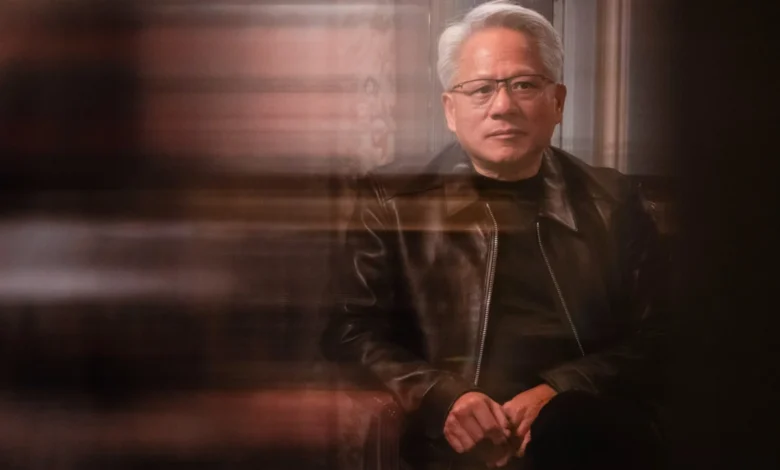
Few corporate executives in modern history have remained as inextricably linked to a single enterprise as Jensen Huang is to Nvidia. Over a remarkable 33-year tenure as chief executive officer, Huang has transformed a niche graphics chip manufacturer into a $4.3 trillion technological powerhouse that commands an estimated 90% market share in high-powered graphical processing units (GPUs) essential for artificial intelligence data centers. Yet, the very architecture that fueled Nvidia’s meteoric rise—one defined by centralized, charismatic, and singular leadership—has now plunged the world’s second most valuable company into an unprecedented corporate governance crisis.
The turmoil erupted following Huang’s public acknowledgment on Sunday of an extramarital affair with a woman whom U.S. authorities have reportedly concluded was a Chinese intelligence asset. In response to the revelations, which surfaced via investigative reporting by The New York Times, Nvidia’s board of directors announced a formal independent investigation to evaluate the circumstances surrounding the relationship. While the board stated it had found no initial evidence to suggest that national security protocols or proprietary Nvidia secrets were compromised, the inquiry is mandated to examine all available information. The disclosure immediately reverberated through global financial markets, sending Nvidia’s shares tumbling more than 4% on Monday and raising urgent questions regarding executive accountability, national security oversight, and succession planning at the absolute epicenter of the global artificial intelligence boom.
The Genesis of the Crisis: Timeline and Disclosure
The unfolding controversy brings to light a complex nexus of geopolitical vulnerability, corporate structure, and executive conduct. According to regulatory disclosures and media investigations, U.S. national security agencies had flagged the woman involved in the affair as a suspected Chinese intelligence operative. When the details of the liaison came to light, Huang addressed the situation directly, prompting immediate action from Nvidia’s board of directors.
The board’s oversight committee, led by key independent directors, initiated a formal review to determine whether the relationship posed operational risks, violated corporate policies, or exposed sensitive technological assets to foreign actors. While corporate representatives maintain that internal secrets remain secure, the involvement of a foreign intelligence target at the highest tier of America’s most strategically vital semiconductor firm has drawn intense scrutiny from federal officials, defense analysts, and institutional investors alike.
The market reaction was swift. Nvidia stock, which has enjoyed unprecedented surges throughout the generative AI boom that began in late 2022, dropped sharply as investors began pricing in the potential departure—or forced resignation—of the man widely regarded as irreplaceable to the company’s operational trajectory.
The Cult of Personality and a Centralized Power Structure
To understand the magnitude of the current crisis, governance experts emphasize the extent to which Nvidia’s corporate DNA reflects the personal philosophy of its 63-year-old co-founder and CEO. Unlike many mature technology conglomerates that maintain multi-layered management frameworks, robust chief operating officer roles, and formalized succession pipelines, Nvidia has long operated under a flattened, highly centralized matrix engineered entirely around Huang.
Huang famously maintains an astonishing 60 direct reports, operates without a chief operating officer, and wields ultimate authority over both strategic vision and granular technical decisions. His signature leather jacket, charismatic public persona, and close advisory relationships with government officials—including foreign trips and policy consultations with the Trump administration—have cemented his status as a cultural icon within the global technology sector.
This hyper-concentrated leadership model has yielded astronomical financial rewards, propelling Nvidia to unprecedented valuations. However, it has simultaneously left the company structurally vulnerable. Brian Burke, founder of Burke Law & Strategy and an expert in corporate board advisory, notes that Huang is bound up in the company’s identity to a degree rarely seen in modern corporate history. Nvidia is frequently studied as a paradigm of modern corporate success, with emerging enterprises striving to emulate its agile innovation cycles. Yet, that very reliance creates systemic fragility when the foundational pillar of the organization is suddenly called into question.
Regulatory Blind Spots and the Absence of a Chief Compliance Officer
Compounding the governance challenge is Nvidia’s internal compliance architecture. Public records indicate that Nvidia has historically operated without a designated chief compliance officer, a structural choice that previously drew scrutiny from federal regulators.
In September 2022, staff members at the Securities and Exchange Commission (SEC) formally inquired into Nvidia’s board risk oversight mechanisms, specifically questioning the absence of a standalone compliance officer and requesting details regarding reporting lines and internal structures. In response, Nvidia defended its oversight mechanisms, pointing to an internal compliance committee composed of its chief financial officer, the executive vice president of operations, and the senior vice president of human resources. The company maintained that this committee adequately ensured communication and adherence to corporate policies across the organization.
Nevertheless, legal and regulatory experts argue that corporate compliance programs universally tend to concentrate on mitigating insider threats, intellectual property theft, and regulatory breaches among rank-and-file employees, often overlooking the distinct risk profiles associated with C-suite executives. Hui Chen, a former federal prosecutor who served as the U.S. Justice Department’s first compliance counsel expert from 2015 to 2017, noted that corporations historically fail to scrutinize high-level executives with the same rigor applied to lower-level staff, leaving catastrophic blind spots at the top of the corporate hierarchy.
The Governance Conundrum: Ouster vs. Continuity
Nvidia’s board now faces a historic dilemma: how to investigate and potentially penalize an executive who is universally acknowledged as indispensable to the United States’ technological competitiveness in artificial intelligence.
Corporate executive scandals are not unprecedented. In 2019, McDonald’s terminated CEO Steve Easterbrook following the disclosure of a consensual relationship with an employee that violated company policy. That situation subsequently escalated into a major legal battle when investigators discovered additional undisclosed relationships, ultimately allowing McDonald’s to recover cash and equity valued at $105 million through legal settlements. However, the Nvidia scenario diverges sharply from traditional corporate misconduct cases. Rather than a violation of internal fraternization policies involving a subordinate, Huang’s situation involves an alleged foreign intelligence nexus at the helm of the world’s most critical semiconductor supplier.
Jason Schloetzer, an associate professor at Georgetown University specializing in executive succession practices, argues that Nvidia’s failure to establish a transparent, long-term succession plan has left the board in an untenable position.
“The board has made a mistake by not having a clearly outlined succession plan that’s been telegraphed to the market for a year or two,” Schloetzer said. “They find themselves at the day of reckoning, and it’s a sudden and perhaps forced one, rather than a relay situation where they have time to figure it out as they go.”
Succession Pathways and Internal Candidates
For years, Huang dismissed conventional corporate succession planning methodologies, asserting publicly that his preferred approach was to continuously disseminate his operational knowledge throughout the corporate hierarchy rather than anoint a single heir apparent. He has frequently expressed his desire that Nvidia’s next leader emerge from within the existing ranks of the company.
In the wake of the current crisis, corporate governance analysts and market observers have begun evaluating potential internal and interim leadership configurations. Among the frequently discussed options for an interim CEO is Stephen Neal, Nvidia’s lead independent director, who serves as chairman emeritus and senior counsel at the law firm Cooley LLP. Alternatively, Chief Financial Officer Colette Kress is viewed by analysts as a steady, highly qualified internal candidate capable of maintaining financial and operational continuity during a transition period.
Intriguingly, Nvidia’s leadership bench also includes members of Huang’s immediate family, who hold prominent operational roles within the firm. His son, Spencer Huang, serves as a director of product management, while his daughter, Madison Huang, holds the position of senior director of product marketing; both have reportedly played significant roles in the company’s robotics development initiatives. Additionally, his son-in-law, Nico Caprez, serves as vice president of global AI infrastructure growth. While family representation at senior management levels is not uncommon in founder-led technology companies, transitioning the CEO role to a family member amid an active national security and governance investigation would likely face rigorous scrutiny from institutional shareholders.
Broader Market and Geopolitical Implications
The outcome of the board’s ongoing investigation will carry profound consequences that extend far beyond Nvidia’s corporate headquarters in Santa Clara, California. As the foundational supplier of hardware powering global advancements in machine learning, national defense simulations, and commercial artificial intelligence applications, any disruption to Nvidia’s leadership continuity threatens to ripple across the entire technology ecosystem.
Prediction markets, institutional investors, and geopolitical strategists are closely monitoring whether Huang will be forced to step down entirely, transition into an advisory or technical role, or weather the inquiry and retain his executive responsibilities. Regardless of the board’s final determination, the incident serves as a watershed moment for corporate governance within the artificial intelligence sector, underscoring the vital necessity of robust compliance frameworks, independent risk oversight, and proactive succession planning for companies wielding global economic and technological hegemony.