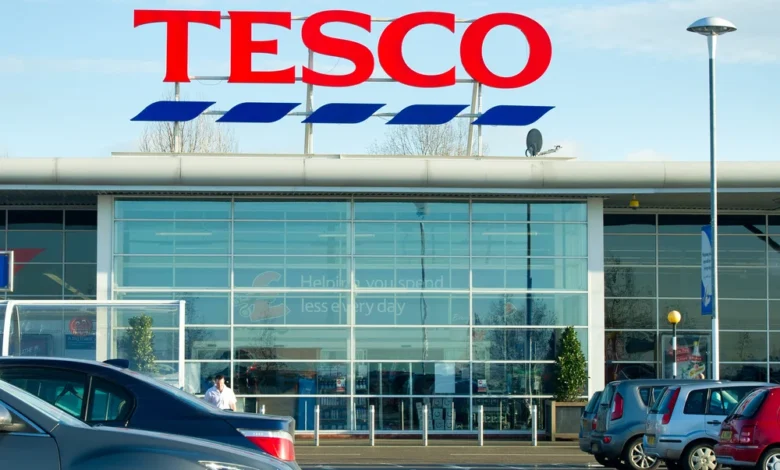
The Supreme Court’s decision on 29 September marks a definitive legal roadblock for the supermarket giant, cementing a Court of Appeal judgment from May that favored the claimants. The case, which has wound its way through the British judicial system for years, centers on whether predominantly female retail staff should be entitled to the same pay rates as their predominantly male counterparts in distribution centers, despite working in different environments.
The Core of the Legal Dispute
At the heart of the litigation is the principle of "equal pay for work of equal value." Thousands of Tesco store workers, represented by the law firm Leigh Day, argue that their roles—which involve customer service, shelf stocking, and checkout duties—are of equal value to those performed by warehouse and distribution center staff. Historically, distribution center roles have commanded higher hourly rates, a disparity that claimants argue is discriminatory given the gender demographics of the respective workforces.
Tesco’s defense strategy focused heavily on procedural technicalities, specifically challenging the methodology employed by the Employment Tribunal. The supermarket had argued against the use of its own internal training manuals and operational documents as the primary evidence to determine what employees were actually required to do. Tesco contended that these documents were aspirational or administrative, rather than accurate reflections of day-to-day duties.
However, the Court of Appeal rejected this narrow interpretation, ruling that internal documentation is a valid and reliable metric for assessing job roles, provided there is no compelling evidence to the contrary. By refusing to hear the appeal, the Supreme Court has effectively upheld this precedent, ensuring that future equal pay litigation will be streamlined by allowing courts to rely on existing company records.
A Chronology of the Equal Pay Battle
The road to this legal juncture has been arduous and costly for all parties involved. The dispute is part of a wave of equal pay claims that have swept across the UK retail sector over the last decade.
- 2018–2020: The initial claims are filed by store workers, alleging that pay structures are inherently discriminatory.
- 2021: The Employment Tribunal begins evaluating the evidence, setting the stage for the debate over job comparability.
- 2025 (July): Further tribunal hearings focus on the admissibility of operational documents, which Tesco attempts to contest.
- 2026 (May): The Court of Appeal hands down a landmark judgment, ruling that internal company training materials are legitimate tools for defining job roles.
- 2026 (September 29): The Supreme Court denies Tesco’s application for leave to appeal, effectively closing the door on the company’s attempt to overturn the May ruling.
Legal and Economic Implications
The refusal by the Supreme Court to intervene is a significant victory for the claimants and their legal representatives. Kiran Daurka, an employment partner at Leigh Day, described the outcome as a milestone for the 16,000 workers involved. "This is a significant outcome for the 16,000 Tesco workers we represent and brings Tesco’s challenge on this issue to an end," Daurka stated.
She further emphasized the procedural clarity this brings to the litigation process. "The courts have confirmed that tribunals can rely on employers’ own training and operational materials when assessing job duties. This will help equal pay claims to be decided fairly, proportionately, and without unnecessary obstacles."
For Tesco, the financial implications are substantial. If the workers eventually succeed in their full claim, the retailer could face a back-pay bill running into the hundreds of millions of pounds, accounting for years of salary discrepancies and interest. While the legal battle over the "job evaluation" methodology has concluded, the substantive question of whether the roles are indeed of "equal value" must still be determined by the courts.

The Broader Landscape of Retail Litigation
Tesco is not alone in navigating this legal minefield. The UK retail sector has seen a cascade of similar litigation, with giants such as Asda, Sainsbury’s, and Morrisons all facing parallel lawsuits.
Asda, for instance, has been embroiled in a decade-long legal fight over the same issue. The consistency of the courts in ruling against the retailers on procedural matters suggests a hardening stance toward corporate pay structures that rely on departmental segregation. Economists and labor rights advocates suggest that these cases reflect a systemic issue in how retailers classify "front-end" retail work compared to "back-end" logistics work.
If these cases result in a definitive ruling in favor of the claimants, it could trigger a fundamental restructuring of how major retailers set their wage floors. It may also necessitate a move toward "total reward" models that harmonize pay across different business functions to avoid the risk of future litigation.
Analytical Perspectives on the Ruling
From a legal perspective, the Supreme Court’s refusal to hear the case signals a reluctance to interfere with the discretionary powers of lower tribunals. By allowing the Court of Appeal’s ruling to stand, the judiciary has signaled that employers are held accountable by their own internal standards. If a company tells its employees in a training manual that their work involves specific, rigorous physical or mental tasks, they cannot later argue in court that those duties are secondary or less valuable.
From an operational perspective, this places a premium on the accuracy and tone of corporate documentation. Retailers will now have to be far more circumspect about how they define roles in internal literature. There is also the potential for increased administrative costs, as HR departments may be required to conduct more frequent and granular "job value" assessments to ensure their pay scales remain defensible under the Equality Act 2010.
Future Outlook for Tesco Workers
With the Supreme Court appeal off the table, the focus now shifts back to the Employment Tribunal for the next phase of the litigation. The case will move toward substantive arguments regarding the "value" of the roles. This will involve detailed expert analysis of the physical demands, stress levels, and skill requirements of both store-based and warehouse-based positions.
The 16,000 workers involved in this action represent a significant portion of the retail workforce, and their success or failure will likely dictate the bargaining power of shop floor staff for years to come. While the path ahead remains long and complex, the September 29 decision removes a major procedural hurdle that had threatened to stall the litigation indefinitely.
For Tesco, the challenge remains balancing its fiscal responsibilities to shareholders with the mounting pressure to resolve long-standing issues of pay equity. As the legal landscape continues to evolve, the supermarket will likely face continued scrutiny from investors, labor unions, and the public regarding its internal wage policies.
Ultimately, this case serves as a reminder that the digital and physical records kept by large corporations are not merely internal guidance—they are legal evidence. As the industry watches closely, the resolution of these claims will likely set the definitive standard for fair pay in the 21st-century retail economy, potentially ending an era where gendered role segregation could be used to justify wage differentials. The legal precedent set in the Tesco case, while specific to one retailer, echoes throughout the sector, signaling that the era of "unnecessary obstacles" in equal pay claims is drawing to a close.
Related posts: