Stranger Things Tales From 85 Season 3 Renewal Status Everything We Know So Far

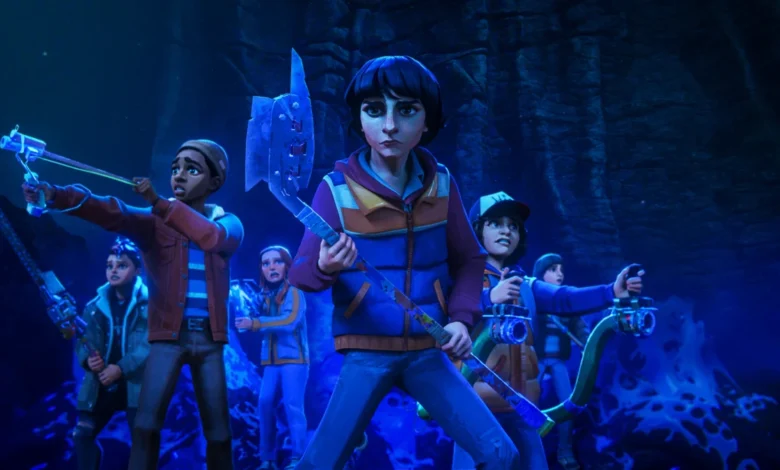
The animated expansion of Netflix’s flagship supernatural franchise, Stranger Things: Tales from ’85, has captured the attention of dedicated fans following the swift consecutive rollouts of its first two seasons. However, with the conclusion of its shortened second outing, questions regarding the show’s long-term future have taken center stage. While the narrative framework leaves ample room for further exploration in Hawkins, the realization of a third season hinges heavily on audience metrics and viewership performance across the streaming platform.
The original animated venture emerged as part of Netflix’s broader strategy to extract deep lore from its most successful intellectual properties. As the Duffer Brothers universe continues to expand across live-action, stage productions, and animated mediums, Tales from ’85 occupies a unique narrative space. Understanding whether the series will secure a third chapter requires an examination of production histories, streaming analytics, creative intent, and franchise continuity constraints.
Initial Production Model and Official Renewal Status
As of right now, Stranger Things: Tales from ’85 has not received an official renewal order for a third season from Netflix executives. The remarkably short turnaround between the premieres of Season 1 and Season 2 can be attributed to the production realities of the animation industry. Netflix initially commissioned the series with a substantial two-season upfront order. In the animation sector, lengthy lead times necessitate multi-season commitments to ensure studio stability and consistent pipeline execution.
Development on the animated project began as early as 2023, following a production cycle comparable to other high-profile Netflix animated titles such as Blue Eye Samurai. With the fulfillment of the initial two-season commitment, the future of the series now rests entirely on traditional performance evaluations. Although preliminary developmental outlines and early storyboarding for a potential third season have quietly circulated behind the scenes, formal greenlighting remains contingent on executive approval.
Showrunner Eric Robles addressed the series’ future directly in communications with the fanbase, emphasizing that audience metrics ultimately dictate production longevity. In digital interactions with viewers, Robles noted that sustained viewership remains the primary catalyst for securing subsequent season pickups, urging the community to amplify engagement to secure further episodes.
Viewership Performance and Global Streaming Metrics
The commercial viability of streaming content relies heavily on sustained engagement metrics, and current data presents a complex outlook for the animated spin-off. Following its debut, the first season secured a modest two-week presence in Netflix’s global Top 10 television rankings, accumulating 23.9 million viewing hours—equivalent to approximately 4.9 million views. Performance metrics compiled during the first half of the release window indicated a cumulative total of 40.4 million viewing hours, translating to roughly 8.3 million views. While these figures represent respectable engagement for a standard animated series on the platform, they fall significantly short of the viewership benchmarks established by the live-action Stranger Things mothership series.
Season 2 encountered similar hurdles in dominating mainstream global charts. Regional daily tracking data from platforms like FlixPatrol indicated that while the series secured positions within regional television Top 10 lists, its footprint remained limited primarily to secondary tiers and lower rankings across select international markets, including parts of Eastern Europe and South Asia. Although the series demonstrated stronger traction within the platform’s dedicated Kids and Family television categories, Netflix typically anticipates broad, cross-demographic dominance for properties attached to its premier franchise. Without a significant surge in organic word-of-mouth growth, the series faces a competitive barrier in justifying continued budgetary allocation.
Narrative Resolution of Season 2 and Continuity Implications
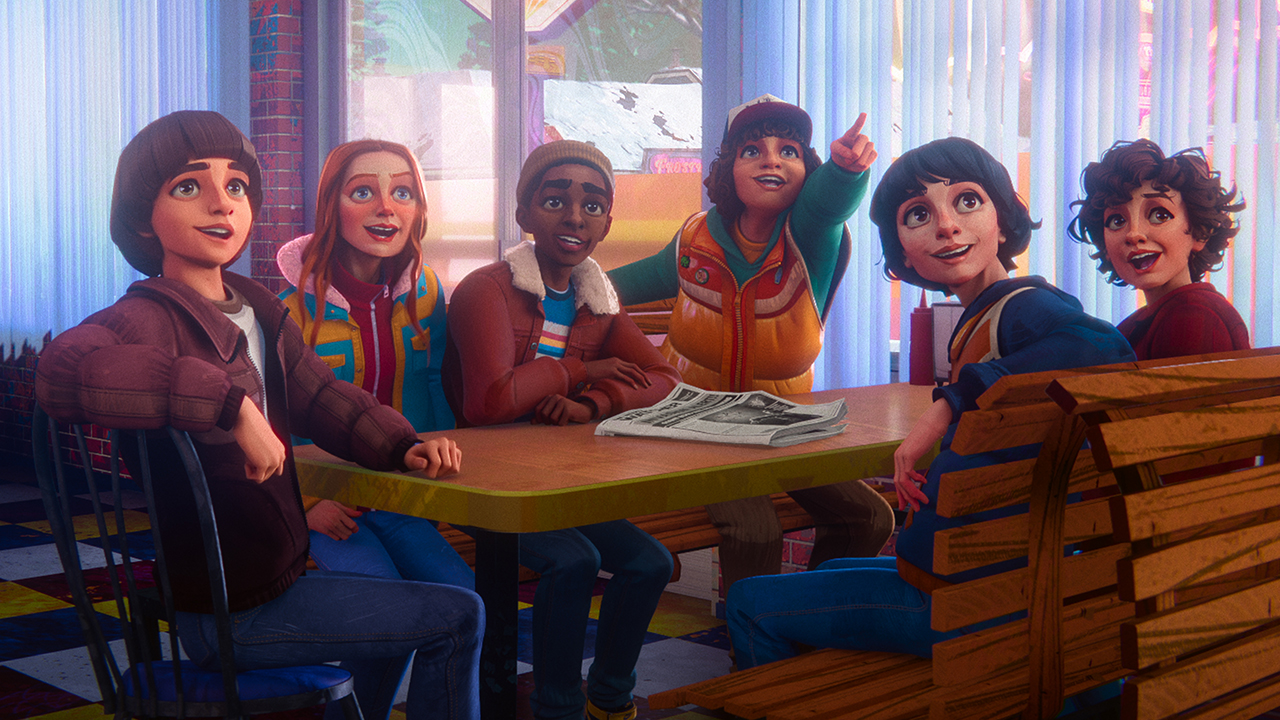
The conclusion of the second season provides a definitive resolution to several localized conflicts while deliberately positioning the narrative for future expansion. The finale centers on a multi-front confrontation involving Daniel Fischer, portrayed by Lou Diamond Phillips, whose mentally controlled flora threatens the stability of Hawkins. Through a coordinated effort—featuring Dustin, Nikki, Will, and Charlie utilizing underground tactics, alongside Lucas and Max disabling surface-level threats via targeted thermal destruction—the characters successfully weaken the primary entity before Mike and Eleven neutralize the core threat in the surrounding woods.
Beyond the supernatural resolution, the Season 2 finale establishes significant interpersonal developments. Mike and Eleven solidify their relationship at the Palace Arcade, while a public video broadcast exonerates historical figures and exposes corrupt local entities. Furthermore, narrative groundwork is established for characters like Nikki to remain in Hawkins due to familial career developments, maintaining a localized anchor for potential future stories.
Despite these open-ended narrative threads, a potential third season faces distinct continuity hurdles tied to the established live-action timeline. Showrunner Eric Robles has previously stated that the overarching objective of the animated spin-off is to bridge the historical gap leading directly into the events of the live-action third season. With Season 2 unfolding around Valentine’s Day in 1985, a prospective third season would inevitably push the timeline toward the summer months and the grand opening of the Starcourt Mall.
This chronological progression introduces a narrative puzzle regarding character continuity. Original animated characters introduced in the series—such as Nikki, voiced by Odessa A’zion, and Charlie—do not appear in the subsequent live-action seasons of the main franchise. Consequently, any continuation of Tales from ’85 would be tasked with providing definitive narrative resolutions for these figures to ensure a seamless transition into the established summer 1985 timeline of the live-action universe.
Broader Industry Context and Franchise Strategy
The predicament surrounding Stranger Things: Tales from ’85 highlights a broader strategic challenge facing major streaming conglomerates: leveraging multi-platform expansions without diluting the core brand equity. As studios increasingly rely on established intellectual property to mitigate subscriber acquisition risks, spin-off content faces intense scrutiny regarding return on investment.
Animated extensions of live-action blockbusters often struggle to bridge the gap between niche animation audiences and mainstream franchise consumers. While high-concept prestige animation can achieve sustained critical acclaim, tie-in projects dependent on live-action continuity frequently encounter rigid narrative boundaries. In the case of the Stranger Things universe, the absolute adherence to a strict chronological timeline limits the long-term viability of ancillary characters who cannot be integrated into future live-action installments.
Ultimately, the trajectory of Stranger Things: Tales from ’85 serves as a case study in modern content valuation. Whether the series secures a third season will depend not merely on creative enthusiasm from its production team, but on measurable consumer demand capable of satisfying the financial thresholds required by one of the industry’s most expensive and closely monitored properties.