Sazo Redefines Cross-Border Commerce with Agentic AI, Secures $10.3 Million Funding and Enters U.S. Market

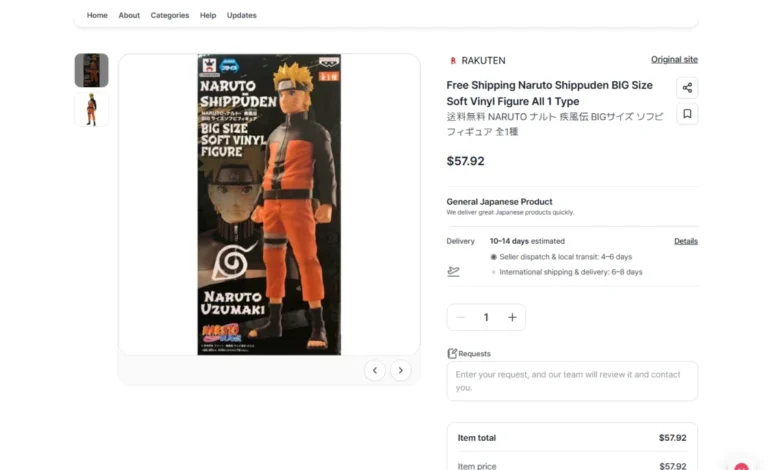
Agentic artificial intelligence (AI)-powered cross-border commerce company Sazo is rapidly expanding its footprint, aiming to make international shopping as effortless as domestic purchases. The company, headquartered in Nagoya, Japan, with offices in Tokyo and Seoul, recently announced its entry into the robust U.S. market, enabling American consumers to directly purchase products from Japan. This strategic expansion follows significant growth in its initial South Korea-Japan corridors and is bolstered by a recently closed Series A funding round totaling $10.3 million.
The Vision: Seamless Global Shopping Experience
Sazo’s core mission, articulated by Chief Financial Officer Gavin Jung, is to dismantle the traditional barriers that complicate international e-commerce. In an increasingly globalized world, consumer demand for unique products from diverse markets continues to surge. However, the complexities of customs duties, international shipping, currency conversion, and fragmented logistics often deter shoppers. Sazo addresses these pain points by acting as an intelligent intermediary, streamlining the entire purchasing process for the end consumer.
The company initially launched its services in early 2024, facilitating cross-border transactions from South Korea to Japan. Demonstrating agile growth, Sazo plans to expand its Japan-to-Korea service in June 2025, further solidifying its presence in the East Asian market. The entry into the U.S. market in June marks a pivotal moment, connecting American consumers directly with the vibrant retail landscape of Japan. This expansion aligns with a broader trend of increasing consumer interest in international goods, especially from cultural hubs like Japan and South Korea, known for their unique fashion, electronics, entertainment merchandise, and culinary products.
Navigating a Complex Global Trade Landscape
Sazo’s expansion comes at a paradoxical time in global trade, as noted by Gavin Jung. "The macro backdrop is almost counterintuitive," Jung told Digital Commerce 360. "Trade is getting more restrictive. The U.S. ended its de minimis duty exemption, and yet cross-border demand keeps rising, actually." This observation highlights a critical shift in the cross-border e-commerce paradigm. Historically, some businesses leveraged loopholes or "duty-free tricks" to keep prices low. However, with evolving regulations, such as the U.S. potentially ending its de minimis duty exemption for certain high-value shipments – a rule that allowed imports under a certain value (currently $800) to enter duty-free – the focus has shifted. The new imperative is not just about low prices, but about seamless customs absorption and transparency for shoppers. "Now, it’s about who absorbs customs more smoothly for the shoppers, and that shift actually plays to our model," Jung explained, underscoring Sazo’s strategic advantage.
The de minimis rule, while still largely in effect for low-value shipments, has faced scrutiny, particularly regarding its application to goods from certain countries and its potential impact on domestic industries. Any tightening of this rule would significantly increase the complexity and cost of international shipments for many direct-to-consumer businesses, making Sazo’s all-inclusive pricing model even more appealing. By bundling tariffs, duties, and international shipping into a single, upfront price in the customer’s local currency, Sazo eliminates the common headaches of unexpected customs invoices or volatile foreign exchange rates, offering a transparent and predictable shopping experience.
The Power of Agentic AI in Cross-Border Commerce
At the heart of Sazo’s innovative approach is its proprietary agentic AI technology. This sophisticated AI system is engineered to tackle the most formidable challenges in international commerce, automating processes that traditionally cause bottlenecks and failures. "Our AI handles the parts of a cross-border purchase that usually break down, estimating duty and shipping up front, translating listings and consolidating items from different sellers into a single shipment and clearing customs," Jung elaborated.
For a U.S. consumer shopping on Sazo, the platform presents a curated selection of products from Japan. The customer can add multiple items from various Japanese sellers to a single cart. Sazo then acts as a proxy buyer, acquiring these products on the consumer’s behalf. Once the items are collected, Sazo’s AI orchestrates their consolidation into a single, optimized shipment, significantly reducing shipping costs and environmental impact. Crucially, the AI accurately calculates all applicable tariffs and duties based on harmonized system (HS) codes, which are international standards for classifying traded products. This predictive capability is vital for providing the customer with a final, all-inclusive price at the point of purchase, eliminating any subsequent financial surprises. The AI also manages translation of product listings, ensuring a smooth browsing experience regardless of the original language.
Looking ahead, Sazo is exploring strategies to further optimize its supply chain. This includes the potential for pre-purchasing and stocking popular products, moving beyond a purely proxy-buyer model. By holding inventory, Sazo could potentially offer even more competitive pricing and faster delivery times, further enhancing the customer experience. This move would position Sazo more akin to a global retailer, albeit one powered by a sophisticated AI logistics backbone.
Behind the Technology: A B2B Ecosystem Play
Sazo’s technological ambition extends beyond its direct-to-consumer platform. The company is strategically building its technology stack to serve as a "cross-border back end that AI agents can plug into," according to Jung. This involves developing an application programming interface (API) that would allow other AI agents – potentially future personal shopping AI assistants or enterprise-level e-commerce solutions – to leverage Sazo’s robust infrastructure.
This B2B strategy is forward-thinking, recognizing the accelerating trend of AI-driven commerce. As AI agents become more sophisticated in "shopping on people’s behalf, searching, recommending, eventually buying," they excel at product discovery but often falter at the intricate execution layer of cross-border logistics. "But they can’t clear customs, predict duty by HS code, or run local fulfillment. That execution layer is exactly what we own," Jung emphasized. By providing this critical backend service, Sazo positions itself as an indispensable partner in the evolving AI commerce ecosystem, regardless of which specific AI agents dominate the market. This creates a resilient business model, diversifying revenue streams and cementing Sazo’s role as a foundational layer for global AI-powered retail.
A Founder’s Journey: From Student Frustration to Global Vision
The genesis of Sazo is rooted in a common frustration experienced by its CEO, Maro Gil. Gil founded the company in 2023 while studying abroad in Nagoya, Japan, as a student from South Korea. Despite the geographical proximity of Japan and South Korea, Gil encountered significant difficulties in purchasing products tied to his hobbies from his home country. This personal challenge ignited the idea for a technology-driven solution.
Nagoya, a city known for its industrial heritage rather than a bustling startup scene, provided a unique environment for innovation. "Nagoya is not Tokyo," Jung remarked, "It’s a very humble place. So there’s not much for you to enjoy in the city." This relative quiet allowed Gil to focus intensely on his vision. Leveraging his background in AI, he began developing a prototype to bridge the gap in cross-border commerce. While the initial prototype was, as Jung described, "very inefficient in terms of how it was engineered, how it was architectured and everything," it laid the groundwork for the sophisticated platform Sazo is today. This entrepreneurial spirit, born from a direct need and fueled by technological expertise, is a testament to Sazo’s authentic problem-solving approach.
Significant Funding Milestones Fueling Expansion
Sazo’s innovative model and rapid growth have attracted substantial investment. The company recently announced a successful Series A funding round, raising an impressive $10.3 million. This round was co-led by Japan Post Capital and Suzuyo & Co., both of whom had previously invested in Sazo’s pre-Series A financing, demonstrating continued confidence in the company’s trajectory.
The list of investors further underscores Sazo’s strategic importance and potential. Notable participants include South Korean internet giant Naver, a major player in e-commerce and technology; leading Japanese financial institutions Sumitomo Mitsui Banking Corporation (SMBC) and Mizuho Bank; Japanese venture capital firm Partners Fund; and D4V (Design for Ventures), a venture capital firm associated with IDEO. This diverse investor base, spanning logistics, finance, and technology, provides Sazo not only with crucial capital but also with strategic partnerships and industry expertise.
Maro Gil expressed optimism about the future, stating, "Our global service has grown rapidly, with monthly gross merchandise value increasing roughly sevenfold over the past six months." This remarkable growth trajectory validates Sazo’s market fit and operational efficiency. Gil further outlined the company’s immediate plans: "Building on this investment, we plan to hire talent across development, service operations, and other areas, and accelerate our efforts to build a cross-border ecosystem that connects consumers and businesses worldwide." The planned opening of a new office in California within the next year further signals Sazo’s commitment to solidifying its presence in the crucial U.S. market.
Market Dynamics and Evolving Consumer Behavior
Sazo’s current growth rate of 25% month-over-month highlights the strong demand for its services. While Gavin Jung noted that Sazo’s customers in Korea and Japan share a fundamental desire for international goods, he observed interesting demographic and purchasing differences.
In Japan, Sazo customers primarily purchase products from Korea, with a strong leaning towards K-pop merchandise and, surprisingly, food items. This demographic tends to be younger and predominantly male. This trend reflects the significant global influence of Korean popular culture (Hallyu wave) and the growing appreciation for Korean cuisine.
Conversely, in South Korea, Sazo customers primarily shop for Japanese products. Jung initially expected this demographic to be dominated by teenagers or young adults in their 20s, given the appeal of Japanese anime, manga, and pop culture. However, Sazo’s data revealed a different reality: more than half of its Korean customers are females in their 30s and 40s. This suggests a broader appeal beyond niche youth markets, potentially tapping into established consumers seeking quality, unique, or nostalgic Japanese goods.
Perhaps one of the most surprising findings for Sazo was its average order value (AOV), which consistently exceeds $100. Jung admitted his initial expectation was that consumers would use Sazo primarily for smaller, cheaper purchases. This higher AOV indicates that customers are willing to invest significantly in desired international items when the purchasing process is simplified and transparent. Jung elaborated on this phenomenon: "But people actually don’t just cut down the money when it comes to buying something they really want to enjoy for their hobbies or something they really want to appreciate. And especially for those IP maniacs who are so into Japanese anime, Japanese characters. They spend a lot of money." This insight reveals a powerful psychological driver: consumers prioritize acquiring unique or passion-driven products, and Sazo facilitates that desire by removing logistical hurdles. Interestingly, the AOV is slightly smaller among Sazo’s Japanese customers compared to those in Korea, suggesting nuances in market purchasing power or product preferences.
Broader Implications for Global E-commerce
Sazo’s model represents a significant evolution in cross-border e-commerce, offering a glimpse into the future of global retail. By leveraging agentic AI, Sazo is not merely facilitating transactions but is actively solving the complex, multi-faceted problems that have historically limited international trade for individual consumers. Its success could inspire other companies to adopt similar AI-driven, end-to-end solutions, fostering greater global accessibility to diverse products.
The company’s strategy of becoming a backend service provider for other AI agents also has profound implications. As AI takes on more proactive roles in consumer life, the ability to seamlessly execute physical world tasks like international purchasing and delivery will be crucial. Sazo is positioning itself to be a critical infrastructure layer in this emerging AI-driven economy, much like payment processors or cloud computing services are today. This could democratize access to global markets for smaller retailers and creators who lack the resources to navigate international logistics themselves, further fueling the growth of unique, niche products on a global scale.
Future Outlook
With substantial funding, proven technology, and a clear expansion roadmap, Sazo is well-positioned to continue its rapid ascent in the global e-commerce landscape. The company’s focus on transparency, efficiency, and customer experience, powered by sophisticated AI, addresses fundamental needs in a market ripe for innovation. As global trade policies continue to evolve and consumer demand for international goods intensifies, Sazo’s agentic AI model offers a compelling vision for a truly borderless shopping experience, setting new benchmarks for convenience and accessibility in the digital age. The journey from a student’s personal frustration to a multi-million dollar venture with global aspirations underscores the transformative potential of applying cutting-edge AI to real-world commercial challenges.