Knight-Swift Transportation Signals Durable Market Shift as Regulatory Pressure Tightens Capacity and Boosts Rates

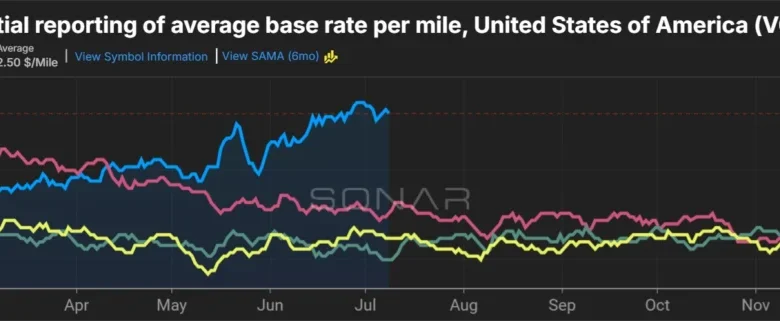
Regulatory authorities intensified their efforts to remove non-compliant capacity from the trucking sector during the second quarter, catalyzing a "rapid progression in truckload market conditions," as reported by industry titan Knight-Swift Transportation. The carrier, a bellwether for the truckload market, announced robust, better-than-expected financial results on Wednesday, underpinned by a significant uptick in contract rates throughout the period and a tender rejection rate that soared to twice the industry average. This positive trajectory is anticipated to gain further momentum from September onwards, extending through the remainder of the year and potentially reshaping the industry’s landscape for years to come.
A Sweeping Regulatory Crackdown Reshapes the Landscape
The current wave of regulatory enforcement by agencies such as the Federal Motor Carrier Safety Administration (FMCSA) and the Department of Transportation (DOT) is unprecedented in its scope and intensity, according to Knight-Swift CEO Adam Miller. Speaking on a Wednesday evening call with analysts, Miller remarked, "We’ve just never seen the FMCSA, the DOT with the push that they’re making on cleaning up our industry and taking the non-compliant, the bad actors out of it." This crackdown targets various forms of non-compliance, including violations of hours-of-service regulations, inadequate vehicle maintenance, non-adherence to drug and alcohol testing protocols, and other safety-critical deficiencies. The primary objective is to enhance highway safety and ensure fair competition by eliminating operators who cut corners on safety and compliance, thereby undercutting legitimate carriers.
This aggressive regulatory stance has had a profound and immediate impact on the supply side of the truckload market. By forcing out thousands of smaller, often less compliant operators, the available capacity has tightened considerably. This reduction in available trucks, coupled with steady demand, has shifted pricing power back to carriers, allowing them to command higher rates. Miller emphasized his belief that this industry-wide change is "durable" and will fundamentally "raise the floor" for rates, even during future economic downturns, by establishing a new, higher baseline for operating costs and pricing expectations. This suggests a structural shift rather than a mere cyclical fluctuation, promising a more stable and potentially more profitable environment for compliant carriers in the long run.

Knight-Swift’s Q2 Performance Exceeds Expectations
Knight-Swift Transportation (NYSE: KNX) delivered an exceptional second-quarter performance, far surpassing analyst expectations. The company reported adjusted earnings per share (EPS) of 63 cents, marking a substantial 28-cent increase year-over-year and exceeding the consensus estimate by 12 cents. Management’s own EPS guidance range for the quarter had been a more conservative 45 to 49 cents, highlighting the strength of the market rebound and the company’s operational execution.
Total revenue for the quarter reached $2.1 billion, climbing 13% year-over-year and outperforming the consensus estimate of $2.04 billion. Excluding fuel surcharges, revenue still saw a healthy 6% year-over-year increase, underscoring robust underlying demand and pricing power. These figures demonstrate Knight-Swift’s ability to capitalize on the improving market conditions, translating capacity constraints and rising rates into tangible financial gains.
The adjusted EPS calculation for the second quarter excluded several items typically associated with corporate restructuring and acquisitions, such as specific acquisition-related costs, restructuring expenses, severance packages, and non-cash impairment costs. Furthermore, the period benefited from favorable financial conditions, including lower interest expense and higher gains derived from equipment sales, which contributed an additional 5 cents to the year-over-year EPS performance. Despite the strong earnings report, shares of KNX saw a modest dip of 0.5% in after-hours trading on Wednesday, a common market reaction as investors digest the details following significant gains earlier in the trading day.
Truckload Segment Leads the Charge: An Inflationary Rate Cycle Begins

The truckload (TL) segment was a primary driver of Knight-Swift’s impressive results, with revenue increasing 3% year-over-year to $1.1 billion. This growth was primarily fueled by a 6% increase in revenue per tractor, which effectively offset a 3% decline in the average number of trucks in service. The decline in truck count reflects the broader industry trend of capacity contraction, which Knight-Swift, as a leading player, has navigated by optimizing its existing fleet and leveraging its scale.
A significant factor contributing to the TL segment’s strength was the carrier’s enhanced asset utilization, driven by sophisticated load planning tools. This operational efficiency resulted in a 140 basis point (bps) year-over-year reduction in deadhead miles (empty miles driven without cargo) and a 70 bps sequential improvement. Loaded miles per tractor improved year-over-year for the seventh consecutive quarter, indicating consistent operational excellence. Management noted that even without adding new tractors, there remains substantial opportunity to further enhance utilization, particularly as some trucks currently remain unseated, suggesting room for further efficiency gains as driver recruitment efforts continue.
Revenue per loaded mile, excluding fuel surcharges, surged 5.6% year-over-year to $2.89. This metric is viewed as being "just beginning to recover" as existing contract rates roll over and new, higher rates are implemented. Most of the rate implementations during Q2 stemmed from bids negotiated earlier in the year, which did not fully reflect the increasingly tight supply backdrop that developed more rapidly towards the end of the quarter. This indicates that the full impact of the current market tightness on contract rates has yet to be realized, suggesting continued upward pressure on pricing.
The acceleration in rate per loaded mile was particularly notable, climbing from low-single digits in April to a robust 8% in June. The company’s over-the-road fleet experienced double-digit increases in June, partly due to some project freight but also despite a headwind from the dedicated segment (which constitutes 28% of the TL fleet), where rate changes are typically less volatile and often indexed to inflation. This strong finish to the quarter signals a burgeoning inflationary rate cycle in the truckload market.
The rate picture continues to brighten as the company reports securing double-digit rate increases on recent bids. Furthermore, Knight-Swift’s exposure to the spot market, which is more immediately responsive to supply-demand imbalances, has increased to 15% from 10% at the beginning of the year. This increased spot market participation allows the carrier to capture higher rates in the most constrained lanes, further bolstering its revenue per mile. The TL unit posted an impressive 91% adjusted operating ratio (OR), representing a 9% adjusted operating margin, which was 360 basis points better year-over-year. Notably, the US Xpress over-the-road fleet, acquired in 2023, achieved profitability for the first time since its integration, underscoring the success of the acquisition and the improving market.

For the third quarter, Knight-Swift’s TL guidance projects a mid-single-digit year-over-year revenue increase, with the adjusted OR expected to improve by 650 to 750 bps year-over-year, implying an 89.2% adjusted OR. Truck count is anticipated to remain stable sequentially but lower year-over-year, with utilization also holding steady. The primary catalyst for the projected year-over-year revenue increase is the continued rise in rates.
Driver Compensation: A Controlled Headwind
While the market is tightening and rates are rising, management identified driver pay as a "creeping headwind" rather than an immediate, sharp increase. Knight-Swift has adopted a strategic approach to driver compensation, noting that it did not claw back prior wage increases even during the preceding downturn when rates fell by over 20%. This commitment to driver welfare helps maintain a stable workforce.
The company currently plans true wage hikes only in select, highly competitive markets, as there isn’t a pressing need for broad-based increases across the entire fleet. Instead, a significant portion of the augmented total driver compensation will come from improved asset utilization, leading to more paid miles for drivers within their existing pay packages. This strategy allows Knight-Swift to increase driver earnings without necessarily raising the base pay rate across the board, thus managing costs effectively.
Management also highlighted that the current labor market for drivers is looser compared to the prior upturn, particularly in 2021 when the industry faced competition from government stimulus programs. This relative looseness provides Knight-Swift with more flexibility in managing driver pay increases, allowing them to restore margins before facing significant inflationary pressures on labor costs. The company reported achieving sub-80% ORs during the last market peak, indicating a long path to fully restore profitability to previous highs, even with current rate increases.

Diverse Segment Performance: LTL, Logistics, and Intermodal
Beyond the dominant truckload segment, Knight-Swift’s other divisions also contributed to the overall performance, albeit with varying trends.
Less-than-Truckload (LTL): The LTL segment experienced a 1% year-over-year revenue decline, reaching $333 million. This was a result of a 4% increase in tonnage being offset by a 4% decline in yield (excluding fuel). Shipments per day were down 4% year-over-year, although the rate of decline lessened as the quarter progressed (down 6.5% in April, 3.2% in May, and 1.3% in June). This improvement suggests stabilizing demand and operational adjustments. The declines were attributed to temporary embargoes implemented to achieve desired service levels and a changing freight mix. A notable increase in weight per shipment (up 8% year-over-year) dragged down the yield metric, but this headwind was partially mitigated by a 5% increase in length of haul. Contractual rate increases in the LTL segment were up by a mid-single-digit percentage in the quarter, indicating some pricing power despite the yield pressure. The LTL unit recorded a 92.1% adjusted OR, a 100 bps improvement year-over-year. For Q3, LTL revenue is expected to see a low-single-digit percentage increase year-over-year, with an adjusted OR in the low-90% range.
Logistics: Logistics revenue increased by 9% year-over-year. This growth was driven by a substantial 30% increase in brokerage revenue per load, which overcame a 16% decline in volumes. The company attributed the volume weakness to "further enhancements to our rigorous carrier screening practices," suggesting a focus on quality and compliance over sheer volume in the brokerage operations. Elevated purchased transportation costs, however, eroded the gross margin by 350 bps year-over-year, resulting in a 96.4% adjusted OR, 160 bps worse year-over-year. The Logistics unit is expected to maintain steady revenue and margin trends sequentially in the third quarter. This indicates a strategic shift towards higher-quality, higher-margin brokerage activities, even if it means sacrificing some volume.
Intermodal: The Intermodal segment made a strong return to profitability, achieving a 99.4% adjusted OR. Revenue soared by 35% year-over-year, propelled by a 20% increase in volumes and a 13% rise in revenue per load. This resurgence in intermodal activity suggests a renewed attractiveness of rail-based freight solutions, likely due to a combination of improved rail service, cost-effectiveness for certain lanes, and potentially shippers looking for alternatives amidst tight truckload capacity. In the third quarter, intermodal revenue is projected to increase by a low-single-digit percentage sequentially (roughly 25% higher year-over-year), with the OR expected to improve slightly from the second quarter’s performance. This positive outlook for intermodal further diversifies Knight-Swift’s revenue streams and positions it to capitalize on multimodal freight solutions.

Outlook and Broader Industry Implications
Knight-Swift issued adjusted EPS guidance for the third quarter ranging from 71 to 77 cents, which was notably better than the 71-cent consensus estimate at the time of the earnings release. This optimistic forecast underscores management’s confidence in the sustained positive momentum in market conditions and their ability to continue executing effectively.
Knight-Swift’s second-quarter results are more than just a snapshot of a single company’s performance; they serve as a critical bellwether for the entire truckload market. As the nation’s largest asset-based carrier, its operational insights and financial outcomes often precede or confirm broader industry trends. This report unequivocally highlights that the market has transitioned from a prolonged cyclical downturn, characterized by overcapacity and intense pricing pressure, to a structural recovery.
The regulatory crackdown, described by CEO Adam Miller as unprecedented, is not merely a transient factor but a fundamental force reshaping the industry’s supply side. By actively removing non-compliant capacity, regulators are not only enhancing safety but also inadvertently creating a more disciplined and potentially more profitable market for compliant carriers. This reduction in "bad actors" means that the remaining capacity is more reliable and operates under higher cost structures (due to compliance), which naturally supports higher rates.
The "durable" change and "raised floor" for rates suggest a long-term recalibration of pricing power within the trucking industry. This could lead to a more sustainable business model for well-managed, compliant carriers, protecting them from the extreme rate compression experienced in previous downturns. For shippers, this implies a future with higher, more stable freight costs, necessitating closer collaboration with reputable carriers and more strategic supply chain planning.

The integration of US Xpress becoming profitable is a significant milestone, demonstrating Knight-Swift’s ability to successfully absorb and improve underperforming assets within an improving market. This could pave the way for further industry consolidation as larger, more efficient carriers acquire smaller, struggling operators that cannot meet the increasing regulatory and operational demands.
In essence, Knight-Swift’s Q2 report paints a picture of a trucking industry undergoing a profound transformation. Driven by stringent regulatory enforcement and sophisticated operational management, the market is moving towards a landscape characterized by tighter capacity, improved pricing power for carriers, and a more robust, albeit potentially more expensive, supply chain for the economy at large. The positive momentum projected to intensify through the year suggests that this structural recovery is firmly underway, with far-reaching implications for all stakeholders in the freight ecosystem.