Optimizing Video AI Workflows: How Granular Analysis Transforms Modern Media Processing


The exponential growth of digital video consumption has created unprecedented demands for automated content analysis, pushing artificial intelligence systems to process thousands of hours of footage with maximum efficiency. At the forefront of this technological shift is Mux, a video infrastructure platform that has recently detailed the architectural framework behind its Mux Robots system. By examining how AI models interact with video data, developers have highlighted a critical engineering principle: successful video intelligence relies not on processing entire files at once, but on determining the precise level of granularity required for a given task. To illustrate this concept, engineers have turned to Markus Eder’s acclaimed 2021 freeride skiing film, The Ultimate Run, a visually dense, ten-minute continuous descent that moves rapidly from high-alpine powder fields through glacial ice caves, a snow park, and medieval architecture before reaching the valley floor.
The Core Challenge of Video AI Processing
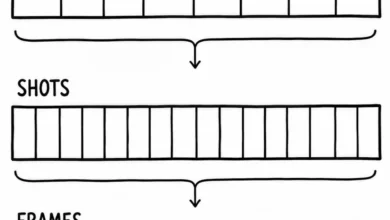
At standard broadcast speeds of 30 frames per second, a single one-hour video contains roughly 108,000 individual images. Feeding every single frame into a vision-language model is computationally prohibitive, highly expensive, and frequently inefficient. Much of the processing power would be wasted on redundant visual data that fails to contribute meaningfully to the task at hand.
When Mux engineers began developing Mux Robots, they confronted this bandwidth and cost bottleneck immediately. Before an AI model can answer a specific query about a piece of media, the system must first determine how much of the video context it actually needs to evaluate. This realization led to the establishment of a hierarchical breakdown model—utilizing frames, shots, scenes, moments, and chapters—designed to deliver the smallest possible slice of video data while retaining sufficient context to produce an accurate result.
Breaking Down the Visual Hierarchy: From Frames to Chapters
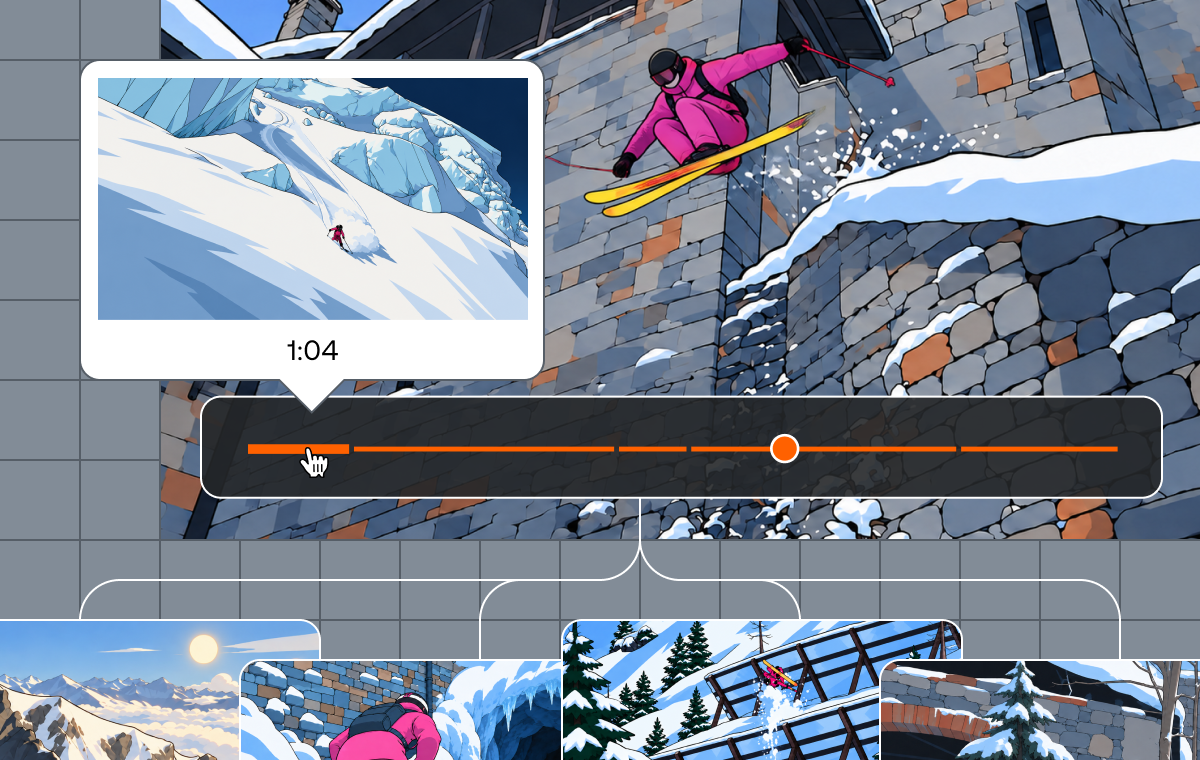
To make automated video processing scalable, developers segment media into distinct building blocks, each serving a unique function depending on the analytical question being asked.
Frames for Instantaneous Visual Queries
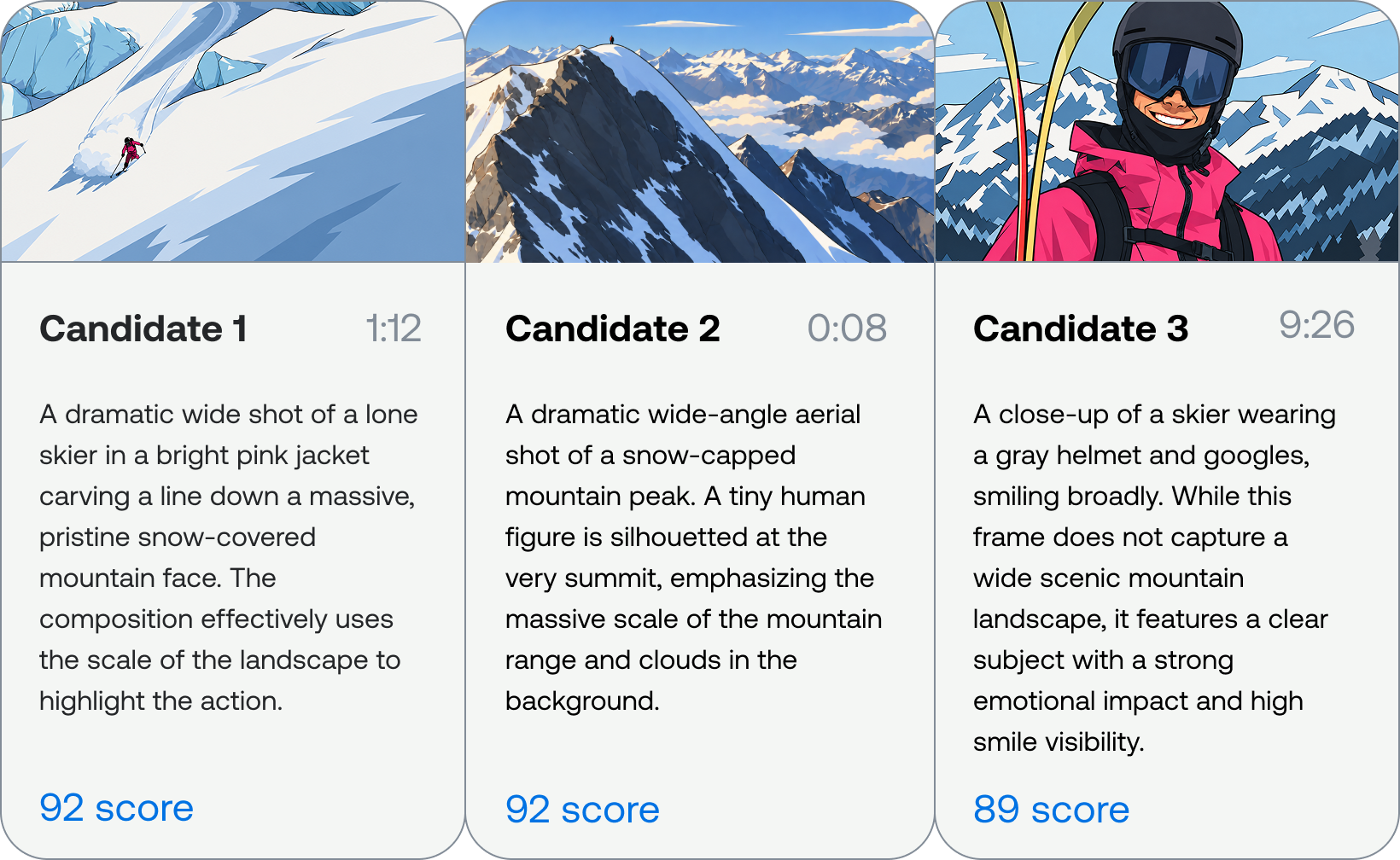
A single frame is sufficient when a query targets an isolated visual state. Common applications include automated thumbnail generation, content moderation, and object or logo detection. For instance, determining the exact instant a skier achieves maximum airtime or scanning individual images for policy violations requires only still-image analysis. By utilizing algorithms that score candidate frames based on composition, clarity, and facial recognition, systems can select optimal preview images without processing continuous motion. However, frames remain inadequate for questions involving sequence, timing, or narrative progression, as a single snapshot cannot confirm whether a landing was successful or how a subject entered a specific environment.
Shots for Dynamic Visual Boundaries
When an application needs to track changes in camera angles, cuts, or abrupt visual states, shot detection becomes necessary. A shot represents a continuous take between two editing cuts. In fast-paced, highly dynamic media like The Ultimate Run—which features rapid terrain shifts and frequent camera angle changes—fixed-interval frame sampling can easily miss brief stunts or environmental transitions. Shot-aware sampling groups consecutive frames using lightweight visual signals to map out an ordered list of boundaries. While shots provide a clear structural map of visual change, they still lack narrative context, unable to determine the broader significance of the visual transition.

Scenes for Narrative Coherence
Moving beyond pixel-level changes, scenes aggregate neighboring shots that share a unified visual or thematic context. For example, identifying the precise cut into a glacier is a shot-level task, but identifying the entire glacial sequence as a cohesive narrative unit requires scene-level analysis. Modern multimodal AI systems achieve this by combining visual boundary detection with transcript cues and model reasoning, allowing systems to group related windows of footage into recognizable chapters of content. This provides applications with a structured map suitable for advanced search, timeline editing, and agentic reasoning.
Moments and Chapters for End-User Navigation
While frames, shots, and scenes describe the underlying media, moments and chapters are engineered to answer specific product and user requirements. Key moments extract standalone, viewable highlights—such as an entire trick from approach to landing—by combining shot boundaries, transcript context, and frame sampling. Chapters, conversely, establish a table of contents for longer-form content, dividing a video into structured sections that enable seamless viewer navigation. In The Ultimate Run, chapters naturally align with the major phases of the descent, including the high-alpine start, glacier navigation, and the final valley run.
Implications for Enterprise Video Infrastructure and Embeddings

The implications of this granular approach extend far beyond action sports editing. Modern media enterprises require sophisticated workflows capable of automated compliance review, dynamic ad placement, trailer assembly, accessibility description generation, and advanced content discovery. By ensuring that AI workflows deploy the least expensive signal capable of answering a query—and adding contextual depth only when necessary—organizations can drastically reduce computational latency and operational expenditure.
This principle applies equally to vector embeddings, which convert text, images, or multimodal inputs into mathematical representations to facilitate semantic search. When a user queries a video archive for "the segment where the skier navigates an ice tunnel," the retrieval system must decide whether to return the entire film, the specific scene, the individual shot, or an exact frame. Matching the granularity of the embedding to the precision of the user’s intent remains a primary focus for video infrastructure developers.
Ultimately, the architecture of modern video AI demonstrates that a single media asset can be simultaneously interpreted in multiple ways—as thousands of individual frames, dozens of distinct shots, multiple narrative scenes, and structured chapters. The effectiveness of any automated video workflow depends entirely on selecting the precise level of analysis required for the task at hand.