NVIDIA Launches DSX Ready Qualification Program to Standardize AI Factory Infrastructure

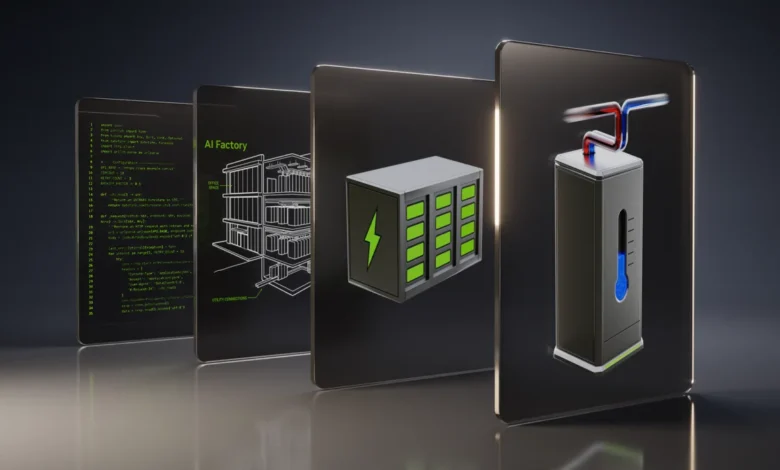
The rapid ascent of generative AI and large-scale model training has fundamentally altered the requirements for modern data centers, transforming them into what industry leaders now term "AI factories." These facilities are no longer just repositories for servers and storage; they are highly specialized, energy-intensive ecosystems that require a seamless integration of compute, networking, cooling, and power management. As the demand for AI compute capacity grows, infrastructure builders face unprecedented challenges regarding site-level grid constraints, water consumption, and thermal management. To address these bottlenecks, NVIDIA has officially introduced the NVIDIA DSX Ready qualification program, a strategic initiative designed to align partner products with the company’s comprehensive AI factory reference designs.
The Evolution of the AI Factory Paradigm
Historically, data centers were designed with a modular, vendor-agnostic approach where compute and facility infrastructure were treated as distinct silos. However, the sheer density of modern AI hardware—specifically those utilizing NVIDIA’s latest GPU architectures—has necessitated a paradigm shift. Today’s AI factories are essentially single, integrated systems where the thermal output of the racks dictates the cooling architecture, and the power load necessitates complex energy storage and distribution strategies.
NVIDIA’s DSX platform was conceived to provide a blueprint for this integration, ensuring that the hardware, software, and physical facility operate in unison. By standardizing these designs, NVIDIA aims to reduce the "integration risk" that often plagues large-scale deployments. The DSX Ready program serves as the validation layer for this platform, allowing builders to select components with the assurance that they have been tested against the specific, stringent requirements necessary for high-performance AI environments.
Chronology and Program Launch
The introduction of the DSX Ready program is the culmination of years of iterative development in data center reference architectures. Following the successful rollout of various Blackwell and Hopper-based hardware suites, NVIDIA recognized that the bottleneck for AI scaling was moving from the chip level to the facility level.
- Early 2023: NVIDIA begins formalizing its AI factory reference designs, emphasizing the need for liquid cooling in high-density deployments.
- Late 2023: Initial collaboration with select power and cooling vendors reveals a lack of standardized testing protocols for AI-specific workloads.
- Mid-2024: NVIDIA initiates the DSX Ready pilot program, engaging with key energy storage and thermal management firms to establish performance benchmarks.
- October 2024: Official public launch of the NVIDIA DSX Ready program, featuring a curated list of inaugural partners in the Battery Energy Storage Systems (BESS) and Cooling Distribution Units (CDUs) categories.
Power and Cooling: The Primary Constraints
The two initial categories for the DSX Ready program—BESS and CDUs—are not arbitrary; they represent the most significant physical hurdles in current AI infrastructure expansion.
Battery Energy Storage Systems are becoming essential for data centers facing constrained local grids. As AI factories require massive, instantaneous bursts of power, BESS units provide the necessary load leveling and backup to prevent grid instability. The initial cohort of qualified BESS partners includes Hitachi Energy, LG Energy Solution, and Tesla. These companies bring deep experience in large-scale energy management, and their qualification under the DSX Ready umbrella signifies that their systems can meet the rapid discharge and recharge cycles characteristic of AI clusters.
Simultaneously, the transition from air cooling to liquid cooling has become a necessity rather than an option. Modern GPU clusters generate heat loads that traditional HVAC systems cannot manage efficiently. The qualified CDU solutions from LG Electronics, LiquidStack, and Vertiv represent the leading edge of thermal management. These units are designed to manage the high-flow, high-pressure demands of direct-to-chip cooling, ensuring that the silicon operates within optimal thermal windows to prevent throttling.
The Methodology of Qualification
The DSX Ready program employs a rigorous qualification process that varies by technology type. For BESS providers, the path involves running extensive qualification tests that are submitted to NVIDIA for exhaustive data review. This ensures that the energy storage system can interface correctly with the broader electrical architecture of the AI factory.
Conversely, for CDU providers, the program utilizes a self-qualification suite developed by NVIDIA. This suite subjects the thermal hardware to functional requirements that reflect real-world AI workloads. It is important to note, however, that passing these qualifications does not absolve the builder of site-level engineering responsibility. A qualified product is a necessary component, but it does not replace the custom architectural planning required to integrate that product into a specific building or campus. The program effectively narrows the field for builders, reducing the time spent on vetting technical specifications so that engineering teams can focus on facility-specific optimization.
Supporting Data and Industry Context
Market research suggests that the global data center cooling market is expected to reach unprecedented growth levels by 2030, driven almost exclusively by the proliferation of AI and High-Performance Computing (HPC). According to recent industry reports, the average power density per rack is expected to jump from 15-20 kW to over 100 kW in the coming years.
This leap in power density is the catalyst for the DSX Ready program. An improperly cooled rack can lead to immediate performance degradation and hardware failure. By establishing a "common language" for infrastructure through the DSX Ready program, NVIDIA is attempting to shorten the "time-to-compute" for hyperscalers and enterprises alike. Reducing the procurement and evaluation phase by even a few months can represent millions of dollars in increased AI output for a large-scale data center operator.
Broader Implications for the AI Ecosystem
The introduction of this program suggests a maturing of the AI sector. In the early days of the generative AI boom, the focus was almost entirely on model parameters, training algorithms, and GPU availability. Today, the focus has shifted toward the "utility" aspect of AI—how to keep the lights on and the servers cool.
The implications for the supply chain are significant. Partners who achieve "DSX Ready" status are effectively granted a stamp of approval that makes them more attractive to Tier-1 data center builders. This creates a competitive incentive for vendors to align their product roadmaps with NVIDIA’s vision. For builders, the program mitigates the "fear of the unknown" associated with integrating novel power and cooling technologies.
However, some analysts caution that while standardization is beneficial, it may also lead to a degree of vendor lock-in. As NVIDIA continues to expand the DSX Ready program into additional categories—including software, networking, and facility management—the company is positioning itself as the primary architect of the entire AI industrial stack. This vertical integration allows for superior performance, but it also means that the ecosystem will become increasingly dependent on NVIDIA’s specific standards and reference designs.
Future Outlook and Expansion
The DSX Ready program is currently in its nascent stage, with plans to expand across the infrastructure stack. Future iterations are expected to cover rack power distribution, facility-wide monitoring software, and advanced networking infrastructure. As the program grows, it will likely incorporate sustainability metrics, helping builders track not just the performance of their AI factories, but also their carbon footprint and water usage efficiency—metrics that are increasingly scrutinized by regulators and ESG-conscious investors.
For companies looking to participate, the process involves a structured engagement with NVIDIA’s engineering teams to ensure that new product lines meet the evolving criteria of the DSX reference architecture. The launch of this program marks a turning point where AI infrastructure is no longer an afterthought to the compute hardware, but a critical, synchronized partner in the race toward more capable and efficient artificial intelligence.
In conclusion, the NVIDIA DSX Ready program provides a much-needed framework for the increasingly complex world of AI factory construction. By bridging the gap between high-performance compute requirements and facility-level infrastructure, NVIDIA is providing the tools necessary for the next phase of the AI revolution—the phase of massive, reliable, and standardized scaling. Whether this will lead to a new era of "off-the-shelf" AI factories remains to be seen, but the intent to minimize integration risk and maximize output is clear. As builders continue to navigate the constraints of power, cooling, and site availability, programs like DSX Ready will likely become the standard by which the success of future AI deployments is measured.
Related posts: