Nvidia GeForce RTX 5090 Supply Chain Crisis Leaves Professional and Gaming Markets Facing Severe Shortages


The global semiconductor landscape is currently witnessing a significant disruption as Nvidia’s flagship GeForce RTX 5090 graphics processing unit (GPU) becomes increasingly elusive for consumers and enterprise clients alike. Market analysis reveals that major PC manufacturers, including industry titans Lenovo and HP, are effectively unable to fulfill orders for high-end desktop configurations featuring this hardware. This scarcity, which has permeated both direct-from-manufacturer storefronts and independent retail channels, marks a critical bottleneck in the high-performance computing sector.
A Chronology of the RTX 5090 Supply Bottleneck
The trajectory of the RTX 5090 availability has been characterized by a rapid transition from high-demand anticipation to widespread market unavailability. Upon its initial launch, the card was positioned as the pinnacle of consumer-grade graphical processing, featuring 32GB of cutting-edge GDDR7 memory. By the first quarter of the release cycle, stock levels appeared stable, allowing enthusiasts and professionals to secure units at or near the suggested retail price of $1,999.
However, the situation deteriorated rapidly as the calendar progressed. By the mid-point of the current quarter, major retailers began reporting "out of stock" statuses for both standalone cards and pre-built systems. The rapid depletion of inventory suggests that demand from the artificial intelligence (AI) development sector—which utilizes the card’s substantial VRAM for local model training and inference—is outpacing the consumer gaming market’s ability to procure units. By the time observers reached the current reporting period, the major manufacturer websites for both Lenovo and HP displayed complete inventory gaps for their flagship gaming desktops equipped with the 5090.
The Impact on Major Manufacturers and Retailers
The current state of availability is perhaps best illustrated by the status of the HP OMEN 45L. Previously a flagship offering in the company’s desktop portfolio, the system—which paired the RTX 5090 with high-end Ryzen 9 processors and 64GB of RAM—is currently listed as unavailable on HP’s primary retail site. The loss of such a marquee configuration is a blow to the manufacturer’s ability to compete in the ultra-enthusiast space.
Similarly, Lenovo’s online storefront reflects a complete absence of RTX 5090-equipped units. When a manufacturer of this scale cannot provide a SKU, it implies that the supply chain is not merely experiencing temporary localized delays but rather a broader, systemic constraint on the supply of the silicon itself.
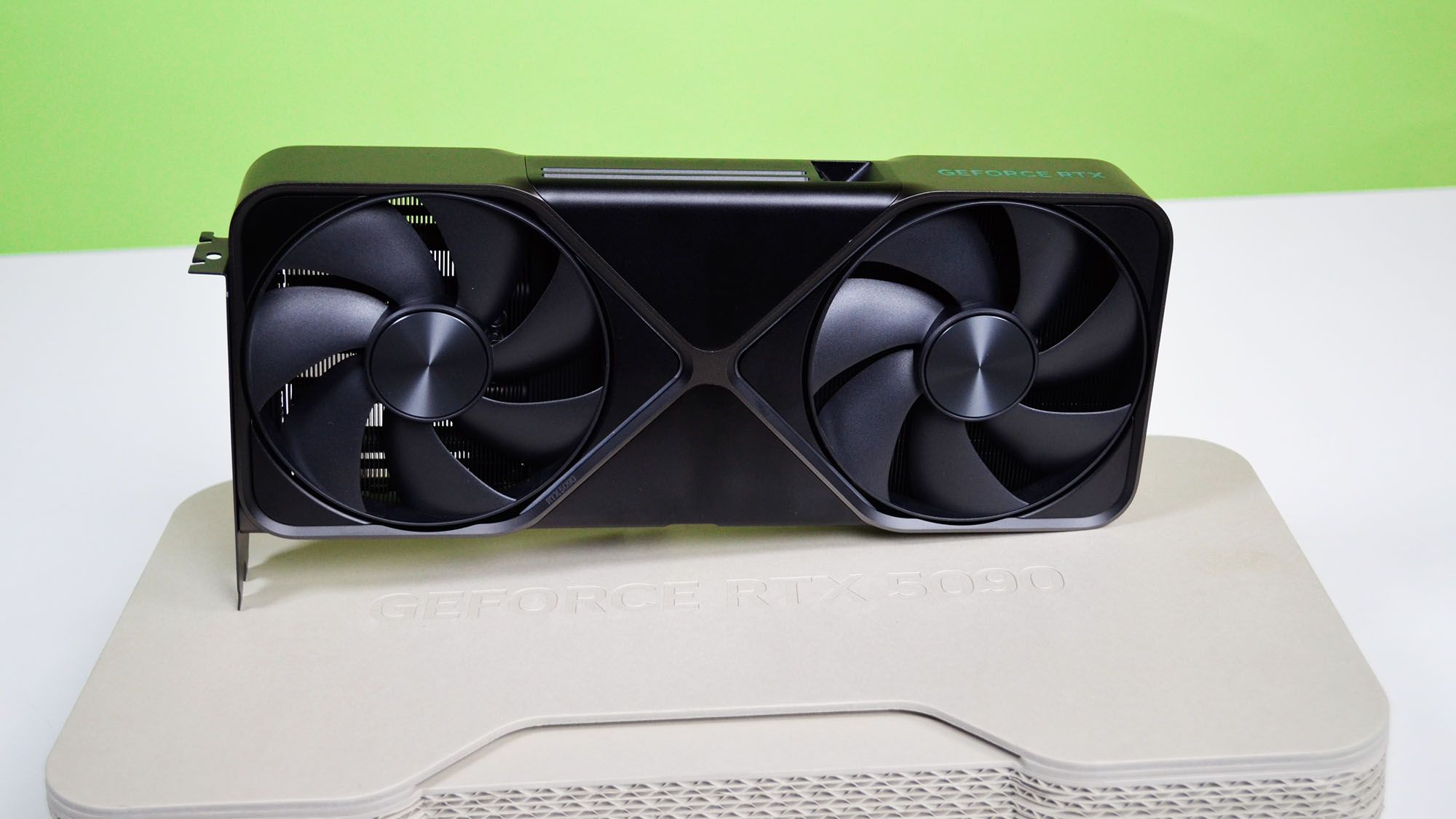
Retailers are witnessing even more extreme market distortions. On platforms like Newegg, models from reputable partners such as ASUS (TUF Gaming) and MSI (Suprim) are being listed at staggering premiums. In some instances, these cards are appearing at prices ranging from $4,500 to $5,800, representing a price hike of between 125% and 195% over the MSRP. Even more alarming, Amazon listings have seen the same hardware reach price points as high as $7,679, a markup of nearly 300%. These figures reflect a market in a state of extreme volatility, where the scarcity of the hardware is being exploited by third-party resellers.
Independent Manufacturers and the Luxury Desktop Tier
While traditional Tier-1 manufacturers like HP and Lenovo struggle to maintain stock, the landscape remains slightly different for boutique system integrators. Companies such as Skytech and CLX continue to offer configurations featuring the RTX 5090. However, the cost of entry has shifted dramatically to the extreme high end.
Boutique configurations currently available through retailers like Best Buy and Newegg are priced at a significant premium, often starting at $8,999 and climbing past $9,800. These systems generally incorporate top-tier CPU architectures, such as the AMD Ryzen 7 9800X3D or the Ryzen 9 9900X3D. Dell, through its Alienware division, continues to offer the Area-51 range, though these systems occupy the most expensive tier of the market, with some configurations exceeding $13,000 when fully specified with high-density RAM and storage.
This divergence suggests that the remaining supply of RTX 5090 units is being prioritized for high-margin, boutique "halo" systems, while mainstream large-scale manufacturers are seeing their supply chains dry up entirely.
Technical Implications and the AI Demand Factor
The underlying cause of this scarcity is inextricably linked to the technological specifications of the card. The inclusion of 32GB of GDDR7 memory makes the RTX 5090 uniquely suited for local AI workloads. As companies and individual researchers seek to perform local inferencing and fine-tuning of large language models (LLMs) without relying on cloud-based infrastructure, the demand for high-VRAM, consumer-priced hardware has surged.
For a professional in the field of machine learning, the RTX 5090 represents a cost-effective alternative to professional-grade workstation GPUs (like the RTX 6000 Ada generation), which often retail for several times the price. Consequently, the RTX 5090 is being absorbed by a dual-use market: gamers who want the highest frame rates and developers who require the memory bandwidth and capacity for AI applications. This dual pressure creates a demand floor that is difficult for traditional supply chain logistics to overcome.
Fact-Based Analysis of the Market Future
Looking ahead, the outlook for the RTX 5090 remains precarious. Nvidia has not provided an official timeline for when supply will normalize or whether production is being throttled in favor of enterprise-grade AI chips. Typically, when a flagship GPU experiences such a prolonged shortage, it indicates that the manufacturing yield of the underlying die (the AD102 or its successor architecture) is either being diverted to more profitable segments or is suffering from lower-than-expected production output.
The implications for the broader PC ecosystem are twofold:
- Market Consolidation: Smaller retailers and boutique builders that can secure limited supply are effectively pricing out the average consumer, transforming the RTX 5090 into a luxury commodity rather than a standard enthusiast component.
- Delayed Adoption Cycles: If the shortage persists through the next fiscal quarter, consumers may be forced to look toward lower-tier GPUs or competitor offerings, potentially shifting market share away from Nvidia in the mid-to-high performance segment.
Conclusion and Official Stance
As of the current date, there has been no official statement from Nvidia addressing the specific cause of the shortages, though the company maintains a focus on maximizing production across its entire product stack. For the consumer, the current market reality is one of limited choice and inflated pricing. Those requiring the performance of the RTX 5090 for professional workflows must weigh the necessity of the hardware against the significant price premiums currently demanded by the secondary market and boutique integrators.
For the gaming community, the crisis serves as a stark reminder of the vulnerability of the GPU market to external factors, particularly the burgeoning demand from the AI and data science sectors. Until supply chain logistics catch up with this shift in usage patterns, the RTX 5090 will likely remain a scarce and prohibitively expensive piece of technology, reserved for those with the capital to absorb the current market premiums.