Neighborhood Intelligence Moves to Rework Fathom Holdings Acquisition, Centering Deal Around Digital Assets and Real Estate Tokenization

Neighborhood Intelligence, the corporate entity formerly known as Bed Bath & Beyond Inc., is significantly pivoting its strategic roadmap by restructuring its proposed agreement with real estate platform Fathom Holdings. Initially unveiled in June as an all-stock acquisition valued at approximately $53 million, the transaction has evolved into a more complex partnership. Under the newly proposed terms announced in late September 2026, the deal is set to leverage substantially all of Neighborhood Intelligence’s digital assets, anchoring the integration around major technological holdings including tZero Group, Medici-related fund assets, and a direct investment in GrainChain.
The structural overhaul marks a notable departure from the original merger agreement. Rather than a straightforward buyout, the revised arrangement attributes a valuation of at least $130 million explicitly to the digital asset portfolio that Neighborhood Intelligence will contribute to Fathom. In exchange, Fathom will issue new shares to Neighborhood Intelligence. While the exact final share count remains subject to the finalization of closing terms, leadership at Neighborhood Intelligence anticipates maintaining a controlling interest in Fathom once the transaction reaches its conclusion.
This strategic shift highlights a broader corporate metamorphosis. Following the high-profile bankruptcy and liquidation of its legacy home-goods retail business, the organization rebranded first and pursued various ventures outside traditional storefront retail before adopting the Neighborhood Intelligence moniker. The latest maneuver underscores management’s commitment to intertwining real estate services, digital infrastructure, and emerging financial technologies.
Understanding the Evolution of the Deal
The trajectory of the relationship between Neighborhood Intelligence and Fathom Holdings has shifted rapidly over a span of several months. In June, the corporate strategy centered on an all-stock transaction valued at roughly $53 million, with both parties anticipating a closure during the second half of the year. At the time, the ambition was to merge Fathom’s residential real estate brokerage infrastructure with Neighborhood Intelligence’s expanding ecosystem of home-related services.
However, market dynamics and internal corporate realignments prompted a re-evaluation. According to Marcus Lemonis, Executive Chairman and CEO of Neighborhood Intelligence, the revised deal’s valuation is deliberately decoupled from Fathom’s current market capitalization. Lemonis acknowledged that Fathom’s share price has experienced a downward adjustment since the initial June announcement. Despite this public market contraction, Lemonis emphasized that Fathom’s core operational pillars—specifically its brokerage and title business segments—have demonstrated meaningful operational progress over the same three-month period.
The newly proposed structure is explicitly designed to recognize both Fathom’s operational advancements and the intrinsic valuation that leadership attributes to the digital asset portfolio. Furthermore, the revised framework provides Fathom with the structural flexibility to pursue supplementary acquisitions intended to strengthen its baseline operating business moving forward.
The Core Digital Assets Driving the Partnership
At the heart of the reworked agreement is a portfolio of high-value digital assets and blockchain-adjacent investments. The inclusion of these assets elevates the transaction far beyond a standard real estate technology merger, infusing the partnership with decentralized finance and securities infrastructure.
The primary asset involved is tZero Group, a prominent player in digital securities and blockchain-based financial technology. Alongside tZero, the contribution encompasses Medici-related fund assets and a direct financial stake in GrainChain, an agricultural supply chain and data network powered by blockchain technology.
Executives from both companies maintain that real estate represents an optimal, natural application for tZero’s digital securities infrastructure. Specifically, the partnership intends to explore the tokenization of commercial real estate portfolios and single-family rental properties. Proponents of this model argue that tokenization can introduce more flexible capital structures, fractional ownership opportunities, and entirely new pathways to liquidity for asset holders. Over a longer time horizon, the allied companies plan to expand these digital applications into title services and individual homeownership mechanics, streamlining processes that have traditionally relied on legacy paperwork and manual intermediaries.

Broader Portfolio Shifts and Retracted Agreements
The recalibration of the Fathom Holdings agreement does not occur in a vacuum; it follows a series of high-stakes portfolio adjustments and aborted transactions executed by Neighborhood Intelligence as it navigates its post-retail identity.
Just weeks prior to announcing the revised Fathom terms, Neighborhood Intelligence made headlines by formally canceling a $150 million agreement to acquire F9 Brands, the parent company of home-improvement chains Cabinets to Go and Lumber Liquidators. At the time of the cancellation, Neighborhood Intelligence publicly stated that F9 Brands was unable to fulfill all necessary closing requirements within the established timeframe.
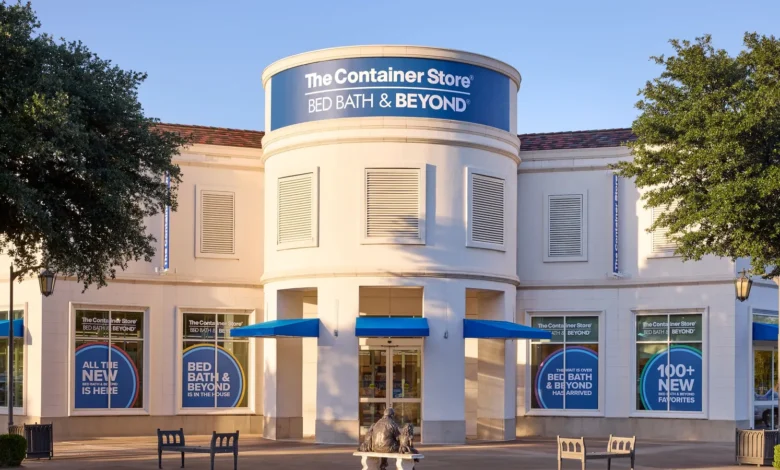
The termination of the F9 Brands deal signaled a calculated retreat from certain heavy retail and physical inventory models. These adjustments form part of a broader, aggressive campaign by Neighborhood Intelligence to pivot away from traditional brick-and-mortar retail and into higher-margin sectors encompassing home services, digital ecosystems, and real estate ownership. This pivot earlier included high-profile operational tie-ups and joint ventures, such as strategic collaborations with The Container Store and The Brand House Collective, formerly known as Kirkland’s Inc.
Industry Reaction and Corporate Silence
As of late September 2026, representatives for neither Neighborhood Intelligence nor Fathom Holdings had provided immediate responses to follow-up inquiries concerning the fine print of the newly proposed agreement or a definitive timeline for the transaction’s ultimate closure. The lack of immediate commentary has left financial analysts and market observers to parse the sparse details provided in the joint press release.

Market analysts note that while the valuation of $130 million assigned to the digital asset portfolio reflects strong internal confidence from Neighborhood Intelligence leadership, the success of the integration will heavily depend on regulatory clarity surrounding digital securities and tokenized real estate. The SEC and other regulatory bodies maintain stringent oversight over digital assets, meaning that scaling tZero’s infrastructure within a publicly traded brokerage ecosystem will require meticulous compliance strategies.
Strategic Implications for Fathom Holdings and Neighborhood Intelligence
The restructuring of the Fathom acquisition carries profound strategic implications for both corporate entities. For Fathom Holdings, securing a controlling partner backed by a substantial digital asset portfolio provides a unique capitalization path. In an industry heavily influenced by interest rate fluctuations and housing market cyclicality, access to digital liquidity solutions and tokenization tools could differentiate Fathom from traditional residential brokerages.
For Neighborhood Intelligence, the transaction represents a vital step in codifying its corporate metamorphosis. By anchoring its primary investments in technology platforms like tZero and GrainChain rather than physical retail inventories, the company is positioning itself as a technology-driven holding entity. If successful, the deployment of blockchain-based real estate tokenization could establish a new operational benchmark for how residential and commercial properties are bought, sold, and capitalized in the modern era.
As both organizations work through the complex closing mechanics of the revised deal, market participants will be watching closely to see how the finalized share distributions shake out, whether regulatory hurdles can be smoothly navigated, and if the promised synergies between real estate brokerage and digital asset infrastructure can materialize into sustainable long-term value.