Mux Officially Disables Email Ingestion for Support Tickets to Combat AI Spam and Infinite Auto-Responder Loops

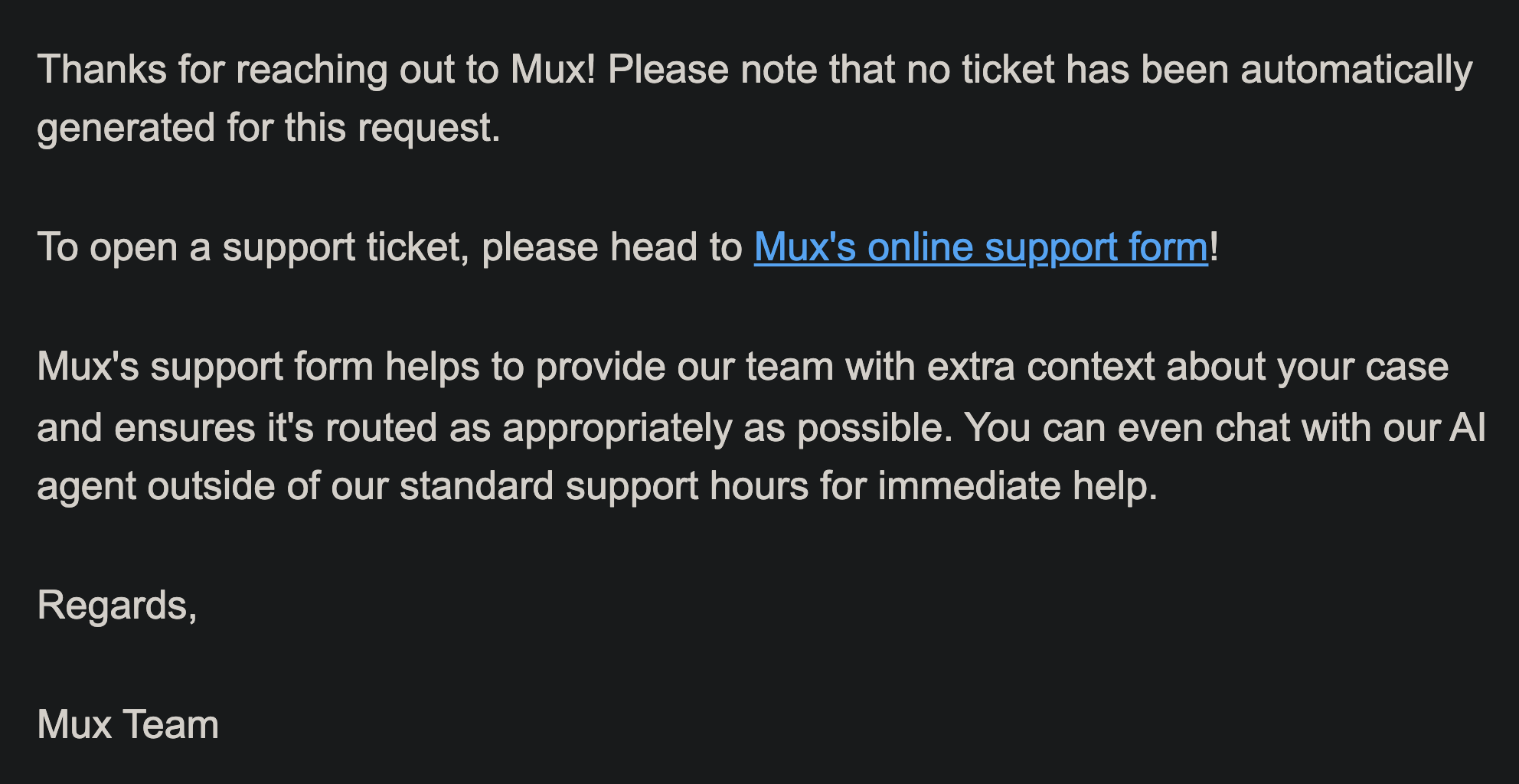
Video infrastructure platform Mux has officially transitioned away from traditional email-based ticket ingestion, marking a significant operational shift in how the company handles customer support inquiries. Effective November 1, 2026, the company has disabled the ability to create new support tickets by sending an email directly to its help desk. Moving forward, all new ticket generation must be completed through a standardized web interface at mux.com/support, while ongoing communication for existing cases will continue to utilize the established email channel.
The decision, which follows extensive internal debate, is designed to protect engineering and support resources from an escalating wave of automated spam, sophisticated AI-driven phishing attempts, and catastrophic auto-responder loops. As digital communication ecosystems evolve to integrate autonomous software agents and automated administrative systems, traditional inbound email architectures have become increasingly vulnerable to technical disruptions.
Background Context: The Vulnerability of Email Ingestion

For decades, email ingestion has served as the bedrock of customer relationship management and technical support ticketing systems. Companies across the technology sector relied on the simplicity of the "support@" alias, allowing users to effortlessly dispatch inquiries, bug reports, and feature requests directly from their native email clients. However, this open architecture relies heavily on implicit trust between communicating mail servers.
In recent years, the rapid proliferation of autonomous agentic artificial intelligence tools and aggressive marketing campaigns for AI-powered inbox managers has fundamentally altered this dynamic. Platforms designed to automate human communication—such as Meta’s Muse agent, which reportedly garnered 10 million users within a single month of its launch—frequently feature automated email management capabilities. While intended to streamline daily workflows, these autonomous systems often generate high volumes of structured, highly convincing inbound messages that mimic human inquiries.
Furthermore, the lack of universal compliance with technical standards designed to prevent automated feedback loops, such as Internet Engineering Task Force (IETF) RFC 3834 governing automatic mail responses, leaves support desks exposed to severe systemic failures. When two automated systems interact without proper metadata signaling, they can rapidly spiral into exponential feedback loops, generating thousands of spurious support tickets within minutes.
Chronology of Events: The Support Ticket Apocalypse
The breaking point for Mux’s support infrastructure occurred mid-summer, highlighting the fragile nature of unmoderated email ingestion. On July 20, 2026, an administrative oversight by an external party exposed a critical vulnerability in standard email etiquette. The individual inadvertently included hundreds of distinct corporate "support@" email addresses on a single visible Carbon Copy (CC) line rather than utilizing the Blind Carbon Copy (BCC) field.
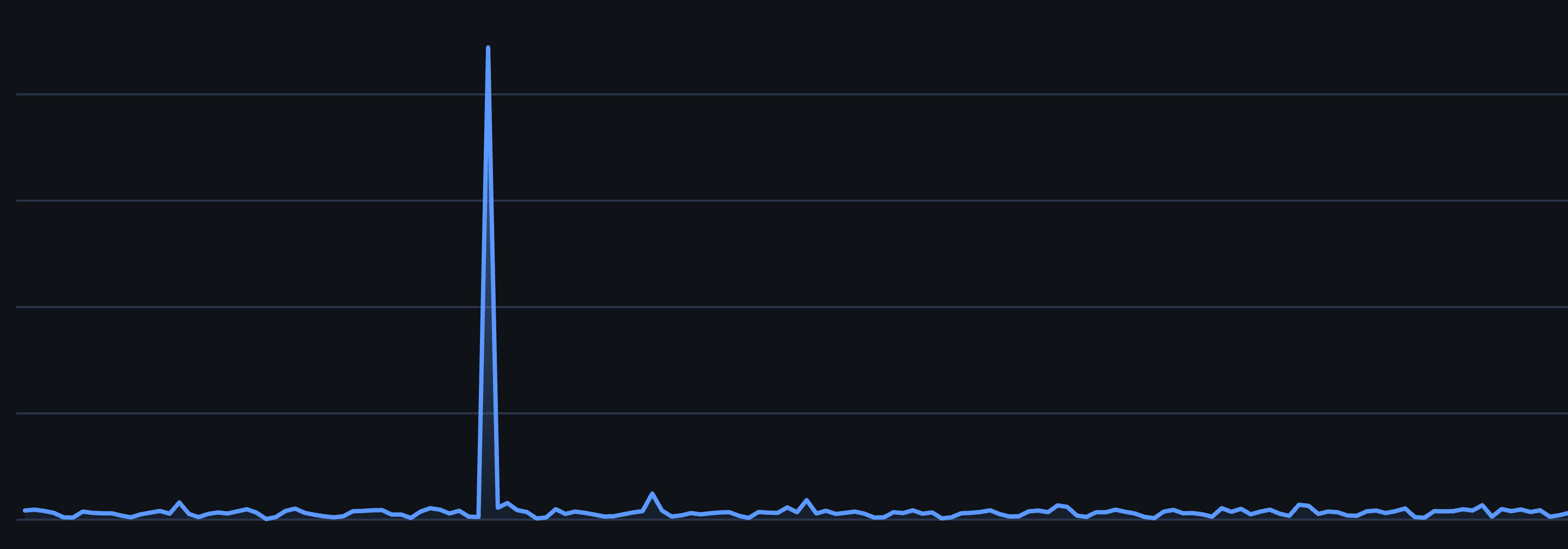
This single action triggered an immediate and catastrophic cascading failure. As each recipient’s automated help desk software received the message, it dispatched an automated acknowledgment or out-of-office reply to the entire thread. Because the replies included all other corporate support addresses on the CC list, every participating ticketing system interpreted the incoming replies as new customer requests, generating thousands of secondary tickets and triggering a reciprocal wave of automated outbound responses.
The resulting "Support Ticket Apocalypse" overwhelmed Mux’s queue with more than 2,000 fraudulent tickets in a matter of hours. Engineering and support personnel were forced to divert critical time and resources away from genuine developer inquiries to manually purge the system and halt the recursive loop. Although technical mitigations were temporarily applied, internal analyses revealed that such incidents were becoming increasingly difficult to prevent relying solely on standard mail server filters.
A subsequent stress test of the new policy occurred shortly after its initial implementation. During non-business hours, another external user mistakenly CC’ed hundreds of support desks on a job application. Under the legacy system, this occurrence would have triggered an unattended multi-hour ticket storm. However, under the new framework, the inbound messages were automatically intercepted and redirected without requiring manual intervention from off-hours staff, validating the operational efficacy of the shift.
Strategic Implications and Operational Adjustments
By decoupling ticket creation from initial email ingestion, Mux has introduced a structured intake funnel that provides several key advantages for both the company and its developer base.
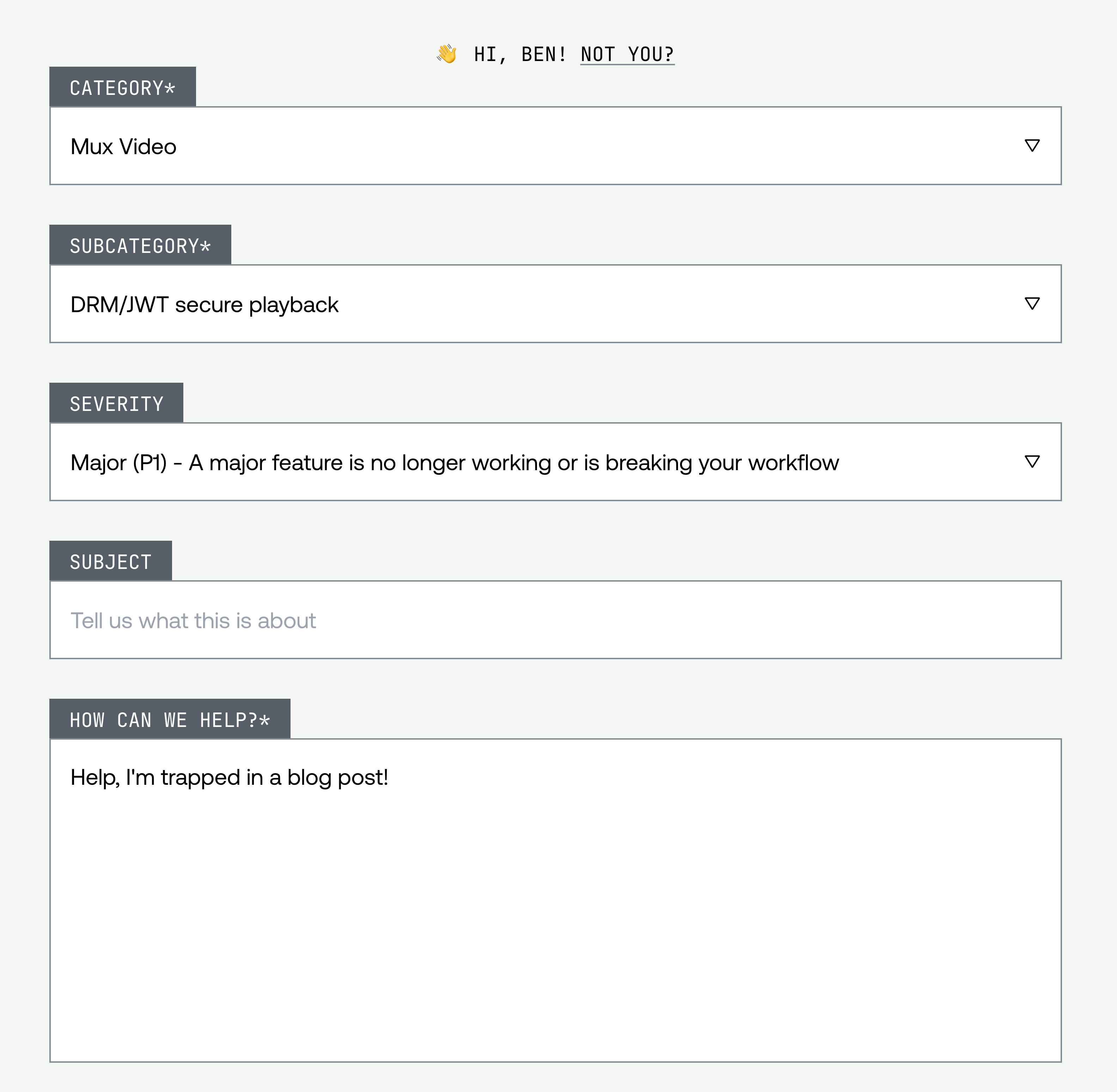
First, the requirement to utilize a web-based form enables the collection of standardized metadata prior to ticket submission. Users are now prompted to pre-classify their inquiries by specific product categories—such as Mux Video, data analytics, or Digital Rights Management (DRM) secure playback using JSON Web Tokens (JWT)—alongside severity indicators and specific subject fields. This structured data ensures that technical support engineers receive precise contextual information immediately, reducing the back-and-forth communication typically required to diagnose complex code-level issues.
Second, the structured data feeds directly into Mux’s automated documentation intelligence systems, often referred to as the Docs Agent. When developers submit a structured query outside of regular business hours, the AI-powered documentation assistant can leverage the pre-classified category and specific context to deliver accurate, instantaneous answers drawn directly from official guides and API references. Users maintain the option to click an "Ask a human" button to ensure that every ticket is formally queued for human review during subsequent business hours if the automated assistant cannot resolve the query.
Balancing Accessibility and Security
A central concern during the design of the new policy was ensuring that the removal of email ticket creation would not impose undue friction on prospective users or individuals experiencing account access difficulties. Mux addressed this by maintaining open access pathways on its support portal for visitors who are logged out or unable to authenticate. Prospective developers, individuals locked out of their dashboards, and those seeking pre-sales information can still submit formal tickets instantly via the web form without requiring an active account login.
While submitting inquiries through an authenticated account remains the optimal method for providing background system context, the decoupled architecture ensures that the barrier to entry for help remains minimal.
Industry-Wide Trend Toward Portal-Based Support
Mux’s transition reflects a broader, industry-wide reevaluation of customer support architecture across the software-as-a-service (SaaS) and developer tools sectors. As generative artificial intelligence tools mature and malicious actors increasingly deploy automated phishing vectors tailored to corporate help desks, reliance on open email ingestion ports has become an unsustainable operational risk.
Technology analysts note that companies are increasingly favoring structured API endpoints, authenticated web portals, and intent-based intake forms over traditional email gateways. These mechanisms not only mitigate the threat of denial-of-service conditions caused by rogue auto-responders and AI agent swarms but also align with modern data privacy and security compliance frameworks.
By addressing the root causes of email-based vulnerabilities—spam, untrusted AI intermediaries, and cascading automated loops—Mux aims to stabilize its support pipeline and redirect engineering talent toward core platform performance and developer experience enhancements. While the familiar routine of guessing a support alias and firing off a quick email message is drawing to a close, the company maintains that its core commitment to responsive, high-quality technical assistance remains unchanged. Developers seeking guidance are directed to the updated support portal at mux.com/support to engage with both automated resources and human engineering teams.
Related posts: