NBCUniversal Overhauls Peacock Mobile App With AI Search, Vertical Video, and Microdramas to Capture On-the-Go Viewers

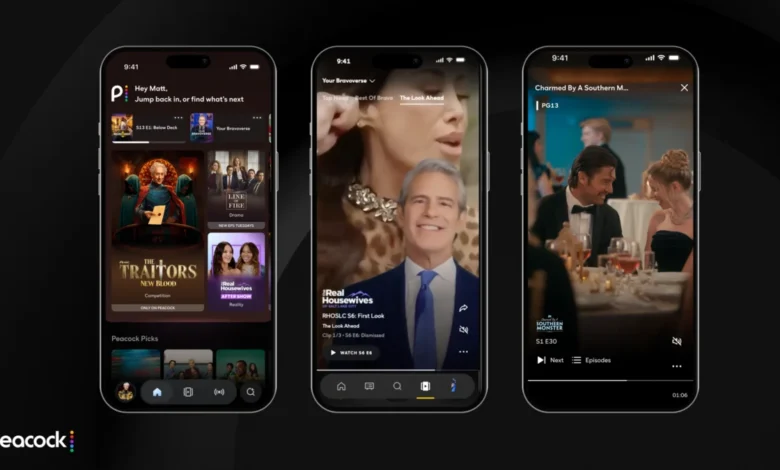
In a significant strategic pivot that places mobile devices at the center of its long-term growth roadmap, NBCUniversal has announced a sweeping overhaul of the Peacock streaming application. Unveiled during a high-profile press briefing in New York City, the comprehensive update reimagines the user experience by introducing conversational artificial intelligence search capabilities, expanded vertical video programming for sports and entertainment, dedicated franchise hubs, and a steady influx of serialized microdramas.
While legacy media companies initially built their premier streaming applications around the traditional living room television set, NBCUniversal’s leadership is aggressively recalibrating its approach. By transforming Peacock into a first-class mobile citizen, the platform aims to capture vital micro-moments throughout the subscriber’s day, ultimately driving up overall engagement and retaining critical viewership in an increasingly saturated and competitive media landscape.
The Evolution of Streaming: From Living Room to Mobile Ecosystem
The streaming sector has undergone a massive structural metamorphosis since Peacock first launched more than six years ago. When parent company Comcast originally introduced the platform in the summer of 2020, the media industry was operating under the assumption that ad-free, binge-release models represented the undisputed future of entertainment. At the time, Peacock adopted a unique approach by heavily leaning into a free, ad-supported tier, a legacy that persists today with approximately 80 percent of its subscriber base utilizing cheaper ad-supported plans.
However, the macroeconomic and consumer realities of streaming have shifted dramatically. Matt Strauss, Chairman of NBCUniversal Media Group, addressed this evolution head-on during the New York briefing, noting that the platform was strategically designed not necessarily to win the initial, chaotic "streaming wars," but rather to secure sustainable growth in their aftermath.
"We arguably didn’t build Peacock to win a streaming war. We built Peacock for growth in the aftermath of a streaming war," Strauss stated. He emphasized that the next phase of industry expansion will be defined by platforms capable of capturing "another hour per user per month." Achieving this objective, Strauss argued, requires a fundamental reassessment of user experience design, forcing mobile phones to transition from secondary casting devices to primary engagement hubs.
This philosophy mirrors a broader cross-industry trend. While digital-first entities like YouTube spent years successfully infiltrating the living room television screen, traditional legacy media players are now fiercely reclaiming the mobile domain to maintain continuous daily contact with their audiences.
Financial Health and Subscriber Stability
The mobile app overhaul arrives on the heels of a promising financial period for the platform. Last month, Comcast reported its third-quarter earnings, revealing that Peacock had achieved its second consecutive quarter of profitability. Despite this critical milestone toward long-term fiscal viability, the service’s overall subscriber count remained relatively flat, hovering around 48 million active accounts.
Faced with a plateaued subscriber ceiling, media analysts point out that organic growth must now be driven by maximizing monetization and extracting higher engagement from existing users rather than solely relying on aggressive subscriber acquisition campaigns. By deepening daily mobile engagement through interactive features, personalized content feeds, and snackable video formats, Peacock aims to reduce churn and elevate the lifetime value of its current user base.
Conversational AI and the "Large Action Model"
At the technical core of the mobile app redesign is an advanced integration of artificial intelligence designed to streamline discovery and personalization. Rather than relying on static recommendation carousels or traditional keyword searches, Peacock is testing conversational AI features that allow users to interact with the platform more intuitively.
John Jelley, Senior Vice President of Product and UX for NBCUniversal Media Group, detailed the technological architecture powering these updates during the press briefing. Moving beyond the standard capabilities of typical large language models (LLMs) that primarily predict subsequent words in a text sequence, Peacock is utilizing what executives describe as a "large action model."
"We combine that in what we call a large action model," Jelley explained. "Rather than predicting the next word as LLMs do, we’re actually predicting the next action."
This predictive action framework enables the app to dynamically anticipate user intent—whether a subscriber is looking to immediately jump back into a paused episode, track live sports statistics, or explore supplementary podcast content related to a favorite franchise—thereby significantly reducing friction in the user journey.
Expanding Vertical Video from Sports to Entertainment
Vertical video has steadily evolved from a social media novelty into an essential engagement driver for premium content providers. Peacock has quietly pioneered vertical video formats for live sports for nearly two years, utilizing the vertical frame to capture dynamic, mobile-friendly perspectives of athletic competitions.
Building upon NBCUniversal’s landmark long-term media rights agreement with the National Basketball Association (NBA), which commenced in 2025, the company is aggressively expanding its vertical video offerings. Beyond basketball, sports such as collegiate athletics and professional golf will receive specialized vertical treatment, offering fans bite-sized, vertically oriented highlight packages designed for immediate mobile consumption.
Crucially, this format is no longer restricted to the athletic arena. NBCUniversal is actively migrating its vertical video infrastructure into entertainment programming, highlighted by integration into major network mainstays such as the reality singing competition The Voice. This cross-pollination allows fans to consume performance highlights and behind-the-scenes clips seamlessly without rotating their devices.
The Rise of Microdramas on Streaming
One of the most notable content additions to the updated Peacock ecosystem is the systematic integration of microdramas. These ultra-short-form, serialized narratives have exploded into a multi-billion-dollar global category, serving as a powerful top-of-funnel acquisition tool that bridges the gap between social media browsing and traditional streaming.
Under the new operational rollout, Peacock has committed to launching at least one new microdrama title every week. While many of these fast-paced series are licensed directly from third-party creators, NBCUniversal is also commissioning original, in-house microdramas tailored to its powerhouse cable brands.
A prime example of this strategy is the recently premiered Bravo scripted microdrama Charmed by a Southern Monster, featuring reality star Craig Conover from Southern Charm. Additionally, NBCUniversal’s Spanish-language media subsidiary, Telemundo, has already established a robust footprint in the microdrama space, which will now feed directly into the broader Peacock mobile ecosystem.
Redefining Entertainment Through Deepened Engagement
The comprehensive mobile redesign is supported by continuous beta testing and rollouts that will go live incrementally through early 2027. These updates build upon existing ecosystem features such as "Your Bravoverse," the dedicated "Clips Feed," and "Peacock Performance View," creating a unified interface where long-form prestige television, live sports, user clips, interactive games, and microdramas coexist harmoniously.
Jim Denney, Chief Product Officer for Global Streaming and NBCUniversal Media Group, underscored the overarching vision guiding the product evolution.
"NBCUniversal has an unmatched ability to turn the shows, sports and stories fans love into experiences that extend well beyond the screen," Denney noted. "Our ambition is for Peacock to be more than a place to watch. With this new mobile experience, we’re evolving Peacock into an entertainment platform that gives fans more ways to discover, participate and strengthen their connection to their favorite stories, teams and franchises, turning viewing into deeper engagement and lasting fandom and loyalty."
Broader Implications for the Media Industry
As the streaming market matures, the competitive advantage is shifting away from pure content accumulation toward sophisticated user experience engineering and cross-platform ecosystem integration. By modernizing its mobile application with conversational AI, action-predicting models, and diverse media formats ranging from multi-hour prestige dramas to vertical micro-clips, Peacock is attempting to redefine what a modern video streaming service can offer.
Industry observers will closely monitor the rollout of these mobile features through 2027 to evaluate whether enhanced daily engagement can successfully translate into sustained ARPU (Average Revenue Per User) growth and long-term customer retention. If successful, NBCUniversal’s mobile-first pivot could establish a new operational blueprint for legacy media networks navigating the post-streaming-war era.