Mux Expands Video Intelligence Toolkit to Support Open-Weight Models and Self-Hosted Inference Infrastructures

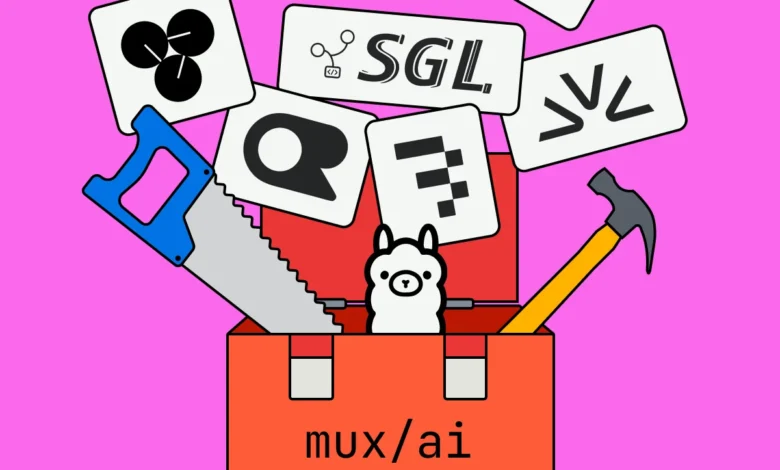
Video infrastructure and developer platform Mux has officially announced a major expansion of its @mux/ai toolkit, introducing native support for open-weight artificial intelligence models and self-hosted inference infrastructure. The update marks a significant shift from the platform’s initial launch strategy, which restricted users to closed-source, hosted LLM providers such as OpenAI, Anthropic, and Google. By incorporating dedicated integrations for Baseten alongside a general-purpose OpenAI-compatible provider, developers can now route video intelligence workflows through local testing environments, specialized private clouds, and customized fine-tuned models without relying on third-party SaaS ecosystems.
Background and Context of the Update
When Mux first introduced the @mux/ai toolkit in December of the previous year, it was designed around a Bring-Your-Own-LLM (BYO-LLM) philosophy. The core objective was to give developers granular control over which external providers processed their proprietary video assets. However, the interpretation of "bring your own" was historically limited to hosted commercial application programming interfaces. For enterprises bound by strict data governance policies, organizations operating under airtight compliance frameworks, or engineering teams maintaining private hardware clusters, this limitation proved prohibitive.
The catalyst for the platform’s architectural pivot originated internally earlier this year. In May, Joshua, a software engineer on Mux’s Community Engineering team, sought to test a customized video intelligence workflow without incurring ongoing token expenses or exposing internal assets to external commercial APIs. By forking the @mux/ai SDK, he successfully integrated Ollama for local prototyping and connected Baseten to host a LoRA (Low-Rank Adaptation) fine-tuned variant of Mistral Small 3.1. While the resulting proof-of-concept demonstrated the viability of localized multi-modal processing, it required an unauthorized fork of the core SDK, highlighting a broader market demand for out-of-the-box support for decentralized inference architectures.
Chronology of the Integration
The development and subsequent release of the new infrastructure followed a rapid engineering cycle driven by community feedback and recent leaps in open-source model capabilities.
Throughout late spring and early summer, open-weight multi-modal models—including iterations from the Qwen, Llama, InternVL, and Gemma families—experienced dramatic performance improvements. Simultaneously, deployment ecosystems matured significantly. Infrastructure platforms like Baseten began serving heavy open models behind standardized, OpenAI-compatible endpoints, while self-hosting utilities such as vLLM and SGLang standardized local protocol handling.
Recognizing that nearly the entire open-source inference ecosystem adheres to the OpenAI chat completion protocol, Mux engineers realized that building a hyper-specific integration was redundant. Instead, the team authored pull request #205, shipped a couple of weeks prior to the public announcement, which established two distinct provider paths: a general-purpose openai-compatible provider and a specialized baseten provider. Both implementations leverage the underlying @ai-sdk/openai-compatible package from the broader AI SDK ecosystem, streamlining maintenance while offering developers maximum operational flexibility.
Technical Architecture and Implementation Details
The newly introduced providers require minimal configuration, maintaining a uniform parameter structure consisting of a base URL, an optional authentication key, and a designated model identifier.
For local experimentation, developers can configure the general-purpose provider to interface directly with local runtimes like Ollama:
OPENAI_COMPATIBLE_BASE_URL=http://localhost:11434/v1
OPENAI_COMPATIBLE_API_KEY= # optional for local endpoints
OPENAI_COMPATIBLE_MODEL=qwen3-vl:30b
Once configured, standard @mux/ai workflows execute identically to their hosted counterparts. For instance, extracting automated metadata and structural summaries can be initiated seamlessly:
import getSummaryAndTags from "@mux/ai/workflows";
const result = await getSummaryAndTags("your-mux-asset-id",
provider: "openai-compatible",
);
Similarly, complex video moderation queries—such as querying specific visual properties via Baseten’s Model APIs—rely on straightforward programmatic calls:
import askQuestions from "@mux/ai/workflows";
const result = await askQuestions("your-mux-asset-id", [
question: "Is this video mostly of feet?" ,
],
provider: "baseten",
model: "moonshotai/Kimi-K3",
);
A notable distinction in self-hosted configurations is the absence of default model parameters. Because Mux cannot anticipate the specific weights deployed on external or localized clusters, developers must explicitly declare the model within their code or via environment variables such as BASETEN_MODEL and OPENAI_COMPATIBLE_MODEL.
Nuances of Open-Weight Video Intelligence
While opening the toolkit to decentralized hardware broadens accessibility, running multi-modal video intelligence workflows presents engineering challenges absent in standard text-based chat applications.
Mux’s architecture relies on four primary vision-dependent workflows: getSummaryAndTags, askQuestions, hasBurnedInCaptions, and generateEngagementInsights. These operations require underlying models capable of interpreting visual data frames and storyboards. By default, Mux transmits a remote URL pointing to the asset storyboard, allowing the target endpoint to fetch the media server-side. However, certain local runtimes—such as Ollama—lack the native capability to resolve external URLs. To circumvent this, developers can pass the imageSubmissionMode: "base64" parameter, instructing the SDK to inline image payloads directly into the request.
Furthermore, all workflows mandate structured JSON outputs via response_format: json_schema to guarantee typed, machine-readable results. Endpoints lacking robust schema adherence will fail explicitly rather than producing corrupted outputs. Text-only workflows, such as generateChapters and translateCaptions, remain less restrictive, operating successfully across any text-based open model possessing an adequate context window.
To mitigate integration friction, Mux has published a comprehensive verification registry alongside a dedicated validation utility:
npx tsx scripts/verify-vision-models.ts -p openai-compatible -m ""
This script executes prerequisite checks against live endpoints to confirm schema and vision compatibility prior to production deployment. Verified configurations as of August include select variants of Kimi K3 and Inkling hosted on Baseten, while architectures like Qwen3-VL and Llama 4 remain documented as vision-capable pending widespread community telemetry.
Implications for Enterprise and Fine-Tuning
The integration of open-weight and self-hosted models carries profound implications for enterprise video platforms, particularly regarding data privacy, cost predictability, and domain-specific customization.
By bypassing third-party commercial APIs, companies operating in heavily regulated sectors—such as healthcare, finance, and defense—can process sensitive video archives entirely within air-gapped or private cloud environments, satisfying stringent data residency mandates. Moreover, the architecture unlocks sophisticated fine-tuning pipelines. As demonstrated by Mux’s internal engineering case studies, organizations can utilize specialized frameworks to LoRA-tune models like Mistral Small on synthetic workflow datasets, generating highly opinionated, concise metadata tailored to specific industry verticals.
However, moving away from centralized commercial vendors introduces operational overhead. Mux has noted that open-weight models occasionally exhibit reliability quirks, such as non-deterministic output truncations under heavy loads. To address this, the SDK’s built-in retry mechanisms have been updated to treat empty or malformed responses as retryable events. Additionally, because self-hosted GPUs operate outside Mux’s visibility, automated cost estimation and model evaluation metrics are unsupported, placing the burden of performance benchmarking and infrastructure maintenance squarely on the adopting engineering team.
Future Outlook and Open Source Contribution
Distributed under the permissive Apache 2.0 license, the @mux/ai toolkit continues to evolve through collaborative open-source contributions. What began as an internal engineering workaround has matured into a comprehensive bridge between professional video pipelines and the rapidly expanding open-source AI community.
As enterprises increasingly seek alternatives to centralized utility pricing and proprietary data locks, Mux’s pivot underscores an industry-wide transition toward modular, interoperable AI infrastructure. Developers can immediately integrate the updated package via standard node package managers, with extensive documentation and validation scripts available via the project’s official public repositories.