60 Minutes season 59 premiere viewership faces significant decline amid major network restructuring

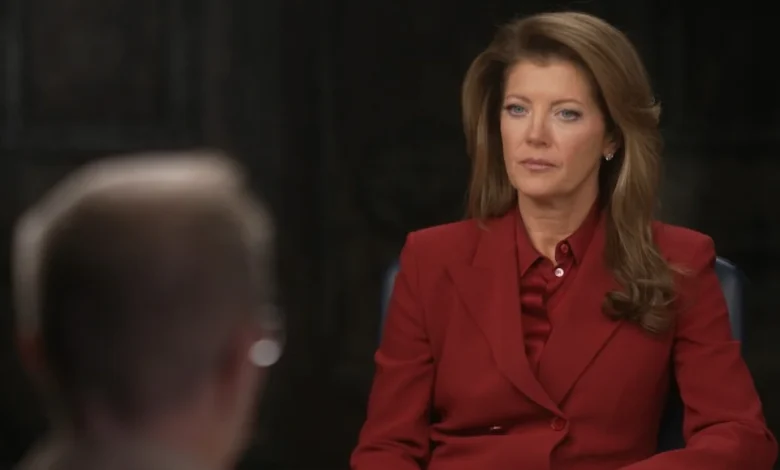
The 59th season premiere of 60 Minutes arrived under a cloud of intense industry scrutiny, marking a pivotal moment for the venerable CBS newsmagazine. On Sunday, September 13, the program drew 7.94 million on-air viewers, according to Nielsen data. This figure represents a notable 21 percent decline compared to the show’s premiere on September 28, 2025, which commanded an audience of 10.03 million. While the premiere maintained its status as a cornerstone of Sunday night television, the dip in traditional linear viewership highlights the shifting consumption habits of the American public and the challenges inherent in rebranding a legacy media institution.
A New Era Under Editorial Transition
The September 13 broadcast was the first to air under the leadership of newly appointed CBS News editor-in-chief Bari Weiss. Her tenure has been characterized by an aggressive overhaul of the program’s internal structure and talent roster. In the months leading up to the season premiere, the network implemented significant cost-cutting measures and strategic personnel changes, including the departure of several long-standing veteran correspondents and behind-the-scenes producers.
These changes were coupled with the appointment of Nick Bilton as the new executive producer, a move signaling a desire to modernize the show’s tone and investigative approach. Despite the high-profile nature of these changes, the premiere remained largely traditional in its execution. Of the newly added correspondents and contributors brought in by the new leadership, only former New York Times columnist Ross Douthat received significant screen time, indicating that the integration of the new talent stable will be a gradual process throughout the 59th season.
The Impact of the NFL Lead-In
For decades, the performance of 60 Minutes has been inextricably linked to the strength of its lead-in programming, specifically the NFL games broadcast on CBS. The network’s late-afternoon football coverage serves as a critical engine for primetime ratings. However, the data for this year’s premiere suggests that the football-to-news pipeline faced significant headwinds.
The Sunday game, which featured a matchup between the Green Bay Packers and the Minnesota Vikings, drew 18.6 million viewers. This represents a 22 percent decline from the lead-in game that preceded the 2025 premiere, which captured 23.77 million viewers. Industry analysts point to a structural change in the NFL’s scheduling as a primary driver of this fluctuation. For the first time since 2023, the league opted to schedule opening Sunday doubleheaders on both CBS and Fox simultaneously.
By splitting the afternoon audience between two networks, the NFL diluted the concentrated viewer base that CBS typically enjoys during its single-network doubleheader weeks. While the aggregate number of viewers watching professional football across the entire television landscape remained robust, the fragmented nature of the scheduling meant that the "bridge" audience for 60 Minutes was substantially smaller than in previous years.
Digital Pivot and Multi-Platform Growth
While traditional Nielsen ratings showed a decline, CBS News officials have pointed toward a different metric to measure the show’s current reach: digital engagement. The network reported that 60 Minutes generated 116.7 million video views across its various social media platforms—a figure that triples the digital footprint of the previous year’s premiere.
This data suggests that the "viewership" of the program is increasingly decoupled from the time-bound, linear broadcast. The network’s emphasis on short-form content and social clips appears to be yielding results in terms of total reach, even as the traditional broadcast audience shrinks. Furthermore, watch time on YouTube—the platform that recently adjusted its methodology for counting "views" to prioritize engagement—has more than doubled compared to last year. This transition reflects a broader trend in news broadcasting, where legacy brands are fighting to remain relevant to younger demographics who rarely tune into live network television.
Contextualizing the Modernization Effort
The current state of 60 Minutes is best understood through the lens of the broader pressures facing legacy media. Since its inception in 1968, the program has defined the "newsmagazine" format. However, the media landscape of 2026 is vastly different from that of the late 20th century. The rise of streaming services, on-demand news, and hyper-personalized digital algorithms has forced CBS to reconcile the show’s prestigious heritage with the demands of a high-speed, digital-first economy.
The departure of veteran staff and the influx of new, digitally savvy contributors are viewed by network insiders as a necessary evolution to ensure the brand survives for another decade. The strategy under Bari Weiss and Nick Bilton appears to be a dual-track approach: maintain the high-end investigative journalism that built the show’s reputation, while simultaneously creating "snackable" content designed to go viral on platforms like TikTok, X, and Instagram.
Historical Ratings Chronology
To understand the scope of the current ratings environment, it is necessary to examine the recent trajectory of the show. During the 2024-2025 television cycle, 60 Minutes remained one of the most-watched programs in America, consistently ranking in the top 20 of all primetime shows. However, the 21 percent year-over-year drop observed this September is one of the steepest single-season declines in the show’s recent history.
- September 2023 Premiere: High engagement, bolstered by strong, exclusive political reporting and a consistent NFL lead-in.
- September 2025 Premiere: 10.03 million viewers, establishing a high benchmark for the subsequent season.
- September 2026 Premiere: 7.94 million viewers, reflecting the impact of split NFL scheduling and the transition period under new management.
The fluctuation in these numbers underscores the precariousness of the Sunday evening block. In years where the NFL schedule aligns perfectly with the network’s needs, 60 Minutes can effectively inherit a massive, ready-made audience. In years where the league’s broadcasting strategy prioritizes cross-network distribution, the newsmagazine must work significantly harder to retain the casual viewer who would otherwise change the channel.
Implications for the Future of News Broadcasting
The current situation at 60 Minutes serves as a case study for the entire broadcast news industry. As linear television advertising revenue continues to decline, news organizations are forced to justify their existence through a combination of brand prestige and digital scalability.
For 60 Minutes, the challenge is twofold. First, it must navigate the internal friction caused by the departure of veteran staff and the cultural shift within the newsroom. Second, it must prove that a long-form investigative format can thrive in an attention economy that favors short, punchy content.
If the digital engagement numbers provided by CBS are any indication, there is still a significant appetite for the brand’s output. However, whether that digital interest can be converted into the kind of sustained, long-form viewership that defined the program’s dominance in the 20th century remains an open question.
Conclusion and Looking Ahead
As the 59th season progresses, industry analysts will be monitoring the program’s ability to stabilize its linear ratings while continuing to scale its digital presence. The early weeks of the season are often volatile, as viewers sample new lineups and get back into the routine of autumn programming.
The success of the 59th season will likely depend on the editorial quality of the segments produced by the new, refreshed team. If the investigative depth that is the hallmark of 60 Minutes can be maintained under the new editorial leadership, the program may be able to retain its core audience even as it experiments with new talent and digital strategies. For now, the premiere serves as a stark reminder that even the most enduring television institutions are not immune to the tectonic shifts currently reshaping the global media landscape. The road ahead for CBS will be defined by the delicate balance of honoring a historic legacy while aggressively courting an audience that has fundamentally moved on from the traditional living-room television experience.