Mux Expands AI-Driven Video Automation with the Launch of Six Advanced Workflows for Global Content Management


The video infrastructure industry reached a significant milestone on July 22, 2026, as Mux announced the general availability of six new Mux Robots workflows. These advanced tools, previously in limited experimental release or requiring manual activation through support channels, are now accessible to all developers and content creators via the Mux dashboard and API. This expansion marks a pivotal shift in how video platforms handle high-intensity post-production tasks, including high-accuracy transcription, multilingual dubbing, and deep engagement analytics. By consolidating these features into a single-request API model, Mux aims to reduce the "plumbing" typically associated with video engineering, allowing companies to focus on content strategy and user experience rather than the complexities of machine learning integration.
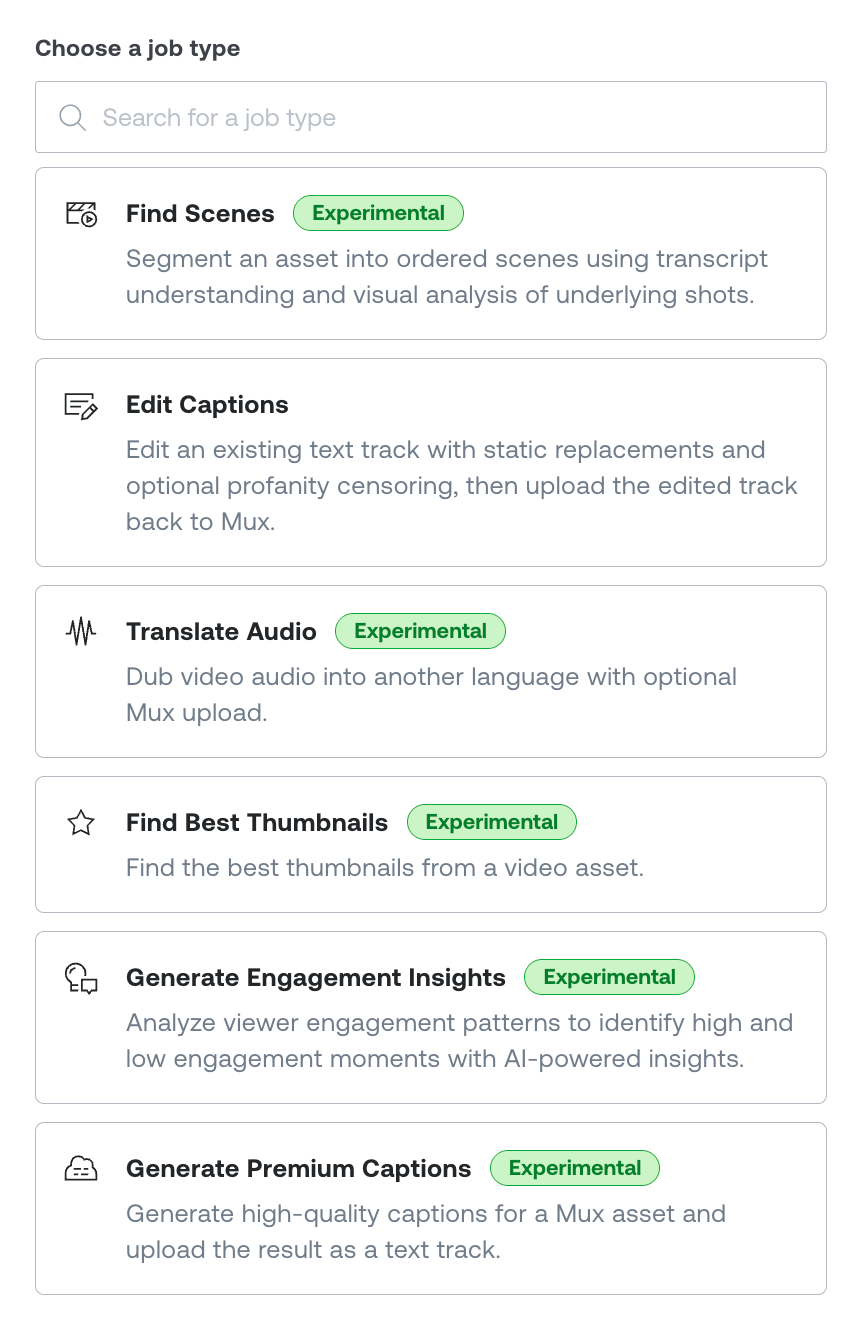
The new suite of workflows—Premium Captions, Engagement Insights, Audio Translation, Best Thumbnails, Editing Captions, and Find Scenes—utilizes a standardized "one API call, structured JSON out" architecture. This design philosophy ensures that even the most complex AI-driven processes can be integrated into existing content management systems (CMS) with minimal friction. As of the July update, the experimental labels on several of these services have been removed or modified to reflect their readiness for production environments, signaling a maturing of AI-assisted video processing at scale.
The Evolution of Video Automation and the Mux Robots Framework
The release of these workflows is part of a broader trend within the media technology sector to democratize sophisticated video processing. Historically, tasks like audio dubbing or scene-level analysis required specialized teams or expensive, siloed software. Mux Robots was introduced to bridge this gap by providing a serverless-style execution environment for video-related AI tasks.
By mid-2026, the demand for "intelligent" video has transitioned from a luxury to a requirement. Platforms now face increasing pressure to provide accessible content through high-quality captions and to reach global audiences through localized audio. The latest update ensures that these capabilities are not just available, but also highly configurable. Each workflow is billed on a usage-based model, typically calculated by the duration of the video asset and the computational complexity of the task, allowing for predictable scaling for both startups and enterprise-level broadcasters.

High-Accuracy Transcription: The Premium Captions Workflow
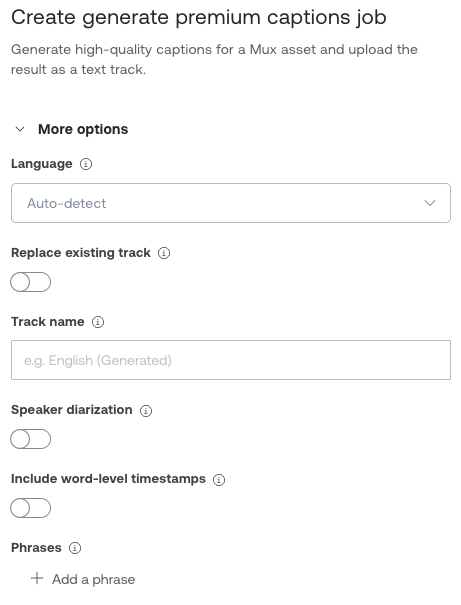
One of the most significant additions to the suite is the Generate Premium Captions workflow. While Mux has long offered basic auto-generated captions at no additional cost, the Premium version introduces a higher tier of accuracy driven by advanced speech-to-text models. This workflow is designed for professional environments where accuracy is paramount, such as legal proceedings, educational content, or high-budget entertainment.
The Premium Captions tool includes several advanced features that distinguish it from standard automated systems. It incorporates "diarization," or speaker identification, which allows the system to distinguish between different voices in a conversation—a critical requirement for interviews and panel discussions. Furthermore, it offers word-level timestamps, enabling developers to build interactive transcripts where the text highlights in sync with the video playback. To handle the nuances of niche industries, the system allows users to pass a list of "phrases"—specialized jargon, brand names, or proper nouns—to the model to ensure correct spelling and recognition. The output is provided in standard .vtt and .srt formats, as well as a word-level JSON for deep integration.
Actionable Data: Generate Engagement Insights
While many video players track basic views, the Generate Engagement Insights workflow goes further by analyzing Mux Data hotspots and heatmaps to produce plain-language summaries. This tool essentially acts as an automated data scientist, scanning through thousands of viewer interactions to identify exactly where audiences "lean in" or drop off.
The system generates an "engagement score" for specific segments, accompanied by qualitative insights. For example, the AI might report that "viewers are highly engaged during the product demo" or note a trend such as "viewers skip past the first 15 seconds of the intro." For this workflow to function, the video asset must have a statistically significant number of views tracked via the Mux Data SDK. This integration of raw performance metrics with AI-driven interpretation represents a significant step forward in content optimization, allowing editors to understand not just that a video performed well, but why it did.
Global Reach through Audio Translation and Dubbing
In an increasingly globalized market, the Translate Audio workflow provides a streamlined solution for dubbing content into multiple languages. By providing an asset ID and a target language code, users can trigger an automated dubbing process that detects the source language and speaker count without manual input.
The translated audio is automatically uploaded back to the Mux asset as a new audio track, facilitating seamless multi-language support in the player. This capability is particularly disruptive for educational platforms and corporate training modules, which previously had to choose between the high cost of human dubbing or the lower engagement of text-only subtitles. The July 2026 update ensures that this workflow is now available via the standard API, removing the previous requirement for support-team intervention.
Intelligent Visual Curation: Find Best Thumbnails
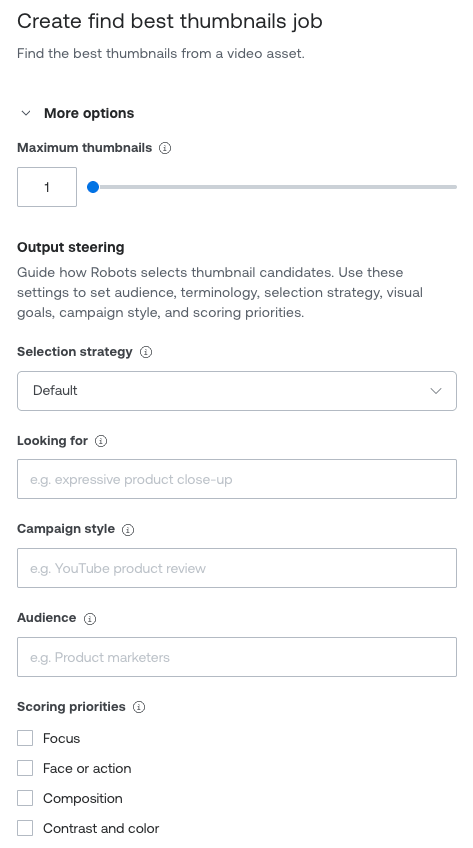
The visual appeal of a thumbnail is often the primary driver of click-through rates (CTR), yet choosing the right frame from a long-form video is a time-consuming manual task. The Find Best Thumbnails workflow automates this by sampling frames across the video and scoring them based on several criteria: focus, face presence, action intensity, composition, and color contrast.
What sets this tool apart is the ability to steer the AI’s selection process. Developers can specify a "selection strategy," such as "face or action" for social media or "campaign thumbnail" for more formal marketing needs. Users can even provide plain-language descriptions of what they are looking for, such as "a shot of a person smiling while holding a laptop." The AI returns the top five candidates with associated metadata, allowing for automated A/B testing of visual assets.
Precision Control: Editing Captions and Profanity Censoring
The Edit Captions workflow addresses the need for post-processing existing transcriptions. It operates on two levels: deterministic and probabilistic. On the deterministic side, it allows for simple find-and-replace operations to fix recurring typos or normalize brand names. On the probabilistic side, it utilizes Large Language Models (LLMs) to perform automated profanity censoring.
The censoring feature is highly customizable, offering modes to "blank" the text, "drop" the cue entirely, or "mask" characters with symbols. This is particularly useful for platforms that host user-generated content and must adhere to varying regional standards for broadcast decency. By providing "always censor" and "never censor" lists, Mux gives administrators granular control over the AI’s decision-making process, ensuring that brand-specific terms or slang are handled correctly.
Narrative Segmentation: The Find Scenes Workflow
Perhaps the most technologically ambitious of the new releases is Find Scenes. This workflow segments a video into ordered narrative scenes, providing titles, transcript cues, and shot-level breakdowns. This creates a "table of contents" for video assets, making long-form content more navigable.
Industry analysts note that this type of metadata is essential for the next generation of AI "agents" that need to understand video content at a granular level. By providing a visual and audible narrative for every scene, Mux is laying the groundwork for more sophisticated search and discovery features within video libraries. Although still categorized as experimental in terms of potential API refinements, its availability without support-team intervention suggests a high level of confidence in its underlying logic.
Technical Implementation and Chronology of Availability
The rollout of these features followed a phased approach typical of modern software-as-a-service (SaaS) deployments. Throughout late 2025 and early 2026, these workflows were tested in "experimental" status with a select group of beta users. The primary challenge during this period was ensuring that the AI models could handle the diverse range of audio and video quality found in real-world assets.
As of the July 22, 2026 update, the timeline of availability is as follows:
- Late 2025: Initial introduction of Mux Robots and basic "Directives" for automation.
- Early 2026: Limited beta release of Translation and Engagement Insights (request-only).
- July 22, 2026: General availability of all six workflows via API and Dashboard; removal of "request access" barriers.
To run these workflows, developers use a standard POST request to the Mux Robots API. The system then processes the request asynchronously, sending a webhook notification once the structured JSON output is ready. This "set it and forget it" model is designed to integrate easily into automated workflows where video assets are processed immediately upon upload.
Industry Impact and Broader Implications
The move by Mux to expand its "Robot" workforce reflects a broader shift in the tech industry toward "AI-as-a-Service." By abstracting the complexity of model selection, hardware provisioning, and data normalization, Mux is positioning itself as an essential layer in the modern media stack.
For the creator economy, these tools lower the barrier to entry for high-quality production. Small teams can now offer the same level of accessibility and localization as major streaming networks. For enterprise clients, the primary benefit is cost-efficiency and speed. The ability to automatically censor content, generate engagement summaries, and find the best promotional thumbnails in a matter of seconds—rather than hours of human labor—represents a significant operational advantage.
However, the shift to AI-driven management also brings new considerations for brand safety and data privacy. Mux has addressed these concerns by providing "human-in-the-loop" options, such as the ability to review and edit AI-generated captions before they are published. As these workflows continue to evolve, the industry will likely see further refinements in how AI interprets context, particularly in the "Find Scenes" and "Engagement Insights" categories.
In conclusion, the July 2026 update to Mux Robots is more than just a feature release; it is a comprehensive upgrade to the video infrastructure landscape. By making these six advanced workflows generally available, Mux is empowering developers to build smarter, more responsive, and more inclusive video platforms for a global audience.