Meta Accelerates Data Center Expansion Through Massive 650-Megawatt Solar Energy Acquisition

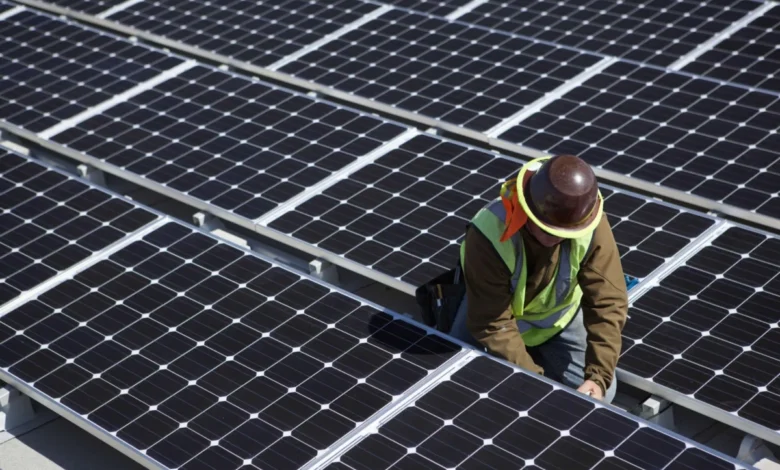
Meta has solidified its commitment to sustainable infrastructure by securing a significant 650-megawatt solar power purchase agreement (PPA) with the American utility giant AES. This latest transaction, which encompasses projects spanning Kansas and Texas, underscores the tech conglomerate’s aggressive strategy to meet the soaring electricity demands of its artificial intelligence operations. As Meta continues to expand its global network of data centers, the integration of large-scale renewable energy has shifted from a corporate social responsibility initiative to a mission-critical operational requirement.
The deal splits the 650-megawatt capacity between two states: 400 megawatts earmarked for development in Texas and 250 megawatts located in Kansas. According to AES, these projects are currently in the developmental phase, reflecting a standard industry timeline where power purchase agreements are inked two to three years ahead of commercial operation. With typical contract terms ranging between 15 and 20 years, Meta is effectively locking in long-term price stability for the energy required to train and run its next-generation AI models.
The Growing Energy Appetite of Hyperscalers
The rapid proliferation of generative AI and large language models has fundamentally altered the power landscape for technology giants. Training and maintaining these systems requires massive computing power, which in turn demands a constant, reliable supply of electricity. For Meta, this has necessitated a move beyond mere carbon offsetting toward direct investment in renewable capacity.
Meta’s renewable energy portfolio now exceeds 12 gigawatts of total capacity, a figure that places the company among the largest corporate buyers of renewable energy globally. This recent agreement with AES marks the fourth solar-focused PPA announced by Meta in 2025 alone. The company’s focus on solar—a technology that has achieved record-low costs—is part of a broader strategy to reconcile its massive carbon footprint with its public sustainability targets.
The Texas Solar Surge
Texas has emerged as the epicenter of this renewable expansion. The state’s dominance in the solar market is not accidental; it is the result of a convergence of favorable geography, aggressive policy, and a deregulated energy market that rewards speed and efficiency. According to the Solar Energy Industries Association (SEIA), Texas led the nation in new solar capacity installations throughout 2023 and 2024.
Several factors contribute to the state’s appeal for hyperscalers like Meta:
- Irradiance and Land Availability: The vast, sun-drenched plains of Texas provide an ideal environment for utility-scale solar arrays.
- Permitting Efficiency: Compared to many other U.S. regions, Texas offers a streamlined regulatory environment that allows developers to bring projects to the grid with fewer bureaucratic hurdles.
- Grid Integration: The Electric Reliability Council of Texas (ERCOT) grid has seen an influx of new connections, which, despite occasional congestion, provides a robust framework for large-scale energy projects.
For developers, the ability to build, permit, and connect a solar facility in a matter of months rather than years is a competitive advantage that makes Texas the preferred destination for capital-intensive green energy projects.
Strategic Advantages of Phased Deployment
A critical component of this deal is the operational flexibility offered by solar energy. Unlike traditional fossil fuel plants, which often require full completion before producing usable power, solar farms can be phased in incrementally. This modularity allows Meta to begin drawing electricity as soon as individual sections of a project go online, even while construction continues on the remainder of the facility.
Andrés Gluski, CEO of AES, emphasized this attribute in a recent press statement. He identified the “fast time-to-power” and “low-cost electricity” provided by solar as the primary drivers behind the surge in interest from the world’s largest tech companies. By leveraging these projects, Meta can effectively match its rising energy needs with a supply that can be brought online in stages, minimizing the lag between infrastructure investment and operational utility.
Chronology of Meta’s 2025 Solar Acquisitions
The deal with AES is part of a flurry of activity for Meta this year, as the company seeks to fortify its energy supply chain. The following timeline outlines the major solar procurement milestones reported in 2025:
- January 15: Meta announced an initial 200-megawatt solar agreement, marking the start of a year of aggressive energy expansion.
- Late January: A substantial 595-megawatt project was secured, signaling a shift toward larger, utility-scale developments.
- Early February: A 505-megawatt power purchase agreement was inked with Cyprus Creek, further solidifying the company’s footprint in the Texas market.
- Mid-March: A secondary 200-megawatt project was confirmed in Bastrop, Texas, in partnership with RWE, specifically to support local data center operations.
- Late March: The current 650-megawatt deal with AES, split between Kansas and Texas, was formalized.
This rapid succession of deals demonstrates a shift in procurement strategy. Rather than seeking smaller, localized energy sources, Meta is pursuing massive, multi-hundred-megawatt projects that offer significant economies of scale.
Economic and Environmental Implications
From an economic perspective, the deal is a testament to the maturation of the renewable energy market. Solar power has become one of the most cost-effective forms of new generating capacity, frequently outperforming coal and natural gas even without the inclusion of federal subsidies. For a company like Meta, which operates on razor-thin margins in its hardware infrastructure, the low levelized cost of energy (LCOE) offered by these solar projects is a crucial factor in maintaining long-term profitability.
However, the rapid growth of data centers poses challenges for the power grid. As hyperscalers consume increasing percentages of regional energy capacity, utility providers must manage the impact on grid reliability. The integration of large-scale battery storage—often paired with these solar projects—is becoming increasingly common, though it remains a secondary concern compared to the primary goal of pure energy volume.
Challenges to Continued Expansion
While the momentum is clearly in favor of solar expansion, the industry faces persistent headwinds. Interconnection queues—the waitlist for projects to be granted permission to plug into the regional transmission grid—remain a major bottleneck across the United States. While Texas has fared better than most regions, the sheer volume of new solar and wind projects has begun to strain the capacity of the grid to absorb new power.
Furthermore, the physical construction of these projects is subject to the volatility of the global supply chain. The availability of photovoltaic panels, inverters, and high-voltage transmission equipment can fluctuate, potentially delaying project timelines. Despite these risks, the long-term contracts typical of these PPAs provide enough financial certainty to shield both Meta and developers like AES from short-term market shocks.
The Path Forward
As Meta looks toward the future of its AI-driven infrastructure, the role of renewable energy will likely expand beyond solar. Industry analysts suggest that hyperscalers are beginning to explore a more diversified energy portfolio, including long-duration battery storage, nuclear power, and geothermal energy to ensure 24/7 carbon-free power.
For now, the focus remains on the rapid scaling of solar capacity. By securing 650 megawatts in a single stroke, Meta has signaled to the energy market that it is prepared to act as an anchor tenant for large-scale utility projects. This strategy not only serves the company’s internal demand for power but also acts as a catalyst for the broader transition to renewable energy in the regions where these projects are deployed.
As the tech sector continues to grapple with the energy-intensive reality of the AI revolution, the partnership between major cloud providers and utility companies like AES will likely become the blueprint for future industrial energy procurement. Through these agreements, Meta is not only ensuring its own operational continuity but is also setting a precedent for how global corporations can leverage their massive buying power to accelerate the decarbonization of the energy grid.
Related posts: