Staten Island Judge Halts New York City Pied-à-Terre Tax Rollout in Major Legal Blow to Mayor Zohran Mamdani

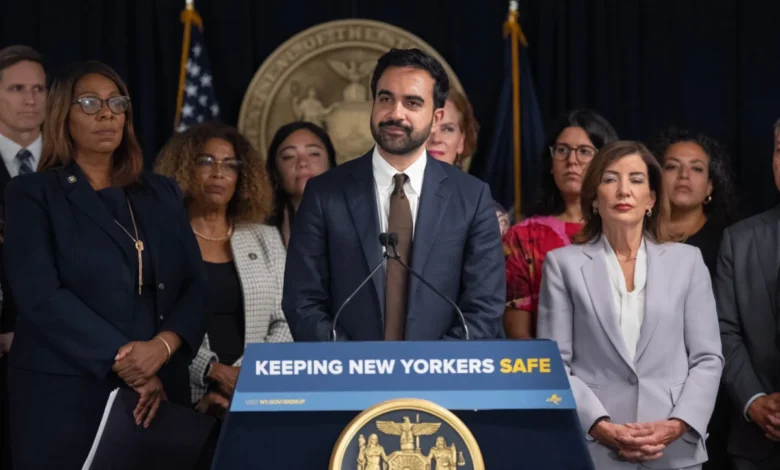
New York City’s ambitious and politically charged effort to implement a new pied-à-terre tax suffered a significant judicial setback on Tuesday when a State Supreme Court judge in Staten Island threw out the administration’s rollout of the controversial surcharge. Justice Wayne Ozzi ordered Mayor Zohran Mamdani’s administration to cancel the notices sent to property owners and essentially restart the arduous administrative process of determining who actually owes the tax.
The ruling marks a critical escalation in the ongoing war between the progressive mayoral administration and wealthy real estate owners, high-profile billionaires, and legal heavyweights. While Justice Ozzi did not rule on the ultimate legality of the tax itself—leaving the core constitutional questions for another day—his decision harshly rebuked the city’s Department of Finance for what he deemed a legally flawed, rushed, and burdensome implementation process.
The Mamdani administration, which had anticipated pulling in at least $500 million annually from the surcharge as a cornerstone of its "tax-the-rich" legislative agenda, wasted little time signaling its intention to fight back. Sources close to the city’s legal team confirmed that the administration planned to file an immediate appeal and invoke an automatic stay of the injunction late Tuesday, ensuring that the legal battle over New York City real estate policy will rage on through the higher courts.
The Mechanics of the Surcharge and the Flawed Rollout
The pied-à-terre tax, which officially went into effect on July 1, was designed to target luxury secondary properties across the five boroughs. Under the parameters of the policy, the surcharge applies to one-, two-, and three-family homes valued at more than $5 million, as well as condominiums and cooperative apartments worth more than $1 million, provided that the properties do not serve as the owner’s primary residence.
The controversy, however, stems entirely from how the city chose to identify those properties. In July, the Department of Finance mailed approximately 17,000 notices to property owners flagging them as potential targets for the new tax. However, the rollout immediately drew public outcry and widespread confusion when city officials acknowledged that they had failed to cross-reference property records with basic income tax filings before sending out the warnings.
Once owners were forced to respond, it quickly became apparent that the dragnet was far too wide. Thousands of the flagged properties were demonstrably primary residences, leaving lifelong New Yorkers scrambling to prove they were not absentee owners hoarding luxury real estate in a housing-starved metropolis. Adding to the friction, the city published an online database containing the names and addresses of more than 900,000 properties, inviting public scrutiny and privacy concerns that galvanized property owners into action.
The Legal Challenge Led by Randy Mastro
The lawsuit that successfully halted the rollout was brought by former First Deputy Mayor Randy Mastro on behalf of three affected homeowners. Mastro, who served under former Mayor Eric Adams and has since emerged as one of Mayor Mamdani’s most persistent legal antagonists, targeted the administrative framework of the tax rather than its legislative intent.
Mastro’s legal team argued three main points before Justice Ozzi: first, that state law explicitly required the Department of Finance to make an individual, reasoned determination for each property before issuing a notice, a step the city bypassed; second, that the city unlawfully shifted the burden of proof onto homeowners, requiring them to prove they did not owe the tax rather than conducting the investigative work itself; and third, that no existing statute permitted the city to publish a sprawling, publicly accessible database of nearly a million property owners’ personal details.
Mastro himself became a victim of the city’s broad administrative net. Despite having lived in Manhattan for decades, the veteran attorney received one of the warning notices. Following Tuesday’s ruling, Mastro issued a statement declaring that the court had "recognized we were right all along," emphasizing that the city must now perform its due diligence owner by owner before demanding a single dollar.
Mayor Mamdani and city officials, accustomed to the legal sparring with Mastro, have routinely brushed off his challenges. In a previous statement addressing Mastro’s litigiousness, Mayor Mamdani quipped, "There are few things more certain in New York City than death, taxes, and Randy Mastro filing a lawsuit against this administration."
Broader Legal Fronts and Billionaire Opponents
While Mastro’s lawsuit focused strictly on administrative overreach, a separate and potentially more dangerous legal threat to the tax is already making its way through the judicial system. Just a day prior to Justice Ozzi’s ruling, a coalition of prominent billionaires—including former Commerce Secretary Wilbur Ross, his wife Hilary Geary Ross, and casino developer Steve Wynn—filed a federal lawsuit challenging the constitutionality of the tax itself.
Unlike the Staten Island case, the federal challenge spearheaded by Ross and Wynn targets the substance of the law rather than its execution. Their legal argument asserts that the tax violates constitutional protections by unfairly and exclusively penalizing out-of-state residents and individuals who do not maintain their primary domicile within New York City.
Speaking to reporters shortly after Justice Ozzi’s decision, Wilbur Ross expressed little surprise at the outcome. Confident in the legal merits of his own challenge, Ross noted that the Staten Island ruling provides early momentum for property owners who have been "on pins and needles" since the tax was first proposed and enacted. While acknowledging that the city’s pending appeal means the fight is far from over, Ross praised the swiftness of the court’s intervention.
The Political Battle Lines and Economic Implications
The pied-à-terre tax has quickly become the defining socioeconomic battleground of the Mamdani mayoralty. For the administration and its progressive allies, the tax is framed as an issue of fundamental economic justice. Matt Rauschenbach, a spokesperson for the mayor, delivered a scathing defense of the policy following Tuesday’s ruling, doubling down on the administration’s populist messaging.
"The pied-à-terre surcharge is about a basic principle of fairness: If you can afford a luxury second home in New York City, you can afford to pay your fair share for the schools, streets, and parks that make this city work," Rauschenbach said in a statement to Fortune. "Today’s decision is wrong, and we will invoke a stay of the injunction. With a stay, we will continue implementing the surcharge fairly, efficiently, and in full compliance with the law, as we have since day one."
Rauschenbach added that the administration views the legal challenges as the desperate maneuvers of an ultra-wealthy elite attempting to protect their privileges at the expense of working-class residents. "New York is a city for the many—not a tax haven for the wealthy few," he said. "Our administration is fighting every day to deliver for working New Yorkers. The ultrawealthy are fighting in court to avoid paying their fair share."
State-level backing for the mayor’s mission remains intact, despite the local administrative stumble. Jen Goodman, director of rapid response for Governor Kathy Hochul, reiterated the governor’s support for the underlying concept of the tax, telling Fortune that while administrative matters are for the city and the courts to resolve, the governor firmly believes that owners of multimillion-dollar secondary homes possess the financial capacity to contribute more to the municipal infrastructure.
Timeline and Chronology of the Conflict
To fully understand the current legal paralysis, it is helpful to examine the rapid sequence of events that brought the pied-à-terre tax to this juncture:
- Early 2026: Mayor Zohran Mamdani champions the pied-à-terre tax as a flagship revenue generator, projecting at least $500 million annually to fund city services.
- July 1, 2026: The pied-à-terre tax officially takes effect, targeting homes over $5 million and condos/co-ops over $1 million used as secondary residences.
- Mid-July 2026: The Department of Finance blasts out approximately 17,000 notices to suspected secondary homeowners without prior income tax verification, triggering widespread confusion.
- August 2026: Former First Deputy Mayor Randy Mastro files a lawsuit on behalf of homeowners, arguing that the city bypassed statutory individual determinations and illegally published a database of 900,000 property records. Mastro himself publicly reveals he received a notice despite decades of residency in Manhattan.
- September 2026: Wilbur Ross, Hilary Geary Ross, and Steve Wynn file a separate lawsuit challenging the constitutionality of the tax on the grounds that it unfairly targets non-residents.
- Tuesday (Current Date): State Supreme Court Justice Wayne Ozzi rules in favor of Mastro’s plaintiffs, throwing out the initial rollout, ordering the cancellation of existing notices, and demanding the city restart the determination process. The Mamdani administration immediately vows to appeal and seek a stay.
What Lies Ahead for New York City Real Estate
The immediate future of the pied-à-terre tax now hinges on the appellate courts. If the Mamdani administration successfully secures a stay of Justice Ozzi’s injunction, the Department of Finance will likely attempt to patch its administrative workflow while continuing to defend the policy in court. However, complying with the judge’s order to review all available records and issue individualized determinations before issuing notices would require a massive operational overhaul, potentially delaying revenue collection and straining municipal resources.
Furthermore, the separate constitutional challenge brought by Ross, Wynn, and other ultra-wealthy property owners looms large. Even if the city manages to fix the procedural flaws identified by Justice Ozzi, it must still survive a rigorous constitutional test in federal or higher state courts regarding whether it can legally single out non-primary homeowners for distinct tax burdens.
For a city administration that staked its political capital on making the wealthy pay for municipal revitalization, the ruling is a sharp reminder of the checks and balances inherent in New York’s judicial system. As lawyers for both sides prepare for the appellate battles, thousands of New York City property owners—and the city’s budgetary planners—remain locked in a state of high-stakes legal limbo.