ICONIQ 2026 GTM Benchmark Report Reveals Significant Shifts in Sales Quotas and Compensation Strategies for B2B and AI Companies

The 2026 Go-to-Market (GTM) Benchmark Report recently published by ICONIQ Growth indicates a transformative period for the business-to-business (B2B) and artificial intelligence (AI) sectors, characterized by a return to fundamental sales processes that have been significantly "ramped up" by technological integration. Drawing from a comprehensive survey of GTM executives at over 150 B2B and AI software companies, the report suggests that while the underlying economic structures of sales organizations remain recognizable from the pre-AI era, the scale of expectations and the breadth of responsibilities for sales representatives have expanded to unprecedented levels.
The data, collected from a diverse sample of organizations ranging from early-stage startups to late-stage enterprises, provides a high-performance benchmark for the industry. Because ICONIQ Growth typically invests in the top tier of growth-stage companies, these findings represent the operational standards of well-funded startups that have achieved true product-market fit. The report highlights a critical shift: the "AI era" has not replaced the human sales element but has instead acted as a catalyst for higher efficiency, larger quotas, and a more integrated approach to the customer lifecycle.
The Evolution of Sales Quotas and Attainment in a High-Growth Environment
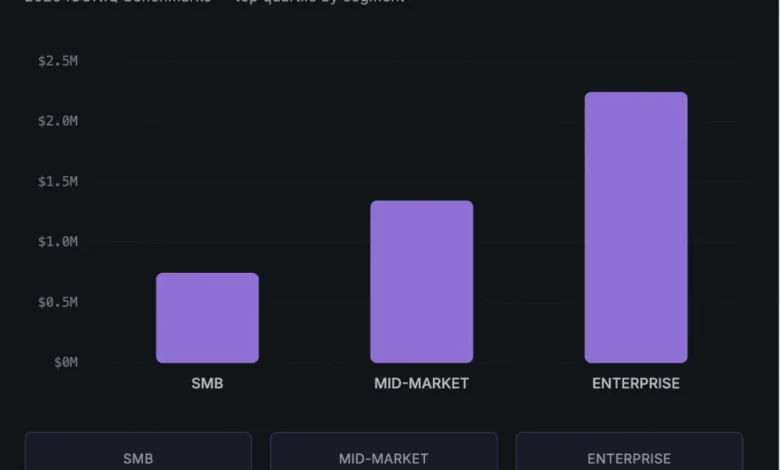
One of the most striking revelations in the ICONIQ report is the escalation of sales quotas, particularly within enterprise-level roles. In the current market, the baseline for a successful enterprise Account Executive (AE) has moved significantly. While a $1.5 million annual quota was once a standard benchmark, high-performing organizations are now setting quotas as high as $2.5 million. This 66% increase is not merely a reflection of inflation or aggressive management; it is supported by a fundamental change in how leads are generated and managed.
Despite these higher targets, attainment rates among top-tier B2B and AI leaders are actually rising. In a traditional B2B sales environment, a healthy organization might expect 65% to 75% of its sales force to meet their quotas. However, ICONIQ’s data shows that the latest generation of B2B and AI-integrated companies are seeing attainment rates between 85% and 90%. This inverse relationship—where higher quotas lead to higher attainment—suggests that the tools and processes supporting these reps have become significantly more effective.
The report posits that if a company’s enterprise AE quota remains stagnant at $1.5 million, it is likely leaving approximately 30% of its potential revenue on the table. However, the report also warns against "quota inflation" without support; increasing targets to $2.5 million without a corresponding increase in pipeline quality and compensation restructuring will inevitably lead to talent attrition and a collapse in morale.
The Integration of Cross-Sell and Upsell into the Sales Portfolio
A significant driver of increased quotas and attainment is the expansion of the Account Executive’s role across the entire customer journey. The "siloed" model of sales, where an AE closes a deal and immediately hands it off to a Customer Success Manager (CSM) or an Account Manager (AM), is being replaced by a more holistic ownership model.
According to the benchmark data, 65% of high-performing companies now have their sales teams owning the cross-sell process, compared to only 49% in lower-performing organizations. Furthermore, 55% of high performers task sales with owning upsells, and 37% give sales direct responsibility for renewals. In contrast, among "other" companies, those figures drop to 44% and 24%, respectively.
This shift indicates that the most successful companies in 2026 are those that leverage the relationship-building skills of their sales reps throughout the duration of the customer contract. By involving sales in the expansion of existing accounts, companies are able to maximize Net Revenue Retention (NRR) and ensure that the representatives who understand the client’s initial pain points are the ones identifying additional solutions for them.
Compensation Architecture and the Shift Toward Expansion
As the responsibilities of the sales representative have evolved to include more post-initial-sale activity, compensation plans have followed suit. The ICONIQ report notes that the underlying economics of sales compensation—typically paying reps a total of roughly 20% of the revenue they generate through a mix of base salary and bonuses—has remained relatively stable. However, the "weighting" of these commissions has shifted.
In previous years, a standard compensation plan might have been weighted 80% toward new business and 20% toward expansion. In the 2026 landscape, top-tier companies are moving toward a more balanced model. This change acknowledges that reps carrying $2 million-plus quotas are often doing so by growing existing accounts as much as they are by finding new ones.
Founders who have not updated their compensation plans since 2023 are finding themselves at a disadvantage in the talent market. Reps who are capable of managing high-value, complex sales cycles now expect meaningful compensation for expansion revenue. Without this, they are increasingly likely to migrate toward competitors who offer "modern" comp structures that reward the full scope of their impact on the company’s bottom line.
AI as the Primary Driver of Pipeline Quality and Capacity
The ability for sales teams to handle larger quotas is directly tied to the integration of AI within the marketing and Sales Development Representative (SDR) motions. The report provides specific data on the "AI dividend" in the sales funnel. Companies that have successfully embedded AI into their lead generation processes are seeing an 11-point increase in lead-to-MQL (Marketing Qualified Lead) conversion rates. Furthermore, they are seeing an 8-point increase in MQL-to-SQL (Sales Qualified Lead) conversion.
This improvement in conversion rates means that the pipeline being handed to Account Executives is of a much higher quality than in previous years. AI tools are now capable of handling the initial "grunt work" of prospecting, qualification, and even some preliminary discovery. This allows the human sales rep to focus their time on high-value activities, such as negotiation and strategic account planning.
From a management perspective, the higher quota is not a "punishment" for more efficient tools; it is a reflection of increased capacity. When the pipeline generation is climbing at the same rate as the quota, the sales organization can scale without the traditional "burnout" associated with aggressive targets.
Chronology of GTM Evolution: 2023 to 2026
To understand the 2026 benchmarks, it is necessary to look at the trajectory of the GTM landscape over the last three years.
- 2023: The Efficiency Mandate. Following the market correction of late 2022, companies moved away from "growth at all costs" toward "efficient growth." This period was marked by significant layoffs in sales and marketing and a focus on reducing the cost of customer acquisition (CAC).
- 2024: The AI Experimentation Phase. Companies began integrating early generative AI tools. Most of these efforts were siloed, with individual reps using AI for email drafting or research, but without a cohesive organizational strategy.
- 2025: Operationalizing AI. Leading companies began to rebuild their tech stacks with AI at the core. This year saw the rise of automated SDR functions and AI-driven CRM management, which began to significantly impact pipeline velocity.
- 2026: The New Baseline. As reflected in the ICONIQ report, AI is no longer a "feature" but a fundamental component of the GTM strategy. Quotas have been recalibrated to reflect the new reality of rep productivity, and compensation models have been finalized to reward full-cycle ownership.
Broader Impact and Industry Implications
The findings of the ICONIQ 2026 report suggest that the gap between high performers and the rest of the market is no longer defined by product strategy alone, but by the sophistication of their GTM architecture. The implications for the broader tech industry are significant.
First, the "talent bar" for sales representatives is rising. As AI handles more of the administrative and entry-level tasks, the remaining human responsibilities require a higher level of strategic thinking, emotional intelligence, and business acumen. The "average" rep may find it increasingly difficult to survive in an environment where the baseline quota is $2 million or more.
Second, the role of the Sales Development Representative is undergoing a fundamental transformation. With AI handling the bulk of lead qualification, the SDR role is becoming more technical, focusing on managing AI agents and optimizing data flows rather than making high volumes of cold calls.
Finally, for venture capitalists and investors, these benchmarks provide a new lens through which to evaluate company performance. Growth-stage companies that cannot demonstrate the high attainment rates and pipeline efficiencies highlighted in the ICONIQ report may struggle to secure funding, as they will be seen as falling behind the "new standard" of operational excellence.
In conclusion, the 2026 GTM landscape is one of heightened expectations and enhanced capabilities. For organizations that can align their quota setting, pipeline generation, and compensation architecture with these new benchmarks, the potential for revenue growth is greater than ever. For those that remain anchored in the strategies of 2023, the risk of obsolescence is real and immediate.