The Knot: Navigating the Intersection of Intent and Obstacle in the Age of Artificial Intelligence

Maps are fundamentally easy to commoditize because they provide a definitive, linear path from an origin point to a desired destination. Whether they take the form of instructional manuals, procedural step-by-step guides, or algorithmic directions, maps thrive on the promise of certainty. In contrast, the compass serves a more resilient, albeit less descriptive, function. It does not dictate the route, nor does it guarantee the terrain ahead; instead, it offers orientation and clarity, placing the burden of navigation—and the responsibility of choice—firmly on the individual. In an era defined by the proliferation of generative artificial intelligence, where information and algorithmic "answers" are increasingly abundant, the value of the well-framed question has reached a historical peak.
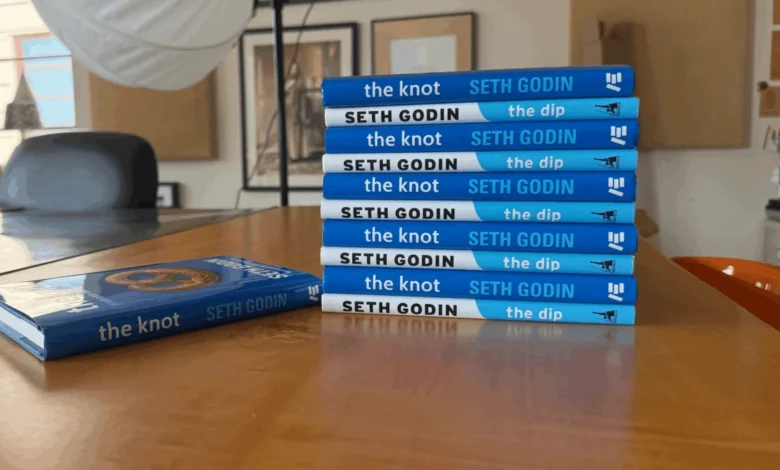
This shift in intellectual priority serves as the backdrop for the latest publication from author and business theorist Seth Godin. On September 15, 2026, details emerged regarding his forthcoming work, The Knot, a conceptual follow-up to his seminal 2006 title, The Dip. While The Dip focused on the strategic necessity of quitting—a concept that remains counterintuitive in traditional professional literature—The Knot shifts the focus to the psychological and systemic paralysis that occurs when commitment is already established, yet forward motion remains elusive.
The Evolution of Strategic Literature: A Twenty-Year Retrospective
To understand the significance of this new release, one must examine the landscape of professional development literature as it existed in 2006. At the time of The Dip’s initial publication, the prevailing corporate philosophy favored persistence as an absolute virtue. Godin’s assertion that quitting could be a strategic, intelligent choice—if the project in question lacked long-term potential—was met with significant skepticism from publishers and retail booksellers.
The methodology employed in that book was deliberately sparse. Rather than offering a traditional "how-to" manual, Godin provided a framework designed to provoke introspection. It functioned as a diagnostic tool for career trajectory and business viability. Two decades later, the book remains a staple in business management curricula, and the author reports that he continues to receive consistent inquiries regarding the practical application of its principles. The persistence of these questions underscores a fundamental reality: once an individual recognizes the difference between a "dip" (a temporary obstacle) and a "cul-de-sac" (a dead end), the professional landscape is permanently altered.
Defining the Knot: The Psychology of Stagnation
If The Dip was a compass for knowing when to abandon a path, The Knot serves as a compass for those who are committed to the path but find themselves unable to advance. According to the author’s outline, a "knot" represents a psychological and tactical state where an individual attempts to reconcile two mutually exclusive desires.
Industry analysts and behavioral psychologists often categorize this state as cognitive dissonance. Common manifestations identified by Godin include:
- The Desire for Change vs. The Fear of Disapproval: The tension between pursuing innovation and maintaining social or professional standing within an existing hierarchy.
- The Impulse to Ship vs. The Requirement for Guarantees: The conflict between the necessity of launching a product or service and the paralyzing demand for a guaranteed outcome.
- The Goal vs. The Baggage: The struggle to move toward a specific objective while being hindered by past failures, existing commitments, or outdated internal narratives.
Unlike a map, which would simply instruct a user to bypass these hurdles, The Knot is framed as a diagnostic instrument. Its primary thesis rests on the axiom that "problems can be solved," provided the user can articulate the nature of the obstruction. By isolating the specific "baggage" or contradictory incentive structure, the author argues that progress becomes not only possible but inevitable.
Market Context and the AI Paradigm Shift
The timing of this publication is not incidental. In the current economic climate, the utility of traditional maps has been effectively eclipsed by AI-driven search and decision-making tools. As generative models become capable of generating instant, data-backed solutions to complex procedural problems, the market value of "how-to" content has plummeted.
What remains scarce—and therefore highly valuable—is the ability to diagnose problems that do not have clear data signatures. The "knot" is inherently human; it is a manifestation of fear, social conditioning, and cognitive bias. These are areas where current artificial intelligence models, which are largely optimized for pattern recognition and probability-based output, often struggle to provide nuanced guidance.
Market data from the publishing sector indicates a growing appetite for books that prioritize high-level cognitive frameworks over tactical execution. While technical manuals are increasingly handled by digital interfaces, readers are gravitating toward content that addresses the "why" and the "what" of human endeavor.
Broader Implications for Organizational Dynamics
The release of The Knot arrives at a moment when corporate productivity metrics are under intense scrutiny. With the widespread adoption of automation, many firms have found that while they can solve technical bottlenecks, they are increasingly hindered by human-centric "knots."
In an organizational context, these knots often appear as:
- Cultural Inertia: The collective desire to modernize while maintaining legacy structures that offer psychological comfort.
- Performance Measurement Disconnects: Where teams are incentivized to pursue growth, yet are punished by rigid risk-management protocols.
- The "Expert Trap": The tendency for high-performing individuals to rely on outdated methods because those methods previously guaranteed success.
By focusing on the identification of these internal obstructions, the book attempts to provide a vocabulary for teams to resolve these tensions. Early reviewers and beta readers have suggested that the text provides a common language for identifying when a project is stalled not by technical limitations, but by the "stories" the participants are telling themselves.
Anticipated Impact and Release Timeline
The Knot is scheduled for general release next week. Given the twenty-year legacy of The Dip, expectations within the professional development community are significant. The book’s arrival is expected to initiate a series of discussions regarding the balance between strategic persistence and the necessity of navigating internal conflicts.
While the author has refrained from calling this a sequel, the "rhyming" structure of the two works is intentional. Both titles operate on the premise that clarity is a prerequisite for action. In the case of The Dip, the clarity required was whether the goal was worth the struggle. In The Knot, the clarity required is identifying what is stopping the individual from executing on a goal they have already validated.
As the publishing industry prepares for the release, analysts suggest that the success of such works will depend on the audience’s willingness to engage with the discomfort of the question rather than the comfort of the answer. In a world saturated with digital maps, the market for a simple, honest compass appears, once again, to be substantial. The ultimate measure of the book’s efficacy will likely be found in its ability to translate that clarity into tangible, measurable change within the reader’s professional and personal life.