Critical Vulnerabilities in Tailscale SSH Infrastructure Could Allow Lateral Movement and Privilege Escalation

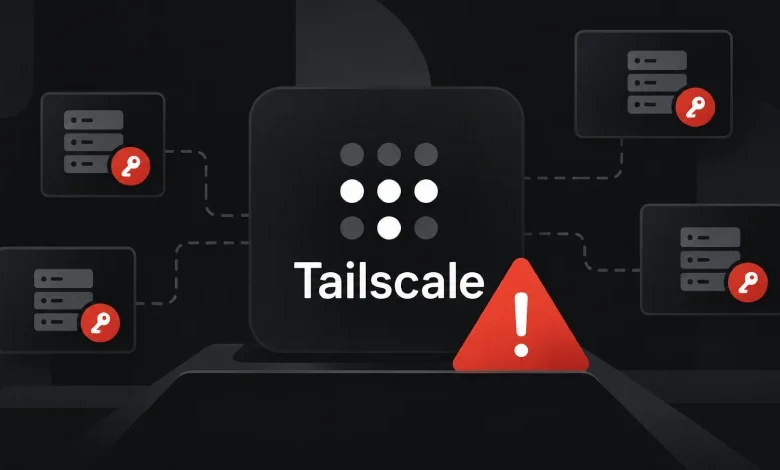
A recently published security report has sent ripples through the cybersecurity community, highlighting a series of potential vulnerabilities within Tailscale’s remote access architecture that could theoretically allow an attacker to pivot from a single compromised device to full root-level control across an entire network. The findings, documented in a report titled "Tailworm" by researcher Erica Windisch of Cyberdione Labs, detail a sophisticated chain of exploitation that leverages Tailscale SSH and port forwarding mechanisms to bypass traditional authentication hurdles.
The research, released on October 25, focuses on the inherent risks associated with how mesh-based VPN services manage device-to-device communication. While the scenarios presented were simulated in a controlled laboratory environment rather than observed in active real-world breaches, the implications for enterprise security teams relying on Tailscale’s "zero-trust" model are significant.
The Mechanics of the Tailworm Vulnerability
At the heart of the issue is the functionality of Tailscale SSH. Unlike conventional SSH implementations, which rely on individual user credentials or cryptographic keys to verify identity, Tailscale SSH operates by identifying the device itself. Access is governed by centralized rules defined by the network administrator, which dictate whether a specific node is permitted to initiate a session with a target server.

According to the Tailworm report, the vulnerability chain requires two primary preconditions: the activation of Tailscale SSH with port forwarding enabled, and an attacker who has already secured a foothold on at least one device within the authorized network path. This initial access—often obtained through common attack vectors like phishing, supply chain compromises, or vulnerable web applications—serves as the jumping-off point.
Once inside the perimeter, an attacker can exploit the way the Tailscale client handles system sockets. The report identifies three specific stages of exploitation tested against Tailscale version 1.104.2 and headscale version 0.29.5:
- Direct Socket Access: By utilizing standard SSH port forwarding, the researcher demonstrated that an unprivileged session could interact with a root-level system socket. This effectively granted the attacker the ability to read sensitive files, such as system password hashes, without needing escalated privileges.
- Service Hijacking: A secondary method involved replacing a legitimate root-owned socket with a malicious one controlled by the attacker, facilitating direct command execution against critical services running on the host.
- Race Condition Exploitation: The most complex stage involved a "race condition," where the system’s security check for file path access was bypassed by manipulating the timing between the verification of a file path and its subsequent execution. This allowed the attacker to capture enrollment keys, enabling them to add rogue devices to the Tailscale network as trusted nodes.
Chronology and Disclosure Context
The path to this public disclosure has been marked by contention regarding coordination. Windisch initiated the disclosure process by providing the report and the underlying proof-of-concept code to Tailscale’s security contacts on the Saturday preceding the public release.
Despite the short lead time, the findings have generated a robust debate within the developer and security communities. On platforms such as Hacker News and Reddit, some industry observers questioned the characterization of the findings as "wormable," arguing that the term implies a self-propagating threat that may not exist in real-world configurations. Others, however, pointed to the severity of the privilege escalation as a critical concern for infrastructure security.

Tailscale’s response was relatively swift. Mike Shaver, the company’s vice president of engineering, engaged directly with the community on Reddit, confirming that the company had been internally investigating these specific architectural areas in collaboration with external security specialists prior to the report’s publication. Shaver emphasized that while the findings are being taken seriously, the company is not currently advising users to disable Tailscale SSH, noting that the specific impact depends heavily on individual network configurations.
Broader Security Implications
The "Tailworm" report serves as a case study in the trade-offs inherent in modern mesh networking. By simplifying the management of secure tunnels, companies like Tailscale remove the friction associated with traditional VPNs, yet they also concentrate significant trust in the network’s underlying daemon.
A key factor in the potential for lateral movement is the use of "Headscale," an open-source, self-hosted implementation of the Tailscale control server. The report highlights a critical disparity: while Tailscale’s hosted service allows administrators to disable port forwarding on a per-rule basis, version 0.29.5 of Headscale does not offer this granularity. Consequently, on Headscale networks, every SSH grant could essentially be viewed as an implicit grant of root access to the target machine.
The report also underscores the protective value of defense-in-depth strategies. The research noted that several factors served to mitigate or stop the attack chain in the lab:

- Access Rules: Networks configured with strict, granular, one-to-one source-to-destination access rules effectively halted the lateral spread of the simulated attack.
- Hardware-Backed Keys: The use of hardware-backed identity, such as TPMs or Apple’s Secure Enclave, made it significantly harder for the attacker to maintain a persistent foothold.
- Tailnet Lock: For networks with the "Tailnet Lock" feature enabled, the attacker’s ability to enroll unauthorized devices was successfully blocked, even if they had captured the necessary secrets in transit.
Assessing the Risk: Beyond SSH
While the SSH privilege escalation has captured the most headlines, the Tailworm report also details 10 other findings. Of particular note is an issue involving "app connectors"—a feature that allows traffic to be routed to specific internal services. Windisch identified a vulnerability in the experimental conn25 feature that could allow a permitted user to tunnel traffic to restricted destinations, such as cloud metadata services. These services often hold temporary security credentials that, if exfiltrated, could allow an attacker to pivot from the local network into the cloud infrastructure hosting it.
This is not the first time Tailscale has faced scrutiny over its socket-handling and SSH implementations. Earlier in 2026, the company addressed a series of flaws, including a notable incident where Unix socket forwarding could be manipulated to reach privileged sockets (TS-2026-004). This history suggests that the complexity of securing a cross-platform, mesh-network agent remains a significant engineering challenge.
Recommended Mitigation Steps
In the absence of an immediate patch, security administrators are urged to review their Tailscale configurations against best practices. The consensus between the research findings and Tailscale’s official guidance includes the following steps:
- Audit Access Rules: Move away from overly broad access rules. Use the principle of least privilege by defining specific source-to-destination paths rather than allowing wide-ranging access within the network.
- Enable Tailnet Lock: This feature adds an extra layer of cryptographic verification to the network’s state, significantly increasing the difficulty for an attacker to add rogue devices.
- Implement SSH Check Mode: While not a patch for the underlying vulnerability, enabling "check mode" mandates that a user must re-authenticate before an SSH session is established, providing a vital barrier against unauthorized access.
- Hardware-Backed Identity: Where possible, ensure that device identities are tied to hardware security modules or TPMs to prevent key exfiltration.
- Stay Informed on Updates: Given that the vulnerability is tied to specific versions of the client and the control server (Headscale), monitoring official security bulletins and applying updates as soon as they become available is essential.
The Tailworm report serves as a sobering reminder that even in "zero-trust" environments, the security of the underlying software stack is paramount. As organizations continue to move toward decentralized network architectures, the ability to rapidly detect, analyze, and remediate vulnerabilities in the mesh itself will become a defining characteristic of a resilient security posture. For now, the onus remains on administrators to manage the configurations of their Tailnets with the assumption that the software is not infallible.
Related posts: